

Rococo Serpentine Commode
A rococo serpentine commode brings sweeping curves and rich marquetry into a room, offering both generous storage and striking decorative presence.
Rococo Serpentine Commode
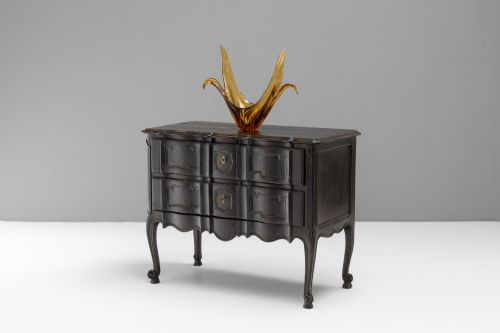
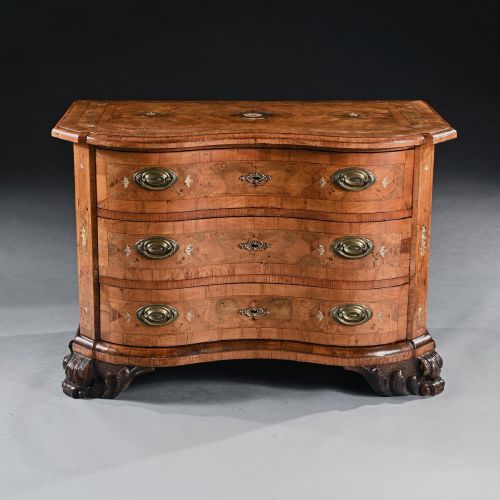
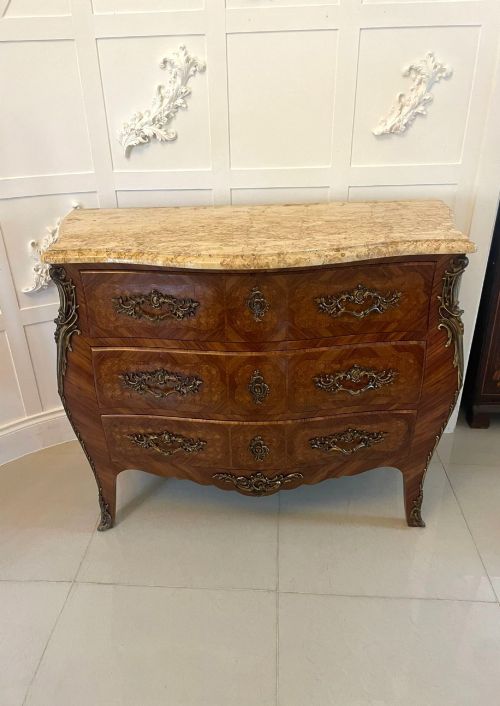
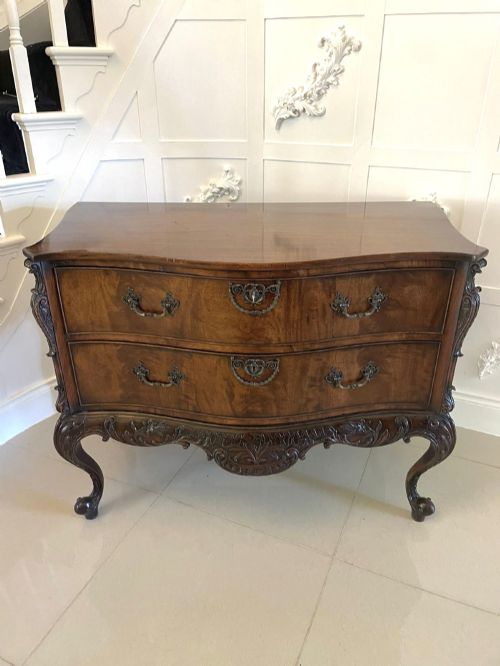
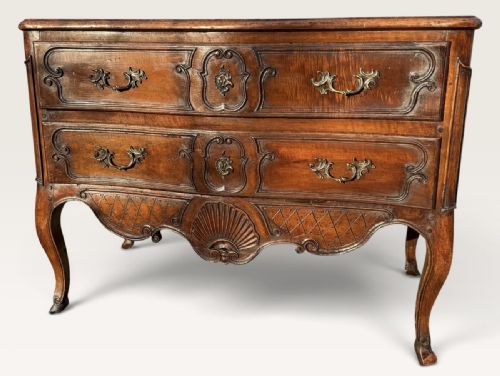
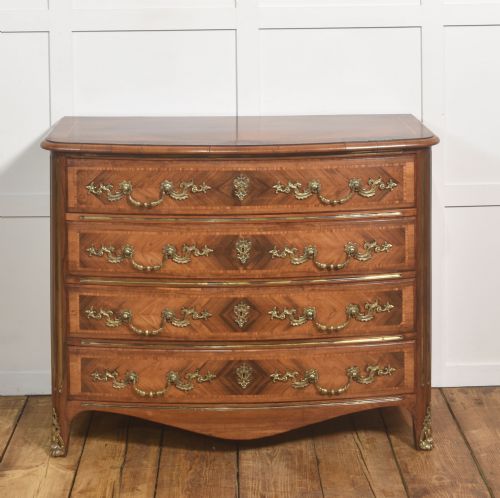
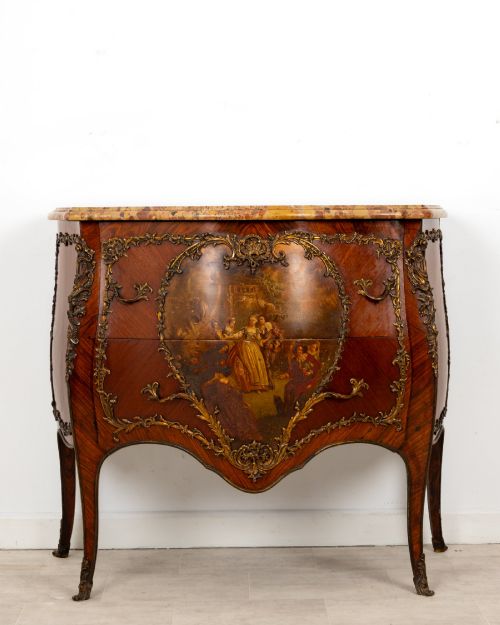
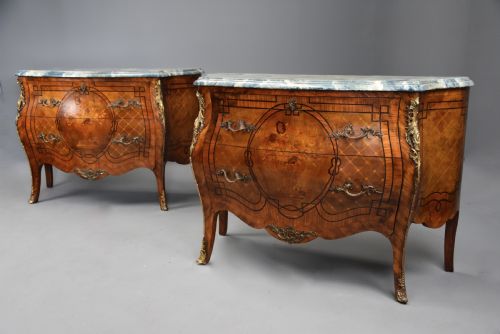
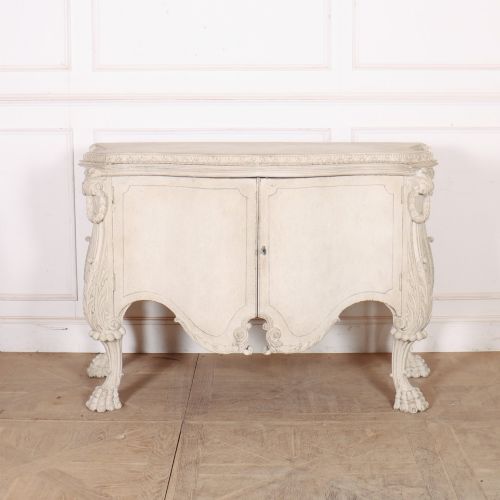
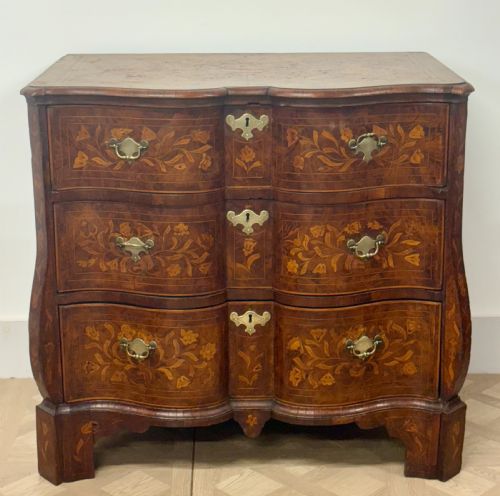
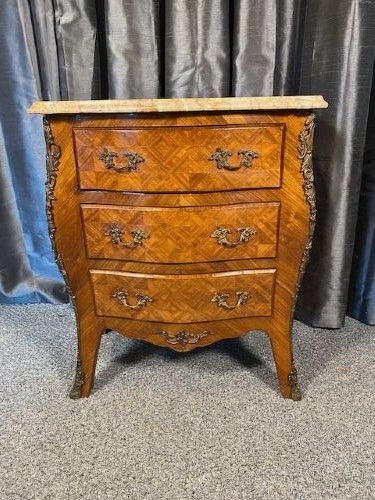
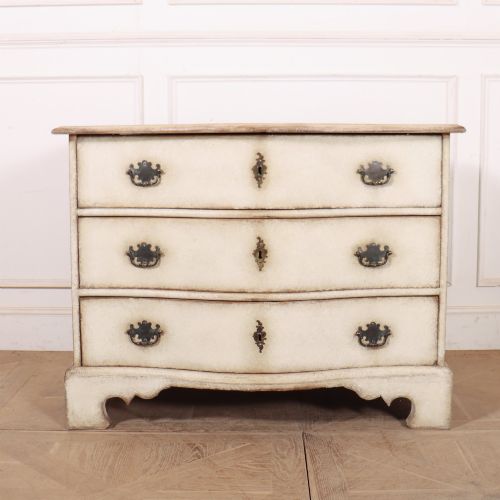
A rococo serpentine commode combines a sinuous, undulating front profile with asymmetrical ornamental styling derived from eighteenth-century continental design. These statement pieces function primarily as low storage chests of drawers or side cabinets, often topped with fitted marble slabs.
The pieces appearing on this page span several centuries and regions, originating from workshops across France, Italy, Germany, Sweden, the Netherlands, and England. Eighteenth-century examples sit alongside nineteenth-century revivals and early twentieth-century interpretations, showing considerable variety in proportion and decorative finish.
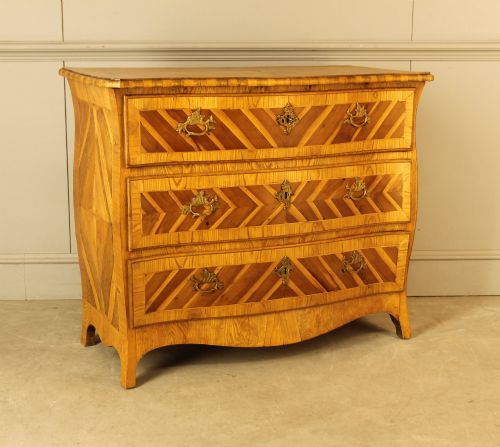
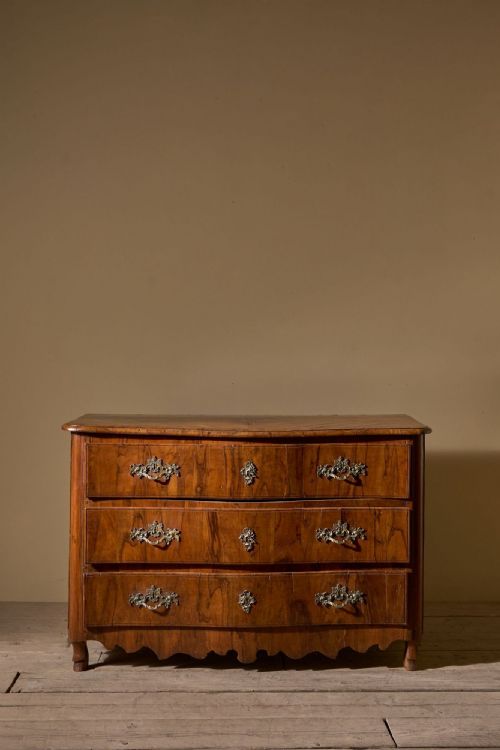
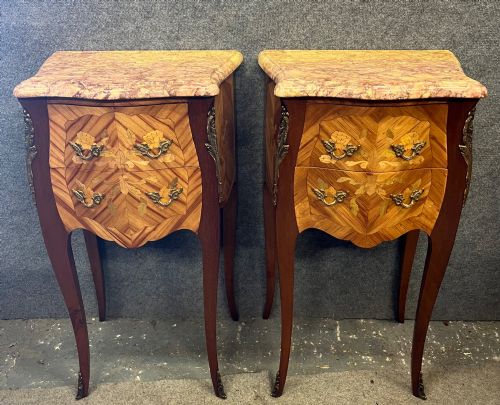
Makers adapted the form through different regional lenses, producing everything from restrained walnut country chests to lavishly decorated Parisian pieces featuring elaborate bombe sides and intricate parquetry. Buyers encounter both single statement chests and matched pairs intended for larger drawing rooms or bedrooms.
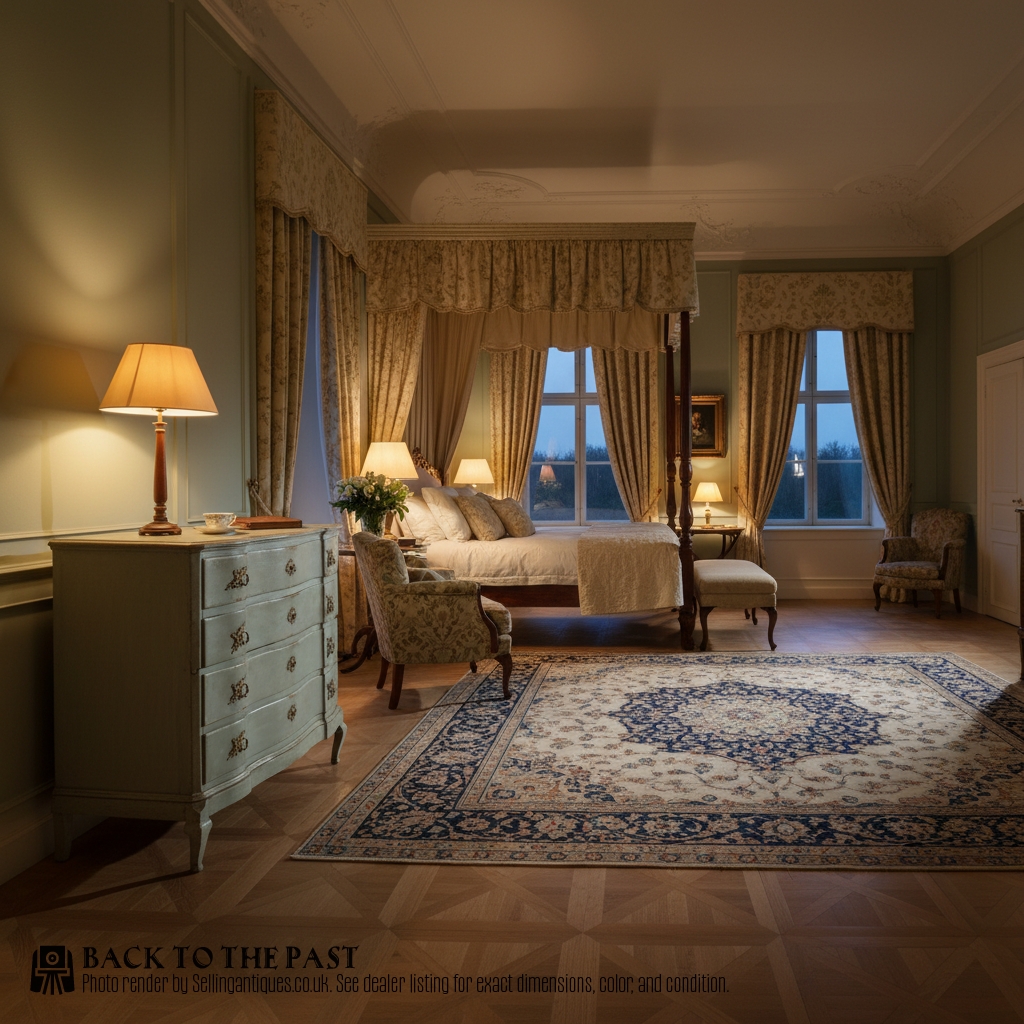
What Varies in Quality
The refinement of the carver's and cabinetmaker's hand dictates the distinction between standard production and exceptional work. Superior pieces display seamless continuity in their veneer patterns across moving drawer fronts, alongside crisply cast and chased ormolu mounts that integrate naturally with the wooden curves.
Structural integrity depends on the precision of the joinery within the curved carcass and the original thickness of the timber veneers. Pieces retaining their fitted marble tops with matching edge profiles and unblemished parquetry command greater appreciation from collectors.
One tiny Maltese chest managed to travel across centuries clad in olive wood, proving island workshops loved curves just as much as Paris.
E. Kahn
The Rococo Serpentine Commode Glossary
- Serpentine
- A furniture front profile that curves inward centrally and swells outward toward the ends. This shape requires advanced woodworking skill to ensure drawers operate smoothly within a non-linear frame.
- Bombe
- A swollen, bulging outward contour applied to the sides and front of a cabinet. The profile creates a dramatic swelling effect popular in continental furniture design.
- Ormolu
- Gilded bronze used for decorative mounts and handles on fine furniture. The technique involves applying a mercury and gold amalgam to cast brass before heating.
- Marquetry
- The art of forming decorative patterns by fitting together small pieces of coloured wood veneer, shell, or ivory. Craftsmen glue these assemblies onto the carcase to create pictorial or floral designs.
- Parquetry
- Geometric wood inlay forming repeating patterns such as cubes or chequers. Unlike marquetry, parquetry relies on angular, symmetrical geometry rather than flowing pictorial scenes.
- Vernis Martin
- A type of simulated Japanese lacquer developed in France during the eighteenth century. Artisans applied multiple layers of translucent varnish to painted surfaces to achieve a lustrous, polished finish.
Rococo Serpentine Commode: Frequently Asked Questions
How do I spot a revival piece?
Nineteenth-century revival pieces often display machine-sawn timber components and standardised brass fixings behind their decorative mounts. Examining the secondary woods inside the drawer linings and the oxidation patterns on the iron or brass fixings helps reveal the true age of construction.
Cabinetmakers working during the later revival periods employed mechanical saws, which left uniform scoring marks distinct from the hand-planed surfaces found on eighteenth-century originals.
Were these commodes used in bedrooms?
Continental commodes originally served varied functions across grand domestic interiors, appearing in dressing rooms, salons, and formal bedchambers. Their deep drawers accommodated clothing, linens, and personal valuables.
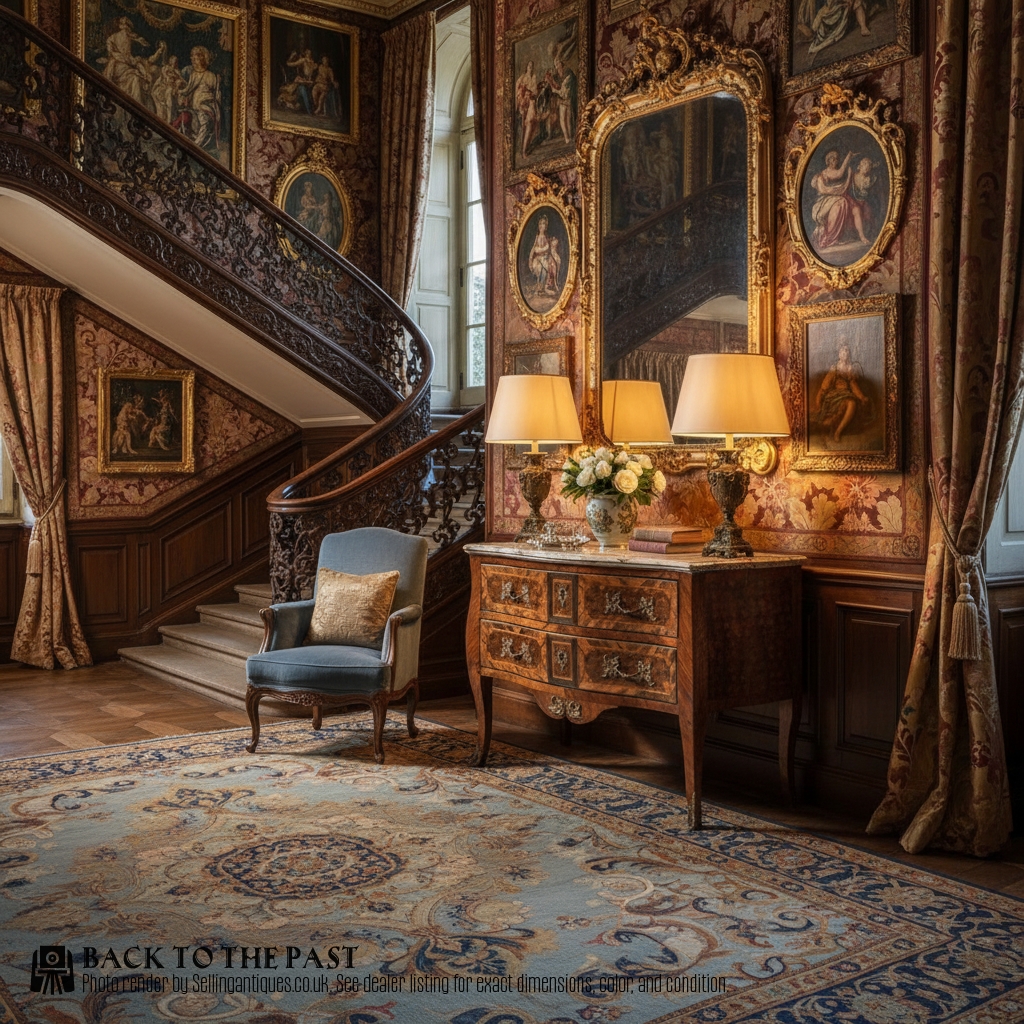
Over subsequent centuries, owners repurposed these decorative chests as hallway console surfaces, living room side cabinets, or lamp tables depending on their scale and regional design.
How do I care for a marble top?
Marble surfaces require gentle cleaning with mild, pH-neutral soap and warm water to avoid etching the polished stone. Strong acidic substances like wine, citrus, and vinegar will instantly dull the gloss if left to sit on the surface.
Applying a specialist stone wax helps protect the porous marble from accidental spills and maintains a soft, historical sheen without creating an artificial gloss.
What defines Louis XV style?
The Louis XV style embraces natural asymmetry, floral motifs, and flowing scrollwork without heavy classical symmetry. Furniture from this design vocabulary avoids straight lines in favor of organic curves and cabriole legs.
Carved details draw inspiration from shells, foliage, and water elements, creating a sense of movement across the wooden surfaces and gilt-bronze mounts.