

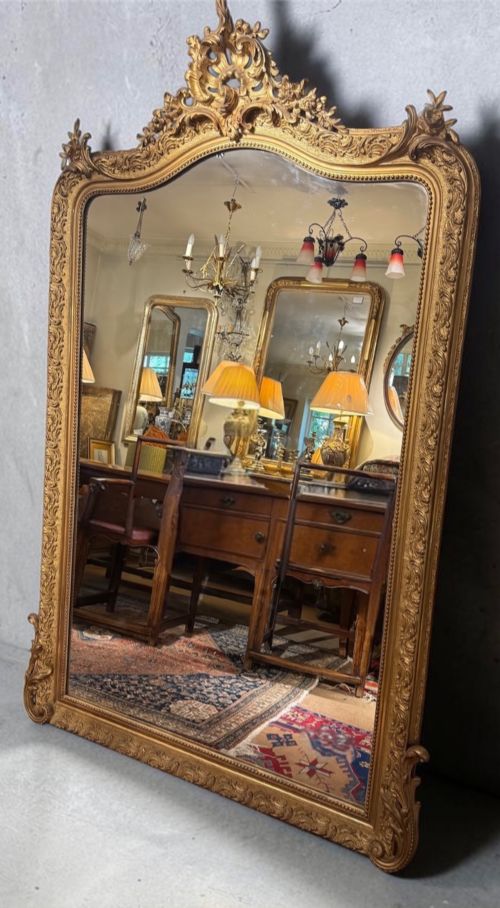
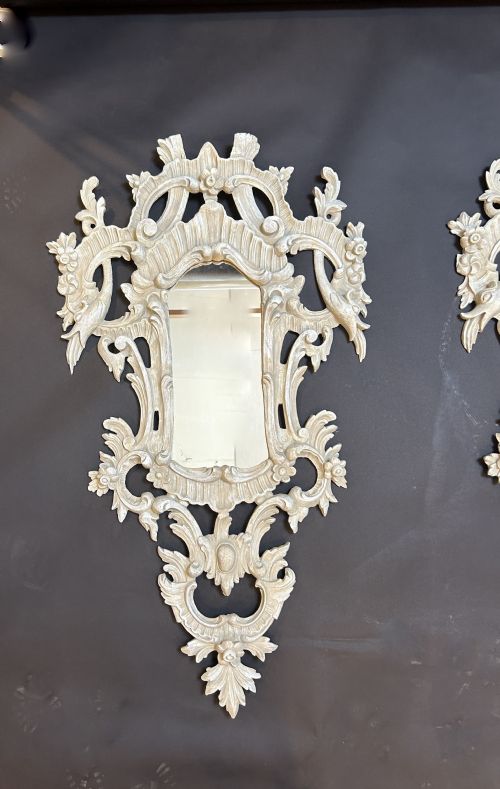


Rococo Revival Pier Mirror
These heavy rococo revival pier mirror examples bring nineteenth-century theatricality to a room, framing light and space with exuberant carved detail.
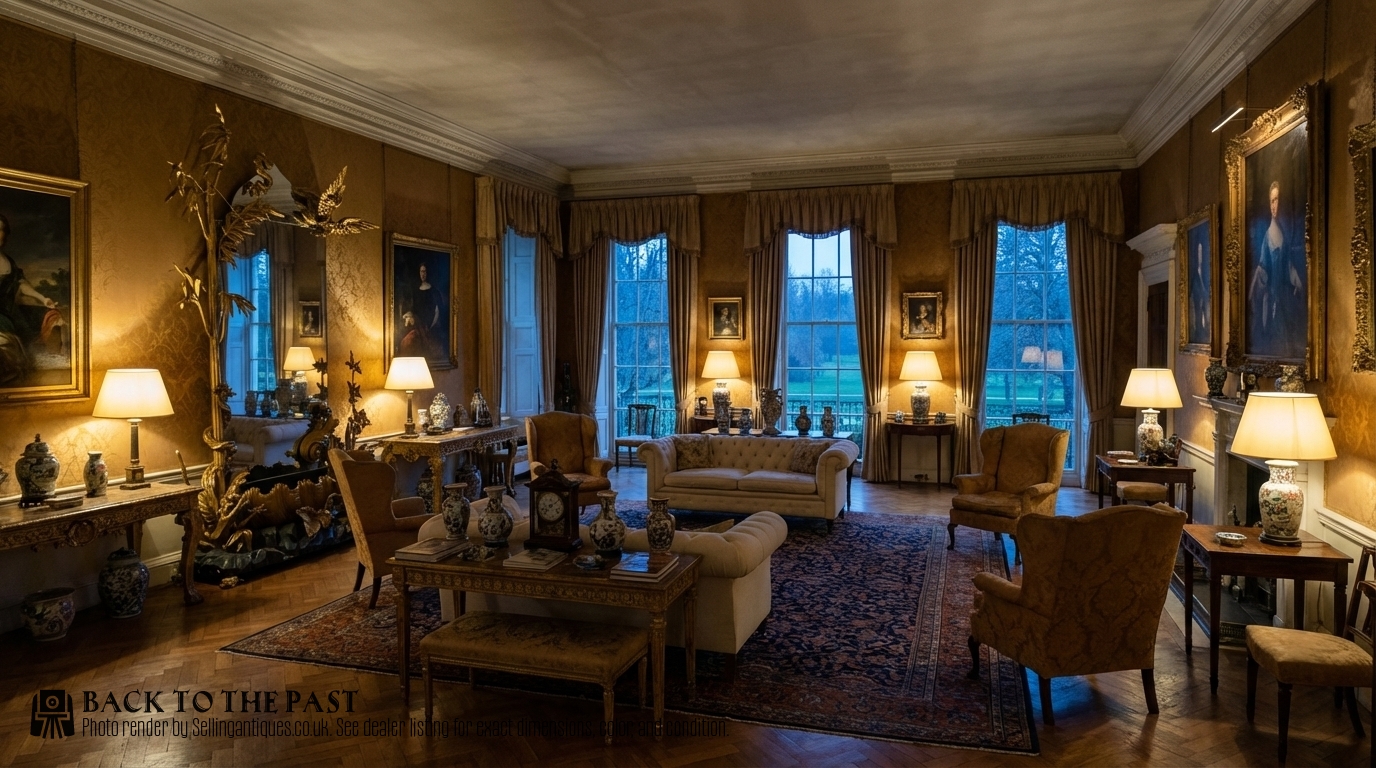
Rococo Revival Pier Mirror
A rococo revival pier mirror is a large, ornate looking glass designed to hang between windows on a pier wall, often reflecting light back into the room. When searching for a rococo revival pier mirror, you encounter pieces predominantly from the nineteenth century, including Victorian and French chateau styles.
These grand items range from monumental giltwood wall mirrors to late Victorian gilt framed pier glasses. Many incorporate carved wood, gesso, and gold leaf to achieve their characteristic decorative impact.
How they were made
Makers shaped these frames from carved wood, pine, and walnut, applying layers of gesso to build up the intricate shell and scroll motifs before gilding them with gold leaf. This combination of carved wood and composition provided the foundation for the deep relief typical of the style.
The mirror glass itself was set within substantial frames, sometimes as cushion mirrors or large wall plates designed to fill a specific architectural space between windows.
Listings feature periods spanning the Victorian era through the 1920s, utilising giltwood, walnut, and carved pine.
What varies in quality
Quality rests in the depth and crispness of the carving, where hand-carved giltwood details display sharper relief than moulded composition. The handling of the gold leaf and the preservation of the original mirror glass further distinguish exceptional examples.
The scale and architectural ambition of the frame also set pieces apart, moving from simpler decorative wall mirrors to monumental nineteenth-century creations.
Sir Willian Trotter
The Rococo Revival Pier Mirror Glossary
- Pier glass
- A tall mirror specifically designed to hang on the wall space between two windows. It frequently sits above a console table.
- Giltwood
- Timber that has been coated with gold leaf or gilt paint. This finish creates a luminous, reflective surface characteristic of formal period furniture.
- Gesso
- A plaster-like mixture applied to wood frames to create a smooth surface for carving or gilding. It allows for elaborate, raised ornamentation.
- Cushion mirror
- A looking glass with a frame that curves outward like a pillow. This form was popular in French and Continental designs.
Rococo Revival Pier Mirror: Frequently Asked Questions
Where should I hang a pier mirror?
These mirrors traditionally hang on the narrow wall space between two windows, known as the pier, to maximise natural light in a room. They also work effectively above a fireplace or a matching console table.
Because many examples are exceptionally large and heavy, they require secure wall fixings anchored directly into structural studs or masonry.
How do I clean a giltwood frame?
Dust giltwood frames gently using a very soft, dry brush or a feather duster to protect the delicate gold leaf surface. Avoid using water, chemical sprays, or abrasive cloths, which can strip the gilding.
Professional conservators should handle any significant restoration or deep cleaning of nineteenth-century gesso and gilt surfaces.
Are these mirrors French or English?
The selection includes pieces from various origins, featuring nineteenth-century French designs, Italian rococo revival works, and English Chippendale revival pieces. Makers across Europe drew on the same rococo vocabulary of asymmetrical scrolls and floral motifs.
French pieces often lean towards grand chateau aesthetics, while English examples reflect specific regional cabinet-making traditions of the period.
What is the difference between a pier mirror and a wall mirror?
A pier mirror is specifically proportioned to fit the narrow wall section between architectural openings like windows or doors. They are often taller and narrower than standard wall mirrors.
Many pier mirrors were originally designed to accompany a matching console table placed directly beneath them.