
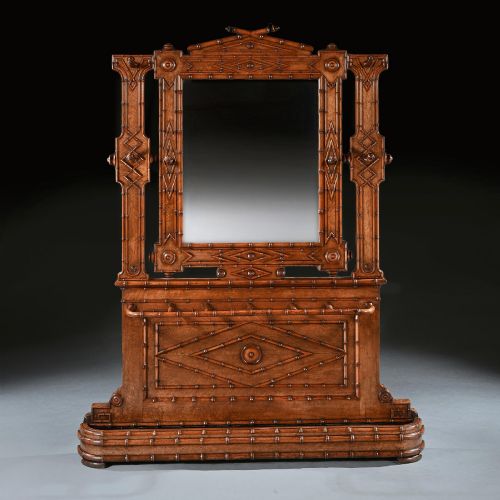
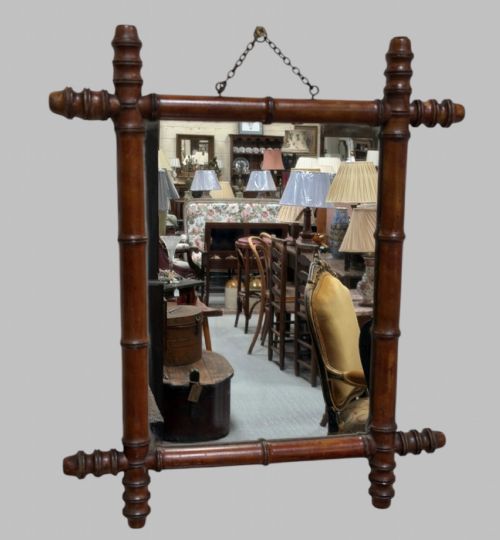


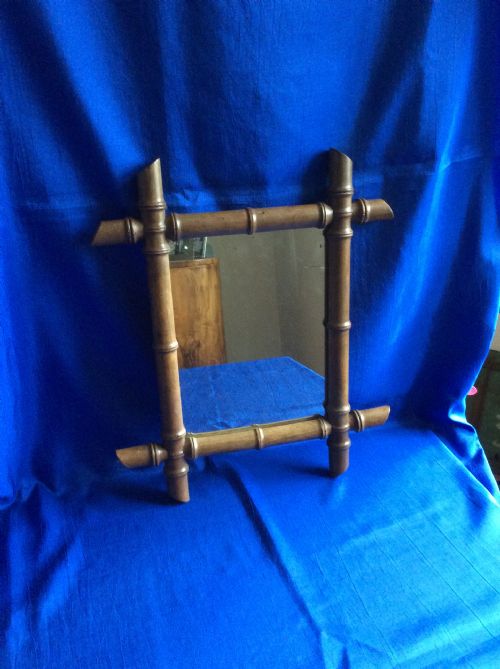

Bamboo Carved Mirror
These bamboo carved mirror pieces bring distinctive texture and nineteenth-century character to an interior.
Bamboo Carved Mirror
A bamboo carved mirror offers the naturalistic forms and decorative charm characteristic of the Aesthetic Movement and Victorian eras. These items appear primarily as wall mirrors, alongside occasional hall stands and overmantel formats.
Most examples originate from French workshops or British makers working in nineteenth-century styles. The selection frequently includes faux bamboo designs rendered in carved wood, pine, and gesso.
Buyers encounter wall-hung formats most often when searching this phrase, often featuring painted, silvered, or black lacquer finishes. The forms range from simple rectangular frames to elaborate Chinoiserie compositions.
How they were made
Craftsmen shaped solid woods such as beech, pine, and birdseye maple to imitate the segmented joints of natural bamboo. Carvers worked wood and gesso by hand to replicate surface nodes and irregular organic curves.
Frames received various surface treatments including gilt, silvering, and black lacquer finishes. Glass panels were then set securely within the carved wooden framework, frequently retaining original silvering.
Carvers occasionally added realistic wooden knots to straight pine mouldings just to trick the eye from across the room.
What varies in quality
The precision of the carving determines much of the visual success in faux bamboo pieces. Skilled carvers rendered the natural nodes and slender joints with botanical accuracy, whereas simpler pieces show generic fluting.
Surface finishes distinguish standard items from exceptional examples. Original gilt, painted decoration, and silvered gesso retain a depth that modern overpainting obscures.
The Bamboo Carved Mirror Glossary
- Faux bamboo
- A decorative technique where wood is carved and painted to resemble natural bamboo canes. This style gained popularity during the nineteenth century across European furniture design.
- Aesthetic Movement
- A nineteenth-century design current that prioritised visual beauty over narrative or moral function. It drew heavily on Japanese art and organic forms.
- Chinoiserie
- European artistic style reflecting Chinese aesthetic traditions. It employs motifs such as lacquerwork, gilt highlights, and landscape scenes.
- Gesso
- A plaster-like mixture applied to wood surfaces as a base for paint or gilding. It allows artisans to build up crisp decorative relief details.
Bamboo Carved Mirror: Frequently Asked Questions
Are these frames made of real bamboo?
Most pieces utilise carved wood, pine, or beech shaped to imitate the segmented appearance of natural cane. This construction provided greater structural stability for supporting heavy mirror glass.
Artisans carved the wooden surfaces by hand to replicate the characteristic nodes and irregularities found in living plants.
How do I date a bamboo mirror?
Dating relies on examining the backing materials, the type of mirror glass, and the construction methods of the frame. Nineteenth-century examples often display older fixing nails and hand-beveled glass.
Stylistic cues such as Aesthetic Movement motifs or French provincial characteristics also help narrow the period of manufacture.
Where should I hang a bamboo mirror?
These mirrors suit hallways, living rooms, and bedrooms where their organic texture adds visual contrast to flat walls. Overmantels and larger wall formats create a focal point above fireplaces or sideboards.
Ensure the wall fixings match the weight of the specific piece, particularly for larger carved wood and gesso models.
How do I care for the surface?
Dust the carved wooden frame gently with a soft, dry cloth to prevent accumulation in the crevices. Avoid chemical polishes that might damage original gilt, silvering, or lacquer finishes.
Clean the mirror glass using a minimal amount of glass cleaner applied to a cloth rather than sprayed directly onto the frame.