
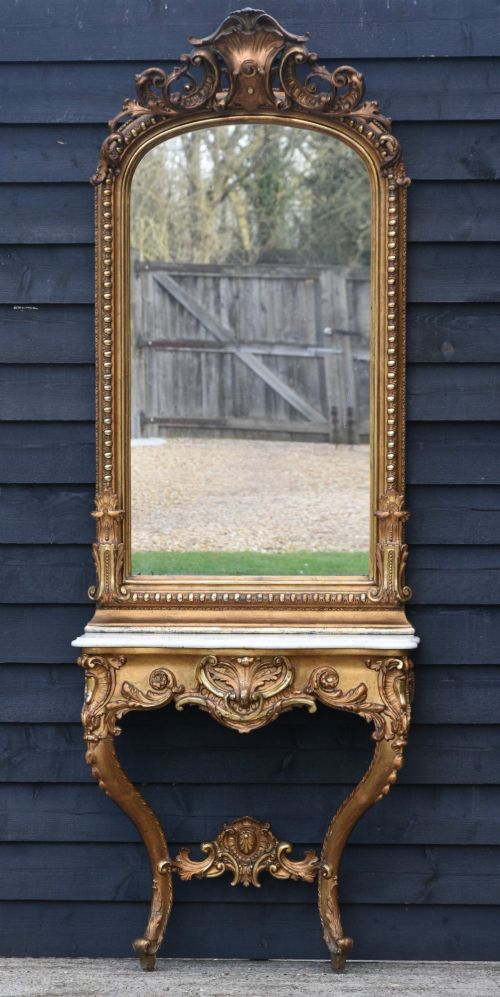
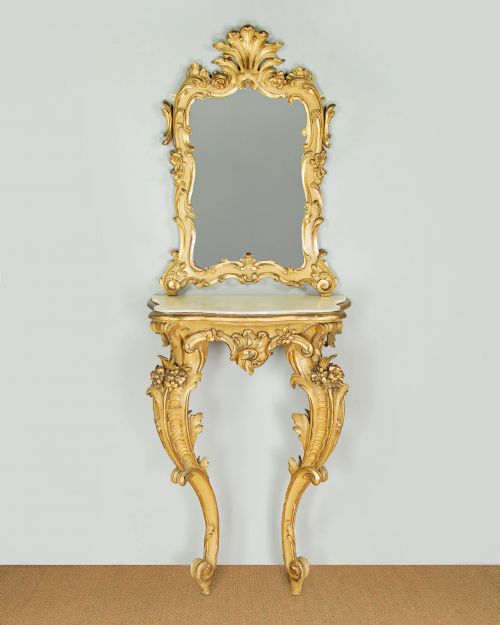


Gilded Console Table Mirror
These gilded console table mirror sets bring striking presence and reflective light to interior spaces.
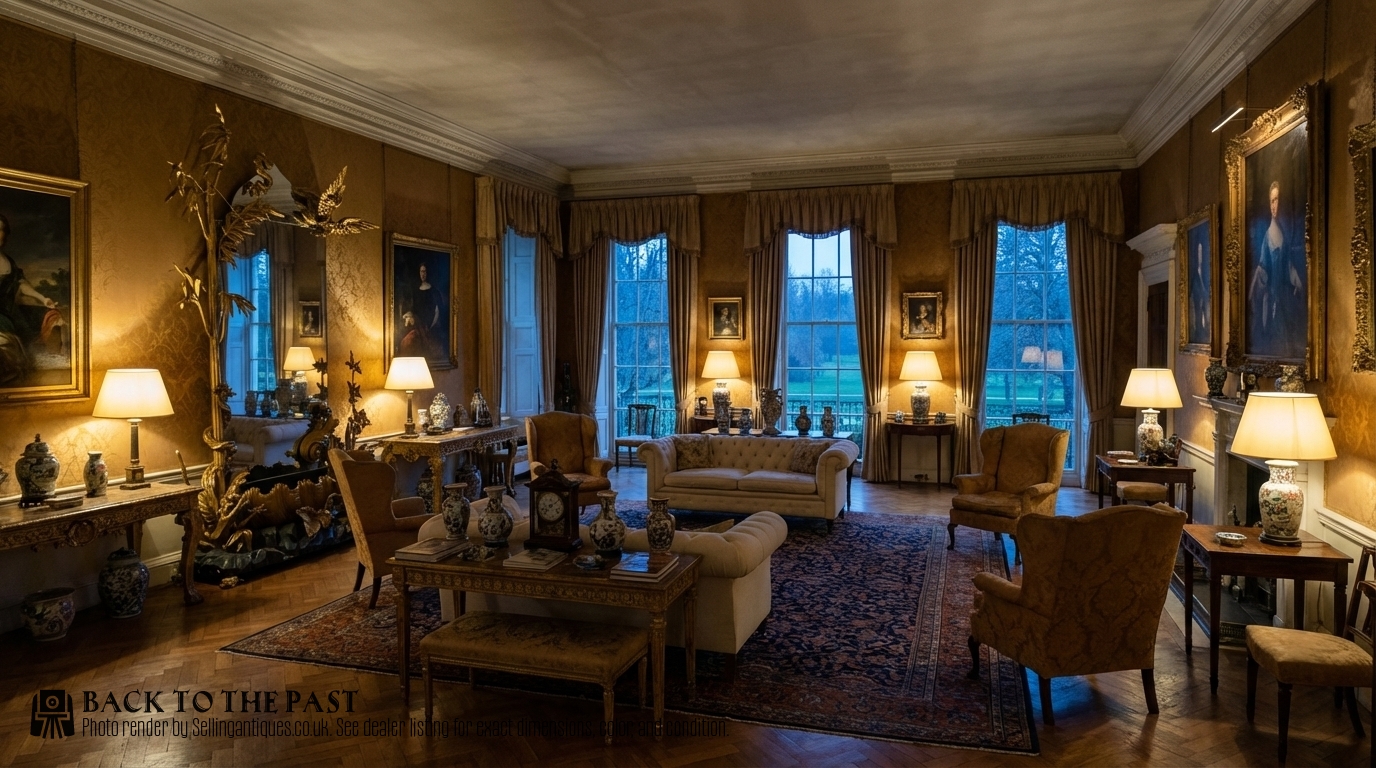
Gilded Console Table Mirror
A gilded console table mirror combines a wall-mounted or trumeau glass panel with a matching base table, creating a unified decorative ensemble. These pieces emerge predominantly from the nineteenth century, alongside later examples from around nineteen twenty.
Buyers encounter distinct regional interpretations, ranging from Venetian and Italian designs to French Rococo Revival and Victorian forms. The grouping includes matched console table and mirror sets, pier mirrors paired with tables, and dressing tables.
Stylistic expressions span from ornate Rococo and Neoclassical lines to French Louis XVI and Art Deco manifestations. Many feature integrated marble tops resting on carved wood bases.
How they were made
Craftsmen utilised wood and gesso as the foundational base for intricate carving before applying a layer of gold leaf to achieve the characteristic giltwood finish. Other examples employ painted wood or flame mahogany alongside the primary gilding.
Mirror glass and marble insert tops complete the construction, demanding specialist joinery to support heavy stone surfaces upon elaborate wooden frames. Artisans combined traditional hand-carving techniques with fitted mirror plates designed to reflect light within nineteenth and early twentieth-century rooms.
Materials recorded across the inventory include giltwood, gesso, marble, mirror glass, painted wood, flame mahogany, and burr walnut.
What varies in quality
The standard of carving determines much of the distinction between pieces, with deep, crisp manual execution of foliage and scrollwork separating superior items from simpler work. The quality of the gilding itself, the depth of the wood preparation under the gold leaf, and the integration between table and mirror play significant roles.
Material selection creates further differentiation, particularly in the choice of solid giltwood versus painted alternatives, and the presence of genuine marble tops. Cohesion of design across the matching table and mirror elements indicates greater original ambition.
The Gilded Console Table Mirror Glossary
- Giltwood
- Wood covered with a thin layer of gold leaf. This finish defines the reflective surfaces seen across many nineteenth-century pieces.
- Console table
- A table supported against a wall by console brackets or legs. These items frequently anchor matching vertical mirrors.
- Pier mirror
- A tall mirror designed to hang on the wall space between windows. They often sit directly above console tables in historical interiors.
- Trumeau
- A decorative architectural wall panel containing a painted scene or mirror. French examples showcase this specific style above matching tables.
- Gesso
- A plaster mix applied to wood as a smooth base for gilding. Skilled artisans carved intricate relief details into this layer.
Gilded Console Table Mirror: Frequently Asked Questions
Where should I place a console table mirror?
These combinations suit entryways, hallways, or principal reception rooms where vertical wall space allows the mirror to sit above the table base.
Positioning them opposite windows maximises reflected daylight within the interior.
Are the table and mirror always sold as a matched pair?
Most listings present the console table and mirror as a unified set designed to complement each other in style and period.
Some pieces pair walnut or mahogany tables with matching gilded wall glasses.
How do I identify French Rococo Revival pieces?
French Rococo Revival items feature asymmetrical scrollwork, naturalistic floral carvings, and curving lines typical of nineteenth-century interpretations.
Italian and Venetian variants often incorporate distinct local carved motifs and painted highlights.
What materials make up the table tops?
Many console tables feature fitted marble tops resting upon the carved wooden base structure.
Other variations utilise timber surfaces, including flame mahogany and burr walnut.