




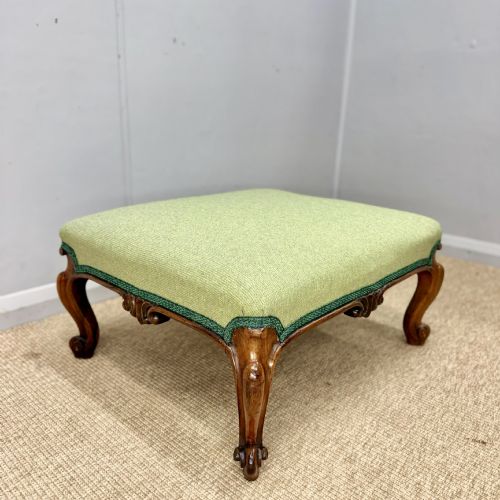


Rococo Revival Footstool
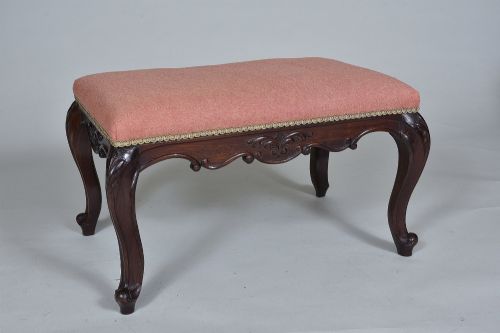
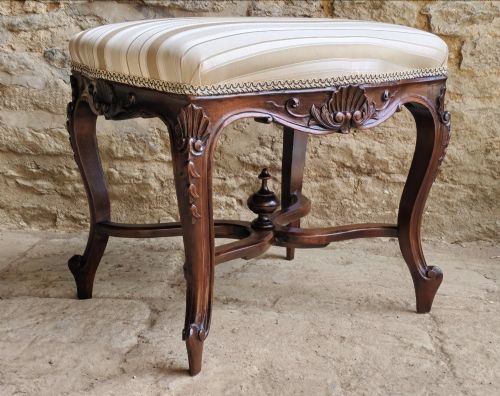
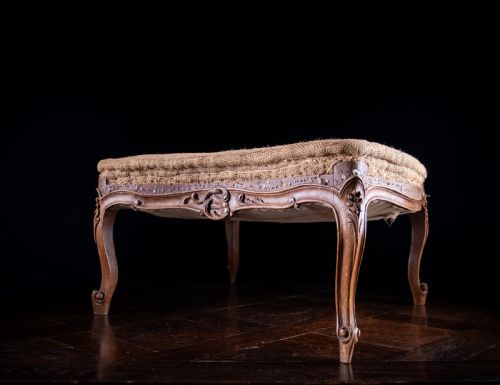
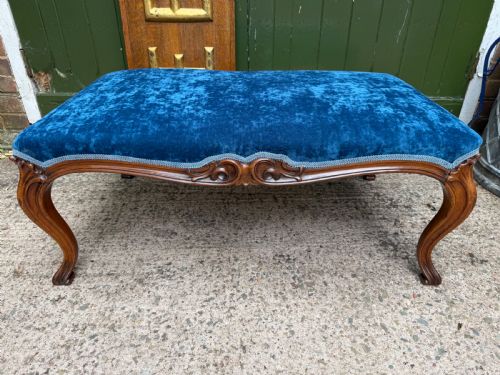
These rococo revival footstool examples bring ornate curves and rich timber frames to your interior.

Rococo Revival Footstool
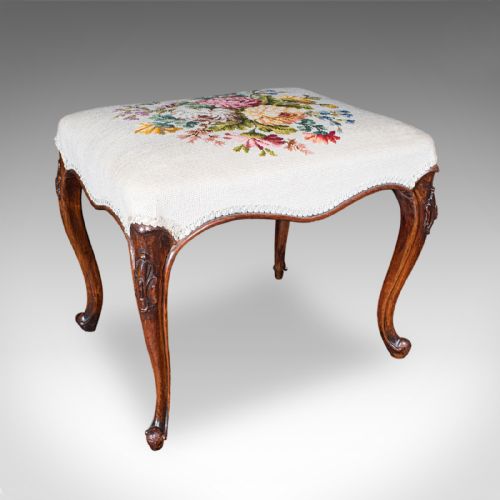
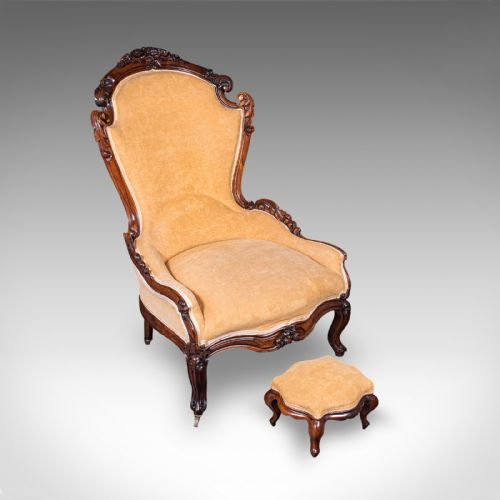
A rococo revival footstool sits low to the floor, providing a support for the feet while echoing the opulent curves of mid nineteenth century design. You will encounter pieces shaped primarily during the Victorian era and the broader nineteenth century.
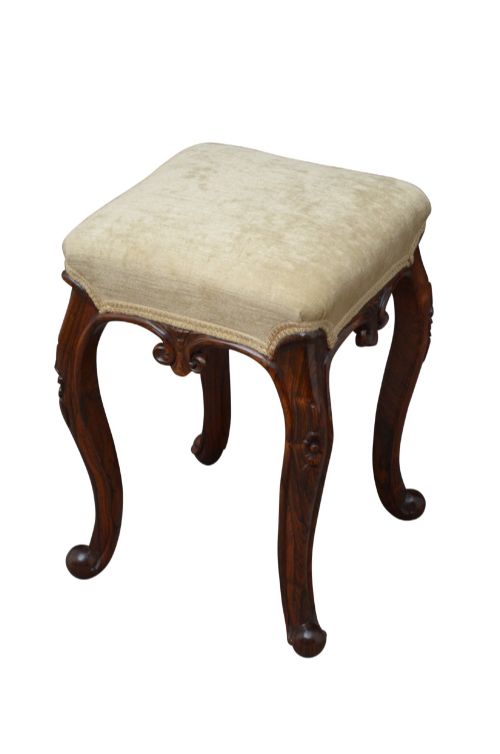
The most common version on this page is a wooden frame supported by cabriole legs, upholstered in fabric, needlepoint or velvet. These items function as fireside stools, dressing table seats or centre stools within a room.
The aesthetic borrows heavily from French chateau styles and Louis XV revival motifs, translating continental extravagance into British domestic spaces. Walnut, mahogany and rosewood form the structural backbone of these furnishings.
Materials and construction methods
Cabinet makers utilised dense hardwoods such as walnut, mahogany and rosewood to carve the elaborate frames and curving legs. Beech and exotic timbers like goncalo alves also appear, shaped with hand-carved detailing.
Upholstery forms a major component, relying on traditional textiles, wool, velvet and hand-worked needlepoint. Brass elements occasionally accent the design, while gilt finishes coat selected frames.
Rococo Revival Footstool Retail Price Guide 2026
Typical asking prices for rococo revival footstool among the pieces listed under this phrase on Sellingantiques today, from the lower quarter to the upper quarter. They describe what is for sale here now, not the wider market.
Listings feature items spanning the Victorian era, the wider nineteenth century, and specific decades from eighteen fifty to nineteen hundred.
Assessing quality in nineteenth century stools
The depth and crispness of the hand carving on the wooden frame dictate the initial visual calibre. Sharply defined botanical motifs and smooth, flowing cabriole legs distinguish superior work from simpler, utilitarian framing.
The choice of primary timber and the integrity of the original or period upholstery contribute to the overall standard. Robust joinery in the underframe ensures the piece remains stable during daily use.
The Rococo Revival Footstool Glossary
- Cabriole leg
- A furniture leg that curves outward and then tapers inward, mirroring animal limbs. This form appears frequently on nineteenth century seating.
- Needlepoint
- Stitched textile work using canvas as a base, often displaying floral patterns. It serves as traditional upholstery for period footstools.
- Goncalo alves
- A dense exotic hardwood sometimes utilised for furniture framing. Its distinctive grain offers a rich visual texture.
- Gilt
- A thin layer of gold applied to wood surfaces. This finish enhances decorative frames from the Victorian period.
- Centre stool
- A larger freestanding stool designed to be viewed from all angles within a room. These pieces often feature elaborate carving.
Rococo Revival Footstool: Frequently Asked Questions
How do I use a footstool today?
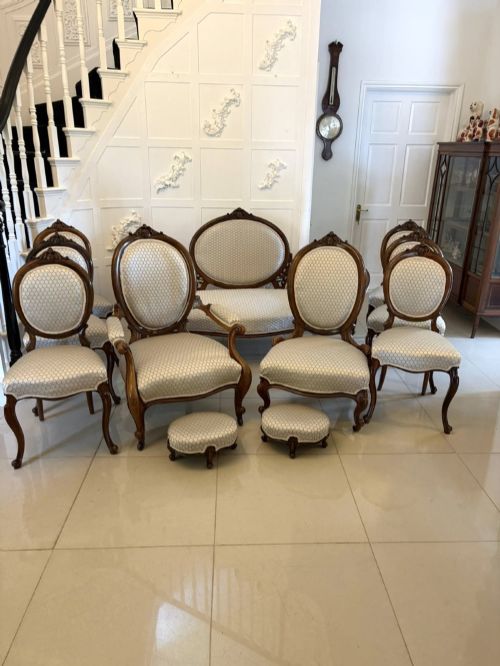
These pieces function well beside armchairs as traditional fireside footstools or beneath dressing tables. They also serve as low occasional seating in living spaces.
Their compact scale allows them to move easily between rooms while adding historic character to modern interiors.
What is the difference between styles?
Rococo revival pieces draw on mid nineteenth century French taste, displaying asymmetrical curves and carved foliage. Early Victorian examples often use simpler geometric lines.
Louis XV revival pieces push the ornamentation further with pronounced cabriole legs and gilt or carved beech frames.
How do I care for the upholstery?
Protect delicate textiles, wool and velvet by keeping them away from direct sunlight and heat sources. Regular gentle vacuuming with a soft brush attachment prevents dust accumulation.
Needlepoint requires particular care to avoid snagging the threads during cleaning.
How do I identify a Victorian stool?
Look for dense hardwoods like walnut, rosewood and mahogany paired with hand-carved cabriole legs. Upholstery methods and textile choices often align with mid nineteenth century workshops.
Proportions generally favour low, comfortable heights suited to sitting or resting feet.