
Victorian Carved Ottoman
A Victorian carved ottoman brings nineteenth-century comfort and elaborate timber craftsmanship into a modern interior.

Victorian Carved Ottoman
When you search for a victorian carved ottoman, you encounter low seating designed for nineteenth-century drawing rooms and parlours. The selection spans footstools, window seats, and box ottomans dating from the early Victorian decades through to the end of the century.
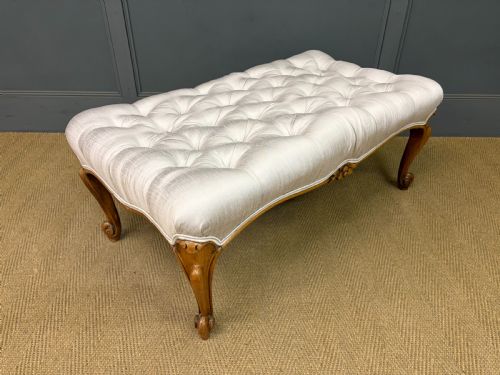
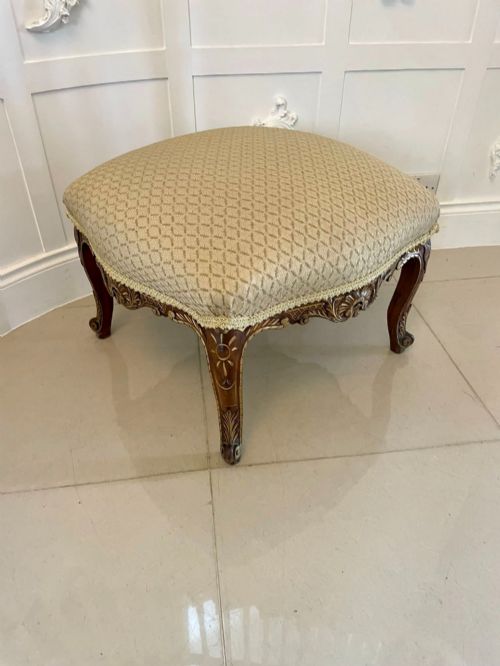
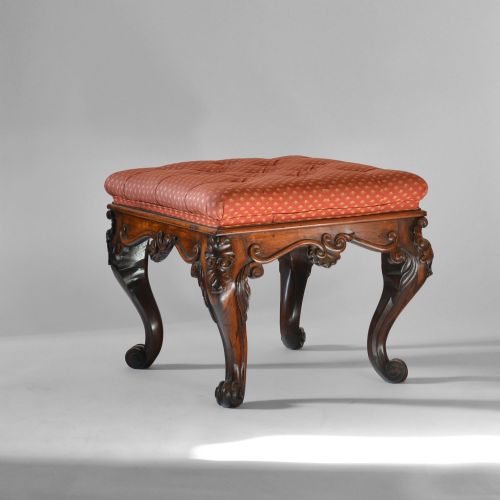
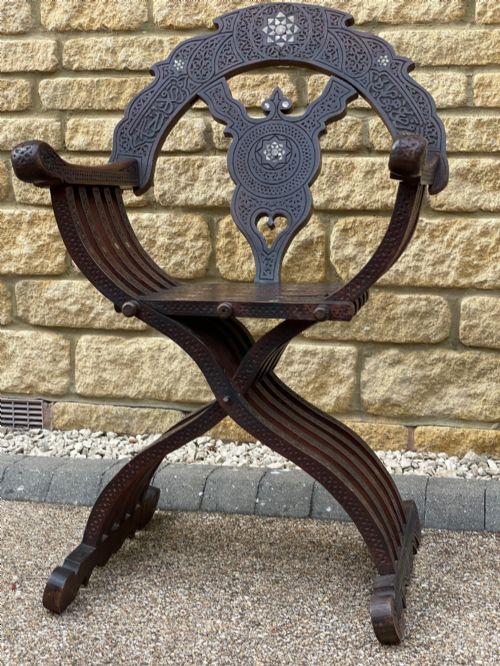
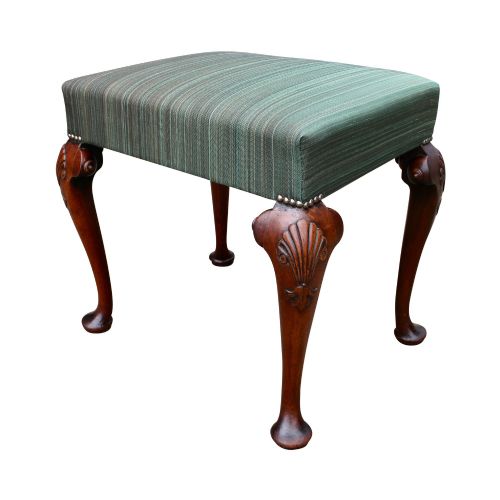
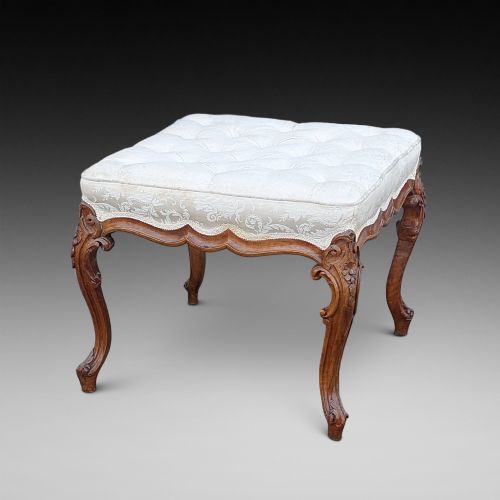
Makers utilised resilient timbers such as walnut, mahogany, and rosewood to shape substantial frames. These pieces often incorporate revival styles, ranging from Queen Anne cabriole legs to Moorish and Rococo ornamentation.
Materials and construction
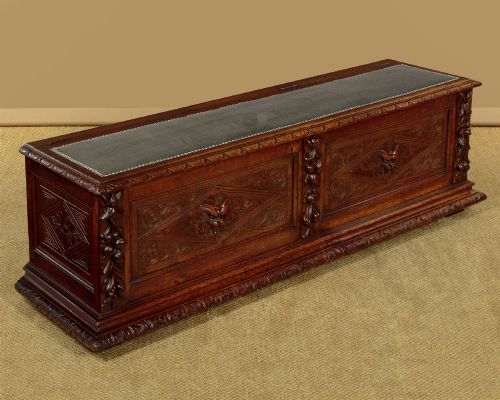
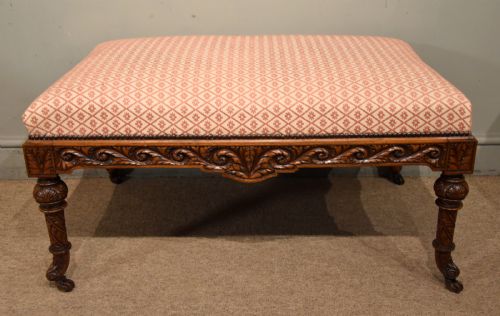
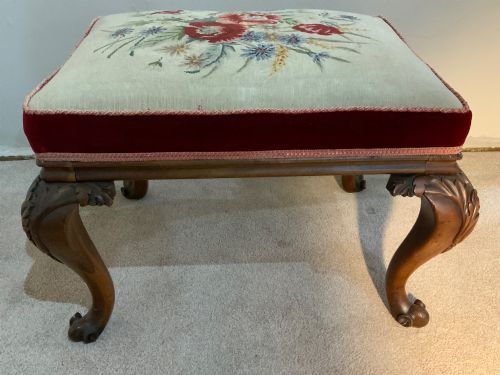
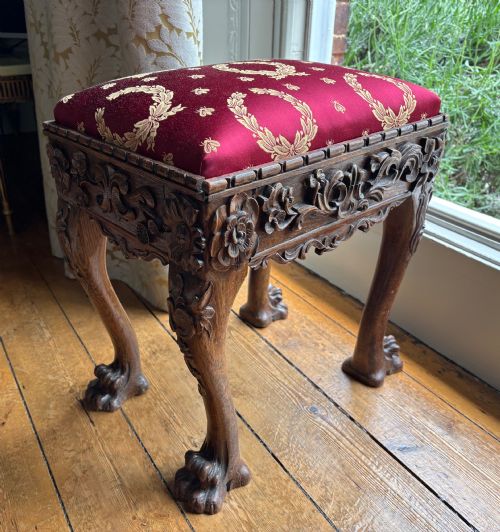
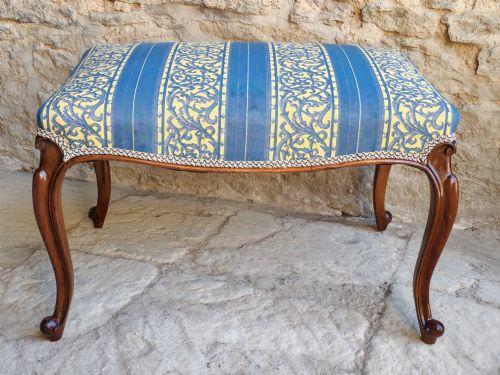
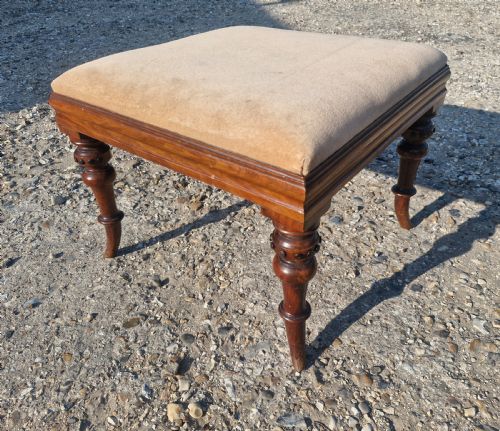
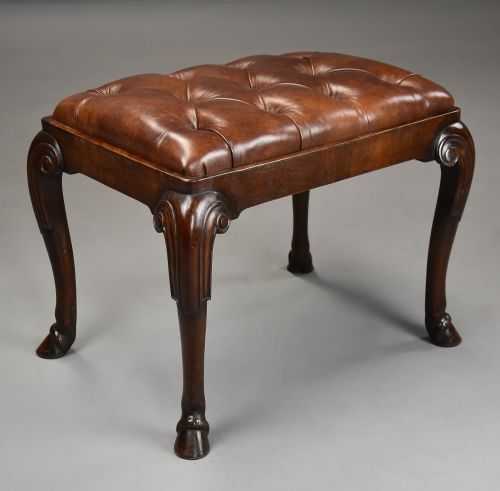
Carpenters shaped dense hardwoods including walnut and mahogany into cabriole legs, spiral turnings, and sarcophagus forms. Hand-carving defines the woodwork, displaying deep relief details and scroll motifs across the frames.
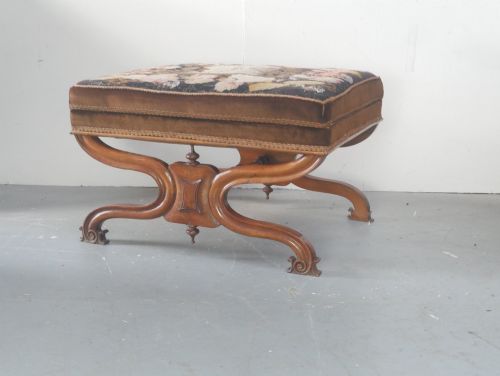
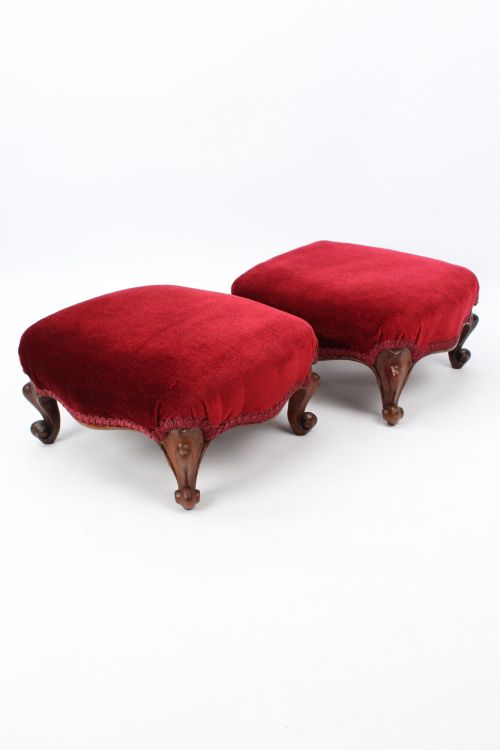
Upholstery techniques involved traditional stuffing materials paired with surface textiles such as needlepoint, velvet, tapestry, and leather. Certain variants incorporated hidden storage compartments or hinged seats.
Listings feature nineteenth-century seating constructed primarily from walnut, mahogany, and rosewood.
Judging the work
Quality rests in the crispness of the hand-carving and the structural integrity of the timber frame. Superior examples display fluent carving without softening of the detail and joints that remain rigid.
The choice of primary wood and the retention of period upholstery materials influence the standing of a piece. Finer items exhibit select veneers or solid exotic woods paired with balanced proportions.
Liberty and Co
The Victorian Carved Ottoman Glossary
- Cabriole leg
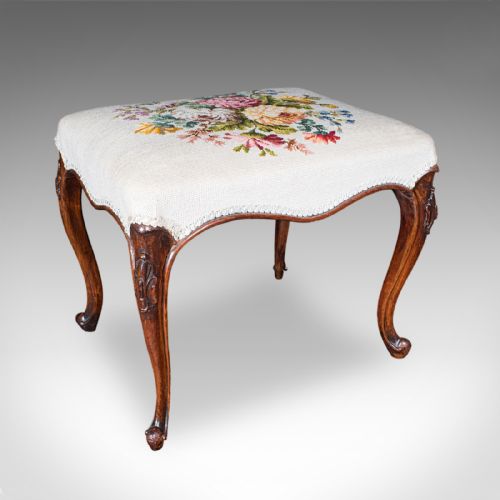
- A furniture leg that curves outward at the knee and tapers inward to an ankle, typical of revival designs. This profile mimics animal limbs and appears frequently on mid-century seating.
- Needlepoint
- Canvas worked with wool or silk threads in counted stitches to create dense decorative patterns. This textile often covers the top of nineteenth-century footstools.
- Sarcophagus
- A box-like shape with a sloping lid resembling an ancient stone coffin. Makers applied this monumental form to substantial nineteenth-century storage ottomans.
- Rococo Revival
- A nineteenth-century design movement favouring asymmetrical scrolls, floral motifs, and shellwork. This style manifests in heavily carved walnut and rosewood frames.
Victorian Carved Ottoman: Frequently Asked Questions
What is a Victorian carved ottoman?
A Victorian carved ottoman is a low upholstered seat or storage box produced during the nineteenth century, featuring decorative woodwork and traditional upholstery.
These items served various domestic functions, acting as footrests, window seats, or piano stools in period drawing rooms.
How do I date a Victorian stool?
Dating relies on identifying timber choices, leg profiles, and decorative motifs linked to specific decades of the nineteenth century.
Early pieces often display heavier mahogany construction, while later decades favour walnut with elaborate revival carving.
Were these ottomans used for storage?
Certain variations incorporate hinged seats or box compartments designed to hold sewing equipment or textiles.
Many examples functioned purely as low seating or footstools rather than storage containers.
What fabrics cover these seats?
Original and replacement coverings include needlepoint tapestry, patterned velvet, hand-dyed leather, and woven textiles.
Needlepoint and heavy wool fabrics remain common survivals from the period.