




Rococo Revival Dining Table
A rococo revival dining table brings sweeping curves and elaborate carved ornamentation into a room, offering both a functional surface and a dramatic nineteenth-century centrepiece.
Rococo Revival Dining Table
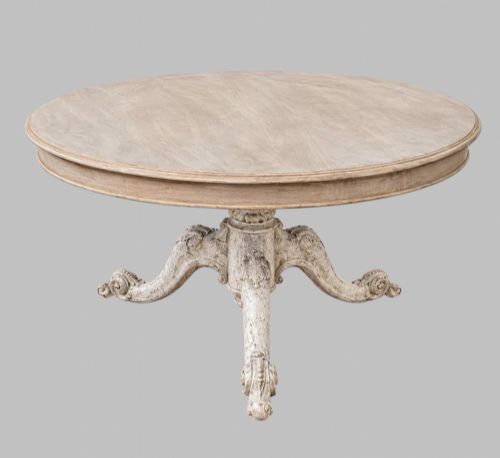
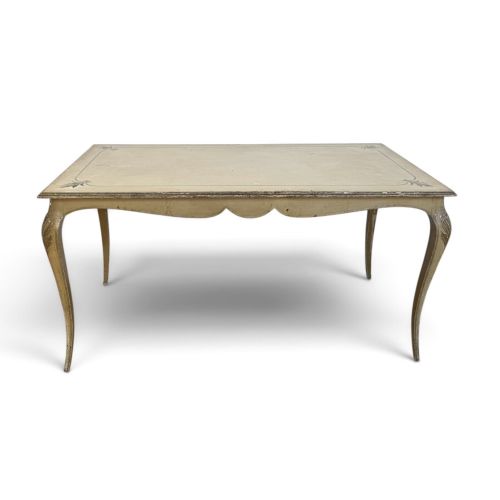
A rococo revival dining table draws upon nineteenth-century Victorian and French Louis XV styles, appearing in forms designated as dining tables, breakfast tables, or large centre tables. These pieces emerge predominantly from the nineteenth century, including specific dates from the 1850s and 1860s, alongside later examples from the Edwardian era and the 1920s.
The silhouettes display shaped oval tops, circular tops, and elaborate carved walnut or rosewood frameworks. Many items serve a dual purpose as both a dining surface and a prominent centre table within a room.
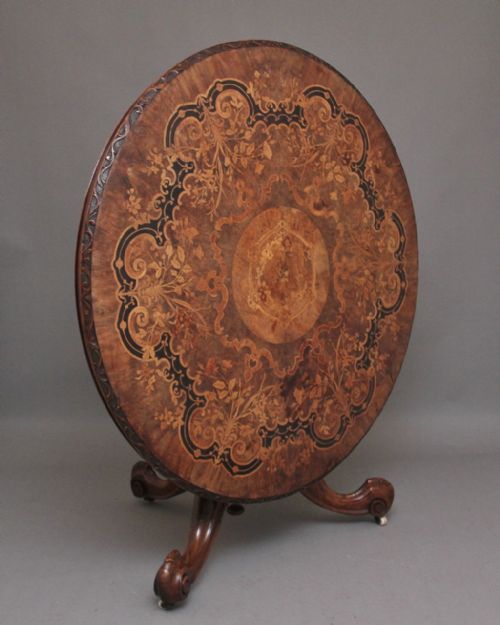
Makers and manufacturers of the period combined these flowing shapes with detailed marquetry inlay and painted finishes, particularly in French-influenced pieces. The resulting furniture balances heavy timber construction with the lighter, asymmetric decorative vocabulary characteristic of the revival movement.
Assessing quality in construction and detail
Quality rests in the depth and precision of the carved woodwork and the selection of timber veneers. Superior examples display crisp, hand-carved floral and scroll motifs rather than shallow or mechanical pressing.
The choice of materials also dictates the standard of the piece, with burr walnut and figured rosewood veneers demanding greater skill in matching and laying. The integration of marquetry work reveals the precision applied by the maker.
Listings feature rosewood, walnut, and burr walnut timbers across nineteenth-century and early twentieth-century periods.
The Rococo Revival Dining Table Glossary
- Marquetry
- Decorative veneer work formed by fitting together small pieces of wood, shell, or other materials to create pictorial or geometric patterns on a surface. This technique requires exact cutting and placement by skilled artisans.
- Centre table
- A freestanding table designed to be viewed from all sides and placed in the middle of a room rather than against a wall. These items often function as dining surfaces or display areas.
- Burr walnut
- Timber taken from a tree growth or burl, yielding swirling, highly figured grain patterns highly prized for tabletops. Cabinet makers slice this wood into thin veneers for decorative impact.
- Rosewood
- A heavy, durable timber featuring dark grain streaks, commonly utilised in nineteenth-century furniture. It polishes to a deep lustre that highlights the natural figuring of the wood.
- Louis XV Revival
- A nineteenth-century design style emulating the curved lines, asymmetry, and natural motifs of the French eighteenth century. Furniture from this movement often incorporates intricate carving and gilt details.
Rococo Revival Dining Table: Frequently Asked Questions
How do I date a rococo revival dining table?
Dating relies on examining the timber species, construction methods, and stylistic indicators present in the carved woodwork. Nineteenth-century examples often employ solid rosewood or walnut frames paired with hand-cut veneers.
Later interpretations from the Edwardian period or the 1920s may show different assembly techniques or lighter painted and gilded finishes. Comparing the specific curve of the cabriole legs and the style of the carving helps narrow the decade of production.
Can I use a centre table for daily dining?
Many nineteenth-century centre tables were constructed with robust timbers like rosewood and walnut, making them structurally capable of daily use. Their generous proportions provide ample surface area for meals.
Care should be taken with polished wood surfaces and delicate marquetry inlay to prevent heat marks or scratches. Using protective table pads preserves the antique finish during everyday dining.
What is the difference between a breakfast table and a dining table?
A breakfast table historically referred to a smaller, often round or tilt-top table used for informal morning meals or smaller rooms. Dining tables generally offered larger fixed surfaces designed to seat multiple guests for formal dinners.
In revival pieces, the terminology often overlaps, with large circular tables described interchangeably depending on their proportions and intended domestic placement.
How do I maintain burr walnut veneer?
Burr walnut requires gentle cleaning with a soft, dry cloth to remove dust without abrasive action. Avoiding direct sunlight and maintaining stable room humidity prevents the timber from drying out or splitting.
Periodic application of suitable furniture wax helps nourish the wood and maintain its natural lustre. Excessive moisture should be kept away from the veneered surfaces at all times.