






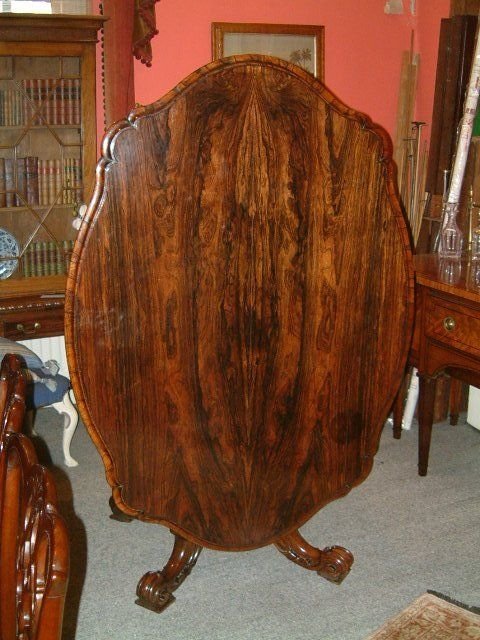
Serpentine Breakfast Table
A serpentine breakfast table is a handsome Victorian tilt-top piece defined by its undulating edge, built to anchor a drawing room or parlour.
Serpentine Breakfast Table
When you search for a serpentine breakfast table, you are looking at substantial Victorian pedestal furniture designed for flexible use in the home. These items typically function as centre tables, dining tables, or tilt-top tables, moving easily from display to dining as required.
The versions you are most likely to meet on this page hail from the nineteenth century, spanning decades such as the eighteen fifties, sixties, and seventies. They frequently appear under alternate nineteenth-century names including loo tables or centre tables, sharing the same grand proportions and curved perimeters.
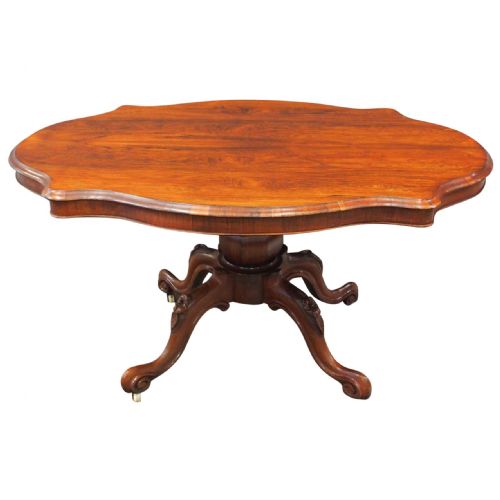
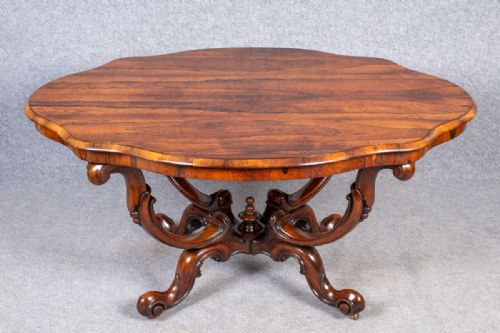
Makers and workshops of the Victorian era constructed these pieces with distinct shaped or serpentine tops, often supported by a central pillar and pedestal base. The physical evidence shows that buyers encounter varied timber choices and pedestal configurations within this distinct Victorian style.
Materials and construction
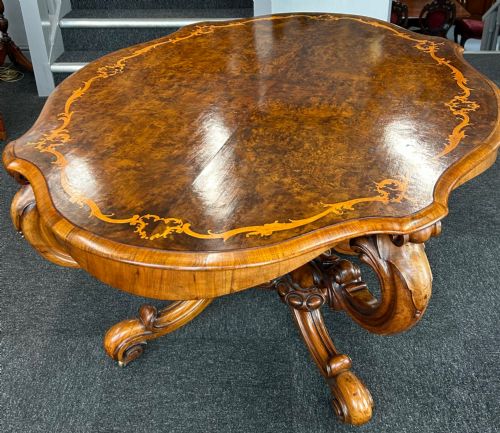
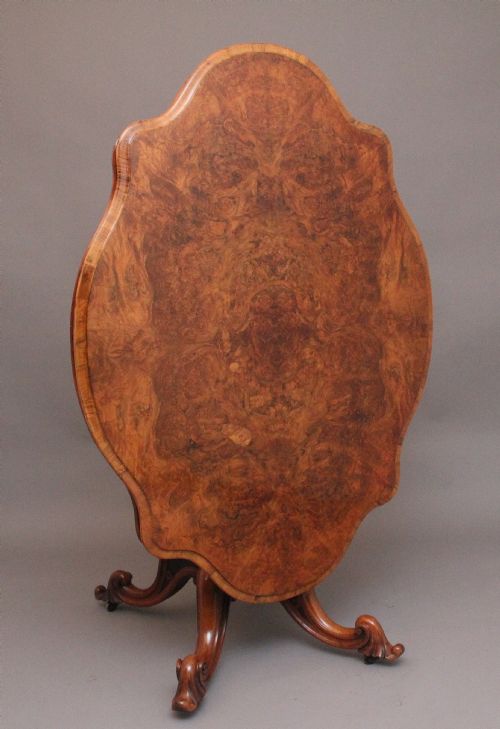
Cabinet makers of the Victorian period built these tables using dense hardwoods like mahogany and rosewood alongside highly figured burr walnut veneers. They selected these timbers for their rich grain patterns, applying veneers carefully over stable secondary woods to achieve a decorative surface on the generous top.
Many examples incorporate fruitwood inlay or contrasting calamander details to accentuate the curved outlines of the shaped top. The tilt-top mechanism allows the heavy surface to pivot upright on its pedestal, combining practical storage with intricate pedestal joinery.
Some tables double as card tables, proving our ancestors took their parlour games very seriously indeed.
Judging the range
The distinction between standard examples and the finest work lies in the choice of timber veneer and the execution of the shaped perimeter. Tables featuring exceptionally figured burr walnut or detailed fruitwood inlay demonstrate a higher level of workshop ambition.
The stability of the tilt-top mechanism and the crispness of the pedestal carving further separate the everyday pieces from those of superior output. Master cabinet makers invested greater care in balancing the heavy top against its central pillar and supportive base.
Edwards & Roberts
The Serpentine Breakfast Table Glossary
- Serpentine
- Having a wavy or undulating edge that curves inward and outward in gentle sweeps. This contour requires precise woodworking along the table perimeter.
- Tilt-top
- A hinged table surface that pivots from horizontal to vertical for storage against a wall. This mechanism was common in nineteenth-century drawing rooms.
- Loo table
- A Victorian round or shaped table originally used for the popular card game loo. These pieces doubled as breakfast or centre tables when not in play.
- Burr walnut
- Timber taken from a tree growth featuring intricate, swirling grain patterns. Cabinet makers prized this wood for high-status table tops.
- Calamander
- A dense, heavily figured exotic hardwood from South Asia with dark brown and fawn stripes. It appears in finer Victorian inlay work.
Serpentine Breakfast Table: Frequently Asked Questions
How do I use one today?
These tables function well as central display pieces in large hallways or as occasional dining tables in spacious rooms. Their tilt-top design also permits compact storage against a wall when floor space is required.
The sturdy pedestal construction ensures they remain practical for daily use while retaining their distinct Victorian character.
Are these tables heavy to tilt?
The substantial timber tops and solid pedestals make these tables reasonably heavy when operating the tilt-top mechanism. The pivot system is designed to bear the weight securely while allowing the surface to lock into place.
Care is required when pivoting the heavy mahogany or rosewood surfaces to protect the surrounding floor and the mechanism itself.
How can I tell the period?
Nineteenth-century pieces display characteristic Victorian construction methods, timber selections, and pedestal designs. The evidence points to specific decades like the eighteen fifties and sixties through distinct stylistic traits.
Examining the underlying woods, veneer thickness, and joinery style helps confirm the nineteenth-century origin of the table.