

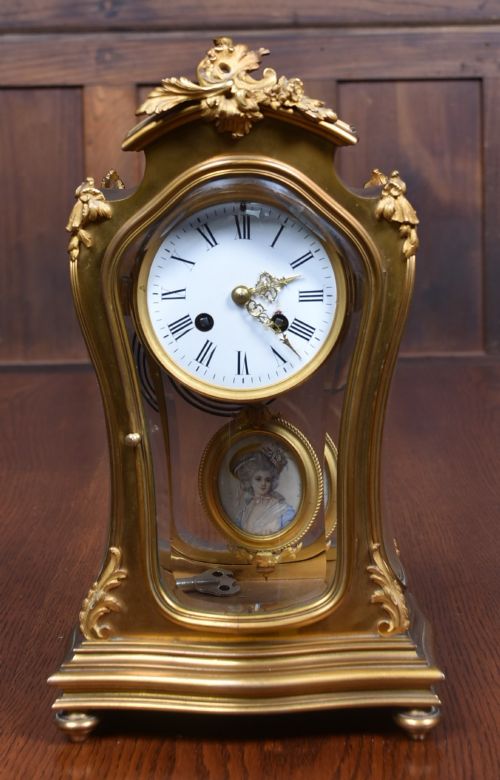
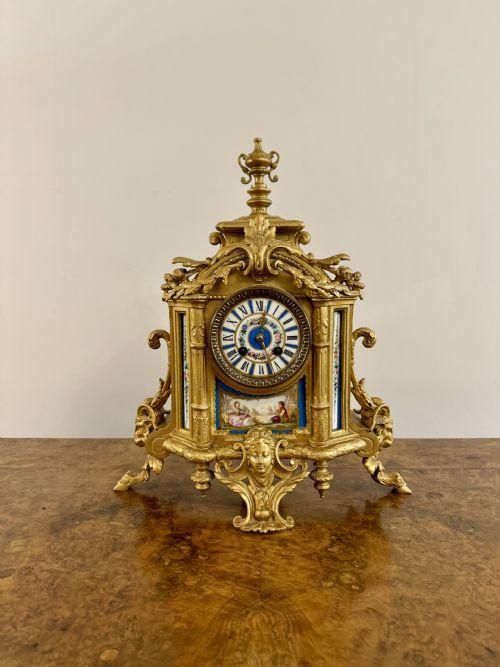


Rococo Porcelain Clock
These ornate timepieces bring together hand-painted porcelain and gilt metal in exuberant asymmetrical forms.
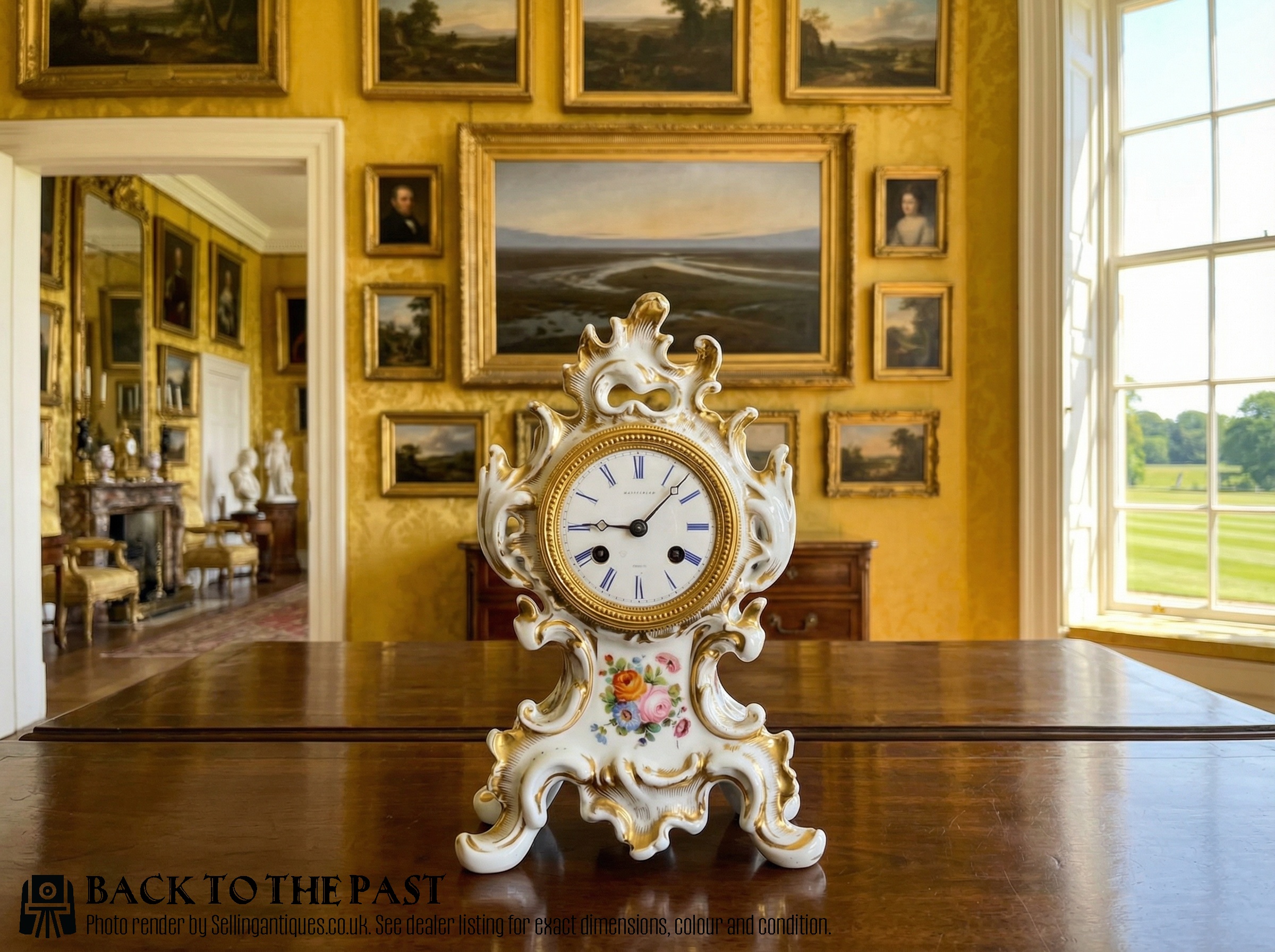
Rococo Porcelain Clock
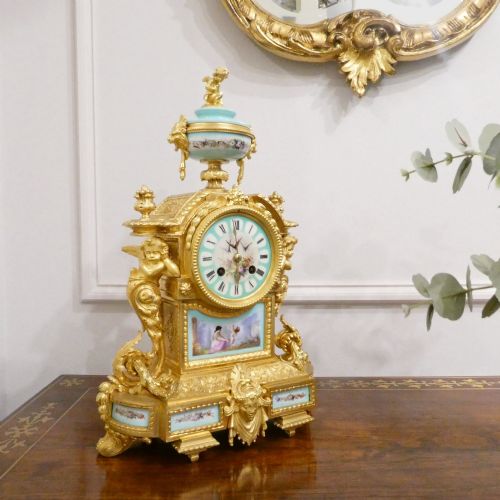
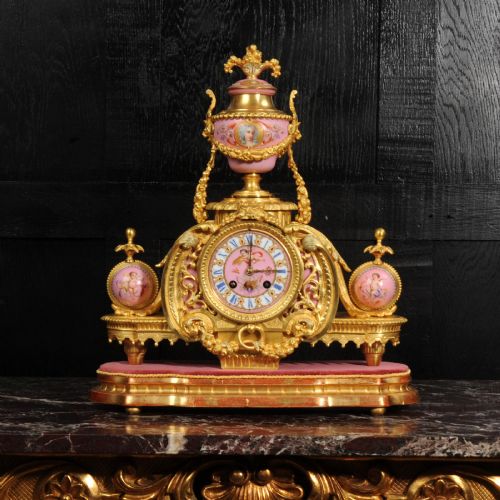
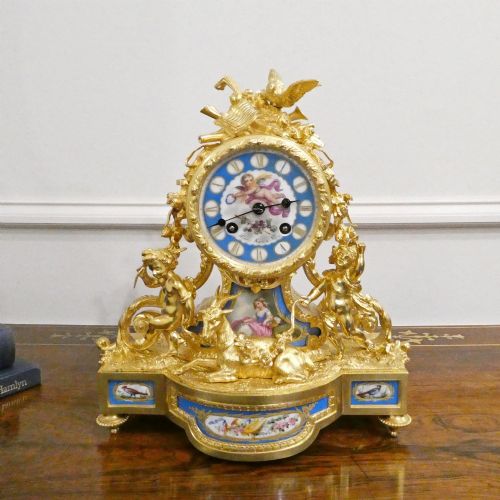
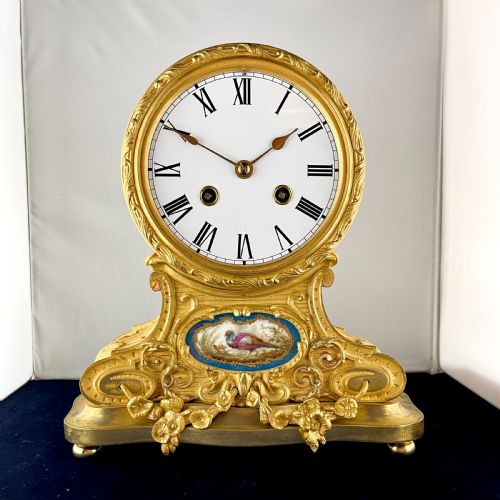
A rococo porcelain clock unites the soft modelling of ceramic bodies with the lively curves of metal mounts, originating predominantly from nineteenth-century French workshops. The most common examples on this page are mantel clocks and garniture sets featuring Sèvres or Meissen style porcelain painted with floral panels and pastoral scenes.
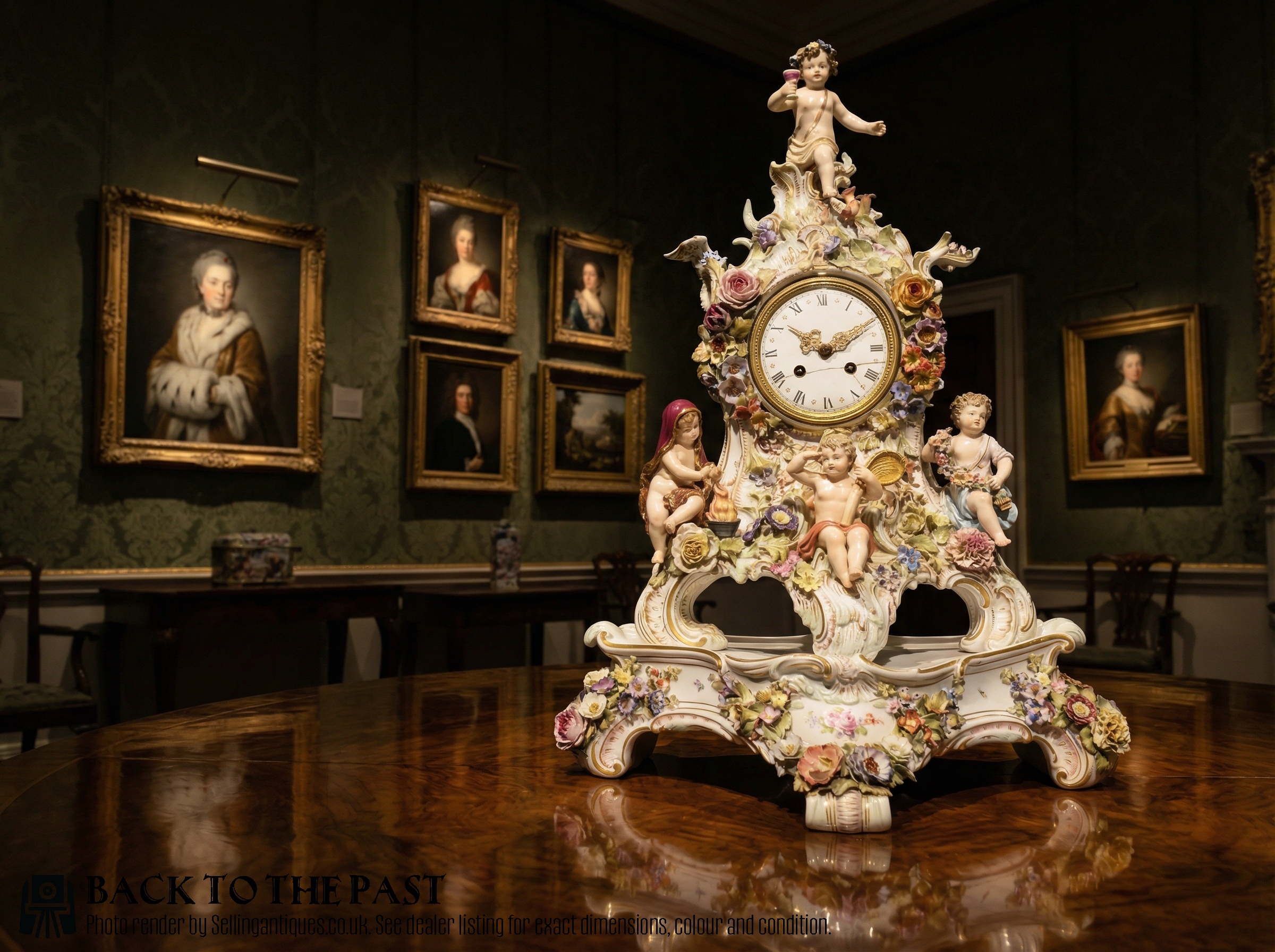
Makers housed these movements in cases shaped by French Rococo Revival and Louis XV styles, where scrolls, foliage, and naturalistic asymmetry dominate. Buyers will also encounter variants incorporating Chinese export porcelain or Meissen figural groups mounted in ormolu frames.
The objects serve as decorative centerpieces, often accompanied by matching candelabra in complete garniture sets designed for nineteenth-century drawing rooms. Their survival relies on the durability of thick gilt bronze frames supporting delicate ceramic panels.
Materials and Construction
Foundries cast mounts in bronze or brass before applying fire-gilding known as ormolu, creating a durable golden surface that complements the glazed porcelain. Ceramic elements were shaped by hand or in moulds, then painted with enamel colours and fired multiple times to fix the pigments.
Clockmakers fitted mechanical brass movements driven by springs or weights, often sourcing these from specialist Parisian workshops to integrate behind enamel dials. The porcelain and metal components were secured with threaded pins and nuts hidden within the case interior.
Listings feature porcelain from Sèvres, Meissen, KPM Berlin, and Imari palettes mounted in gilt bronze, brass, and ormolu.
Quality Variations
The distinction between standard production pieces and masterworks rests on the crispness of the bronze chasing and the delicacy of the porcelain painting. Finely chiselled mounts display deep relief work with sharp undercutting, whereas simpler items rely on shallow cast definition and plain surfaces.
Maker signatures on the movement backplate or porcelain dial elevate an example, particularly when associated with renowned Parisian clockmakers or porcelain factories. Hand-painted panels featuring detailed figural scenes command greater attention than transfer-printed or plain coloured grounds.
Achille Brocot·Henry Marc·Japy Frères·PH Mourey·Le Roy & Fils·Vincenti of Paris·Samuel Marti
The Rococo Porcelain Clock Glossary
- Ormolu
- Gilded bronze produced through a mercury amalgamation process or electroplating, providing a rich golden finish on nineteenth-century metal mounts. This technique creates a durable surface that resists tarnishing over decades.
- Garniture
- A set of matching decorative objects consisting of a central clock flanked by two matching vases or candelabra. Such ensembles were placed on mantelpieces to create a balanced symmetrical display.
- Drumhead
- A circular clock case mounted on a stepped or scrolling base, resembling the shape of a drum. This form gained popularity during the nineteenth century for smaller desk and mantel models.
- Chinoiserie
- European artistic style reflecting Chinese motifs and decorative techniques, often applied to porcelain bodies mounted in French metalwork. This aesthetic blends Asian ceramics with Western rococo frames.
- Silk suspension
- A traditional clock mechanism where the pendulum hangs from a thin ribbon of woven silk rather than a steel spring. This early suspension type appears in eighteenth and early nineteenth-century movements.
Rococo Porcelain Clock: Frequently Asked Questions
How do I wind the clock?
Use the matching winding key on the dial arbor, turning it gently until you feel resistance from the mainspring.
Avoid over-winding the mechanism, as this can strain the internal steel springs and disrupt the beat of the pendulum.
Why is the clock losing time?
Clocks often run slow due to accumulated dust in the brass gear train or changes in room temperature affecting the metal pendulum.
Adjustment can be made using the small nut on the pendulum rod to raise or lower the bob until accurate timekeeping returns.
Can these clocks run daily?
These mechanical movements are designed for regular running provided they receive periodic professional cleaning and lubrication every few years.
Ensure the clock rests on a completely level surface so the pendulum swings evenly without catching on the case interior.