
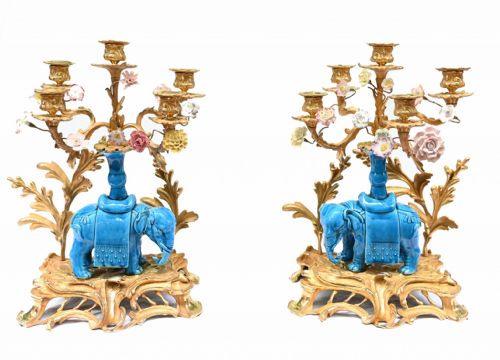


Rococo Porcelain Candelabra
These rococo porcelain candelabra bring elaborate sculptural figures and scrolling mounts together for grand interior lighting.
Rococo Porcelain Candelabra
When you search for rococo porcelain candelabra, you encounter elaborate figural and floral lighting pieces created to dominate a mantelpiece or side table. The examples listed here span the eighteenth and nineteenth centuries, taking forms such as pairs of branch-holders, clock garnitures, and candlesticks.
You are most likely to meet nineteenth-century interpretations, including pieces produced by continental European factories like Meissen, Sitzendorf, and Dresden in the Rococo Revival style. These often combine hand-modelled porcelain figures or birds with scrolling ormolu and gilt-bronze mounts.
The selection ranges from simple matched pairs featuring musicians and gardeners to large, multi-arm centrepieces accompanied by matching clocks. Each object integrates ceramic bodywork with metal branch systems designed to hold multiple candles.
What varies in quality
The integration between the ceramic body and the metal mounts dictates the overall success of the piece. Superior items possess heavy, well-chased ormolu frames that complement the porcelain rather than overpowering it.
Listings feature hard-paste porcelain and ormolu mounts across nineteenth-century German and French pieces.
Meissen·Sitzendorf·Dresden·Samson·Helena Wolfsohn
The Rococo Porcelain Candelabra Glossary
- Ormolu
- A gilt-bronze technique utilising mercury gilding to produce a rich gold-coloured finish on decorative metal mounts. This material appears frequently on the bases and arms supporting the porcelain.
- Garniture
- A set of three or more decorative objects designed to be displayed together, typically consisting of a central clock flanked by candelabra or vases. These sets anchor mantelpiece arrangements.
- Hard-paste porcelain
- A dense, durable ceramic composed of kaolin and petuntse, fired at very high temperatures. European factories adopted this formula to produce crisp figural sculptures.
- Rococo Revival
- A nineteenth-century design movement that revives the asymmetric scrolls, C-curves, and naturalistic motifs of the eighteenth-century French style. This aesthetic defines the curved frames of the pieces here.
- Polychrome
- The application of multiple enamel colours to the surface of the porcelain before firing. It brings life to the garments of the figures and the surrounding floral elements.
Rococo Porcelain Candelabra: Frequently Asked Questions
How do I clean porcelain candelabra?
Dust the surfaces gently with a soft, dry brush to prevent dirt from settling into the intricate floral appliques and painted details. Avoid harsh liquid cleaners that might damage fragile enamel work or dull the gilt metal mounts.
Take care around the joints where porcelain meets ormolu to avoid loosening the adhesive or mechanical fixings holding the branches in place. Professional advice should be sought if deeper cleaning of the metal components is required.
Were these used for actual lighting?
These pieces functioned primarily as decorative showpieces for drawing rooms and formal dining spaces during the eighteenth and nineteenth centuries. While they held candles, the delicate porcelain arms and figural attachments meant actual use was often secondary to their visual impact.
Lighting candles created smoke and heat that could discolour the hand-painted surfaces over time. Consequently, many survived with minimal wax residue, having served mainly as mantelpiece ornaments.
What is a clock garniture set?
A clock garniture is a matching ensemble comprising a central mantel clock accompanied by two side pieces, such as candelabra or vases. These sets were designed to create a balanced, symmetrical display across a fireplace mantel.
The pieces in a garniture share matching decorative motifs, materials, and stylistic details, ensuring a cohesive appearance. The listings here include several examples of these coordinated sets.
How do I spot nineteenth-century copies?
Examine the quality of the hand-painting on the porcelain and the crispness of the casting in the ormolu mounts. Earlier nineteenth-century pieces often display finer detail in the facial expressions and floral modeling than later mass-produced alternatives.
Check the base for factory marks and the condition of the ceramic paste under magnification. Familiarity with the specific output of factories like Meissen and Sitzendorf helps distinguish authentic period production.