



Gilt Porcelain Candelabra
These gilt porcelain candelabra combine European ceramics with cast bronze mounts to illuminate grand interiors.
Gilt Porcelain Candelabra
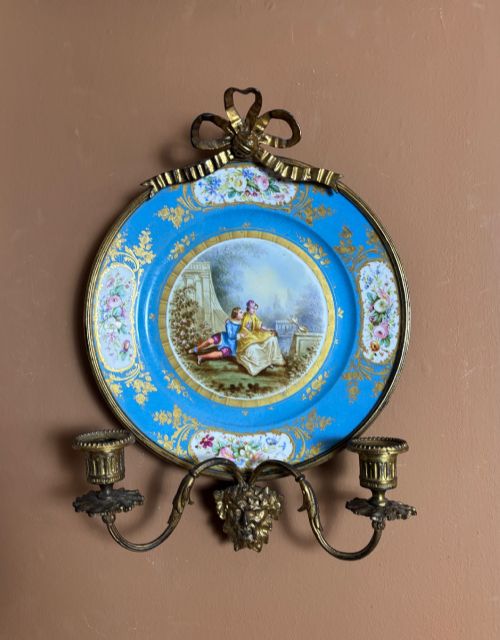
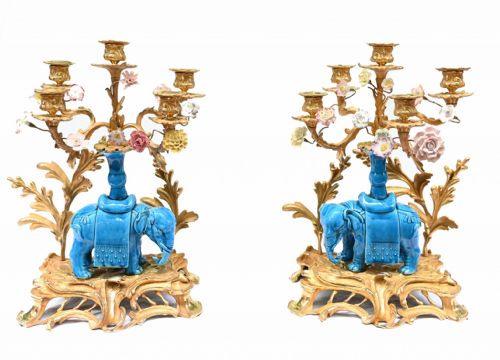
Gilt porcelain candelabra unite glazed ceramic bodies with metallic branches, taking forms that range from paired candelabras to elaborate clock garnitures and wall sconces. The pieces originate primarily from French, German and English traditions across the eighteenth and nineteenth centuries.
French Sevres style and Rococo Revival examples dominate the selection, often featuring cobalt blue porcelain or white bodies decorated with enamel and birds. Makers such as Meissen and Samson also appear, alongside Chinese porcelain elements mounted in European bronze.
Buyers will encounter single wall lights alongside grand pairs designed for mantelpieces, frequently accompanied by matching mantel clocks. The physical presence combines the translucent quality of porcelain with heavy cast metal scrollwork.
What varies in quality
Quality rests in the crispness of the bronze or ormolu chasing and the delicacy of the hand-painted porcelain decoration. Finer examples display deeply sculpted metal foliage and carefully detailed figures or birds integrated seamlessly with the ceramic base.
The weight and gauge of the metal mounts dictate the stability and overall substance of the piece. Superior items maintain precise alignment between the porcelain sections and the supporting metal framework without visible distortion.
Listings feature nineteenth-century French and German workshops, incorporating Meissen porcelain alongside Sevres style ormolu mounts.
Sevres·Meissen·Samson·Derby
The Gilt Porcelain Candelabra Glossary
- Ormolu
- A technique of applying finely ground high-carat gold to an bronze base using a mercury amalgam. This creates a durable, warm metallic finish seen on the mounts of these pieces.
- Bleu de Roi
- A deep, rich cobalt blue ceramic glaze developed at the Sevres pottery. It provides a striking dark ground for gilt decoration.
- Clock garniture
- A set comprising a central mantel clock accompanied by matching side pieces such as candelabra or urns. They were designed to create a balanced display on a fireplace.
- Rococo Revival
- A nineteenth-century design style drawing on eighteenth-century French motifs. It is characterised by asymmetrical scrollwork, C-scrolls and naturalistic floral forms.
- Imari
- A style of Japanese porcelain featuring underglaze cobalt blue and iron red with added gilt highlights. These ceramics were frequently imported and mounted in European metalwork.
Gilt Porcelain Candelabra: Frequently Asked Questions
What are gilt porcelain candelabra?
These decorative lighting pieces combine ceramic figures or vases with metal branches designed to hold candles.
They emerged as status objects for European drawing rooms and dining tables during the eighteenth and nineteenth centuries.
How were clock garnitures used?
Clock garnitures were placed on mantelpieces with the clock in the centre and the matching candelabra flanking it.
This arrangement created a symmetrical display that united timekeeping with functional illumination.
How do I identify French nineteenth-century styles?
French nineteenth-century pieces often adopt Rococo Revival or Sevres styles with heavy ormolu mounts and painted ceramic panels.
Look for cast bronze scrollwork and enamelled details that mimic earlier royal workshop output.
Can these candelabra still hold candles?
Most pieces retain their original metal drip pans and nozzle sockets designed to accommodate standard taper candles.
Care should be taken with wax drips to protect the antique gilt surfaces and painted porcelain.