


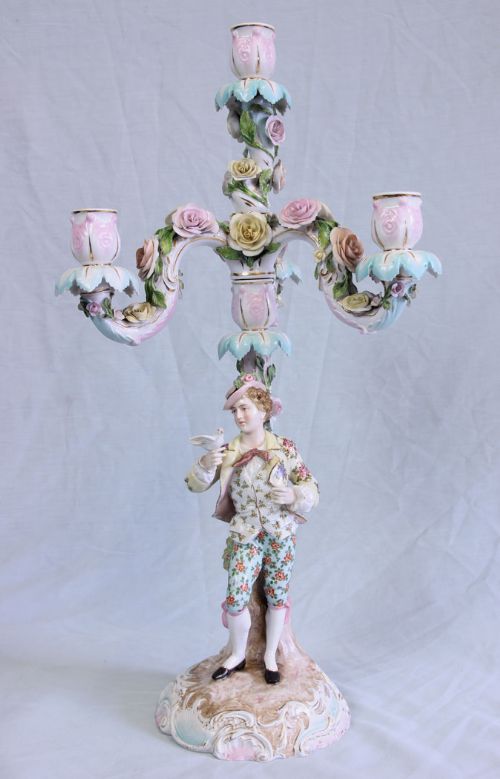


Antique Meissen Candelabra
These antique Meissen candelabra bring elaborate porcelain figures and gilded metalwork together for grand table settings.
Antique Meissen Candelabra
When you search for antique meissen candelabra, you are looking at ornate lighting fixtures formed from hard-paste porcelain and mounted in gilt metal or ormolu. The pieces on this page span the eighteenth and nineteenth centuries, capturing the enduring popularity of Rococo Revival and French Chateau aesthetics.
You are most likely to meet pairs featuring figural groups, such as musicians or birds, intertwined with branch-like candle arms. These works often form part of larger clock garnitures or stand alone as sculptural table centrepieces.
The regional origins trace back to German workshops, alongside Dresden pieces decorated in similar palettes. Buyers seek these candelabra for their sculptural presence and the intricate detail of their enamel painting.
How they were made
The porcelain elements are integrated with gilt bronze or ormolu mounts that form the structural bases and branch arms. Metalworkers cast and gilt these mounts to complement the curves of the Rococo Revival style, securing the porcelain components with pins and screws.
Antique Meissen Candelabra Retail Price Guide 2026
Typical asking prices for meissen candelabra among the pieces listed under this phrase on Sellingantiques today, from the lower quarter to the upper quarter. They describe what is for sale here now, not the wider market.
Listings feature hard-paste porcelain and ormolu across the nineteenth century, including Rococo Revival and French Chateau aesthetic influences.
What varies in quality
The distinction between tiers rests upon the crispness of the modelling and the finesse of the enamel painting. Superior examples exhibit sharply defined facial expressions, naturalistic feather or foliage details, and precise hand-gilding that does not obscure the porcelain beneath.
The integration between the ceramic body and the ormolu mountings defines the overall success of the piece. Top-tier works align the metal casting seamlessly with the porcelain contours, whereas lesser examples show clumsy joins or heavier, less refined metalwork.
Meissen·Helena Wolfsohn·Dresden
The Antique Meissen Candelabra Glossary
- Hard-paste porcelain
- A durable ceramic composition fired at extreme temperatures, invented in Europe at the Meissen manufactory. It provides a bright white surface suited to enamel colours.
- Ormolu
- Finely ground high-carat gold applied to a bronze base using a mercury amalgamation process, or cast gilt brass. It provides a warm metallic contrast to the painted porcelain.
- Garniture
- A set of three or more matching decorative objects, typically comprising a clock flanked by candelabra or vases. These sets create a balanced display on a mantelpiece.
- Rococo Revival
- A nineteenth-century design movement resurrecting the asymmetric scrolls, C-scrolls, and naturalistic motifs of the eighteenth-century French court. This style heavily influences the mounts and branching arms of these candelabra.
- Enamel
- Vitrified glass paste fused to porcelain or metal surfaces during firing to create permanent colours. It allows for intricate floral patterns and skin tones on figural subjects.
Antique Meissen Candelabra: Frequently Asked Questions
What periods do these candelabra date from?
The pieces span the eighteenth and nineteenth centuries, with a strong concentration of nineteenth-century production utilising earlier stylistic models. Makers during the 1880s and 1890s frequently drew upon Rococo Revival designs.
Date attributions rely on factory marks, the character of the enamel painting, and the style of the ormolu mounts. Earlier eighteenth-century examples carry distinct nuances compared to their later nineteenth-century counterparts.
How were these candelabra used originally?
Wealthy households placed them on dining tables, sideboards, and mantelpieces to provide illumination during evening gatherings. Their reflective gilt bronze mounts and white porcelain surfaces amplified the candle flame.
Beyond illumination, they served as status symbols and decorative centrepieces, often matching clock garnitures to create a unified room scheme.
How do I live with antique candelabra?
Position them on stable surfaces away from high-traffic areas to protect the projecting porcelain floral elements and arms. Keep them out of direct sunlight to preserve the vibrancy of the enamel colours.
Dust them gently with a soft, dry brush rather than liquid cleaners, taking care around the gilt metal mounts and delicate painted details.
How do I distinguish Meissen from Dresden?
Meissen pieces originate from the pioneering state-owned German manufactory and often bear the crossed swords mark. Dresden serves as a broader stylistic and geographic descriptor for various decorating studios working in the region.
Pieces attributed to decorators like Helena Wolfsohn often feature distinct nineteenth-century collector marks alongside imitation Meissen signatures, reflecting the competitive market of the period.