
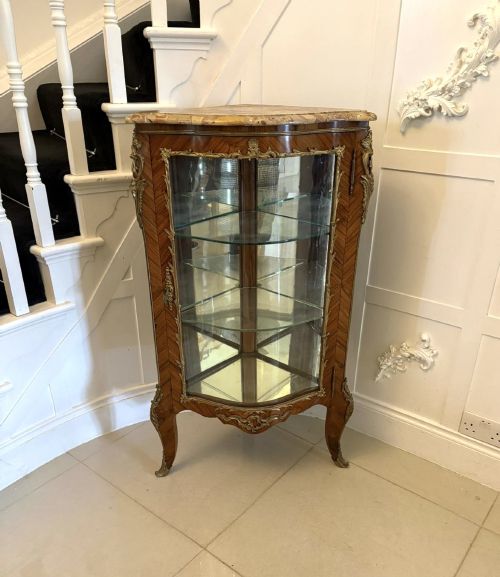
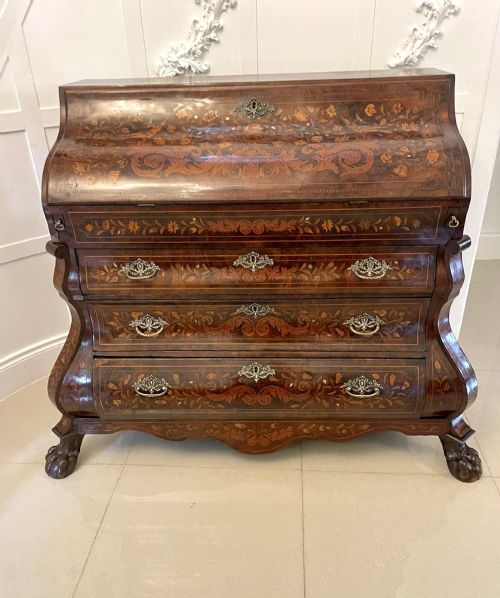
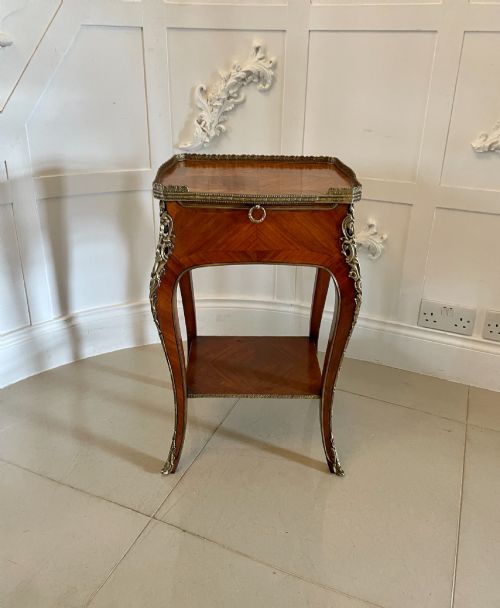

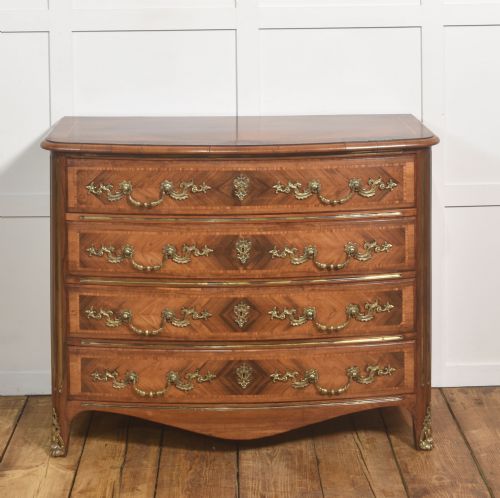
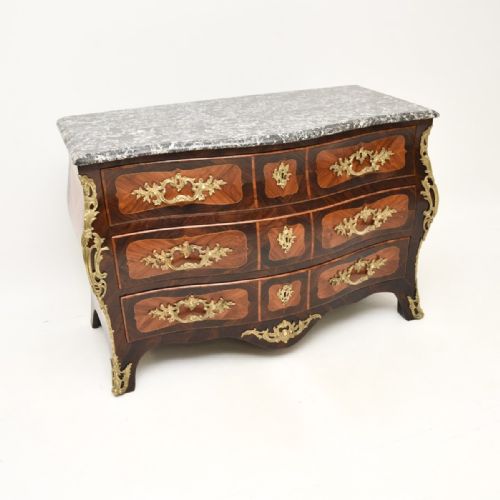
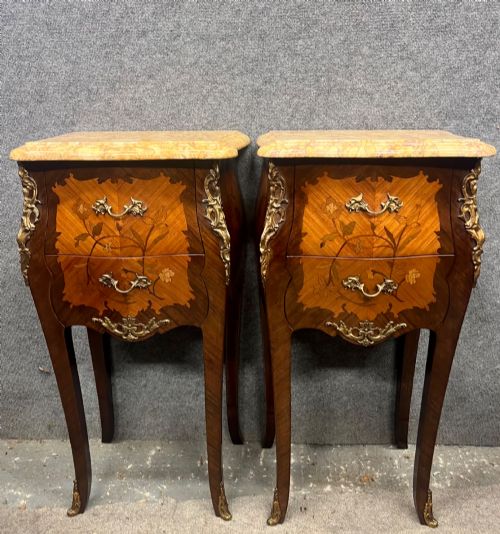
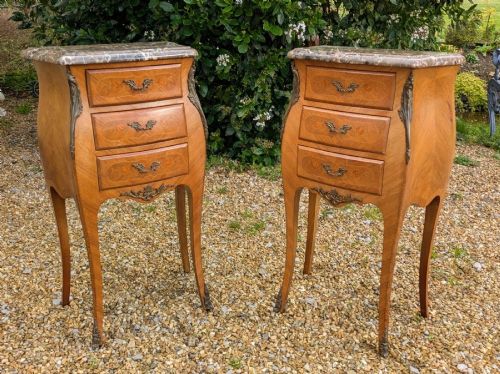
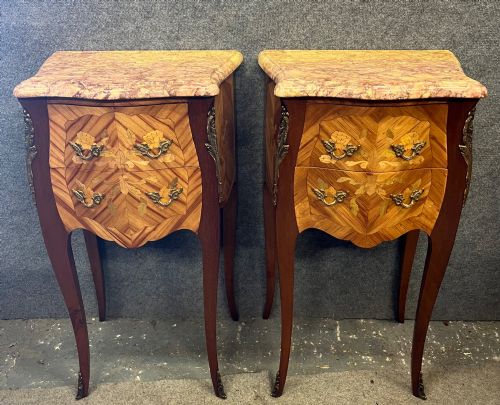
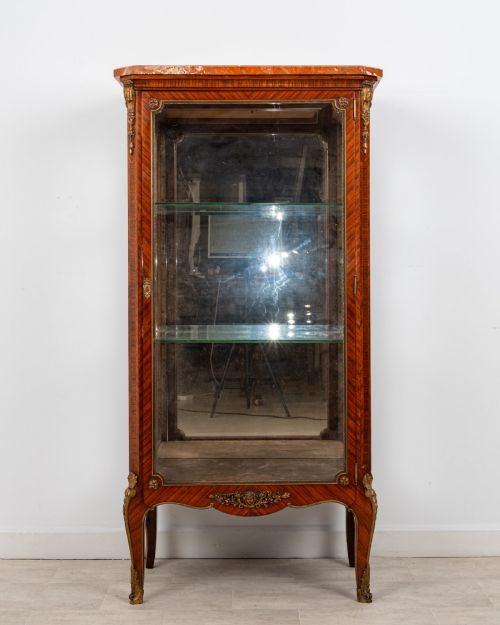
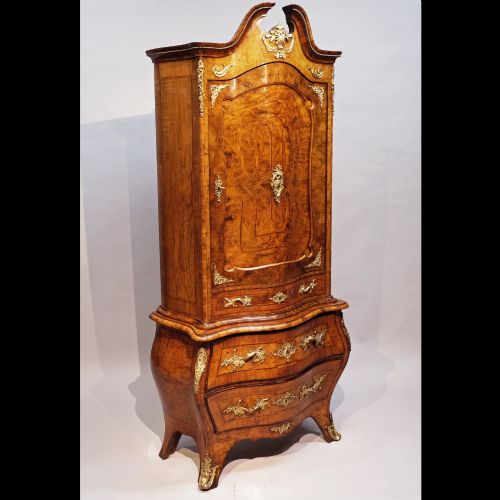
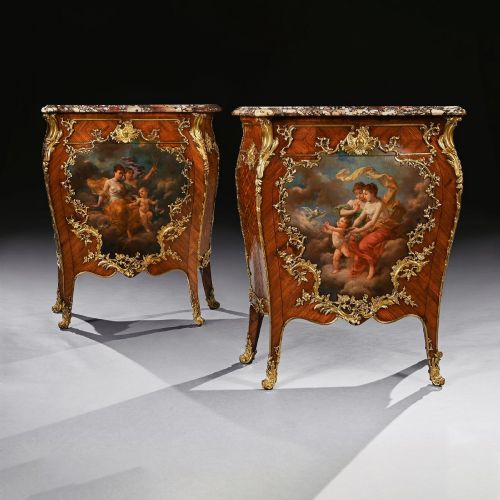
Rococo Marquetry Cabinet
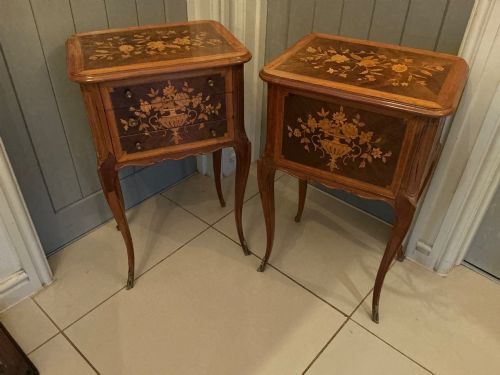
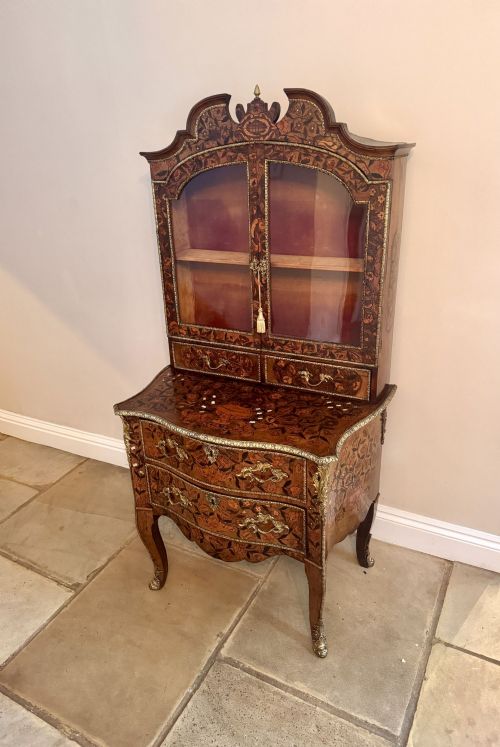
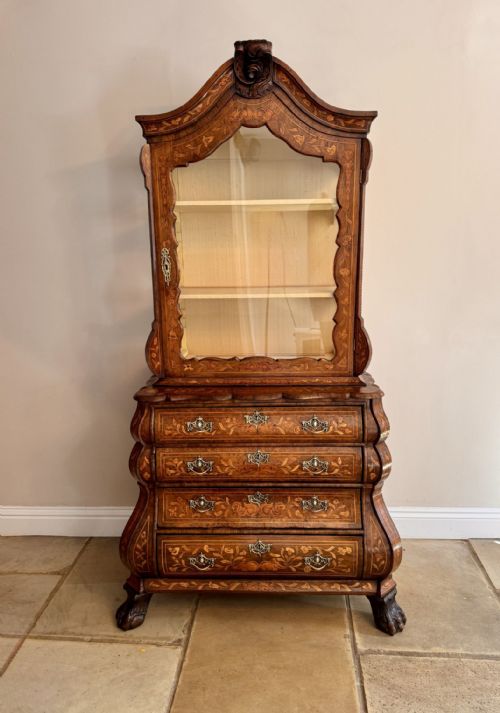
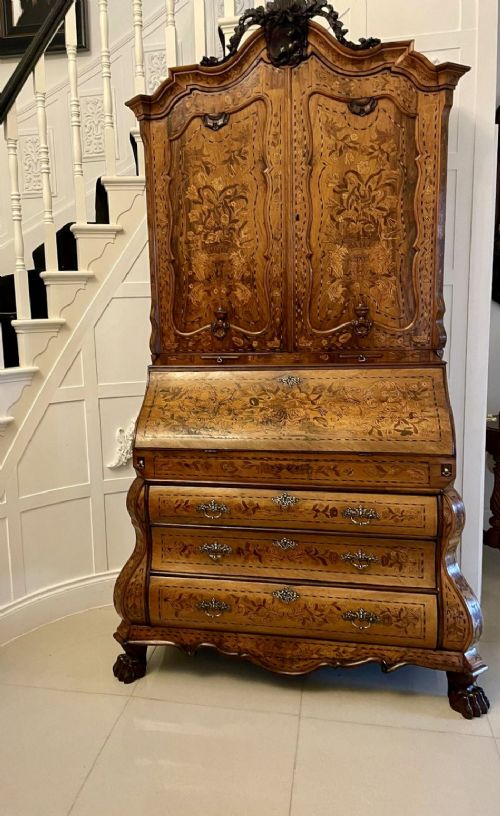
These rococo marquetry cabinet pieces bring sweeping floral veneers and serpentine forms together, offering an expressive centrepiece for a period interior.
Rococo Marquetry Cabinet
A rococo marquetry cabinet selection encompasses everything from grand bureau bookcases and bombé commodes to refined bedside tables and display vitrines. These forms originate primarily across eighteenth-century continental workshops and their nineteenth-century revival successors, showing strong French and Dutch influences.
Buyers most frequently meet nineteenth-century revival pieces finished with Louis XV styling, alongside authentic eighteenth-century Dutch walnut examples. Forms range from corner cupboards and serpentine chests of drawers to compact lamp tables and side cabinets.
How They Were Made
Craftsmen built structural carcasses from timbers such as walnut, oak, and mahogany before applying intricate floral and geometric veneers. Woods like kingwood, tulipwood, and burr walnut provided contrasting tones for detailed marquetry panels.
Gilded bronze or ormolu mounts were cast and chased to accentuate curved corners, feet, and cartouches, while polished marble slabs were fitted precisely to cabinet tops.
Materials documented across the pieces include marble, kingwood, ormolu, walnut, brass, glass, rosewood, and burr walnut.
What Varies in Quality
The refinement of the veneer work dictates much of the distinction, separating simple geometric patterns from complex, multi-timber floral compositions with shaded petals. Crispness in the casting and chiselling of the ormolu mounts reveals the hand of a more accomplished atelier.
Structural integrity in serpentine and bombé shapes relies on precise joinery that prevents warping in the curved wooden carcasses over centuries.
Jacques Bircklé·François Linke
The Rococo Marquetry Cabinet Glossary
- Marquetry
- The art of applying decorative pieces of veneer to a wooden structure to form intricate pictures or patterns. It relies on contrasting timbers like walnut, tulipwood, and kingwood.
- Ormolu
- Gilded bronze mounts applied to furniture for decorative accent and edge protection. It requires careful casting and hand-chiselling after removal from the mould.
- Bombé
- A swelling, outward-curving contour found on the sides and fronts of chests and cabinets. This silhouette demands advanced woodworking skill to maintain stability.
- Vernis Martin
- A type of simulated Japanese lacquer developed in France during the eighteenth century. It employs multiple layers of varnish to achieve a translucent, glossy finish often decorated with painted scenes.
Rococo Marquetry Cabinet: Frequently Asked Questions
What periods do these cabinets span?
The pieces available range from mid-eighteenth-century originals to nineteenth-century revival interpretations and early twentieth-century reproductions.
Eighteenth-century examples display period construction techniques, while later revivals replicate the sweeping Louis XV aesthetic using older styles of veneer and mount casting.
How do I care for marble tops?
Marble surfaces require gentle cleaning with warm water and a soft cloth to avoid scratching the polished finish. Acidic liquids should be kept away from the stone to prevent dulling.
Waxing the marble is generally unnecessary, but keeping the surface dry protects the underlying stone from staining over time.
Where were these pieces made?
Origins are predominantly continental, with notable examples coming from French and Dutch workshops.
Italian makers also contributed significant bureau bookcases and bombé furniture featuring complex marquetry.
How do I distinguish revival pieces from originals?
Examining the secondary timbers inside drawers and behind panels reveals clues regarding the age of manufacture. Tool marks, joint construction, and the ageing of the glues and veneers help date the piece.
Nineteenth-century revival items often use machine-cut elements or different construction methods compared to eighteenth-century joinery.