


Rococo Marble Pier Table
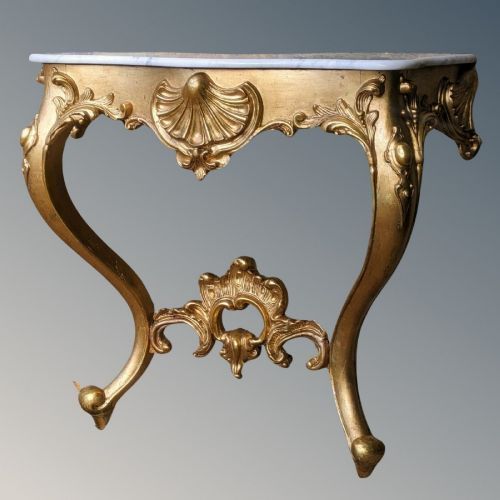
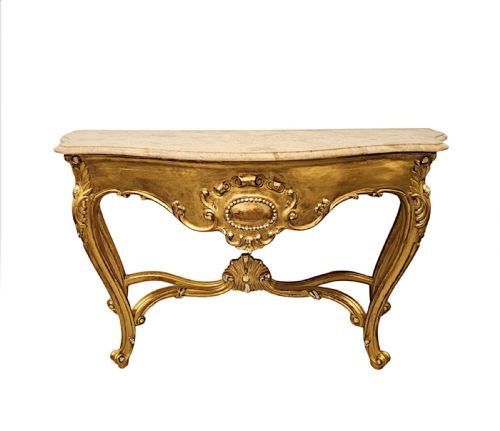
A rococo marble pier table brings dramatic architectural weight and fluid, asymmetrical carved decoration to a formal interior.
Rococo Marble Pier Table
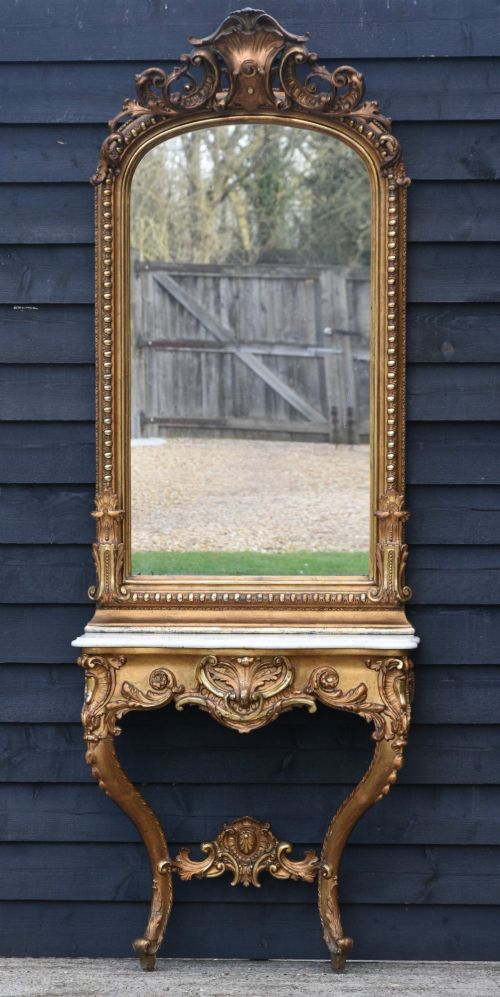
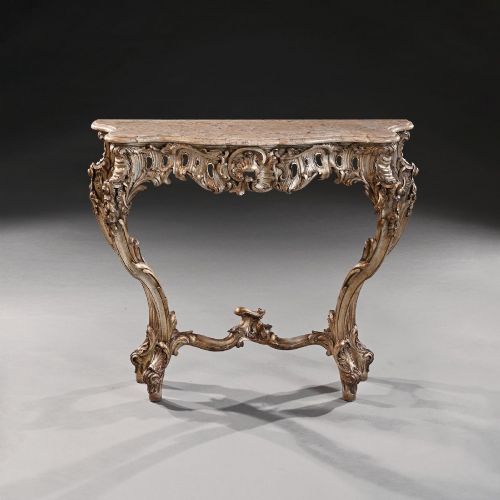
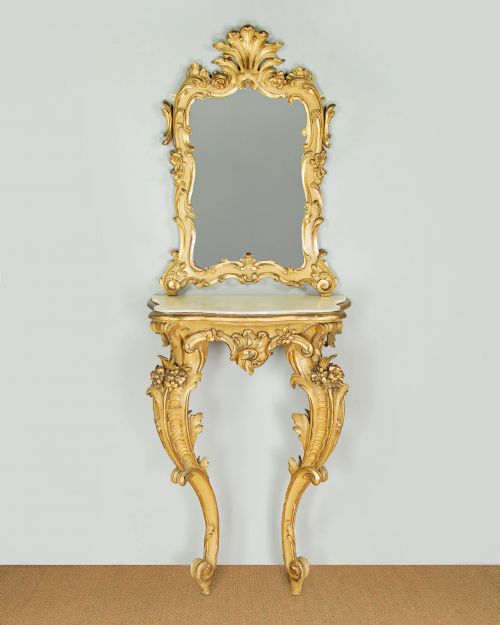
A rococo marble pier table sits against a wall, frequently positioned beneath a matching mirror or between windows in a grand reception room. These tables combine heavy stone surfaces with deeply carved wooden bases, following classical architectural proportions while embracing theatrical curves.
The selections encountered here span from authentic eighteenth-century examples to later revival pieces produced across the nineteenth and early twentieth centuries. French and Italian workshops dominate the origin points, applying regional interpretations to the scrolling foliage and serpentine contours characteristic of the style.
Buyers will find console tables, side tables, and occasional paired sets among the listed objects. The overarching design vocabulary relies on organic motifs, C-scrolls, and substantial stone slabs that anchor the elaborate framework beneath.
Materials and construction
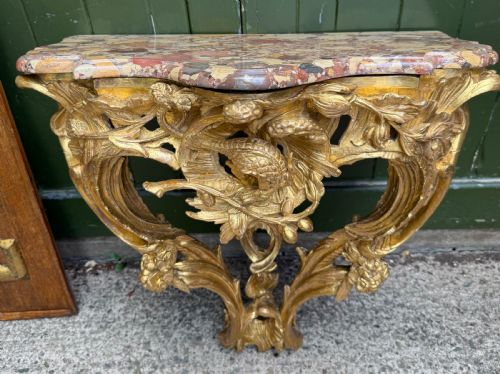
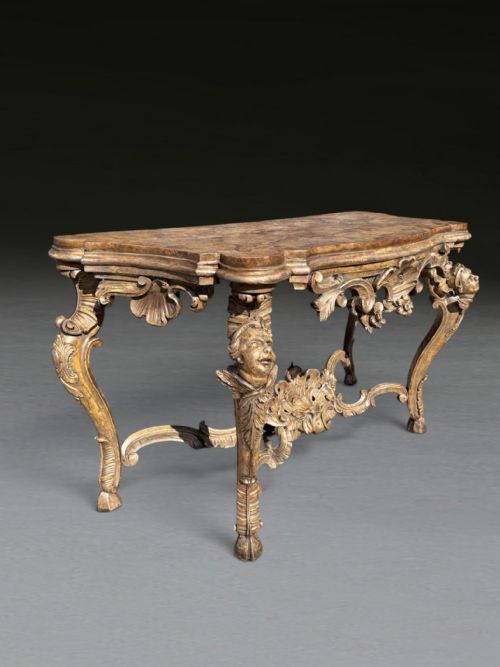
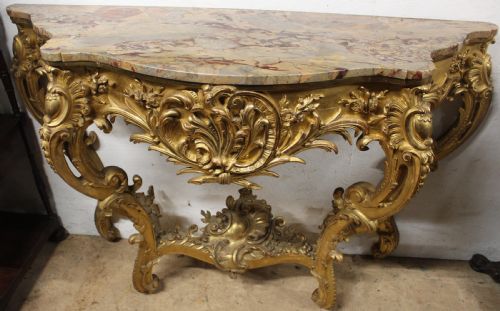
The structural framework relies on solid wood, principally walnut, oak, and pine, which artisans carved by hand to achieve high relief scrolls and asymmetrical flourishes. Giltwood and gesso surfaces received layers of gold leaf or paint, creating reflective metallic sheens designed to catch candlelight in period salons.
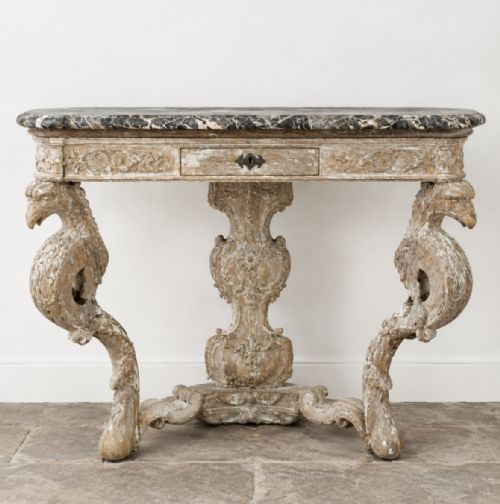
Heavy stone slabs form the upper surfaces, utilising varieties such as white Carrara and figured breche d'alep marble. Stonemasons shaped and polished these tops to follow the serpentine or shaped contours of the wooden aprons supporting them.
The inventory records multiple pairs of console tables alongside single console and mirror combinations.
Discerning quality in carved tables
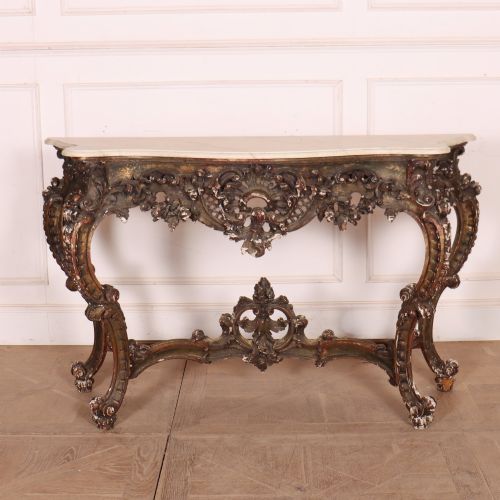
Depth and sharpness of the hand-carved wood separate superior examples from standard production pieces. The best work displays crisp undercut foliage and organic rhythm that flows continuously through the aprons and cabriole legs without stiffness.
The integration between the stone top and its wooden base dictates visual success. Thick, richly figured marble slabs fitted precisely to the shaped wooden rail indicate a higher tier of commission than thinner, plain replacement tops.
The Rococo Marble Pier Table Glossary
- Pier table
- A table designed to stand against a wall, typically between two windows. These pieces often anchor large vertical mirrors mounted directly above them.
- Giltwood
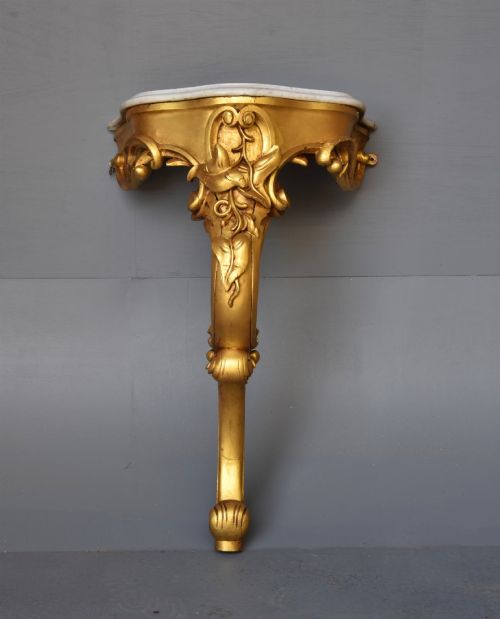
- Timber coated with gold leaf over a prepared gesso ground. This finish provides a bright metallic lustre characteristic of formal eighteenth and nineteenth-century furniture.
- Serpentine front
- A furniture front curving inward centrally and outward at the ends, or vice versa. This undulating line breaks up rigid rectangular shapes.
- Breche d'alep
- A decorative quarried marble featuring brecciated fragments in warm brown, cream, and ochre tones. It appears frequently on eighteenth-century French console tables.
- Cabriole leg
- A furniture leg featuring a double curve, typically swelling outward at the knee and tapering inward at the foot. The shape derives from animal limbs.
Rococo Marble Pier Table: Frequently Asked Questions
Where do you place a pier table?
These tables belong against a flat wall, historically positioned in the architectural pier space between two tall windows. Placing them beneath a matching wall mirror completes the traditional arrangement.
Because of their shallow depth, they occupy minimal floor space while providing a prominent surface for decorative objects or lighting.
Are these tables freestanding?
Pier tables rely on the wall for structural stability. Many historical examples feature only two front legs, requiring brackets or wall attachment to remain upright safely.
Some console or centre table variants incorporate four legs and stand independently in the room.
How do I distinguish eighteenth-century from revival pieces?
Eighteenth-century originals exhibit hand-carving techniques with tool marks specific to period joinery and natural patination on the gilded surfaces. Revival pieces from the nineteenth and early twentieth centuries often employ heavier gesso layers and machine-assisted preparation.
Examining the underside of the wooden frame and the geological cut of the marble helps clarify the manufacturing era.
What items sit on a marble top?
Historically, these surfaces held heavy bronze candelabra, porcelain vases, or decorative clocks that reflected light from the pier mirror above. The stone construction easily supports weighty ornaments without risk of warping.
Modern interiors often utilise the surface for sculptural lamps or collections of small decorative objects.