
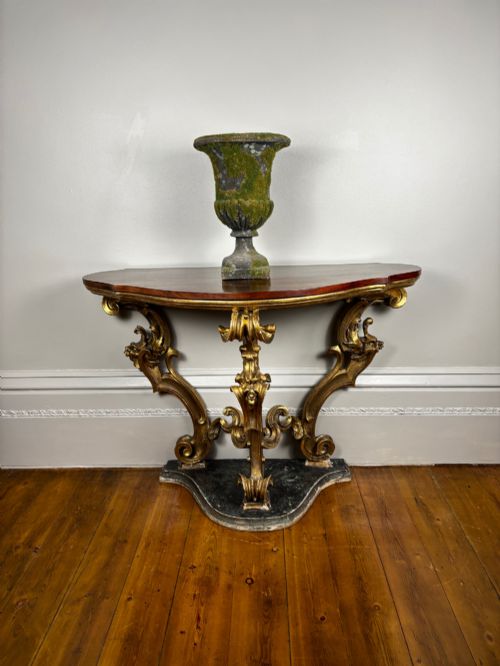
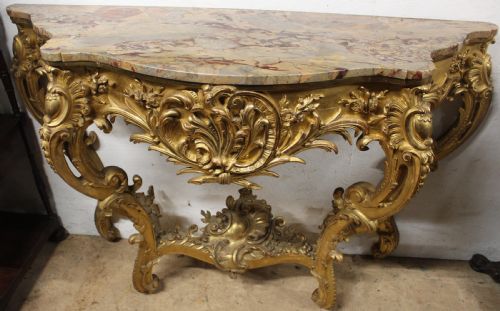
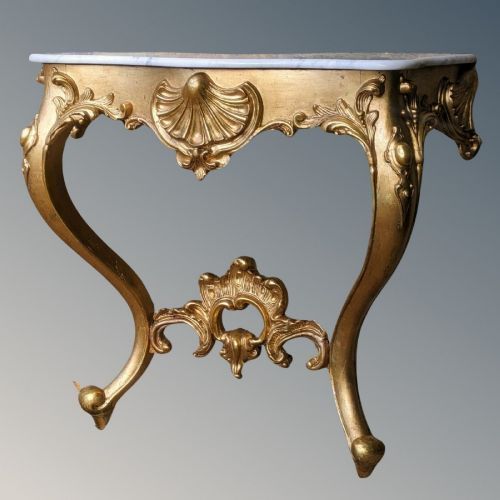
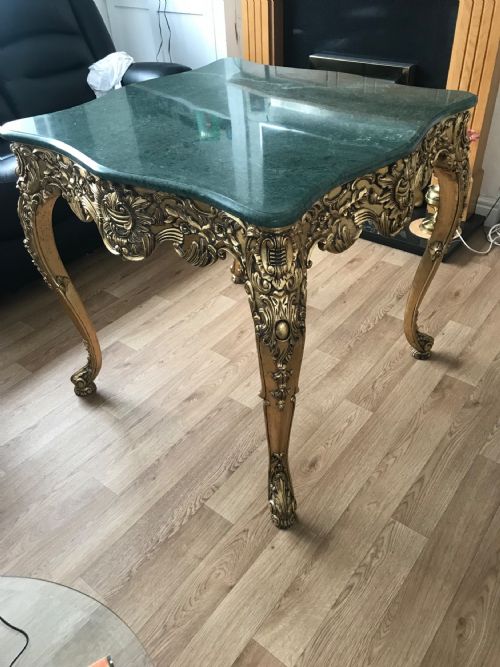


Rococo Giltwood Side Table
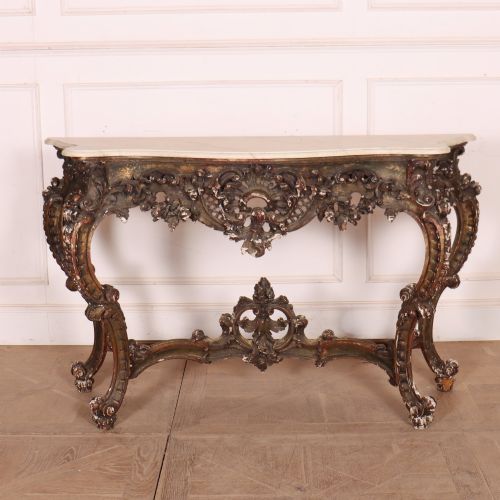
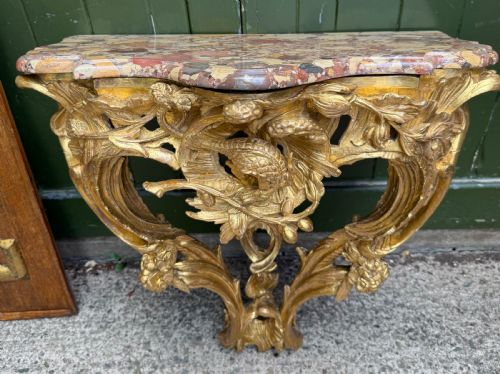
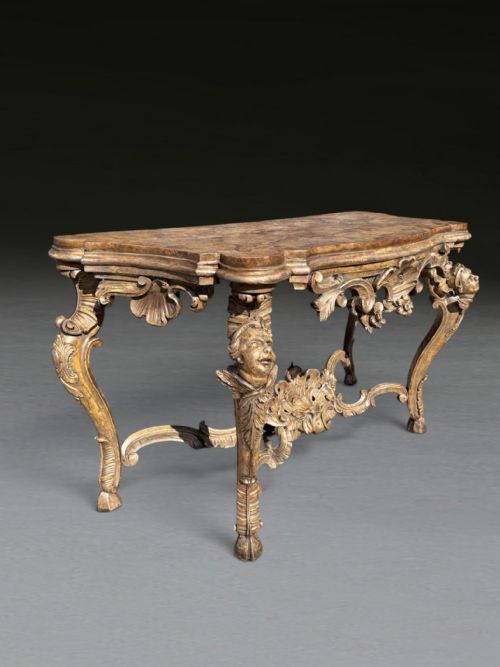
These rococo giltwood side table pieces bring dramatic carved forms and heavy stone tops into a room.
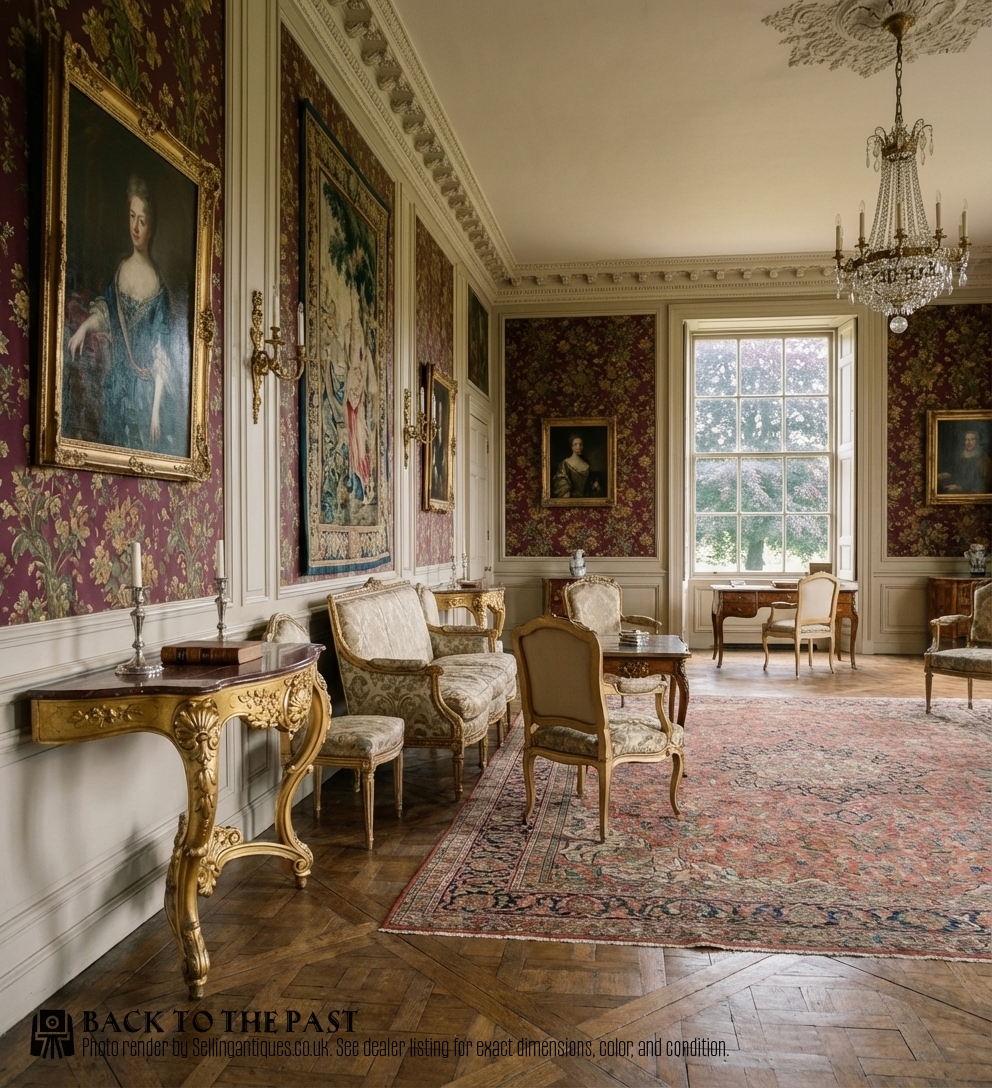
Rococo Giltwood Side Table
A rococo giltwood side table brings elaborate carved wooden frames and polished stone surfaces together, most frequently seen as console tables intended to stand against a wall. The selection spans the eighteenth century through to the twentieth century, taking in French, Italian, and Venetian interpretations of the style alongside nineteenth-century revivals.
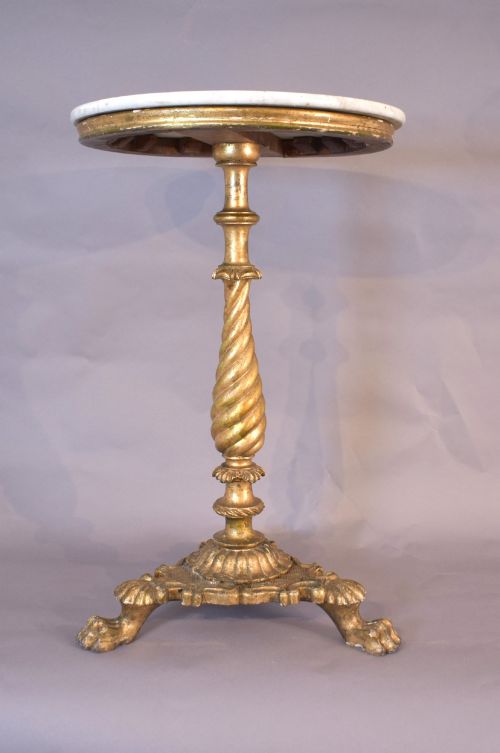
Beyond standard consoles, the grouping includes centre tables, tripod tables, and occasional furniture, often paired with matching mirrors or topped with marble surfaces such as Carrara, Siena, and breche d'alep. These forms reflect centuries of European decorative tastes, leaning heavily on asymmetrical scrollwork and pierced carving.
Materials and construction
Makers shaped structural timber from wood before applying layers of gesso to build up the relief for carving. Artisans then laid gold leaf or paint over the prepared surfaces to achieve the characteristic metallic sheen.
Heavy marble tops, cut to fit serpentine and rectangular frames, rest directly upon the carved wooden bases. These stone slabs range from polished green varieties to figured white and yellow marbles.
Listings feature items from the eighteenth century up to the 1930s, constructed from giltwood, marble, and gesso.
The markers of quality
Depth and crispness of the hand carving separate simpler items from superior examples, particularly where scrolls and floral motifs meet the frame. The precision of the joinery and the weight of the fitted marble slab also indicate the level of craftsmanship involved.
The application and survival of the gold leaf or gesso layers dictate the visual impact of the surface, with older pieces showing distinct patination beneath the metallic finish.
The Rococo Giltwood Side Table Glossary
- Giltwood
- Wood covered with thin sheets of gold leaf over a prepared gesso ground. This finish gives the carved surface a luminous metallic appearance.
- Console table
- A table designed to stand against a wall, frequently secured to it with brackets due to its narrow footprint. These pieces often feature elaborate front legs while relying on wall support.
- Gesso
- A plaster mixture applied to wood frames to create a smooth, buildable surface for fine carving and gilding. It allows artisans to achieve sharp relief details.
- Breche d'alep
- A type of quarried decorative marble characterised by a complex, mottled pattern of varied colours. It was frequently utilised for high-status furniture tops in eighteenth-century France.
Rococo Giltwood Side Table: Frequently Asked Questions
Where should I place a console table?
These tables suit hallways, living rooms, and dining spaces where floor space is limited. Because many historical console designs were built to anchor against a wall, they fit well beneath large wall mirrors or paintings.
Positioning them in low-traffic areas helps protect the delicate carved wooden frames and heavy stone surfaces from accidental knocks.
How do I care for giltwood furniture?
Giltwood requires gentle dusting with a soft, dry cloth to prevent damage to the delicate gold leaf layers. Moisture and harsh cleaning agents can strip the metallic finish from the gesso underneath.
Keeping these tables away from direct sunlight and strong heat sources protects the underlying wood and prevents the gesso from cracking over time.
Are marble tops attached to the base?
Many historical marble tops rest entirely under their own heavy weight upon the wooden frame rather than being permanently fixed. This design made moving the heavy stone separate from the carved base much easier during transport.
When positioning or shifting the table, lifting the marble off first prevents strain on the structural joints of the giltwood frame.
How can I tell an 18th century piece from a revival?
Eighteenth-century originals display hand-carved details with tool marks appropriate to period workshop practices and older timber construction. Revival pieces from later periods often utilise different joint construction methods and machine-prepared elements.
Examining the wear patterns on the gold leaf and the oxidation of the underlying gesso helps reveal the true age of the object.