
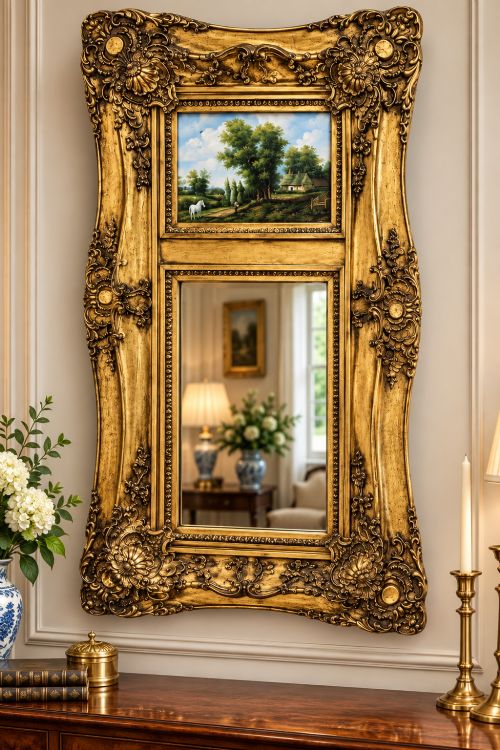
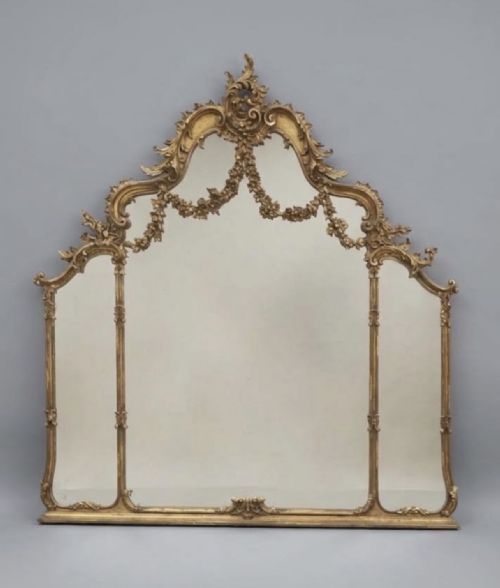
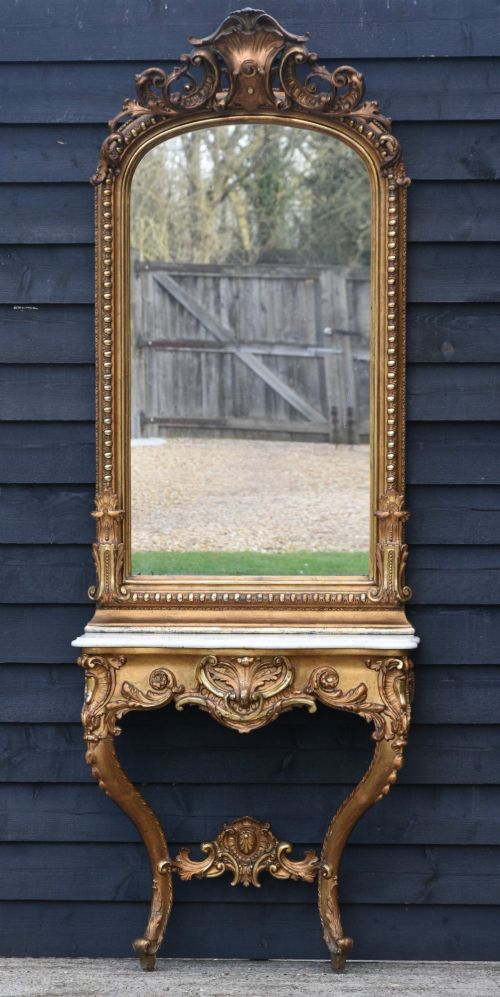
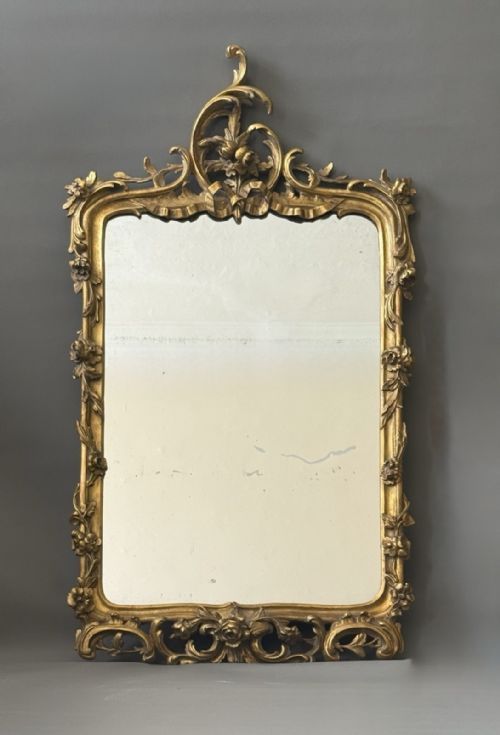
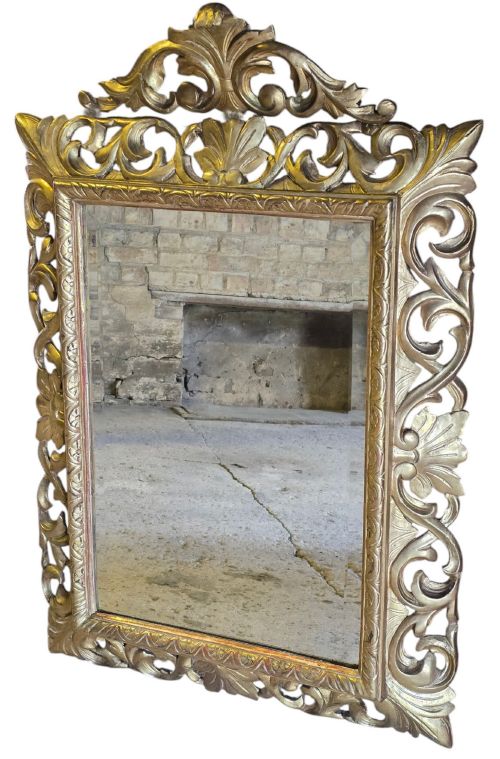
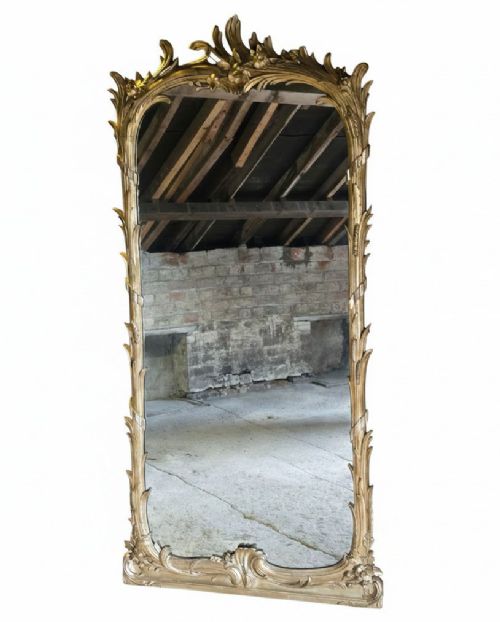
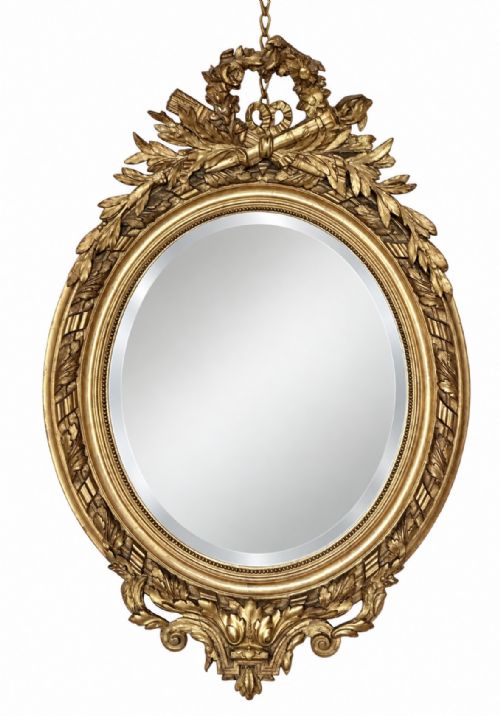
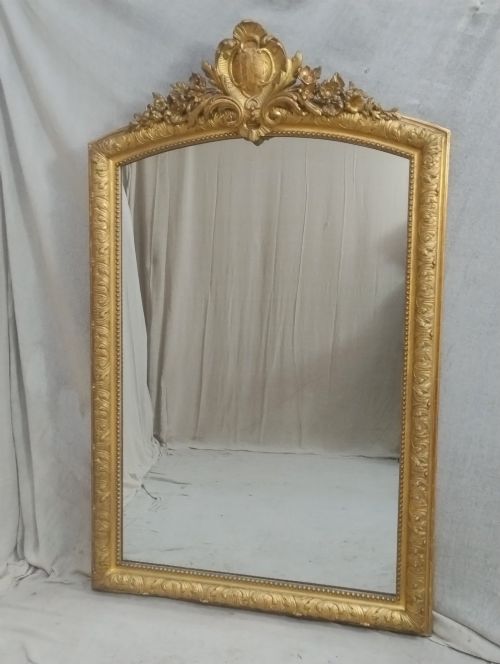


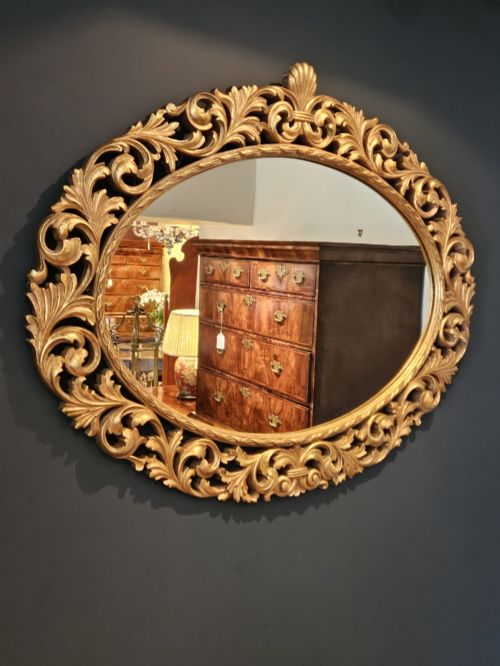
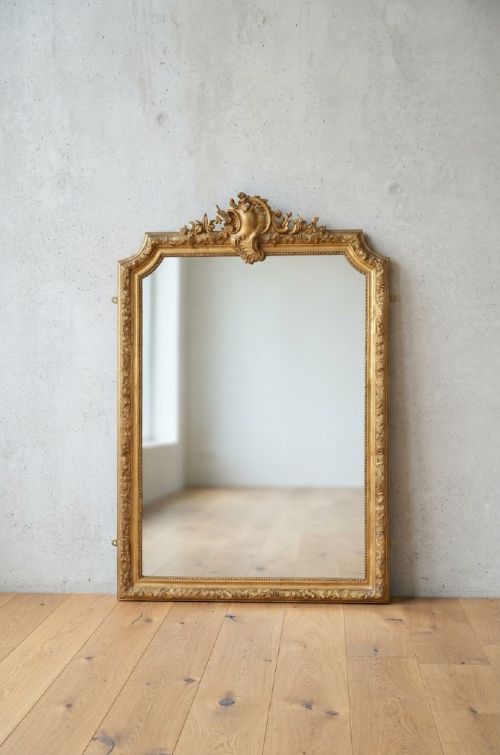
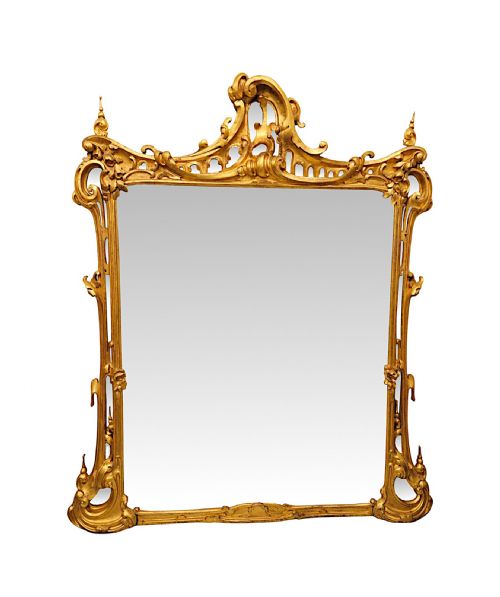
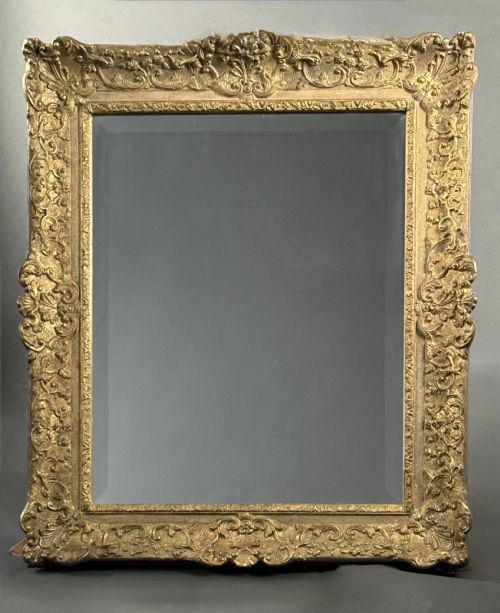
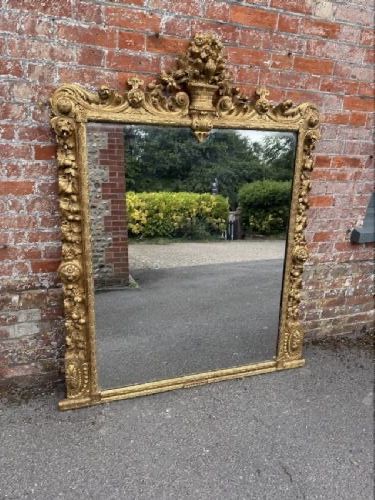
Rococo Carved Gold Mirror
A rococo carved gold mirror brings luminous depth and fluid, asymmetric ornament to a room, channelling centuries of French and Italian design.
Rococo Carved Gold Mirror
When searching for a rococo carved gold mirror, buyers encounter grand wall hangings, overmantels, and console combinations designed to reflect light and expand interior spaces. The selection spans centuries, with nineteenth-century revivals and continental interpretations appearing alongside eighteenth-century originals.
Most examples adopt the extravagant C-scrolls, floral motifs, and asymmetrical cartouches characteristic of French and Italian workshops. These pieces range from intimate oval frames to monumental overmantels meant to anchor a principal reception room.
How they were made
Artisans carved intricate motifs into timber, applying layers of gesso to build up high-relief details before gilding the surface. Gold leaf or composition leaf catches the light, while specialised techniques produced antique mirror plates and mercury glass.
Frames often combine solid wood cores with applied moulded ornament, secured to substantial wooden backs. The integration of carved wood and gesso allowed craftsmen to achieve deep, undulating profiles without adding excessive weight.
Listings feature periods spanning from the eighteenth century through the twentieth century, incorporating materials such as gesso, giltwood, and mercury glass.
What varies in quality
Depth and crispness of the carving distinguish superior examples from simpler production pieces, with hand-tooled details showing clear separation from moulded composition. The preservation of the original gilding and the character of the mirror plate determine the visual authority of the piece.
Structural integrity of the wooden frame and the quality of the joint work dictate longevity, particularly in larger overmantel and leaner formats that bear considerable weight. Finer mirrors retain the subtle tooling marks of the artisan rather than the flat uniformity of mass manufacturing.
The Rococo Carved Gold Mirror Glossary
- Giltwood
- Wood that has been coated with gold leaf or metallic powder. This finish provides the characteristic metallic brilliance seen on period frames.
- Gesso
- A plaster mixture applied to wood frames to create a smooth surface for carving and gilding. It allows artisans to shape complex, high-relief ornamentation.
- Mercury glass
- A double-walled glass blown in the nineteenth century with a silvering solution inserted between the layers. It produces a distinctive mottled and foxed reflection.
- Overmantel mirror
- A large mirror specifically proportioned to hang above a fireplace mantel. These pieces frequently feature landscape formats or triple plates.
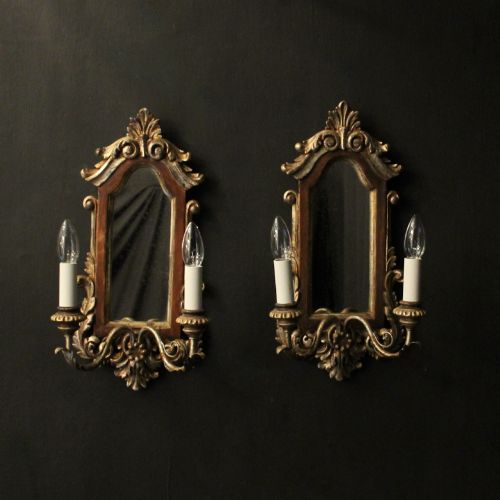
- Girandole
- A decorative wall mirror fitted with one or more candle arms attached to the frame. The polished branches help amplify candlelight within the room.
Rococo Carved Gold Mirror: Frequently Asked Questions
How do I clean a antique gilt mirror?
Dust the carved surface gently with a soft, dry brush to prevent disturbing the delicate gold leaf or composition. Avoid harsh chemical cleaners that can strip the historic finish.
Clean the glass plate using a lint-free cloth dampened slightly with distilled water. Keep moisture away from the wooden joints and the edges of the mirror plate.
Where should I hang a large overmantel mirror?
Position the mirror centrally above a fireplace mantel to reflect light and anchor the vertical space in a room. Ensure the wall fixings are secured directly into structural studs given the substantial weight.
Alternatively, lean a tall format mirror against a principal wall to create a sense of height and openness. This placement mirrors traditional chateau styling.
What is the difference between gesso and carved wood?
Carved wood involves shaping the structural timber itself to form the framework and primary decorative lines. It offers immense durability and sharp definition.
Gesso is a pliable plaster applied over the wood base to build up intricate, three-dimensional flourishes. Artisans carved into the dried gesso layer before applying gold leaf.
How can I tell an eighteenth century mirror from a nineteenth century revival?
Eighteenth-century originals often exhibit hand-bewn construction marks, old pine or walnut secondary woods, and genuine mercury glass plates with natural foxing. The carving style tends to reflect the organic asymmetry of the period.
Nineteenth-century revival pieces utilise machine-sawn timber and standardised compositions while still employing traditional gilding methods. They often feature heavier frames built to withstand Victorian domestic standards.