
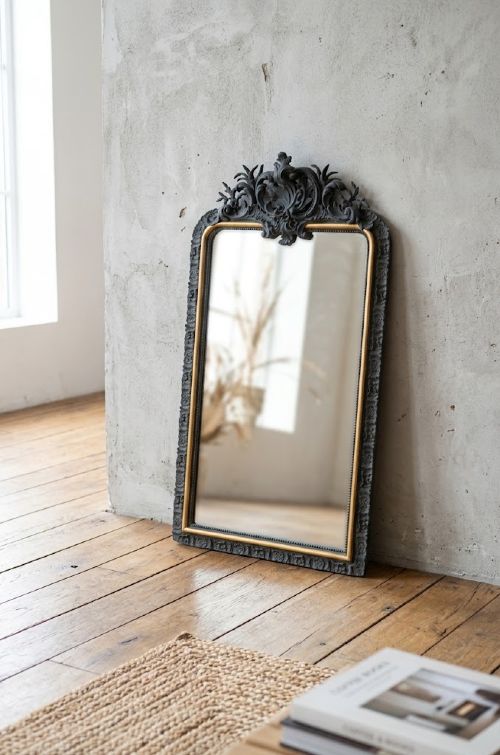
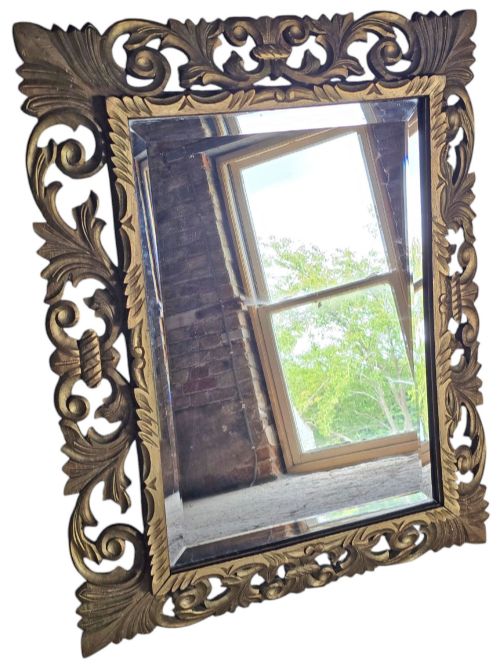
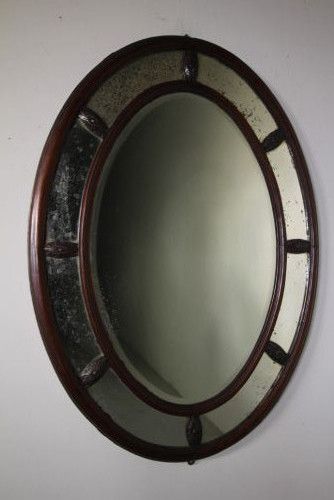

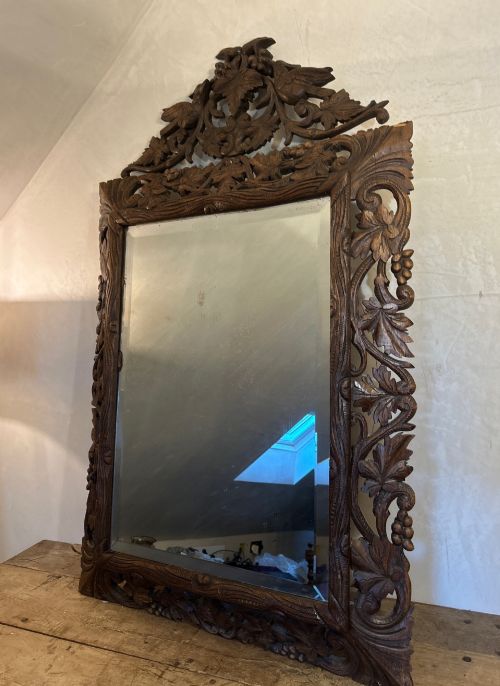
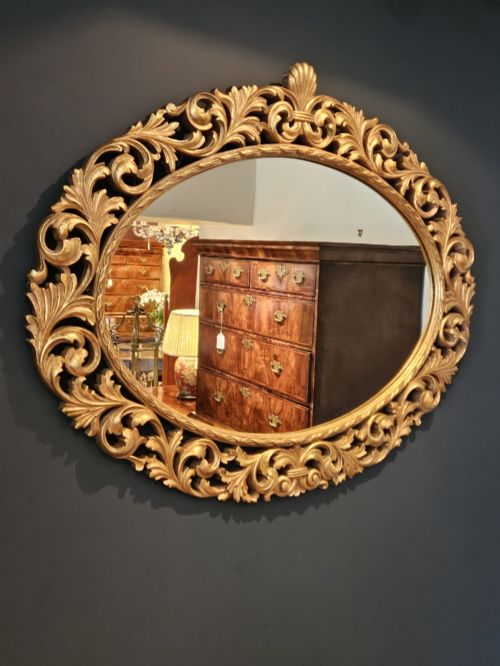
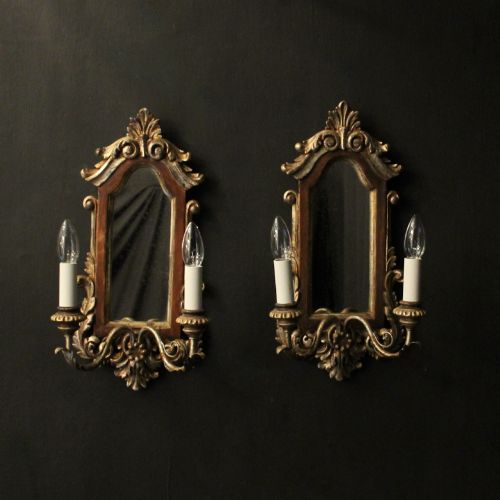
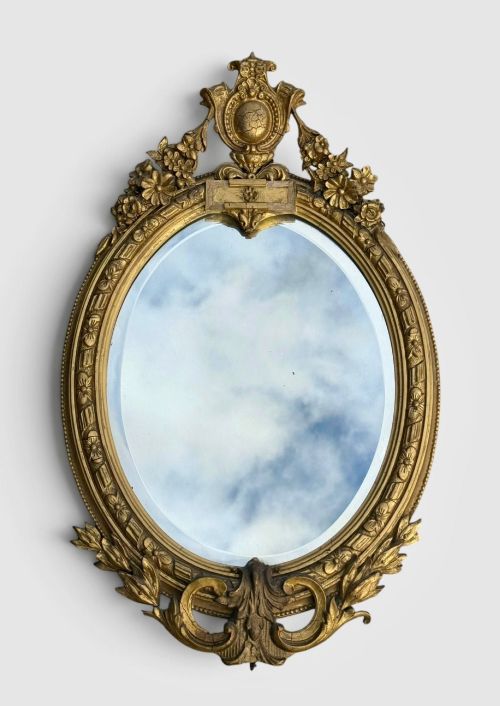
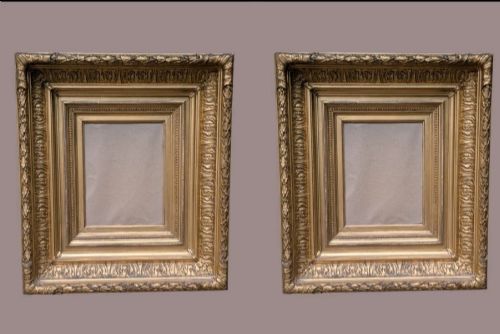
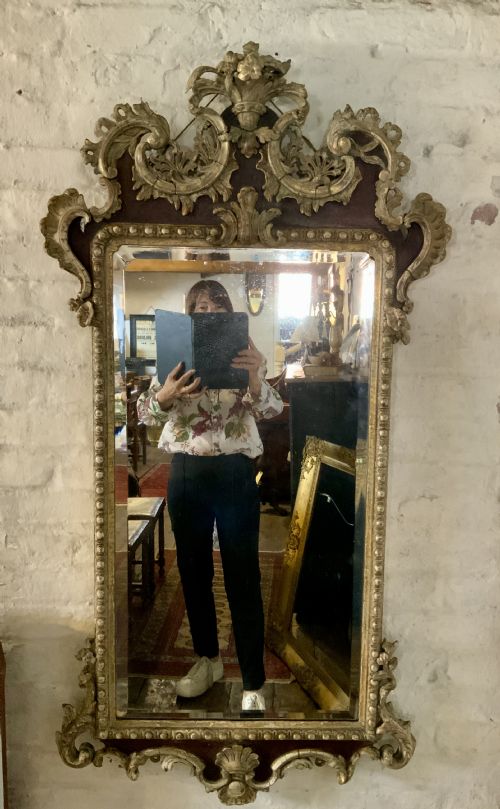
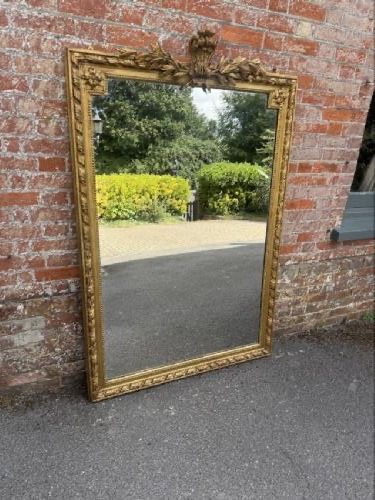
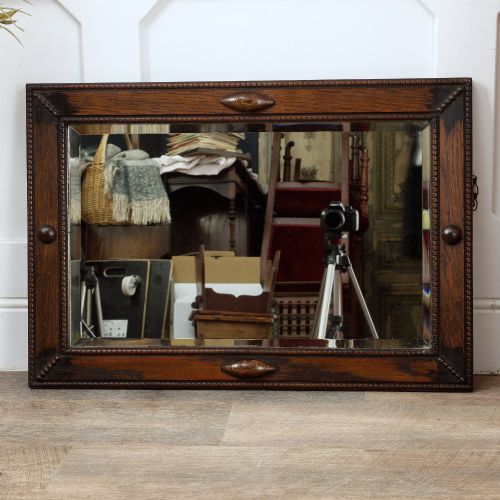
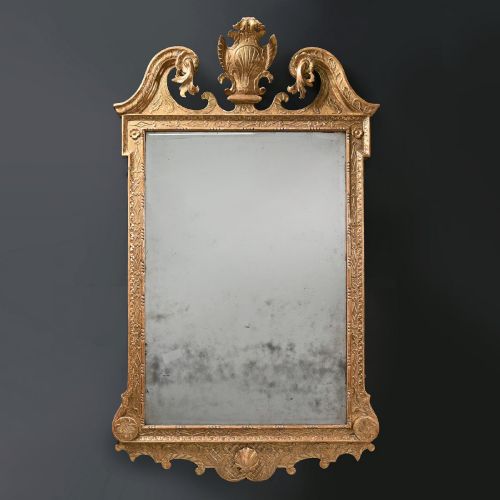
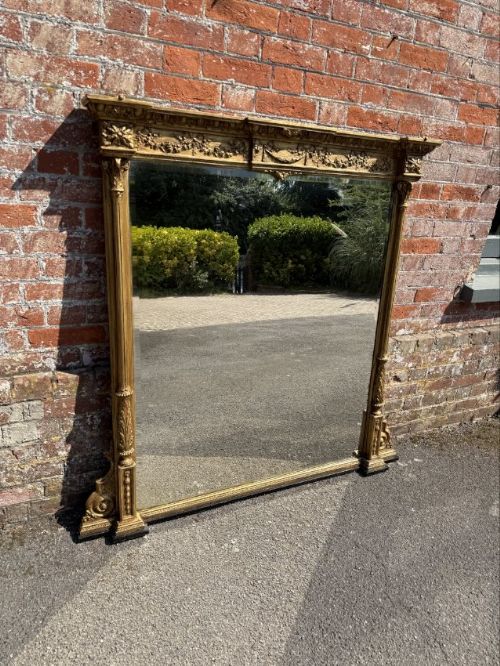
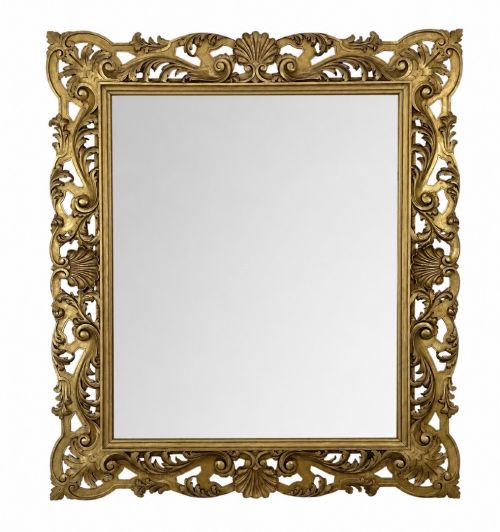
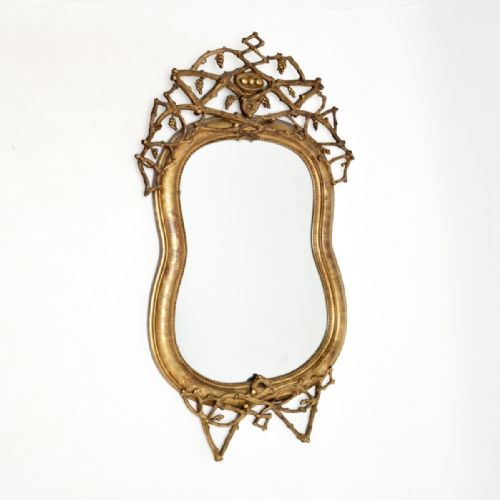
Decorative Carved Wood Mirror
A decorative carved wood mirror brings depth and light to a room through centuries-old craftsmanship.
How They Were Made
Frames rely on a timber base, typically oak, walnut, mahogany, or softer woods shaped by hand carving. Artisans then applied layers of gesso to the carved wooden surfaces, smoothing the composition to receive subsequent gilding or paint.
Giltwood elements received thin sheets of gold leaf applied over bole, while other pieces used silver leaf, painted finishes, or dark ebonising. Mirror glass was set within the rabbet, often secured by original backing boards and secured with traditional fixings.
What Varies in Quality
The crispness of the carving dictates the initial visual impact, distinguishing fluid, deeply undercut foliage and scrolls from softer, shallower moulding. Superior makers achieved harmonious proportions where the weight of the frame balances the reflective plate.
The integrity of the gesso and surface finish contributes significantly to the piece, noting how well gold leaf or original paint layers have survived over generations. Original mercury or early silvered mirror plates displaying natural foxing add authenticity and depth compared to modern replacements.
Listings feature eighteenth-century walnut and George II gesso pieces alongside nineteenth-century Victorian giltwood frames and early twentieth-century oak designs.
The Decorative Carved Wood Mirror Glossary
- Gesso
- A plaster mixture applied to wood frames to create a smooth surface for gilding or painting. It accepts fine detail work carved by the artisan.
- Giltwood
- Wood that has been coated with thin leaves of gold metal. This technique creates a luminous, warm surface that catches interior candlelight or daylight.
- Overmantel mirror
- A large glass specifically designed to hang above a fireplace mantel. These architectural pieces often span the width of the hearth below.
- Girandole
- A decorative wall mirror featuring attached candle sconces or arms. The glass reflects the candle flame to multiply ambient room illumination.
- Pier mirror
- A tall, narrow glass made to fit the wall space between windows. They often sat above matching console tables in formal period rooms.
Decorative Carved Wood Mirror: Frequently Asked Questions
Where should I hang an overmantel mirror?
These large pieces sit naturally above a fireplace mantelpiece where they anchor the room's central focal point. Ensure the weight is properly supported by structural fixings in the wall.
Positioning the glass at this height also helps reflect light from opposite windows back into the living space, brightening darker corners effectively.
How do I identify French Rococo revival pieces?
French Rococo revival frames display asymmetrical scrolls, C-scrolls, and naturalistic motifs like acanthus leaves and flowers. The carving tends to be deeply textured and dynamic.
These pieces frequently utilise gesso over timber to build up high-relief ornamentation that characterises the mid to late nineteenth-century aesthetic.
What causes foxing on antique mirror glass?
Foxing appears as small dark spots or cloudy patches where the backing silver has oxidised over long periods. This chemical ageing process occurs naturally through exposure to atmospheric moisture.
Many collectors value original glass with light foxing because it proves the antiquity and untouched nature of the mirror plate.
Can these mirrors be cleaned safely?
Dust the carved wooden and gilt surfaces gently with a soft, dry brush to prevent accumulation. Avoid commercial liquid cleaners on the frame entirely.
Clean the glass plate sparingly using a soft cloth slightly dampened with water, taking care not to let moisture seep behind the rebate into the gesso.