

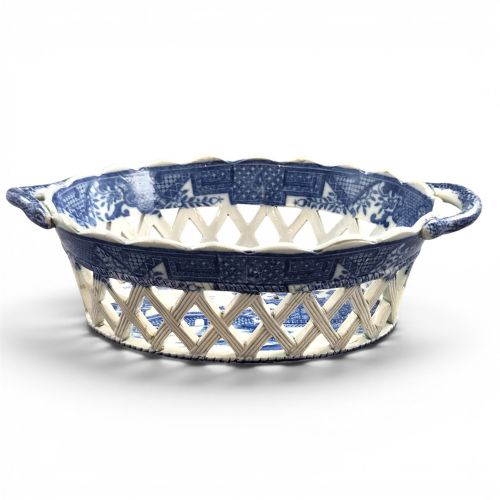
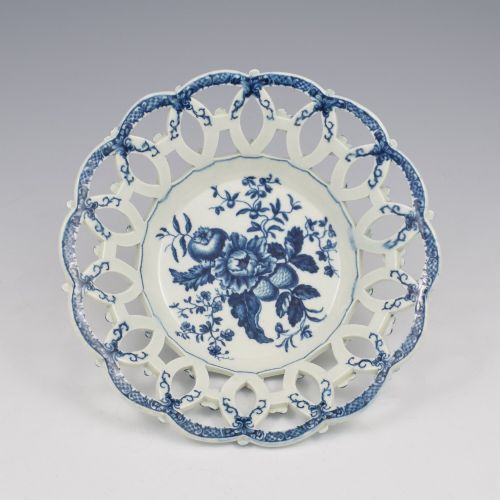


Reticulated Porcelain Basket
A reticulated porcelain basket combines pierced openwork ceramics with functional serving forms, prized for delicate craftsmanship.
Reticulated Porcelain Basket
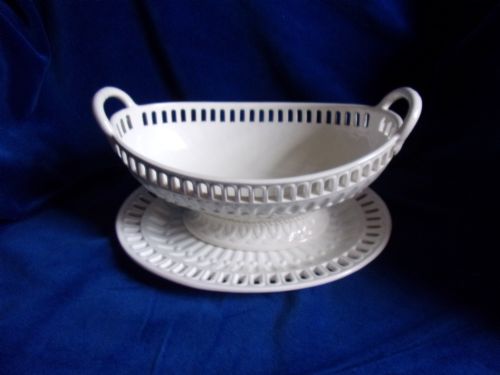
A reticulated porcelain basket is a decorative vessel characterised by pierced or openwork lattice walls, frequently designed as a chestnut basket, sweetmeat dish, or centrepiece. These items appear across the eighteenth and nineteenth centuries, spanning Georgian, Regency, Victorian, and Edwardian periods.
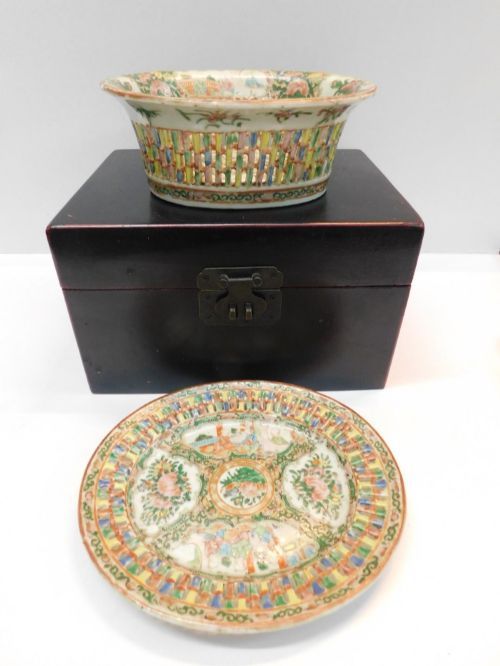
The selection on this page ranges from English factories like Worcester and Spode to continental European kilns in Meissen, Germany, alongside Chinese export wares. Buyers encounter circular and oval bowls, many accompanied by matching stands or lids.
Early examples include soft-paste porcelain from the eighteenth century, while later nineteenth-century pieces demonstrate various revival styles and firmer ceramic bodies.
Materials and technique
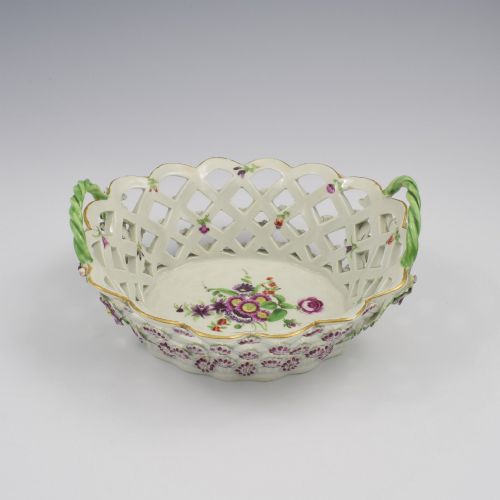
Potters formed these vessels using porcelain or soft-paste ceramic bodies, often applying intricate hand-piercing to the clay before firing to create the open lattice work. Artisans utilised glaze, enamel paints, and gold leaf or gilding to decorate the surfaces with polychrome floral motifs and transfer-printed patterns.
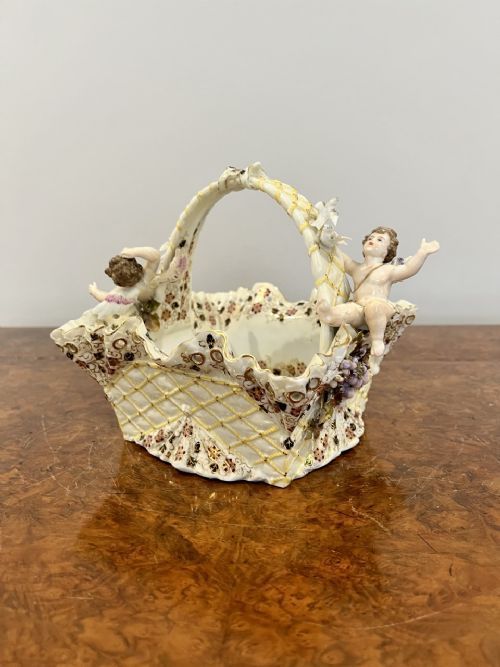
Continental and English workshops shaped intricate details such as applied floral leaves, known as florrel work, or figural elements depicting maidens and cherubs. The firing process required careful temperature control to prevent warping in the delicate pierced basket walls.
Reticulated Porcelain Basket Retail Price Guide 2026
Typical asking prices for reticulated porcelain basket among the pieces listed under this phrase on Sellingantiques today, from the lower quarter to the upper quarter. They describe what is for sale here now, not the wider market.
The listings span the eighteenth, nineteenth, and early twentieth centuries, featuring porcelain, earthenware, and soft-paste ceramic bodies.
Judging the standard
Quality in a reticulated porcelain basket rests upon the crispness of the pierced lattice and the precision of the hand-painted enamel or transfer-printed decoration. Finer examples display meticulous attention to applied floral ornamentation and well-preserved gilding without rubbing.
Pieces from established eighteenth-century factories exhibit sharper moulding and more refined ceramic bodies compared to mass-produced later equivalents. The presence of matching stands and original lids elevates the integrity of the piece.
Dr Wall Worcester·C.G. Schierholz and Sohn·Mason’s Ironstone·Meissen
The Reticulated Porcelain Basket Glossary
- Reticulated
- Pierced or patterned to resemble a net or open lattice. This technique defines the openwork walls characteristic of these baskets.
- Chestnut basket
- A specialised serving vessel with a matching stand or lid. These were historically used for serving chestnuts at the dining table.
- Sweetmeat dish
- A small vessel designed for holding confectioneries, nuts, or sweet preserves. They frequently feature pierced rims or bowl sections.
- Soft-paste porcelain
- A ceramic material composed of clay and glass frit fired at lower temperatures than hard-paste porcelain. It is common in eighteenth-century English factory production.
- Polychrome
- Decorated in multiple colours. Artisans painted these schemes onto the ceramic surface beneath or above the glaze.
Reticulated Porcelain Basket: Frequently Asked Questions
What were reticulated porcelain baskets used for?
These vessels functioned primarily as table service items for holding fruit, sweetmeats, or roasted chestnuts during formal meals.
They also served as decorative centrepieces or ornamental display items on sideboard tables and cabinets.
How do I distinguish eighteenth-century pieces?
Eighteenth-century examples often utilise soft-paste porcelain bodies that display characteristic warmth and minor firing imperfections under examination.
Factories such as Worcester incorporated distinct pine cone patterns and hand-painted blue and white or polychrome enamel schemes during this era.
What is the difference between a basket and a centrepiece?
Baskets typically feature arched loop handles for carrying or serving, whereas centrepieces are heavier stationary display vessels designed to sit in the middle of a table.
Centrepieces frequently incorporate figural supports like cherubs or elaborate column stands rather than simple carrying handles.
How should I care for antique porcelain baskets?
Display these items away from direct sunlight and areas subject to sudden temperature fluctuations to protect the enamel and gilding.
Dust them gently with a soft, dry brush and avoid washing them in water, particularly pieces featuring delicate applied floral work.