




Retail Display Showcase
A retail display showcase turns everyday commerce into theatre, framing goods in glass and timber with the quiet authority of a period shop interior.
Retail Display Showcase
A retail display showcase encompasses freestanding cabinets, low serving counters, tall tower units, and compact countertop cases designed originally for commercial trade. These pieces originate largely from the Victorian, Edwardian, and Art Deco eras, spanning the late nineteenth century through the nineteen-thirties.
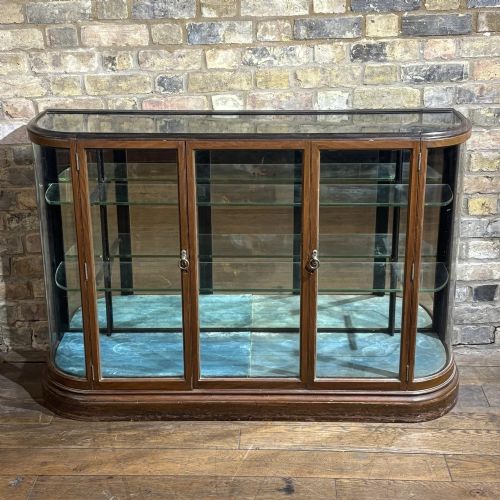
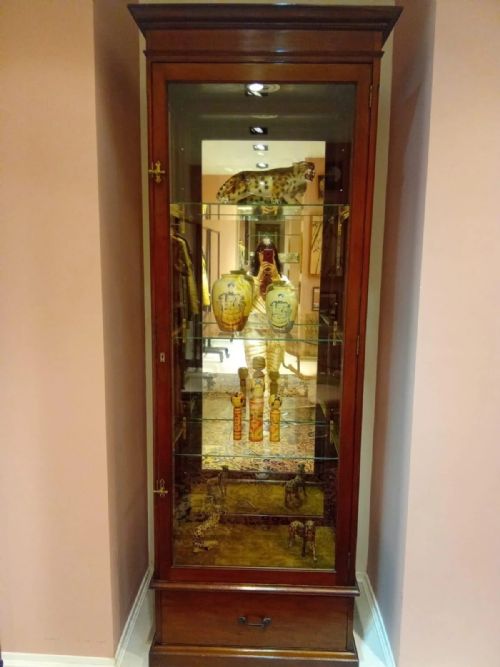
The version most commonly encountered on this page is the mahogany or oak shop display cabinet, often featuring glazed panels and adjustable glass shelving. Such pieces range from modest tabletop vitrines to substantial floor-standing counters built for provincial merchants and grand emporiums alike.
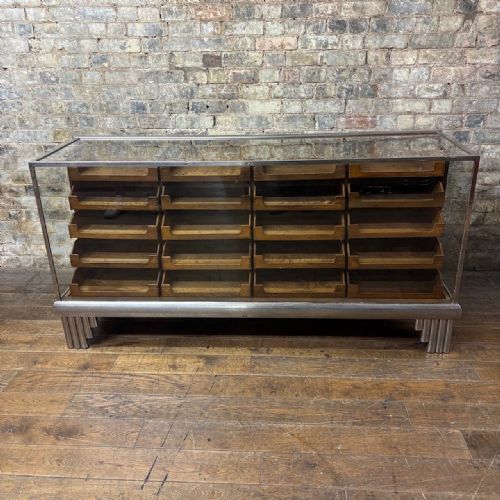
Specialised regional forms also appear, including haberdashery counters with multiple glazed compartments, apothecary units, and confectionery vitrines bearing the names of makers like Cadbury and Rowntree. Each format reflects the specific mercantile needs of the period, from dry goods to precious bijouterie.
How they were made
Makers constructed the primary frames of these retail display showcase pieces using dense hardwoods such as mahogany and oak, occasionally employing ebonised finishes, brass detailing, or aluminum and steel frames in later industrial designs. Glazing formed the dominant element, utilising large sheets of clear glass to maximise visibility for merchandise.
Interior surfaces frequently incorporated mirrored backs to enhance light penetration, alongside velvet linings or wooden bases. Joinery techniques prioritised rigidity and clear sightlines, creating robust structures capable of withstanding heavy daily commercial use while presenting goods without visual obstruction.
Retail Display Showcase Retail Price Guide 2026
Typical asking prices for retail display showcase among the pieces listed under this phrase on Sellingantiques today, from the lower quarter to the upper quarter. They describe what is for sale here now, not the wider market.
Listings feature oak, mahogany, glass, brass, mirror, velvet, aluminium, and steel across Victorian, Edwardian, and Art Deco periods.
What varies in quality
The distinction between standard commercial units and superior examples rests on the sophistication of the timber selection, the presence of signed maker plaques such as F. Sage and Co, and refined stylistic flourishes like Adam style carving or bow end glass. Finer pieces demonstrate meticulous attention to proportion, polished brass hardware, and integrated mirrored interiors.
Utility pieces built simply for trade stand apart from bespoke architectural commissions or branded confectioners' cases designed to attract customer attention. The integrity of the original glazing, the complexity of the cabinetry, and the survival of makers' stamps govern the standing of each piece.
F. Sage and Co·Dudley and Co·Cadbury·Rowntree·Fry
The Retail Display Showcase Glossary
- Vitrine
- A glass display cabinet or case designed specifically for exhibiting fine objects or merchandise. These units rely on extensive glazing to provide all-round visibility.
- Haberdashery counter
- A long retail cabinet featuring numerous shallow drawers or glass-fronted compartments used traditionally for ribbons, threads, and small textiles. They offer partitioned storage beneath a display surface.
- Bow end
- A curved glass or timber termination at the end of a cabinet or counter. This detail softens the silhouette and widens the viewing angle for items inside.
- Bijouterie table
- A shallow glass-topped table designed for displaying jewellery and small decorative items. Customers view the contents from above while standing.
- Ebonised
- Wood finished to resemble ebony through a dark staining or painting process. This technique was popular in nineteenth and early twentieth century furniture to create stark, formal contrast.
Retail Display Showcase: Frequently Asked Questions
How were retail display showcases used?
Merchants used these cabinets and counters to protect valuable stock while keeping goods fully visible to customers browsing the shop floor.
They served various retail trades, housing items ranging from sweet confectionery and apothecary preparations to haberdashery and fine jewellery.
What woods appear most often?
Mahogany and oak dominate the construction of these pieces, reflecting the standard cabinetry materials of the Victorian and Edwardian eras.
Later examples occasionally incorporate metal frames, chrome, aluminium, and ebonised timber to achieve a more industrial aesthetic.
How do I date a showcase?
Dating relies on stylistic clues, timber choice, and construction methods, moving from heavy Victorian mouldings to cleaner Edwardian lines and nineteen-thirties steel frames.
Maker signatures, patent plates, and branded confectionery lettering also provide reliable chronological anchors.
Are shelves usually adjustable?
Many larger cabinets and tabletop vitrines feature adjustable glass shelving supported by internal brass brackets or wooden ratchets.
This adaptability allowed nineteenth and twentieth-century shopkeepers to alter internal heights according to the merchandise on display.
Can I use one at home?
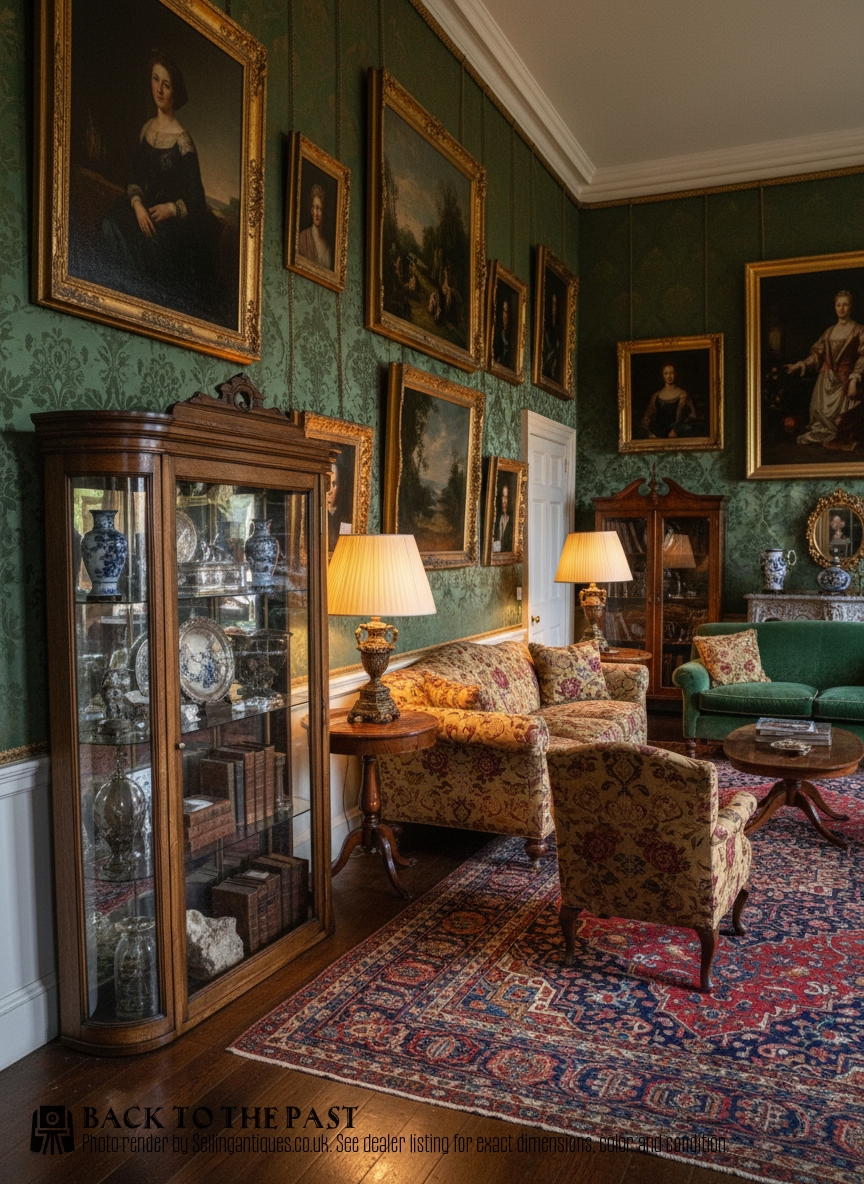
These cabinets suit modern domestic interiors for displaying collections, ceramics, books, or glassware in living spaces and kitchens.
Freestanding models and countertop cases provide secure storage while maintaining open sightlines through original glass panels.