
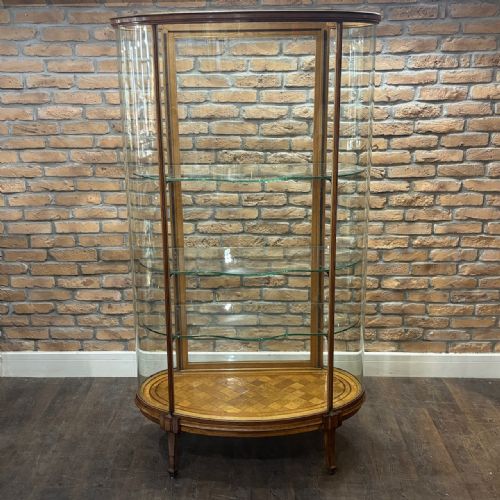
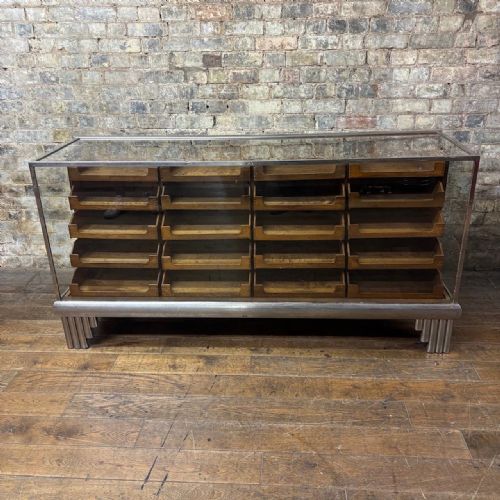



Oak Haberdashery Showcase
An oak haberdashery showcase provides uncompromising commercial display, pairing solid timber framing with expansive glazing to hold merchandise.
Oak Haberdashery Showcase
When you search for an oak haberdashery showcase, you are looking at utilitarian shop furniture designed to exhibit goods while keeping them protected behind glass. The examples on this page span the Victorian and Edwardian eras, stretching through the 1920s and 1930s into early twentieth-century commercial forms.
Most pieces you meet here take the form of substantial display counters or smaller countertop cabinets intended for shop interiors. Makers such as F. Sage and Co and Dudley and Co produced these fixtures to meet the demands of late nineteenth-century and early twentieth-century retail spaces.
Commercial workshops utilised durable timbers and transparent panels to maximise visibility for customers browsing haberdashery and confectionery. Surviving items retain their original proportions, whether configured as large floor-standing counters or compact glass enclosures.
Construction and materials
The primary structural frame of each showcase relies on solid oak, chosen for its strength and ability to support heavy plate glass panels. Metal elements such as brass or chrome appear in hardware, framing components, and interior fittings to secure doors and hinges.
Surfaces frequently incorporate velvet linings to cushion displayed items, while secondary woods support the internal shelving and base structures. Workshops combined traditional joinery with commercial metalwork to build display furniture capable of withstanding heavy daily retail use.
Distinctions in grade and execution
The division between standard commercial fittings and finer display pieces rests on the complexity of the cabinetry and the integration of specialised hardware. Early twentieth-century commercial pieces built by established shopfitters display more refined moulding and tighter joint tolerances than basic utility counters.
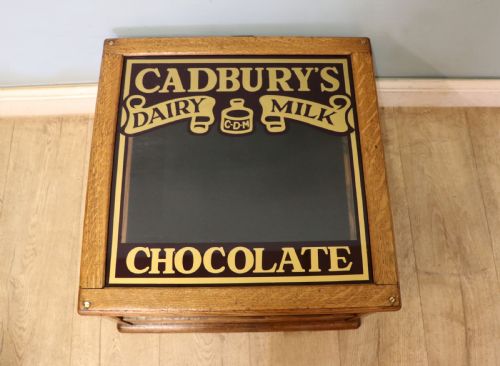
The retention of original signage, such as period chocolate branding, shifts an ordinary display cabinet into a documented piece of retail history. Glazing quality and the robustness of the opening mechanisms further separate mass-produced fittings from bespoke architectural commissions.
F. Sage and Co·Dudley and Co
The Oak Haberdashery Showcase Glossary
- Haberdashery counter
- A shop counter incorporating glass display sections specifically designed for selling small dry goods and sewing notions. These units allowed customers to inspect items without handling them.
- Countertop display cabinet
- A smaller glass and timber enclosure built to sit upon an existing shop counter for eye-level merchandising. They were frequently utilised for confectionery and luxury items.
- Shop fitting
- Custom furniture and architectural elements manufactured for commercial retail interiors. These items were designed to maximise floor space and product visibility.
- Plate glass
- Heavy, flat glass manufactured for large display windows and cabinet panels. It provides clear visibility and structural rigidity in commercial settings.
Oak Haberdashery Showcase: Frequently Asked Questions
What is an oak haberdashery showcase?
An oak haberdashery showcase is a commercial display unit constructed from oak timber and glass panels, built to exhibit retail merchandise securely.
These pieces originated in shops, department stores, and emporiums during the Victorian and Edwardian periods, as well as the 1920s and 1930s.
How were these cabinets used?
Merchants used them to display small goods, textiles, and confectionery while keeping stock clean and protected from handling.
Countertop versions sat upon larger shop fittings for eye-level marketing, while floor-standing counters formed the main serving and display space.
How do I live with one?
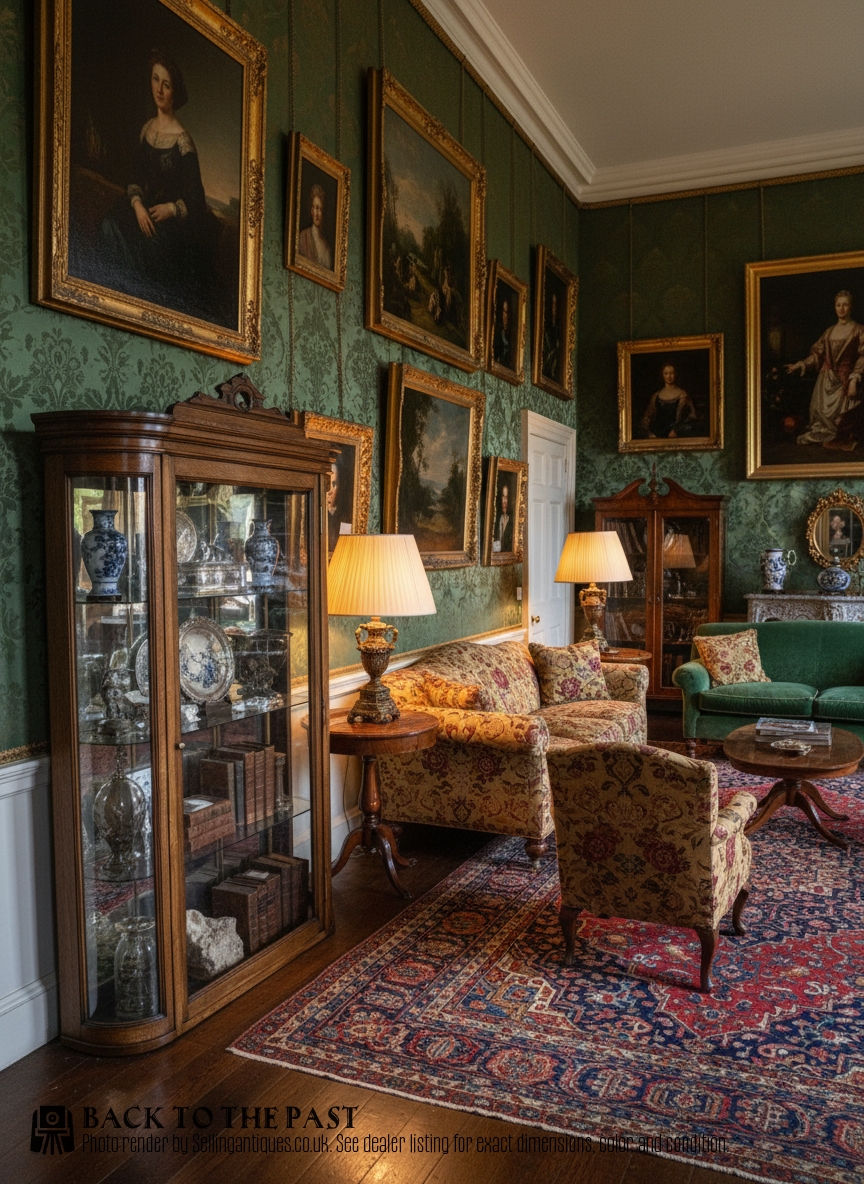
You can position a countertop cabinet on a sideboard or table, or use a large counter as a freestanding architectural island in a modern room.
Their glass panels and timber frames provide natural display space for collections, books, and objects without dominating a domestic interior.
How do I date a showcase?
Dating relies on stylistic clues, hardware materials, and construction methods spanning the late nineteenth century through the Art Deco era of the 1930s.
Victorian and Edwardian examples show heavier mouldings and traditional brass fittings, whereas 1930s pieces introduce chrome elements and streamlined commercial lines.