
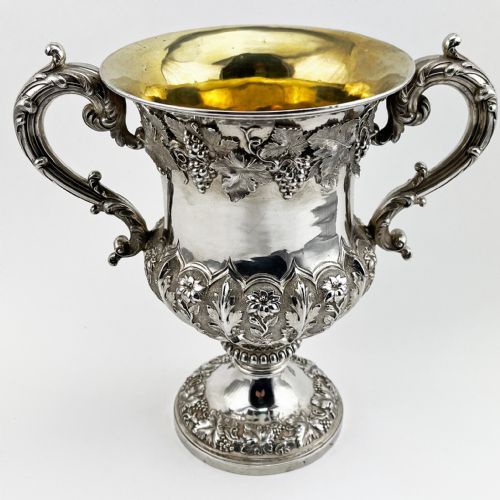


Repousse Silver Cup
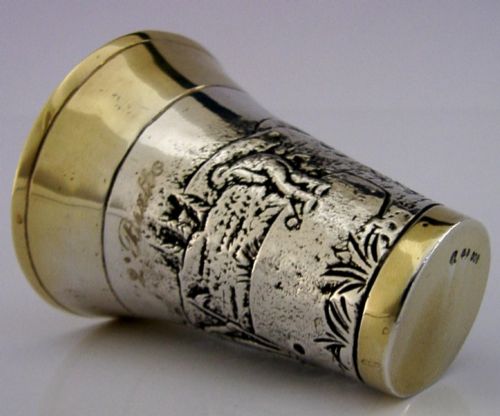
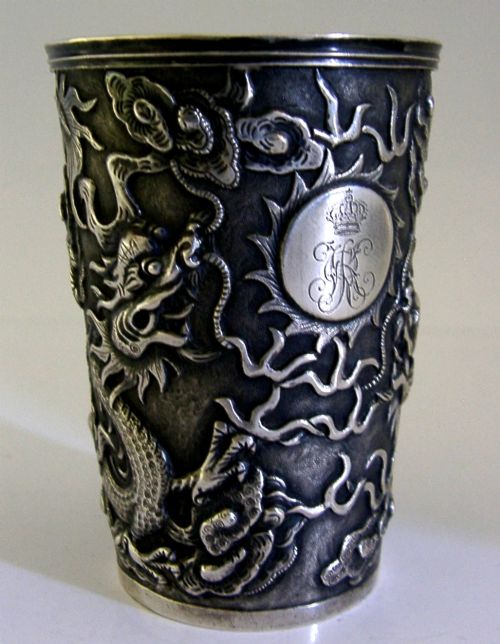
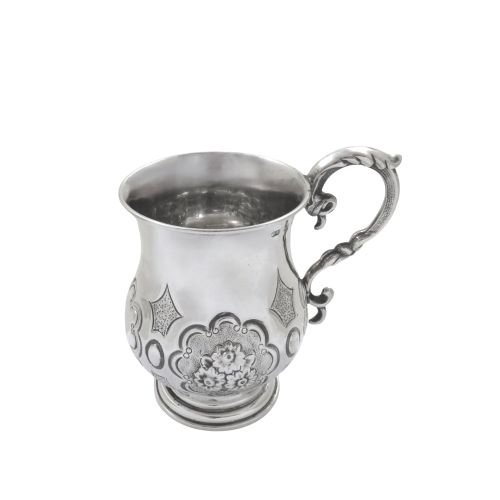
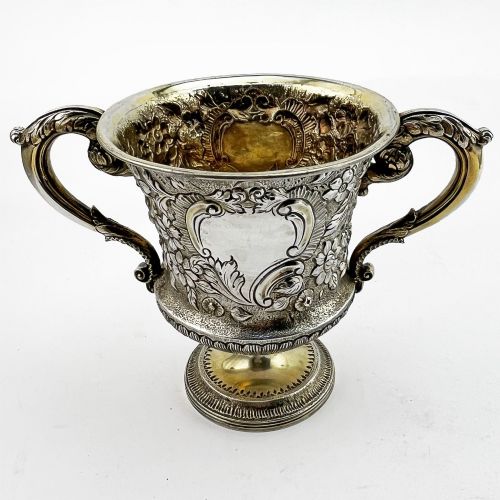
These repousse silver cup examples range from Victorian christening mugs to Chinese export beakers, offering raised metalwork that catches the light.
Repousse Silver Cup
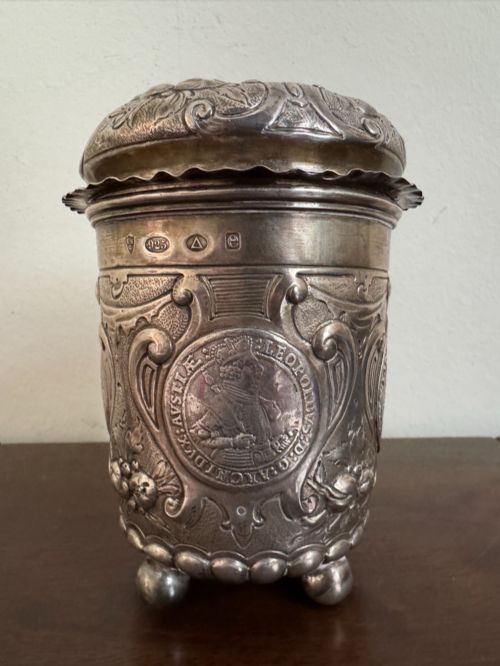
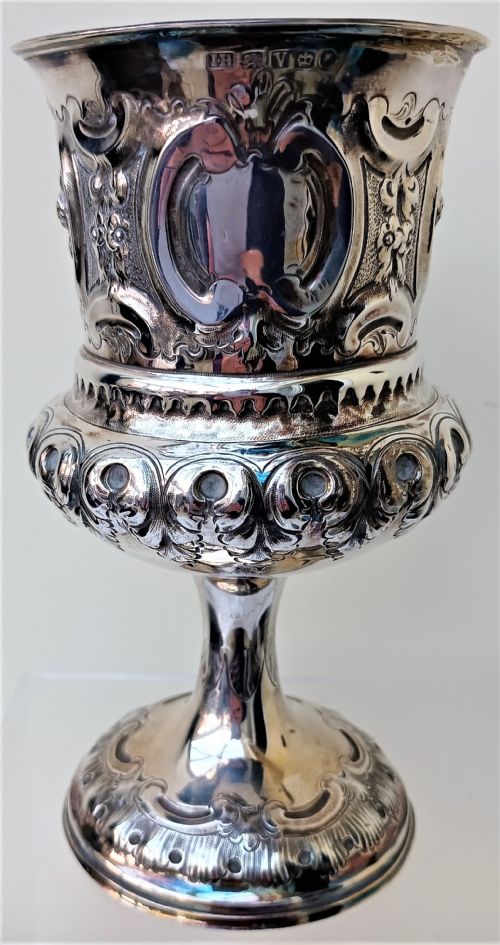
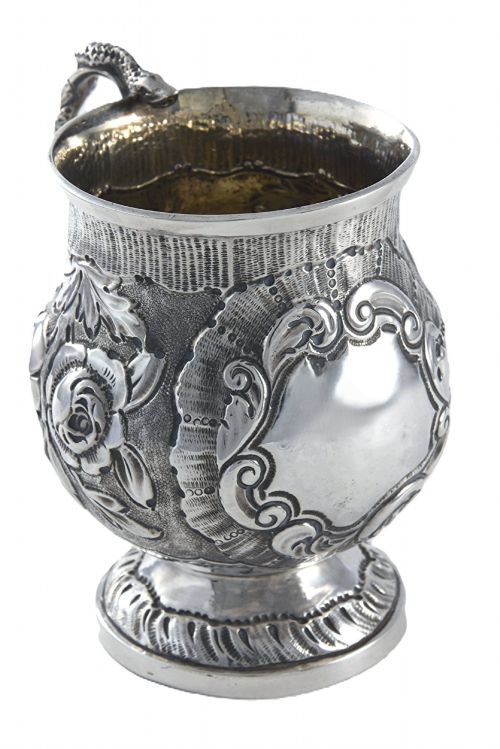
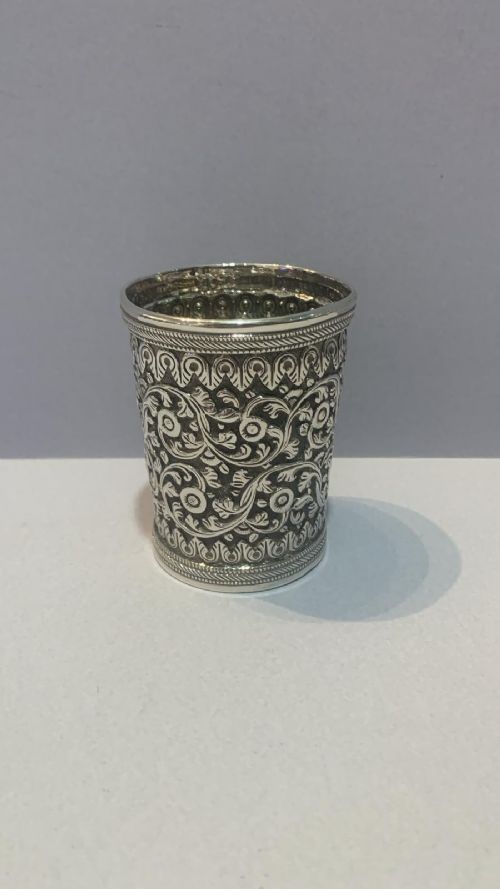
When you search for a repousse silver cup, you encounter drinking vessels and presentation pieces shaped with raised ornamentation hammered from the reverse. The selection spans George III campana shaped cups, Victorian christening mugs, and Chinese export beakers, alongside German coin beakers and wine tasters.
Victorian sterling silver christening mugs and 19th-century beakers appear most frequently on this page. These domestic and commemorative items reflect periods from the Georgian era through to the turn of the century.
Origin points stretch from English provincial towns to continental workshops in Germany, alongside Asian export centres like Hong Kong and Kutch. Forms include chalices, tankards, porringers, and lidded beakers.
How they were made
Silversmiths utilised sterling silver, 800 silver, and coin silver, frequently applying parcel-gilt, silver-gilt, or vermeil finishes to interior surfaces and highlights. The primary technique involves hammering metal from the reverse side into relief, known as repousse, sometimes combined with chasing on the front.
Construction methods range from raised hollowware bodies soldered to cast bases and handles to coin silver formed directly from historical thalers. Certain pieces incorporate organic elements, pairing hammered metal with cherry wood.
Repousse Silver Cup Retail Price Guide 2026
Typical asking prices for repousse silver cup among the pieces listed under this phrase on Sellingantiques today, from the lower quarter to the upper quarter. They describe what is for sale here now, not the wider market.
A German coin beaker incorporates an authentic Salzburg Thaler, letting you drink from a minted piece of history.
What varies in quality
Depth and crispness of the hammered relief separate standard utility items from masterworks. Sharp definition in chased dragons, floral scrolls, or heraldic crests indicates skilled handwork rather than shallow mechanical pressing.
Weight, gauge of metal, and the integration of cast handles or gilt interiors dictate the structural substance of the vessel. Maker marks and clear town assays also anchor the standing of a piece within its period.
Wang Hing And Co·D And J Wellby
The Repousse Silver Cup Glossary
- Repousse
- A metalworking technique where the design is hammered into relief from the reverse side of the sheet. This creates tactile, three-dimensional surface decoration.
- Sterling silver
- An alloy consisting of pure silver and other metals, traditionally copper, standardised for purity. British pieces typically carry hallmarks confirming this standard.
- Vermeil
- Sterling silver plated with a thin layer of gold. This finish protects the interior of drinking vessels from tarnishing and acidic liquids.
- Porringer
- A small, shallow two-handled bowl used for soups or porridges. In silver, these often double as presentation pieces.
- Campana
- A bell-shaped vessel profile common in neoclassical metalwork. These cups feature flared rims and pedestal bases.
Repousse Silver Cup: Frequently Asked Questions
What is a repousse silver cup used for?
These vessels served various functions, from christening gifts and presentation trophies to wine tasting and daily dining. Many acted as commemorative objects for specific historical events or personal milestones.
Over time, their roles shifted from practical barware and tavern items to display pieces collected for their intricate surface decoration.
How do I care for silver cups?
Gentle washing with warm soapy water and a soft cloth preserves the metal surface without wearing down the raised relief. Avoid harsh abrasive polishes that strip away historical patinas and fine details.
Store pieces in dry environments away from direct sunlight and chemical fumes to minimise natural tarnishing processes.
How can I tell the period?
Stylistic cues such as George III neo-classical lines, Victorian scrollwork, or Art Nouveau turn-of-the-century motifs provide initial chronological markers. Hallmarks, maker marks, and assay office stamps offer precise dating evidence where present.
Material composition also points to eras, such as German coin beakers utilising specific historical thalers from the early twentieth century.