
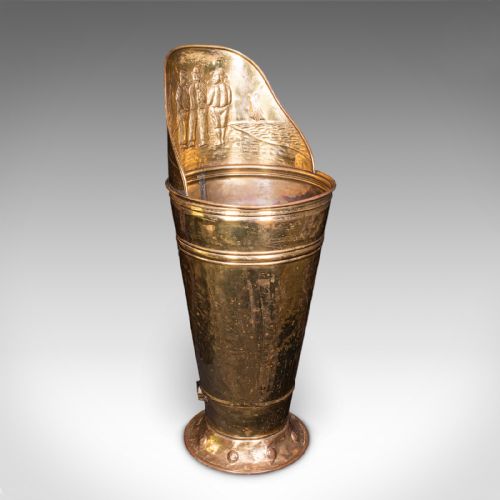


Repousse Brass Container
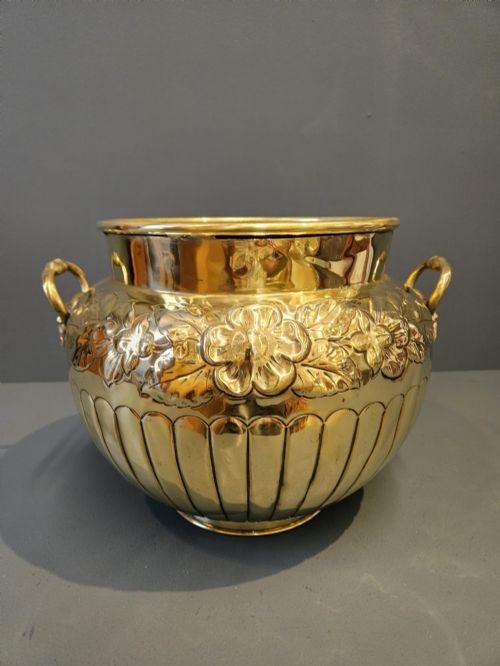
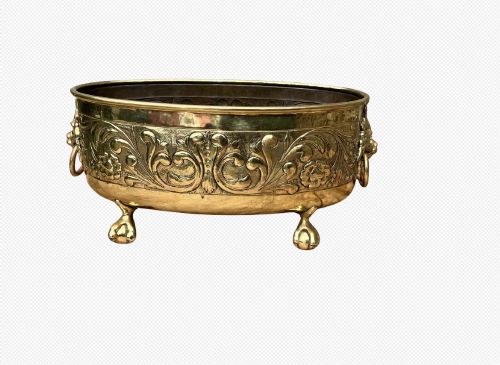
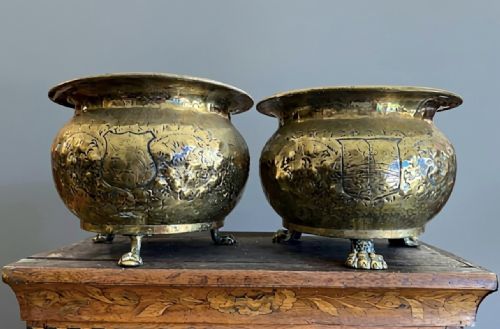
These repousse brass containers are practical hearth vessels and decorative planters shaped by Victorian, Edwardian, and Arts and Crafts hands to hold fuel or flora.
Repousse Brass Container
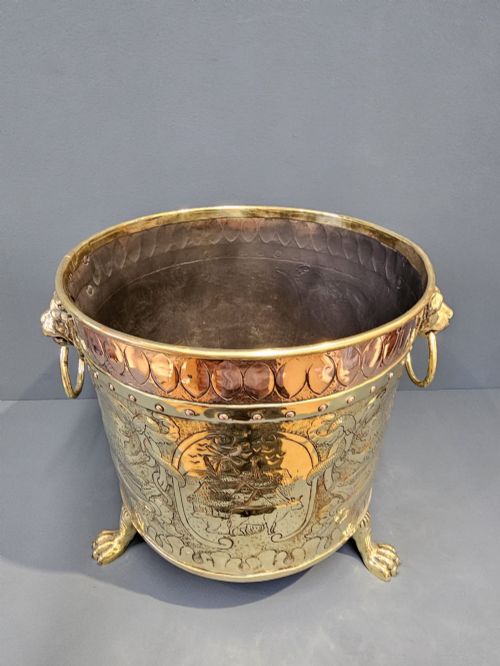
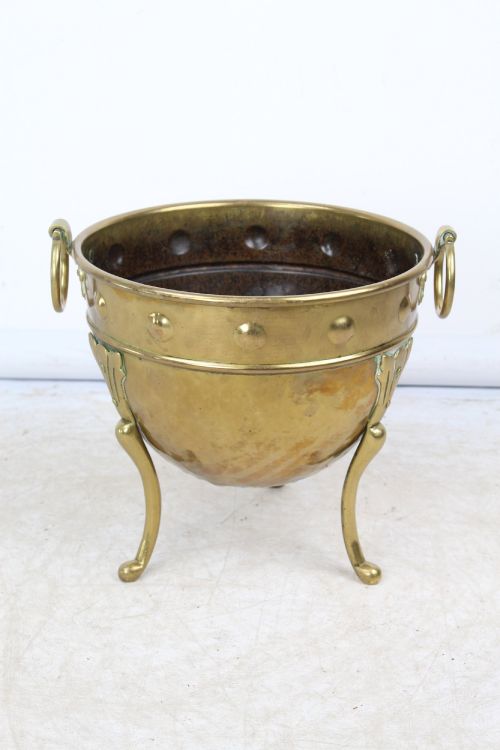
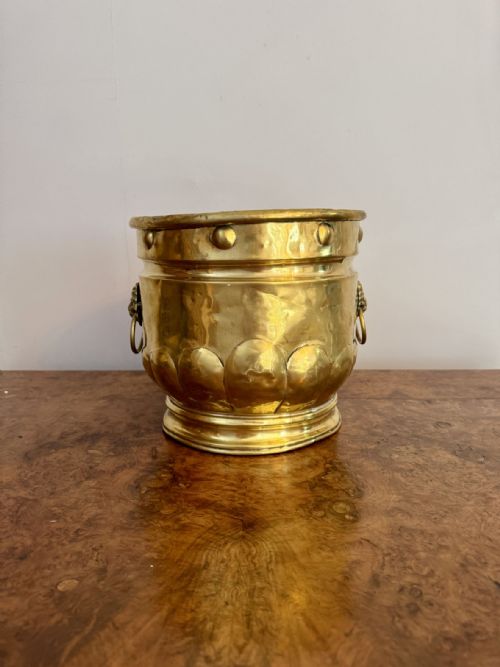
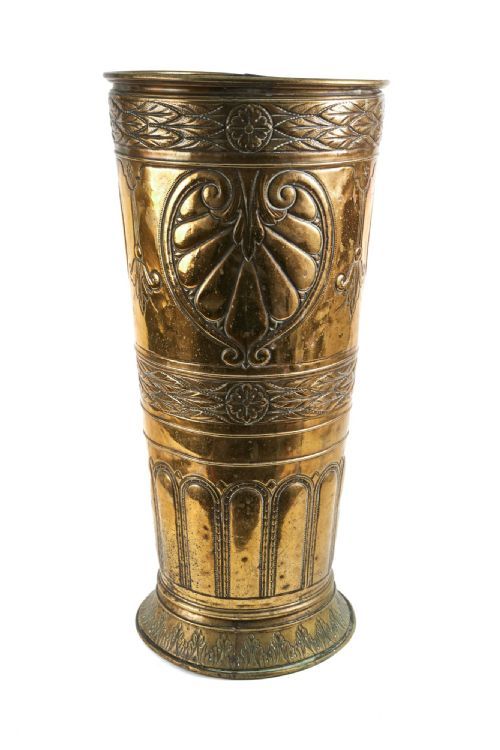
A repousse brass container serves functional roles around the fireside and in reception rooms, functioning as log bins, coal buckets, umbrella stands, and planters. You will most frequently encounter Victorian and Edwardian examples shaped for domestic fuel storage or plant display.
The forms range from substantial coal bins and receivers to large jardinieres and stick stands. Many pieces connect directly to domestic routines of the nineteenth and early twentieth centuries, fashioned to keep fuel tidy or house indoor greenery.
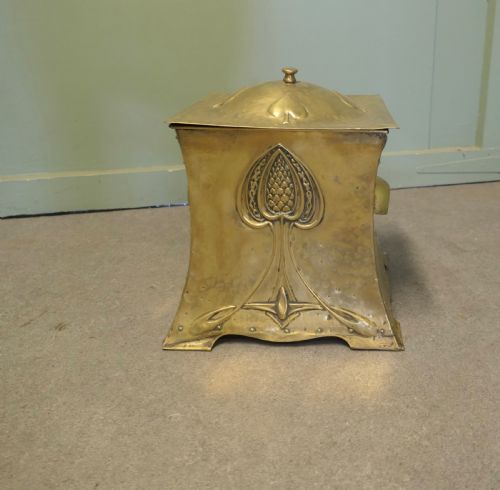
Origins stretch across English, French, Dutch, and Belgian workshops, bringing varied stylistic influences to the heavy metal bodies. Buyers searching for a repousse brass container will find items bearing styles from Arts and Crafts and Art Nouveau to French Provincial and Dutch Traditional.
Materials and construction
Makers shaped sheet brass and copper using hammering and repousse techniques, working designs from the reverse to raise motifs in relief on the surface. Iron and ebonised wood occasionally appear in structural supports, handles, or internal framing.
Surface ornamentation relies on chased detailing, applied copper bands, and cast elements such as lion mask handles or animal heads. Makers utilised these methods to build robust fireside vessels capable of withstanding heavy daily use.
Repousse Brass Container Retail Price Guide 2026
Typical asking prices for repousse brass container among the pieces listed under this phrase on Sellingantiques today, from the lower quarter to the upper quarter. They describe what is for sale here now, not the wider market.
Listings feature Victorian, Edwardian, and Arts and Crafts pieces utilising brass, copper, and ebonised wood across various domestic forms.
Assessing quality and character
Quality rests in the crispness of the repousse relief work and the structural integrity of the heavy metal body. Pieces featuring named makers or distinct regional motifs display superior hand-finishing in the chased details and handle attachments.
The distinction between ordinary utility items and finer examples lies in the depth of the metalwork and the harmony of applied elements like copper bands or cast brass feet.
Henry Loveridge·J Sankey and Sons·Petrus Ramus·Benham and Froud
The Repousse Brass Container Glossary
- Repousse
- A metalworking technique where the artisan hammers the design from the reverse side to create a raised relief on the front. This method gives these containers their characteristic textured surface patterns.
- Jardiniere
- An ornamental pot or stand designed to hold growing plants or flowers. These items often sit on floors or hearths as decorative focal points.
- Dinanderie
- The traditional term for medieval and later brass or bronze wares produced in the Meuse Valley region. The designation covers various decorative metal containers and domestic vessels.
- Coal scuttle
- A bucket or box specifically designed for holding and transporting household coal to the fireplace. They frequently feature hinged lids, swing handles, and shovel attachments.
Repousse Brass Container: Frequently Asked Questions
How do I clean a brass container?
Dust the surface regularly with a soft cloth to prevent grime accumulation.
Avoid harsh commercial metal polishes that strip the historic patina accumulated over decades of fireside use.
Can I use these for logs?
Many of these vessels were originally made as log bins, coal boxes, or fuel baskets.
Ensure the interior is dry before storing wood to prevent any residual moisture from affecting the metal.
What is the difference between a jardiniere and a log bin?
Jardinieres are generally designed to hold plants and feature watertight or decorative interiors.
Log bins and coal buckets are built heavier to withstand the rough handling of firewood and solid fuel.
How do I date an antique brass container?
Examine the construction methods, handle attachments, and stylistic markers such as Arts and Crafts or Art Nouveau motifs.
Victorian and Edwardian examples often display registration marks, maker stamps, or characteristic hand-beaten repousse work.