



Renaissance Revival Bronzes
Renaissance revival bronzes deliver the gravitas of sixteenth-century court sculpture through nineteenth-century foundry work.
Renaissance Revival Bronzes
Renaissance revival bronzes encompass nineteenth-century sculptures, ewers, candlesticks, and wall plaques inspired by earlier European eras. These objects draw heavily on French Renaissance revival, Italian Grand Tour souvenirs, and Baroque revival idioms.
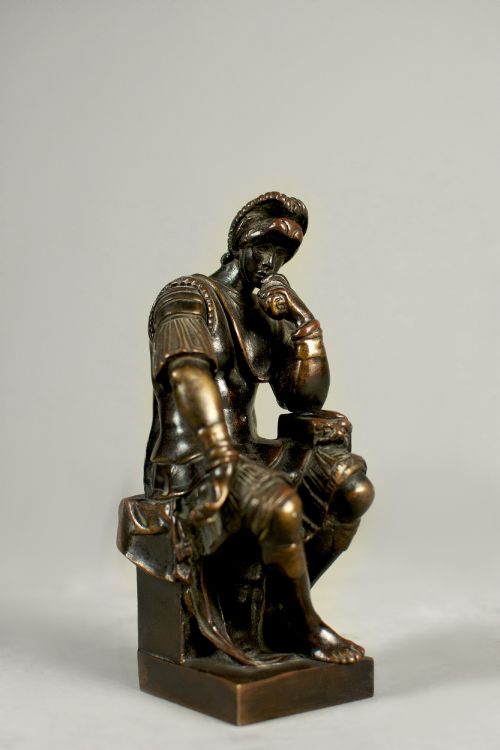
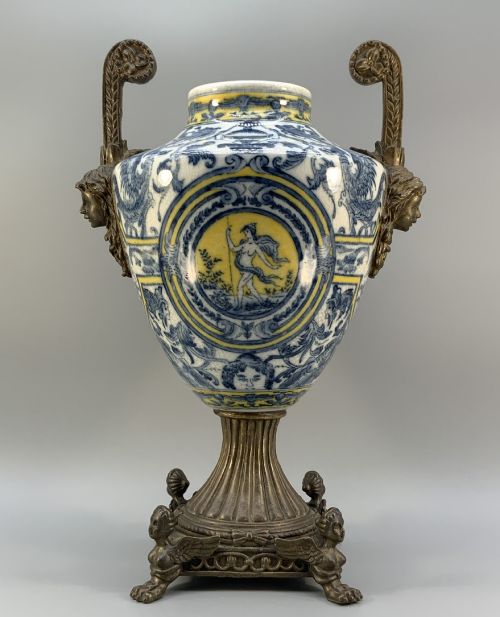
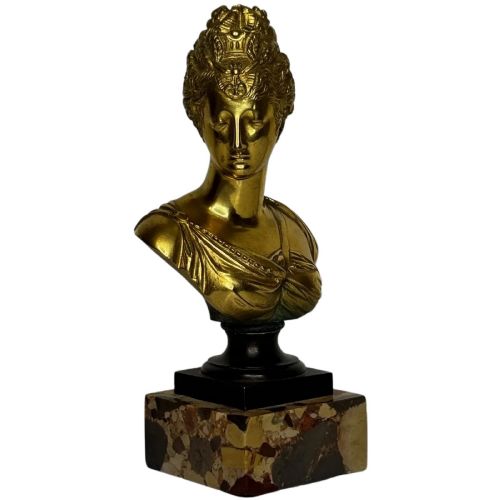
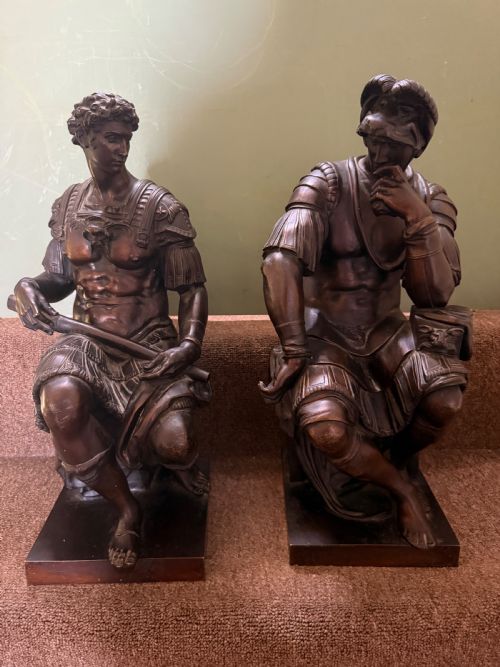
Buyers frequently encounter pairs of figural sculptures, decorative ewers, and mantel pieces dating from the eighteen-eighties and eighteen-sixties. Forms range from portrait busts of historical figures like Diana de Poitiers to architectural pedestals and repousse shields.
The aesthetic bridges classical motifs and Victorian craftsmanship, utilising materials such as patinated bronze, gilt bronze, marble, and ebonised wood. Pieces often replicate famous works after Michelangelo or Clodion, tailored for nineteenth-century drawing rooms.
How they were made
Foundries utilised bronze, gilt bronze, brass, and white metal, often combining them with marble bases or ebonised wood to enhance visual weight. Finishes alternate between deep patinated bronze surfaces and bright mercurial gilding.
Techniques relied on careful casting followed by extensive hand-chiselling and repousse work to sharpen details on plaques, ewers, and shields. Artisans mounted these metal bodies onto stone plinths or integrated them with ceramics and porcelain.
Renaissance Revival Bronzes Retail Price Guide 2026
Typical asking prices for renaissance revival bronzes among the pieces listed under this phrase on Sellingantiques today, from the lower quarter to the upper quarter. They describe what is for sale here now, not the wider market.
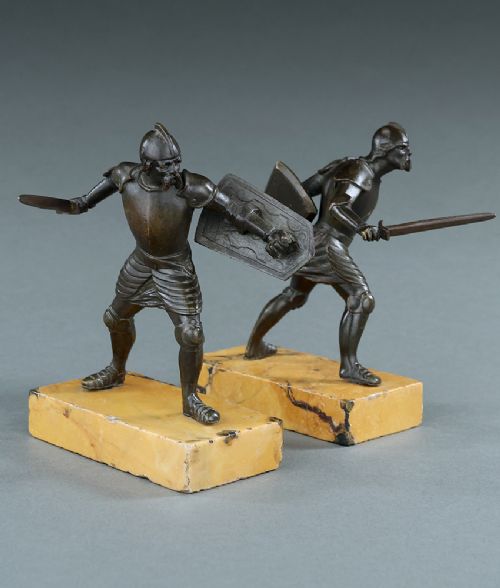
Several sixteenth-century knights spend their entire nineteenth-century retirement locked in eternal bronze combat across various mantelpieces.
What varies in quality
Quality rests primarily on the sharpness of the casting and the depth of the subsequent chasing work. Superior examples exhibit crisply rendered facial expressions, distinct armour detailing, and clean articulation on figural subjects.
The choice of secondary materials, such as heavy solid marble versus lighter timber supports, dictates the overall solidity and presence of the piece. Foundry signatures and attribution marks further distinguish standard decorative production from exhibition-grade objects.
Gustav Grohe·Barbedienne·Eurotrope Bouret·Duboy
The Renaissance Revival Bronzes Glossary
- Patinated bronze
- Bronze treated with chemical solutions to produce a controlled surface colour, typically dark brown or greenish-black. This layer protects the metal and accentuates sculptural contours.
- Repousse
- Metalworking technique where a design is hammered into relief from the reverse side of a sheet of metal. It frequently appears on sixteenth-century style shields and decorative plaques.
- Gilt bronze
- Bronze coated with a thin layer of gold, historically applied using mercury gilding or electroplating. The technique produces a brilliant golden lustre that resists tarnishing.
- Grand tour
- Nineteenth-century travel phenomenon where wealthy Europeans collected souvenir sculptures, bronzes, and architectural models in Italy. These souvenirs typically reproduced famous classical and Renaissance monuments.
- Ewer
- Large jug with a wide spout and elaborate handle, historically used for pouring water. In revival decorative arts, it functions primarily as an ornamental vessel.
- Tazza
- Shallow saucer-like dish mounted on a stem and foot, used as a centrepiece. Nineteenth-century examples often incorporate gilt bronze and aesthetic movement design elements.
Renaissance Revival Bronzes: Frequently Asked Questions
What are renaissance revival bronzes?
These objects are nineteenth-century decorative and sculptural works inspired by sixteenth-century European art. They include figures, candlesticks, ewers, and plaques cast in bronze and other metals.
Makers drew upon Italian and French Renaissance sources, often producing Grand Tour souvenirs or large exhibition pieces for Victorian interiors.
How were bronze ewers used?
Decorative ewers served primarily as ornamental display pieces on sideboards, mantelpieces, and pedestals during the Victorian period. They mirrored earlier functional vessels but functioned as pure decoration.
Paired with basins or displayed alone, they demonstrated the owner's appreciation for historical metalwork and classical form.
How do I date these bronzes?
Dating relies on stylistic clues, foundry marks, and accompanying materials like marble or ebonised wood. Most pieces date from the mid to late nineteenth century, specifically between eighteen-fifty and nineteen-hundred.
Victorian revival styles often combine Renaissance figures with nineteenth-century casting techniques and mounting methods.
What subjects do these sculptures depict?
Subjects commonly include historical figures, literary characters, and Renaissance nobility such as Henry the Fourth, Diana de Poitiers, and the Medici family. Many pieces replicate famous Italian monuments and sculptures after Michelangelo.
Duelling knights, courtier figures, and classical allegories also appear frequently across the surviving inventory.