


Renaissance Revival Artwork
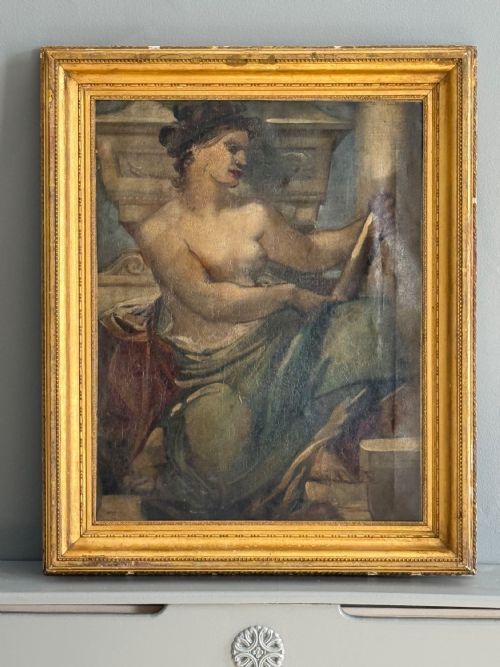
Renaissance revival artwork brings the grand religious iconography and portraiture of earlier centuries into nineteenth-century interiors through skilled oil paintings and decorative panels.
Renaissance Revival Artwork
Renaissance revival artwork encompasses oil paintings on canvas and wood panels alongside decorative metalwork and enamel plaques created during the nineteenth century. Buyers searching this phrase encounter historical subjects, religious scenes, and portraits directly inspired by sixteenth-century masters such as Raphael.
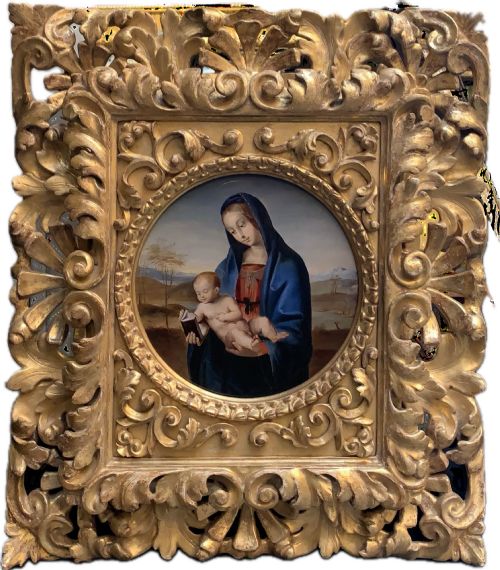
The most common examples on this page are nineteenth-century oil paintings replicating famous Renaissance compositions, often executed by skilled followers or schools operating in the Italian Renaissance style. Alongside these canvases, collectors find carved walnut wall plaques, repousse shields, and Limoges enamel pieces on copper panels.
Pieces span several periods, with the majority originating in the nineteenth century while drawing heavily upon sixteenth-century prototypes. Formats range from large-scale religious compositions of the Holy Family and Madonna figures to arched wall panels and detailed portraiture.
How they were made
Makers utilised traditional canvas and wood supports for oil paintings, applying oil paint and gesso to replicate the rich surfaces of earlier periods. Gilding on wood frames and panels was frequently employed to enhance the visual weight of these revival decorative objects.
Metal and enamel works on this page demonstrate specialised techniques such as repousse shaping on shields and detailed enamel painting on copper bases. These methods allowed nineteenth-century artisans to echo the craftsmanship of Renaissance metalwork and Limoges production.
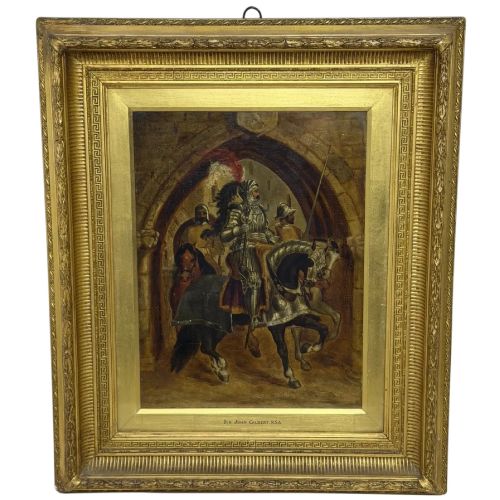
Several pieces depict famous subjects like the Madonna or knights, painted by artists who clearly loved the sixteenth century just a bit too much.
What varies in quality
Quality in these revival pieces rests upon the precision of the brushwork and the fidelity with which the artist interprets the original master's composition. Superior examples display nuanced handling of light and shadow, particularly in flesh tones and drapery.
The material integrity of the support, whether carved walnut panels, copper plates, or stretched canvas, dictates the longevity and physical presence of the artwork. Finer decorative panels show crisp carving and meticulous framing that complement the historical subject matter.
Sir John Gilbert RA·Raffaello Sanzio Da Urbino·Girolamo Dai Libri·Joachim Bueckelaer·Samson
The Renaissance Revival Artwork Glossary
- Repousse
- Metalworking technique where the metal is hammered from the reverse side to create a raised design on the front. This method appears on decorative shields.
- Gesso
- A white paint mixture consisting of a binder mixed with chalk, gypsum, or pigment, used as a prepared surface for painting or gilding on wood panels.
- Enamel
- A glassy substance applied to metal objects through firing to create a durable and decorative coloured surface, seen here on copper plaques.
- Giltwood
- Wood that has been treated with a thin layer of gold leaf or gold paint, frequently used for ornate picture frames and wall panels.
- Oil painting
- Pigment mixed with a drying oil binder, utilised extensively across nineteenth-century canvas and panel works referencing earlier centuries.
Renaissance Revival Artwork: Frequently Asked Questions
What is Renaissance revival artwork?
Renaissance revival artwork consists of nineteenth-century pieces that emulate the artistic styles, subjects, and techniques of the fifteenth and sixteenth centuries. These works include oil paintings after Raphael, enamel plaques, and carved wooden panels.
Artists and workshops during this period sought to capture the grandeur of the Italian and Northern Renaissance for Victorian and Edwardian interiors, reinterpreting historical religious scenes and portraits.
How were these paintings created?
These works were produced using traditional materials such as oil paint on canvas or wood panels, alongside enamel on copper and carved walnut. Painters studied earlier masterpieces to produce faithful interpretations or original compositions in a historical manner.
Craftsmen also utilised techniques like repousse metalwork and gesso preparation to build up the rich, textured surfaces characteristic of revival decorative arts.
Where should I hang these wall panels?
Large oil paintings and carved wall panels require sturdy walls capable of supporting heavy wood frames and canvases. Placing them in rooms with controlled light levels protects the oil paint and gilt surfaces from fading.
These pieces function well as focal points above mantelpieces or within traditional dining and living spaces that complement their historical aesthetic.
How do I identify the period?
Identifying the period involves examining the materials, framing techniques, and style of the canvas preparation. While the subjects often date to the sixteenth century, the physical components typically point to nineteenth-century manufacturing.
Signatures, stamps, and the specific methods used on the reverse of wood panels or copper plates often provide further clues to the exact era of creation.