


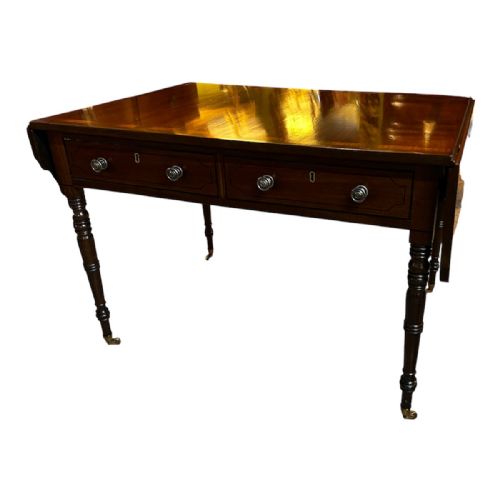


Regency Writing Table on Castors
A regency writing table on castors is a functional antique piece designed for mobility and study, offering classic proportions and rich timber character for the home.
Regency Writing Table on Castors
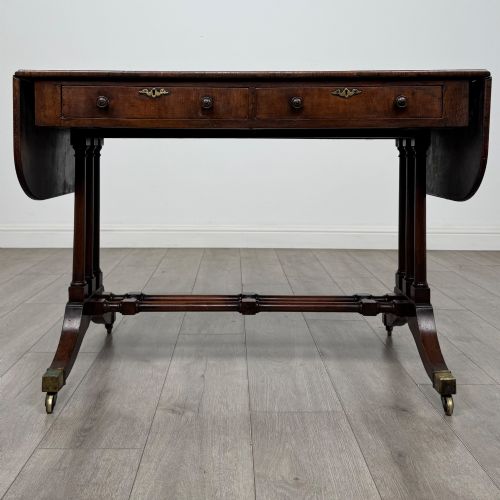
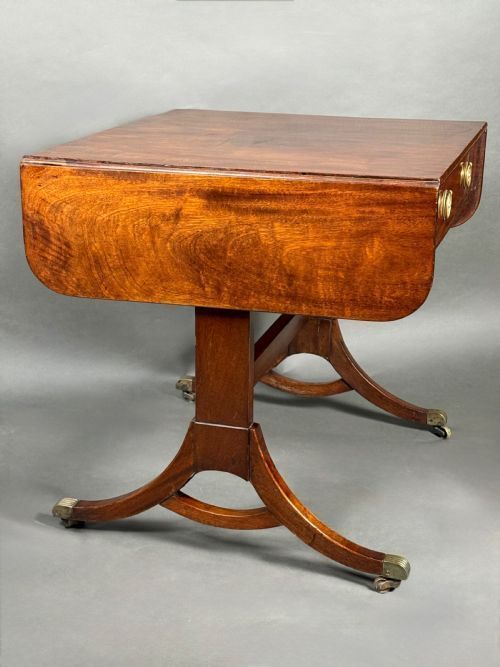
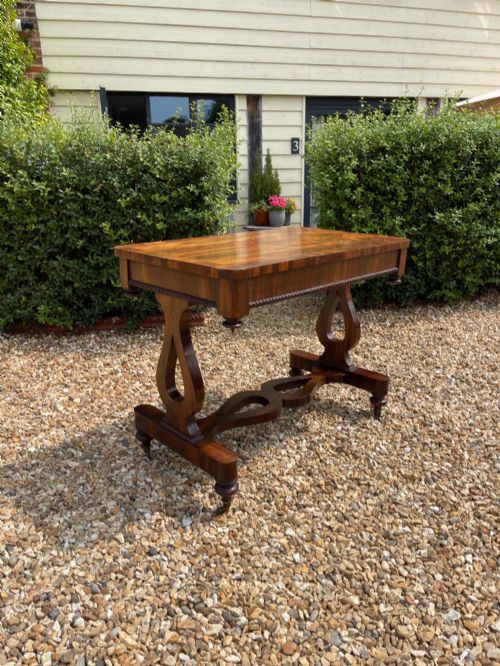
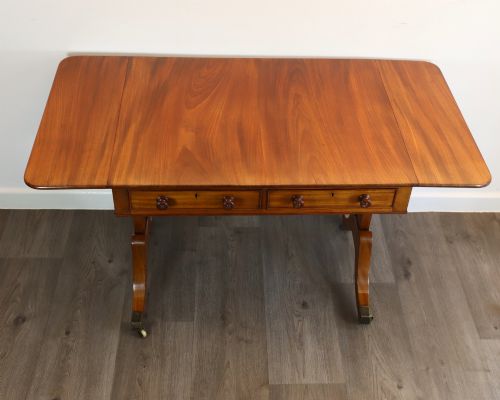
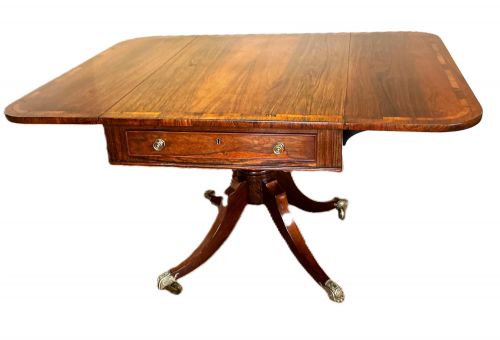
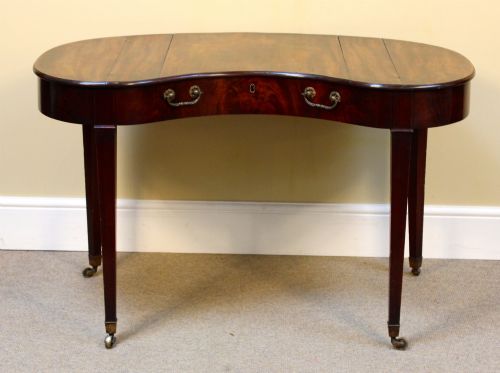
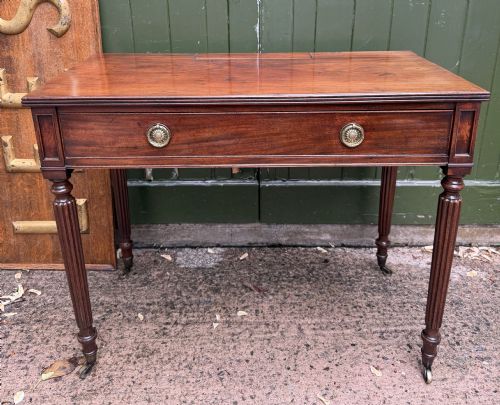
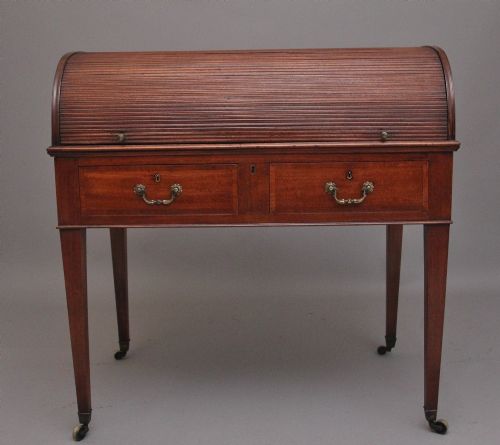
A regency writing table on castors encompasses a versatile range of antique furniture forms designed for practical daily use. The selections available on this page lean heavily toward classic sofa tables, drum tables, and dedicated library desks originating from the Georgian, Regency, and Victorian periods.
Buyers will encounter various structural formats including drop-flap sofa tables, revolving drum tables, and kidney-shaped writing desks. These pieces typically rest upon wheeled supports, allowing them to be moved easily across a room as light and requirements changed.
Materials and Construction
Cabinet makers relied primarily on solid and veneered timbers, utilising mahogany, flame mahogany, and rosewood for primary surfaces. Finer examples incorporate contrasting details in satinwood, boxwood, and yew wood to accentuate borders and drawers.
Many of these tables retain their original brass wheels, proving that even 19th-century furniture appreciated a smooth ride across the carpet.
Assessing Quality and Character
The distinction between standard examples and superior pieces rests upon the choice of timber and the complexity of the grain. Highly figured flame mahogany and richly toned rosewood elevate the visual presence of a desk far beyond plain utility timbers.
Refinement in secondary details, such as inlaid stringing, carved supports, and original brass castors, separates everyday utilitarian furniture from exceptional cabinet work. The harmony of proportions and the crispness of the original joinery define the upper tier of surviving examples.
Gillows of Lancaster
The Regency Writing Table on Castors Glossary
- Castor
- A small wheel mounted on a swivel assembly attached to the foot of a table. This mechanism allows heavy timber furniture to be repositioned smoothly across floor surfaces.
- Sofa table
- A rectangular occasional or writing table traditionally designed to sit directly in front of a sofa. These pieces commonly feature drop leaves on either side to expand the surface area.
- Drum table
- A circular library or writing table featuring a deep frieze fitted with drawers around the circumference. The top is frequently inset with a writing surface of leather.
- Tambour
- A flexible shutter or sliding door constructed from narrow strips of wood glued to a canvas backing. This mechanism conceals small compartments within desks and writing cabinets.
- Stringing
- A narrow inlay of contrasting wood used in thin lines to outline panels and drawers. It highlights the geometric layout of the cabinetwork.
Regency Writing Table on Castors: Frequently Asked Questions
What is a regency writing table on castors?
A regency writing table on castors is a movable antique desk or table produced during the late Georgian and Regency eras. These pieces were built for study and correspondence, featuring wheeled supports for easy repositioning.
They appear in various formats including sofa tables with drop leaves, circular drum tables, and freestanding library desks. Each style reflects the practical and aesthetic demands of 19th-century domestic interiors.
How were these tables used originally?
These tables served as versatile surfaces for reading, writing letters, and organising correspondence in libraries and drawing rooms. Because they were fitted with castors, occupants could roll them closer to fireplaces or windows as daylight shifted.
Drop-leaf sofa tables were positioned near seating to hold books or sewing equipment, while drum tables stood in the centre of rooms as permanent writing stations with accessible drawer storage.
How do I live with a regency writing table?
Integrating one of these tables into a modern room requires placing it where its timber surfaces and proportions can be appreciated. Many serve effectively as compact desks, console tables, or sofa-side surfaces in living spaces.
Care involves keeping the wood conditioned and protecting leather writing inserts from direct moisture. Allowing space around the piece also highlights the mobility provided by the original castors.
How do I tell different periods apart?
Distinguishing between Georgian, Regency, and Victorian pieces involves examining the timber choices, hardware styles, and overall silhouette. Georgian and Regency pieces often display clean classical lines, lighter satinwood inlays, and rich mahogany or rosewood grains.
Later Victorian interpretations tend to feature heavier carving, darker finishes, and slightly altered proportions. Comparing the specific joinery and secondary woods helps confirm the likely era of manufacture.