
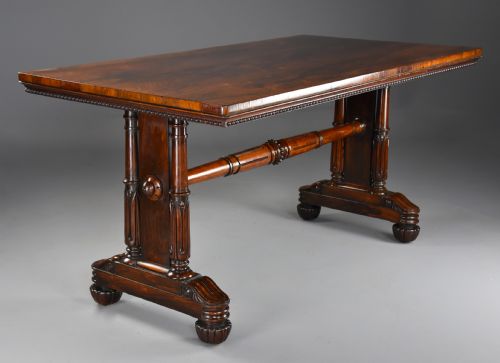
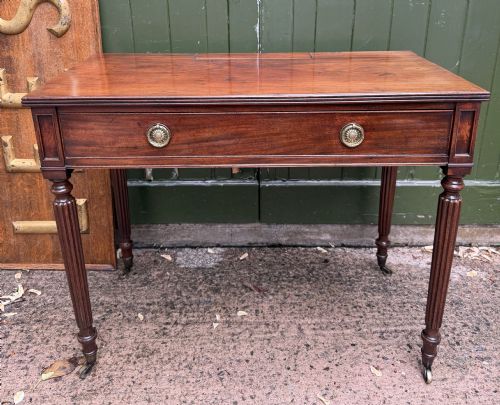


Gillows Style Writing Desk
A gillows style writing desk brings architectural proportion and uncompromising cabinet-making directly to the study.
Gillows Style Writing Desk
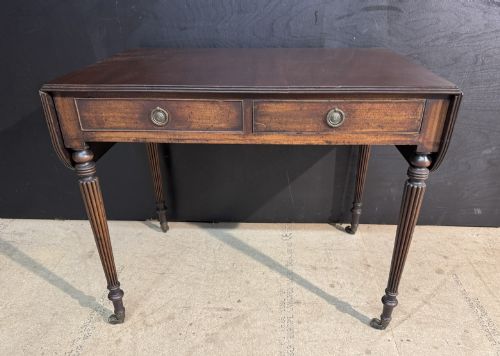
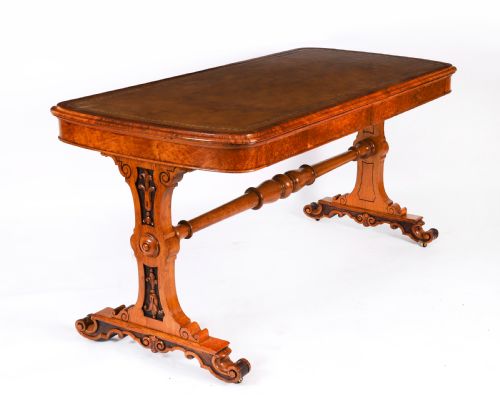
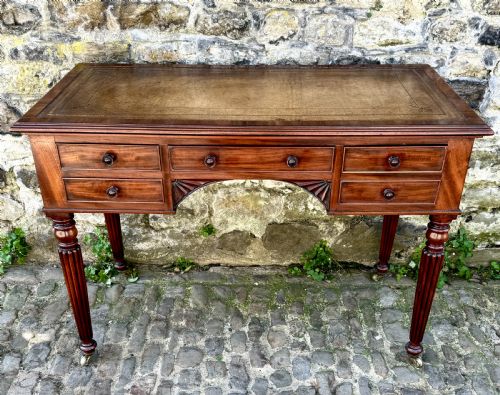
A gillows style writing desk embodies the disciplined proportions and cabinet-making traditions associated with the Lancaster and London workshops. These pieces span the Georgian, Regency, and Victorian periods, taking forms such as library tables, compact davenports, and grand partners desks.
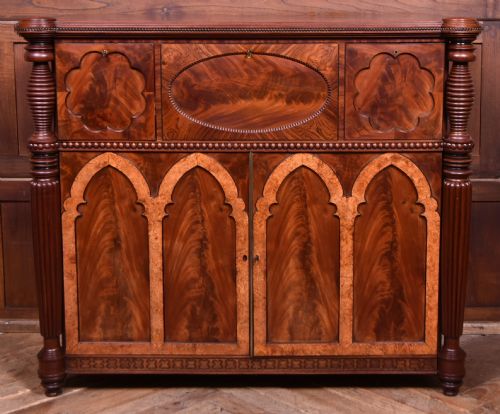
The versions most frequently encountered on this page belong to the Regency and George IV eras, often constructed in figured mahogany or rich rosewood. They range from utilitarian chamber tables to sophisticated secretaire cabinets designed for formal libraries.
Materials and construction
Makers utilised dense native and exotic timbers, selecting Cuban mahogany, rosewood, walnut, and satinwood for both their grain and structural stability. Secondary woods like oak and pine appear in drawer linings, demonstrating a commitment to internal durability.
Brass mounts, inset tooled leather surfaces, and specialised hardware such as Bramah locks complete the construction. Timber selection governed the exterior finish, with flame mahogany and burr walnut chosen to create striking visual depth.
Secret compartments occasionally emerge behind dummy book spines, hiding inkwells from opportunistic scribes.
Distinguishing the execution
The hierarchy of these desks rests on the precision of the joinery and the selection of timber veneers. Superior examples display impeccably matched grain across large drawer fronts and unbroken friezes, alongside secondary timbers of equal grade.
Hardware and secondary detailing further separate the standard production from the exceptional. Original brass galleries, finely cast mounts, and smoothly operating mechanisms indicate a workshop operating at the highest level of execution.
Gillows of Lancaster·James Winter and Son·Waring and Gillow
The Gillows Style Writing Desk Glossary
- Partners desk
- A large double-sided writing table designed for two people to sit opposite one another, featuring banks of drawers on both long sides.
- Davenport
- A compact desk featuring a sloped, hinged writing lid above a pedestal of side drawers, originating in the late eighteenth century.
- Secretaire
- A cabinet or desk incorporating a pull-out writing drawer or fall-front flap that conceals small pigeonholes and letter drawers.
- Sofa table
- A rectangular occasional or writing table with drop leaves at either end, traditionally placed before a sofa.
- Bramah lock
- A high-security cylindrical lock invented by Joseph Bramah in the late eighteenth century, frequently found on superior campaign and writing furniture.
Gillows Style Writing Desk: Frequently Asked Questions
How do I identify a genuine period piece?
Examine the secondary timbers inside the drawer boxes and the hand-cut dovetailing. Period pieces exhibit construction methods consistent with eighteenth and nineteenth century cabinet-making rather than modern machinery.
Look closely at the brass hardware, timber shrinkage patterns, and the wear on the writing surface. These physical characteristics reveal the age and workshop origin more reliably than secondary labels.
What is a Davenport desk?
A Davenport is a small, freestanding desk featuring a sloping writing surface lined with leather. The upper section often encloses stationery compartments.
Beneath the writing slope sits a pedestal containing a set of functional drawers, frequently flanked by dummy drawers on the reverse side for symmetry.
How should I maintain the leather top?
Keep the leather surface nourished with a neutral paste wax or specialised leather balm to prevent cracking. Avoid placing hot cups or liquids directly onto the hide.
Direct sunlight causes the tooling and the surrounding wood to fade unevenly. Position the desk away from intense heat sources and south-facing windows.
Where were these tables placed originally?
Library tables and partners desks stood centrally in large rooms rather than against walls. Their finished backs allowed them to occupy open floor space.
Smaller chamber tables and davenports were designed for private dressing rooms or bedrooms. Their modest proportions accommodated more intimate domestic interiors.