

Regency Wooden Dresser
Regency wooden dresser searches bring up mahogany and pine chests of drawers and sideboards that anchor a room with period proportion and practical storage.
Regency Wooden Dresser
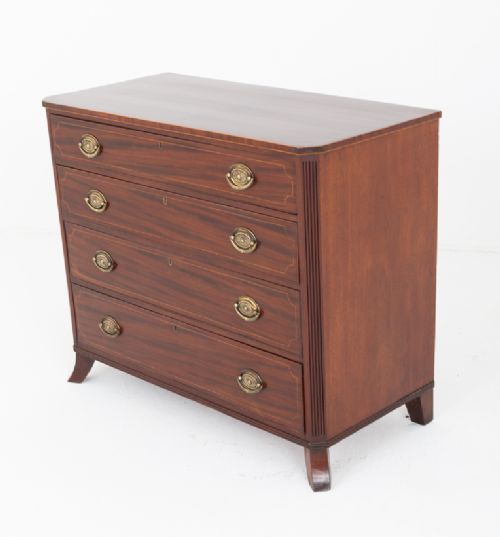
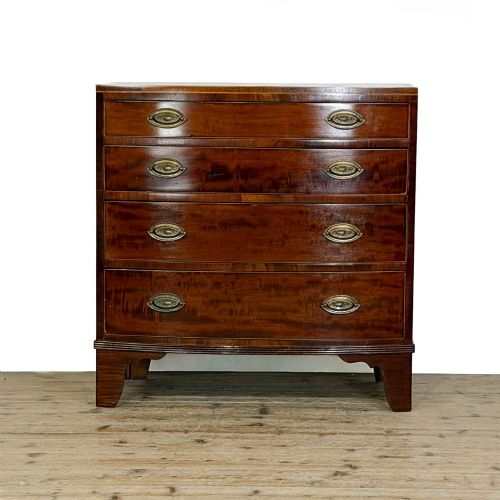
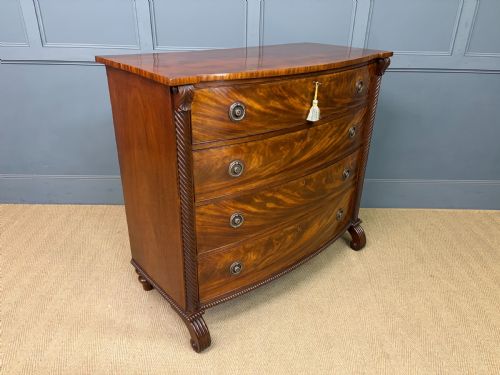
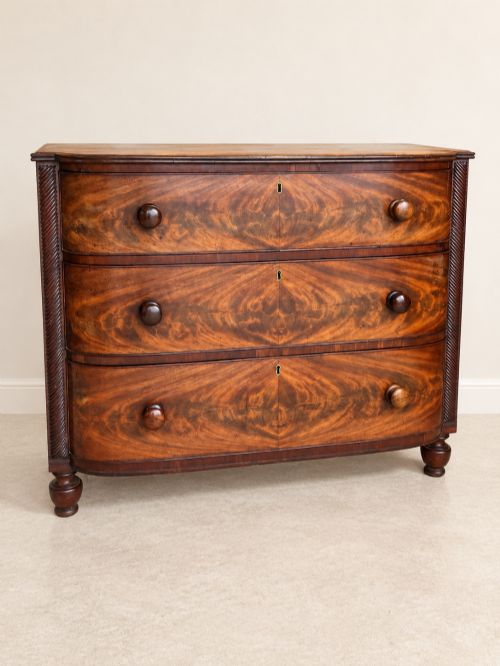
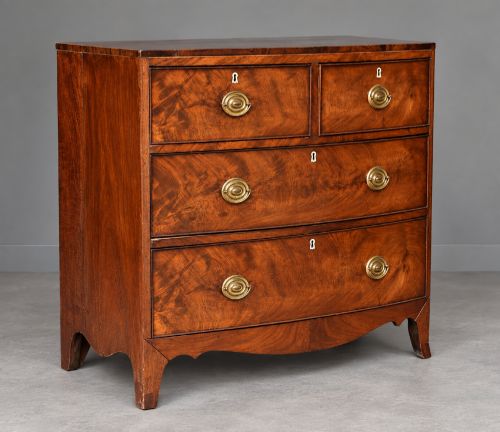
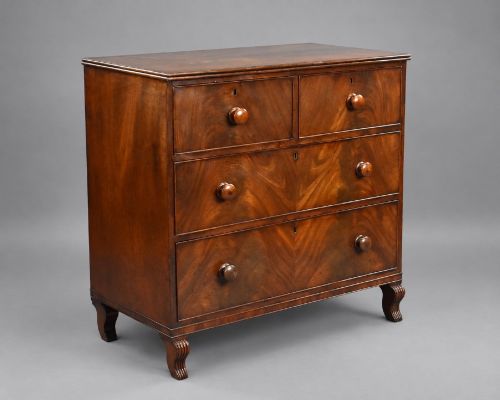
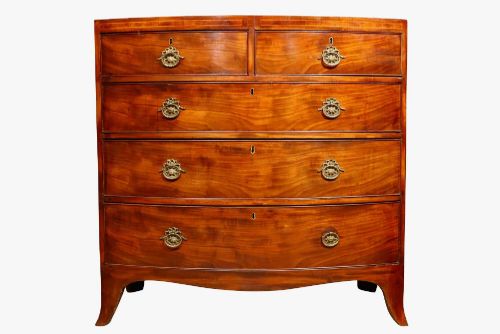
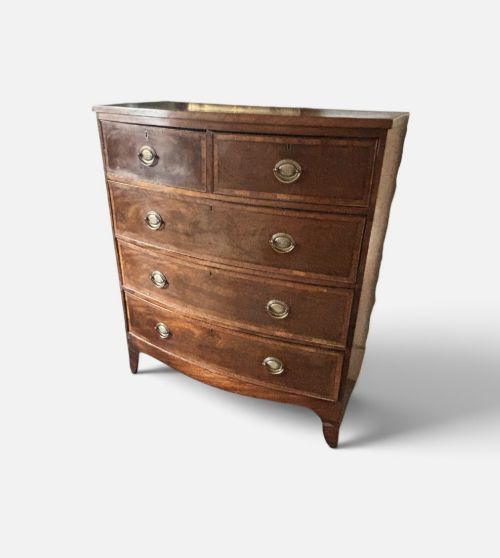
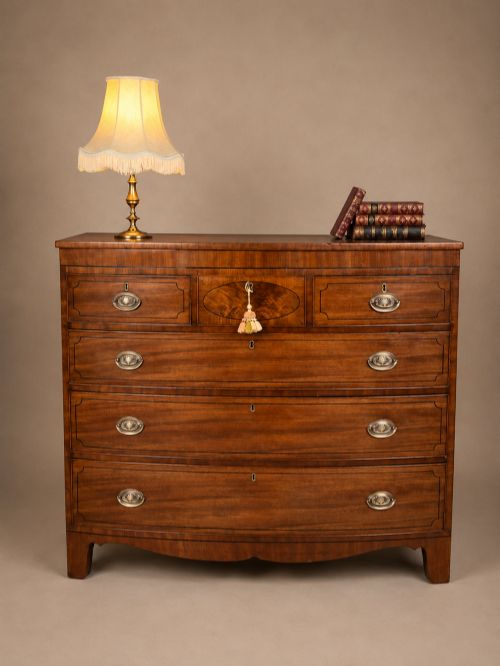
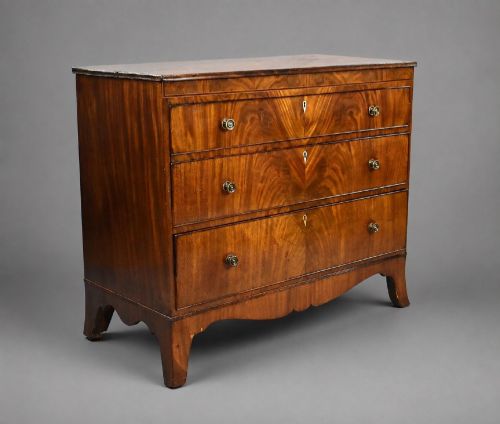
A regency wooden dresser search primarily reveals chests of drawers and sideboards spanning the Regency, Georgian, and Victorian periods. Buyers encounter mahogany forms most frequently, often featuring bow fronts and flame mahogany veneers.
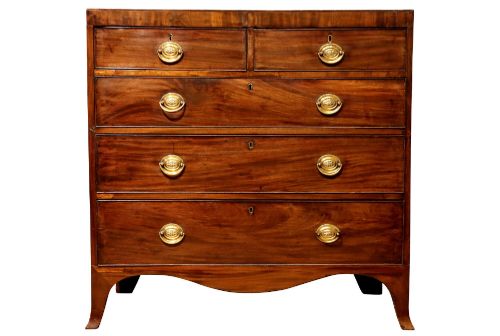
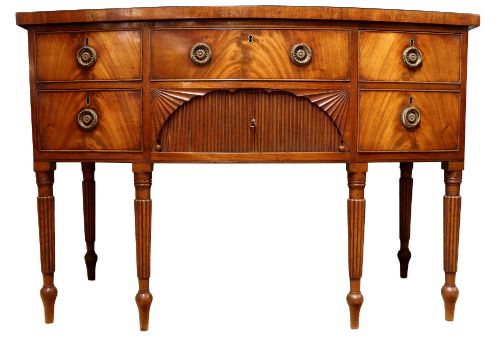
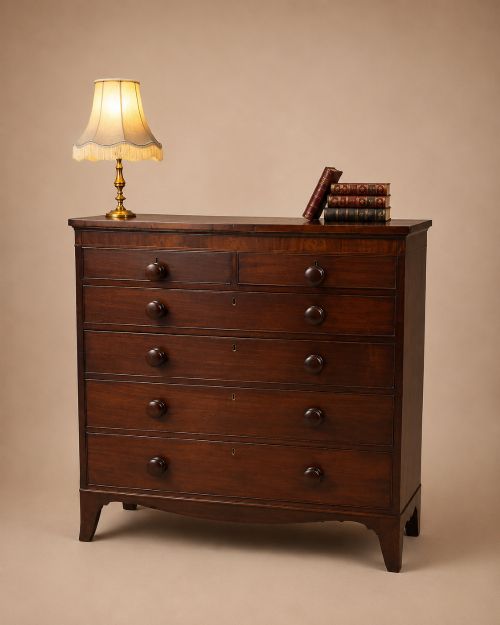
Makers and workshops constructed these storage pieces in various configurations, ranging from small bowfront chests to tall five-height drawer units and brass inlaid chiffoniers. Scottish Regency and English country variations also appear among the broader selection of nineteenth-century furniture.
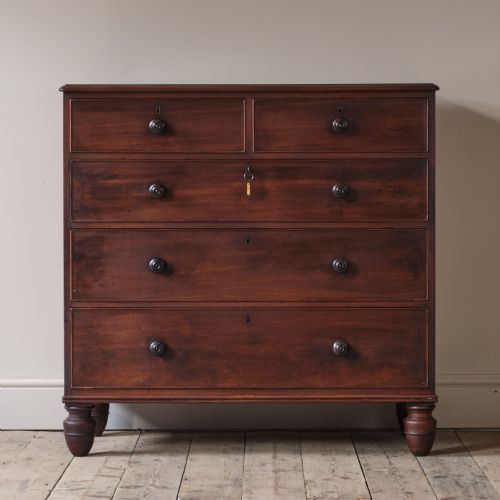
The core forms serve the exact same storage purpose today as they did in the early nineteenth century, providing deep drawers and flat top surfaces. Most survivors maintain their original timber carcass structure, though specific secondary woods like oak and pine appear inside the drawers.
How they were made
Cabinet makers utilised solid mahogany, pine, and oak as structural timbers, applying fine flame mahogany veneer and satinwood crossbanding to visible exterior surfaces. Brass hardware, including drop handles and inlay strips, added metallic contrast to the dark wood grains.
Joiners built drawer boxes with hand-cut dovetail joints and lined them with secondary timbers such as oak or pine. Pine also served as the primary painted body for occasional brightly finished pieces.
Listings feature mahogany, flame mahogany veneer, satinwood, pine, and oak across nineteenth-century forms.
What varies in quality
The choice of face veneer dictates much of the visual impact, with symmetrical flame mahogany figuring and precise satinwood crossbanding marking out the superior examples. Plain mahogany boards provide a simpler utility without the decorative flash of matched grain patterns.
Proportion and cabinet-making restraint separate standard regional pieces from pieces attributed to known makers like T & G Seddon. Delicate details such as brass inlay, faux bamboo turning, and caddy tops demand higher skill from the workshop.
T & G Seddon
The Regency Wooden Dresser Glossary
- Bow front
- A convex curved front profile that projects outward in the centre, common on chests of drawers from this era. This shape softens the room's angles.
- Flame mahogany
- A veneer cut from the fork of the mahogany tree to create a distinctive, flickering flame pattern. Cabinet makers reserved this timber for principal drawer fronts.
- Crossbanding
- A narrow strip of veneer laid around the border of a drawer front so the grain runs at right angles to the surrounding wood. This technique frames the primary panel.
- Chiffonier
- A low sideboard or cabinet featuring shelves or a raised back, designed for dining rooms and parlours. These pieces often incorporate brass inlay.
- Caddy top
- A moulded top edge resembling the lid of a tea caddy, featuring rounded corners and stepped profiles. It provides a finished architectural cap to a chest.
Regency Wooden Dresser: Frequently Asked Questions
How are these chests arranged?
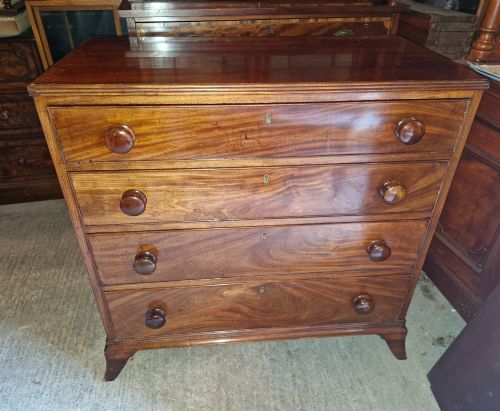
These storage units typically organise drawers in graduated rows, starting with smaller top drawers and descending to larger bottom drawers.
Tall variants reach five heights, while standard models house four main drawers.
Where were these pieces used?
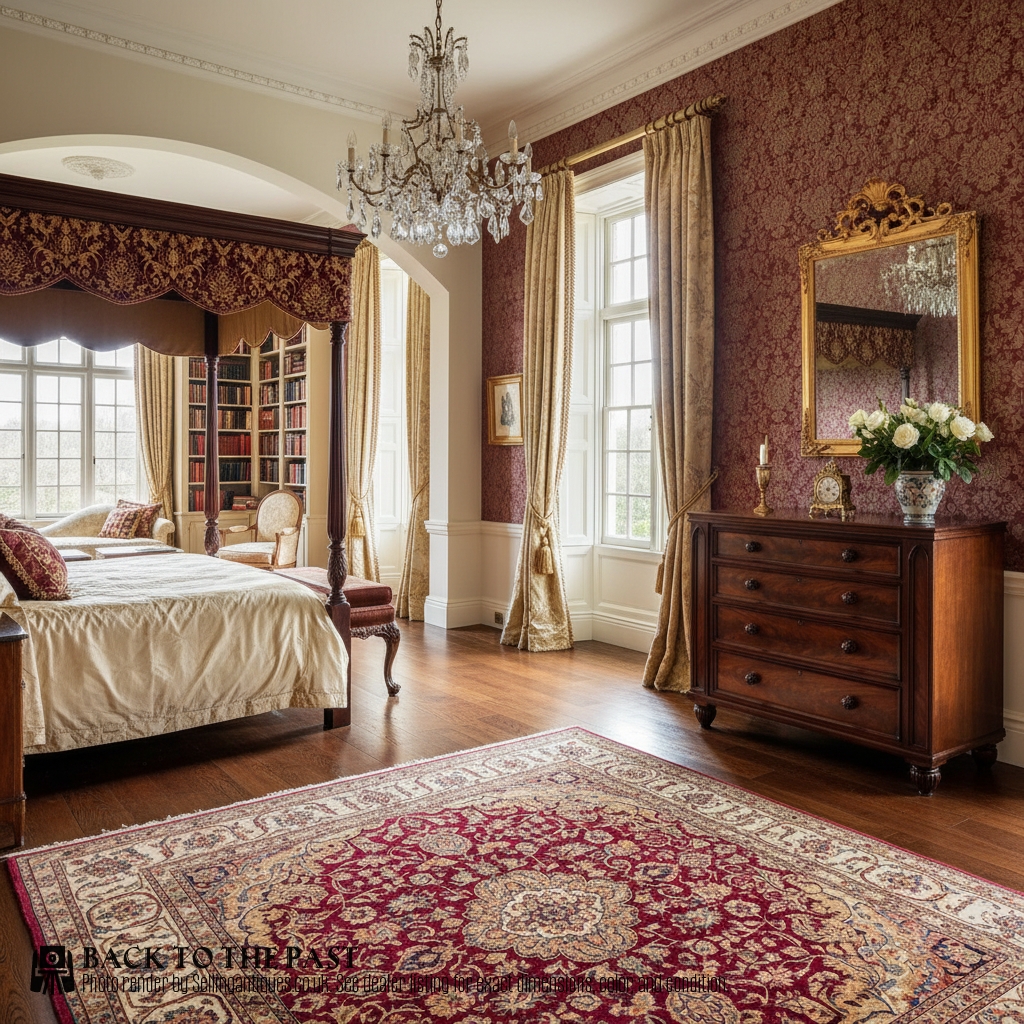
Bedrooms and dressing rooms housed these chests for garment storage and linen organisation.
Sideboards and chiffoniers occupied dining rooms and entrance halls for serving and display.
How do I spot flame mahogany?
Flame mahogany displays a distinctive swirling pattern that resembles flickering fire or feathers across the wood.
Cabinet makers placed these matched veneers on the main drawer faces to catch the light.