






Regency Walnut Furniture
Regency walnut furniture brings rich figure and dark warmth to formal rooms through centre tables, Davenport desks and occasional seating.

Regency Walnut Furniture
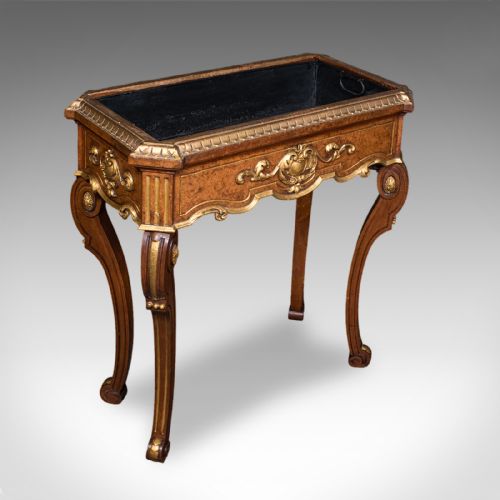
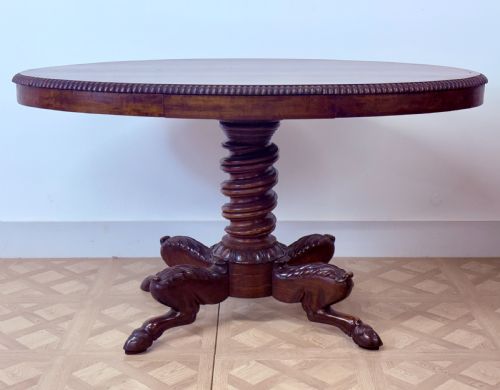
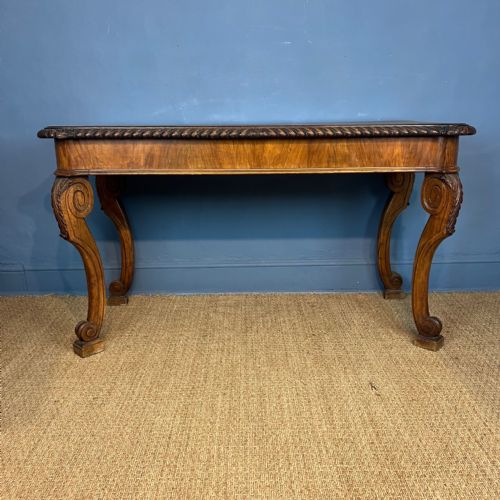
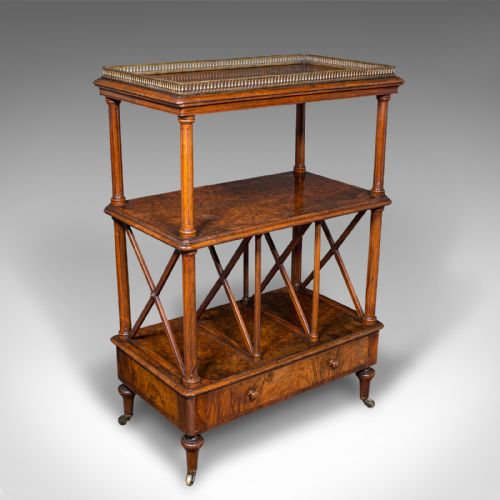
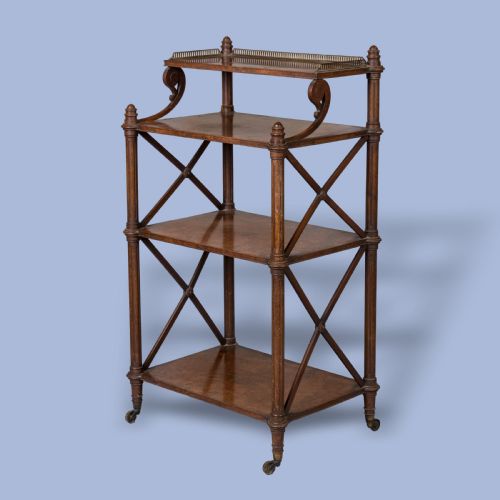
Regency walnut furniture encompasses diverse functional forms designed for domestic refinement during the nineteenth century. Pieces appearing here range from centre tables and Davenport desks to Canterbury stands, window seats and Wellington chests.
Buyers encounter substantial variety across English, Scottish and French origins spanning the Regency, William IV and Victorian periods. Forms combine utility with decorative presence, offering specific solutions for drawing rooms, libraries and hallways.
How they were made
Craftsmen utilised solid walnut and burr walnut veneers applied to supportive framing timbers to create striking surface patterns. Selected sections exploited the natural grain configuration of the timber for visual depth.
Secondary materials including brass, ormolu, leather and velvet were integrated into hardware mounts and writing surfaces. Structural elements often incorporated secondary woods alongside primary walnut construction.
Listings feature walnut, burr walnut, mahogany, oak and specimen wood tops alongside velvet, leather, brass and ormolu.
What varies in quality
The standard of execution depends upon the selection of timber veneers and the precision of cabinetmaking joints. Figured burr walnut requires meticulous handling to maintain smooth expanses across complex curves and drawer fronts.
Integration of secondary decorative elements such as brass inlay, ormolu mounts and turned supports determines the refinement of individual pieces. Construction integrity within internal drawers and hidden compartments reflects the original workshop capability.
Gillows·Holland and Sons
The Regency Walnut Furniture Glossary
- Burr walnut
- A veneer sliced from the knotty growths of the walnut tree, prized for its swirling and highly decorative grain patterns. It creates striking visual movement across table tops and cabinet doors.
- Davenport
- A compact desk featuring a sloping, hinged writing surface above a pedestal of drawers. It typically includes internal stationery compartments accessed from the side or top.
- Canterbury
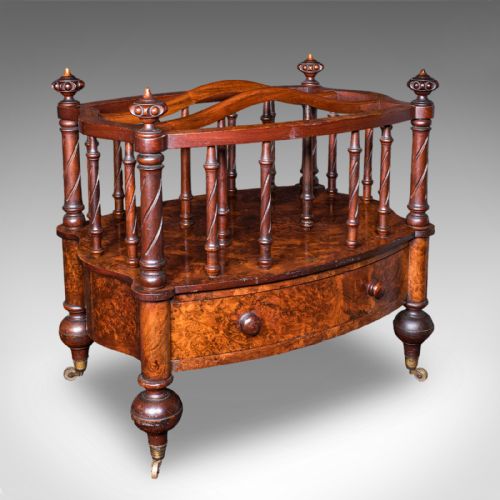
- A low stand featuring sloped partitions designed originally for holding sheet music or newspapers. Later examples serve primarily as magazine racks and display pieces.
- Ormolu
- Gilded bronze ornamentation applied to furniture for decorative accent. It provides a bright metallic contrast against dark timber surfaces.
- Wellington chest
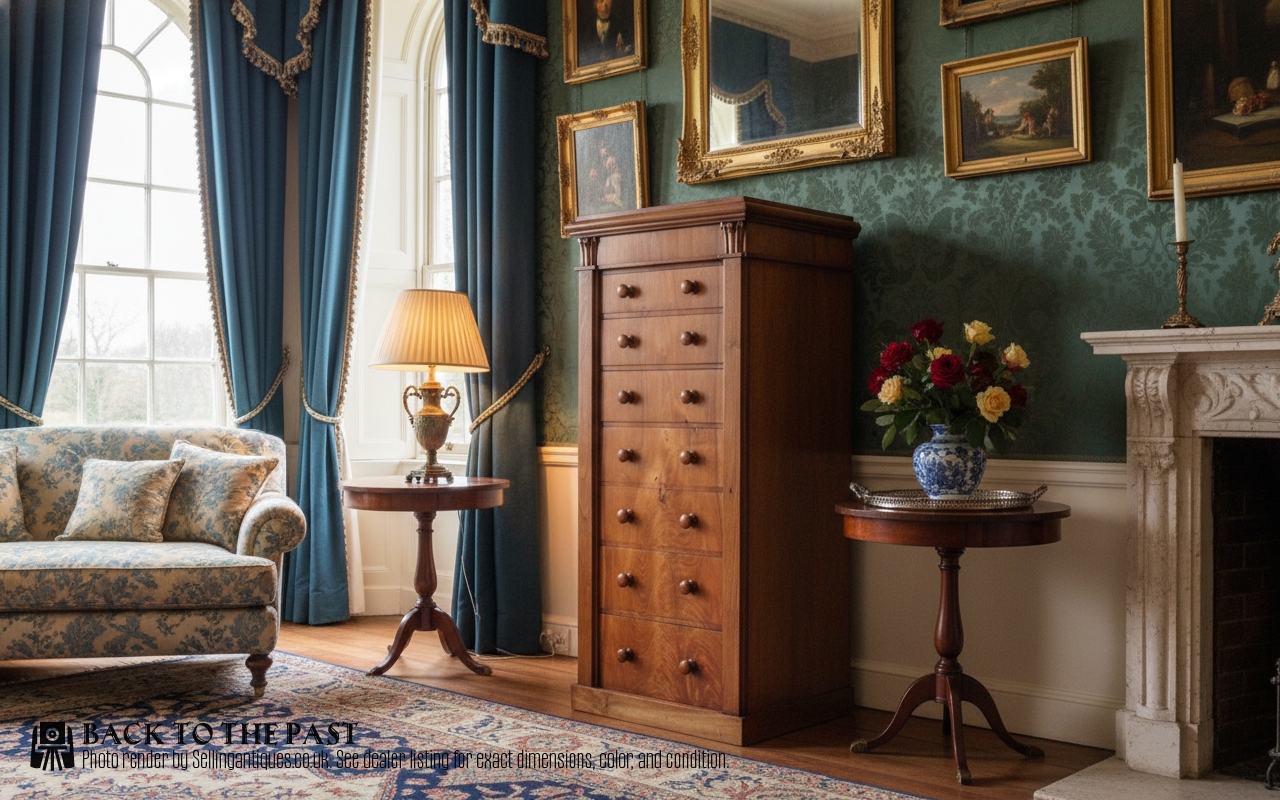
- A tall, narrow set of drawers secured by a locking side stile hinged to the cabinet frame. This mechanism locks every drawer simultaneously with a single key.
Regency Walnut Furniture: Frequently Asked Questions
What is a Davenport desk?
A Davenport desk is a compact writing cabinet featuring a sloping lid with a leather insert, supported over a pedestal of side drawers. It emerged during the early nineteenth century as a practical workspace for correspondence.
Inside, small pigeonholes and stationary compartments provide organised storage. Many examples include a pen drawer and pull-out slides on the sides.
How do I identify a Canterbury stand?
A Canterbury stand is recognised by its divided vertical compartments designed for holding folios, sheet music or periodicals. It typically stands on short legs fitted with castors for easy movement around a drawing room.
Lower sections frequently incorporate a single drawer or an open shelf. They appear in both open wood construction and upholstered combinations.
Where does burr walnut come from?
Burr walnut is sourced from arboreal growths or excrescences where abnormal cell growth creates intricate, swirling grain patterns. Cabinetmakers slice these knots into thin veneers to cover large flat surfaces.
This technique highlights the rich figure of the timber without relying on solid burr blocks. It became a defining decorative treatment for high-status nineteenth-century case pieces.
What is a Wellington chest?
A Wellington chest is a tall, narrow set of drawers secured by a hinged vertical locking bar on one side. This wooden locking arm fastens with a key to secure all drawers simultaneously.
The vertical format makes it suitable for tight spaces while offering substantial storage capacity. The design prioritised both security and efficient footprint utilisation in period bedrooms.