
Regency Tilt Top Dining Table
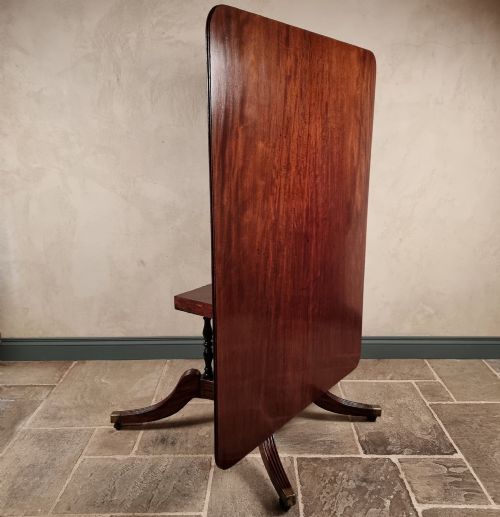
A regency tilt top dining table brings sculptural presence and clever flexibility to a room, tipping upright against a wall when the feast is cleared.
Regency Tilt Top Dining Table
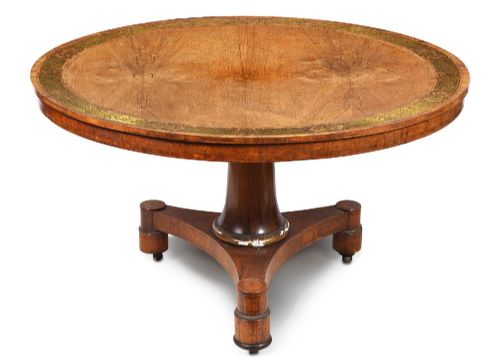
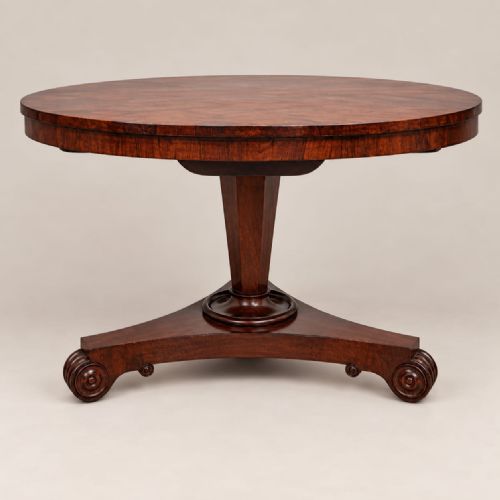
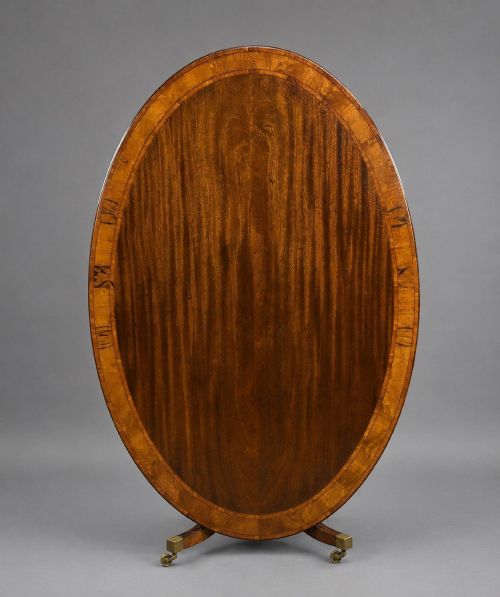
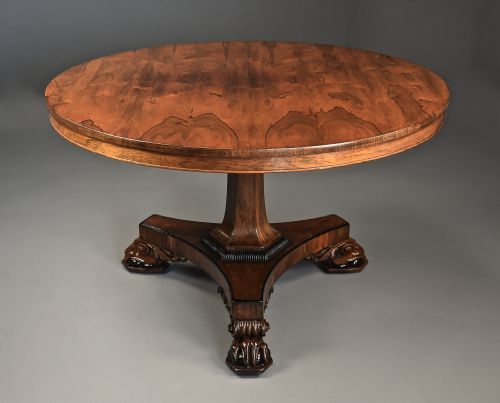
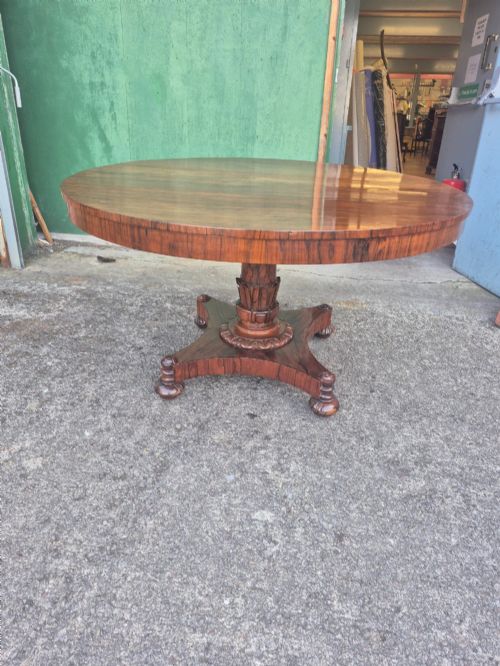
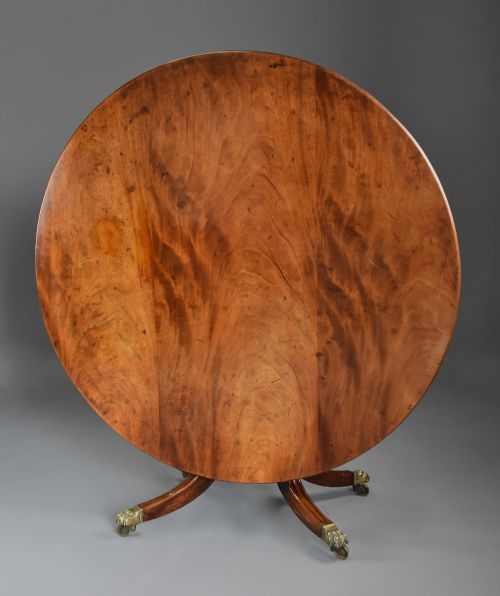
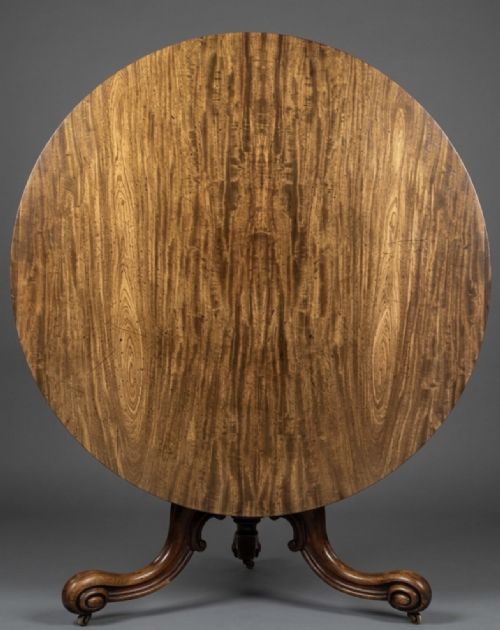
When you search for a regency tilt top dining table, you encounter circular, oval and breakfast tables spanning the nineteenth century alongside later revivals. The form typically stands on a central pillar supported by a platform or branched legs, combining the stability needed for dining with the mechanism to tilt the surface.
Original pieces date from the Georgian, Regency, George III, George IV, and William IV periods, constructed in rich timbers designed to anchor a principal room. You also meet Edwardian and later reproductions built to replicate the classical proportions of earlier eras.
Most examples function equally well as centre tables during daily life, shifting effortlessly into dining service when guests arrive. Their versatile footprints make them practical for contemporary houses that retain an appetite for classical cabinet work.
How they were made
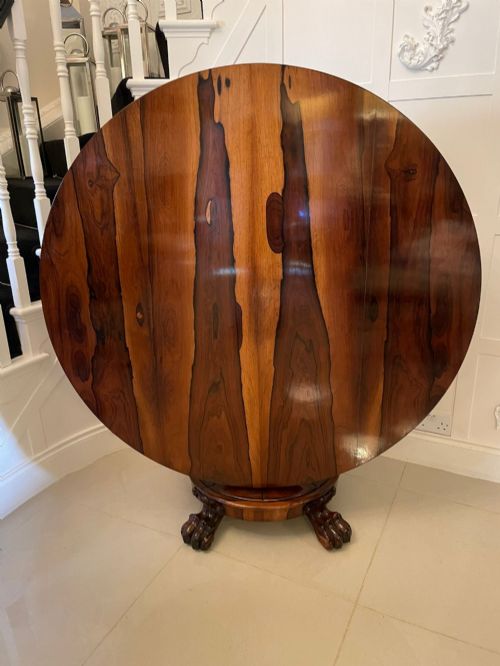
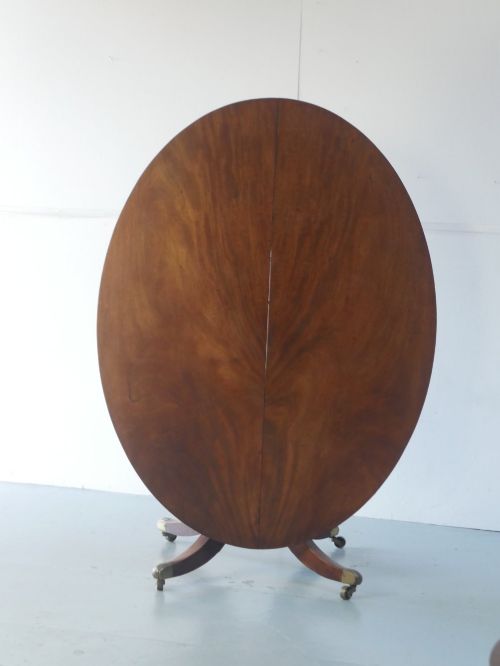
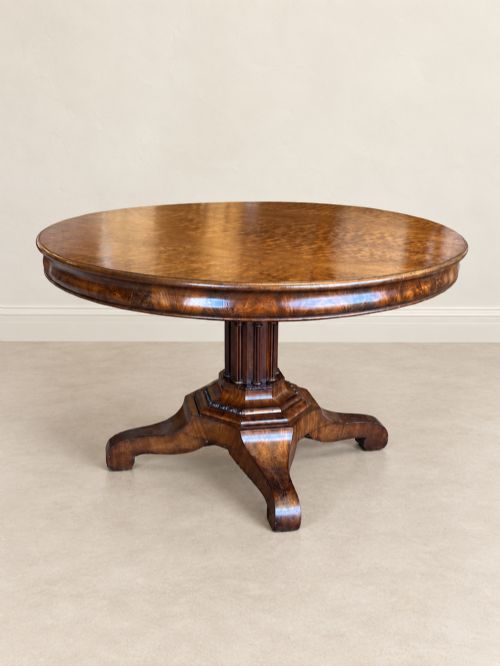
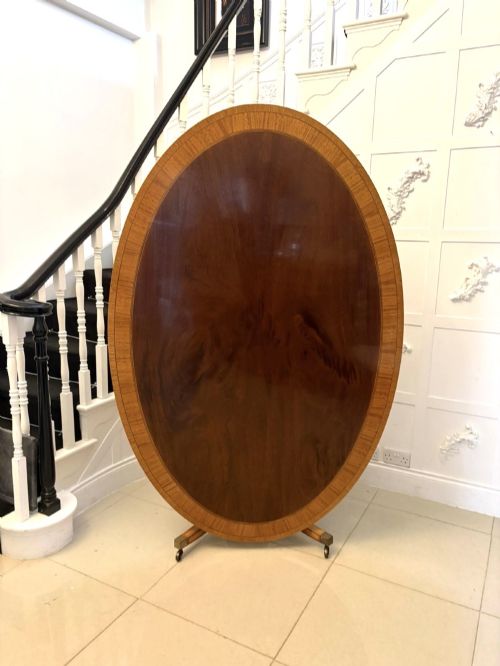
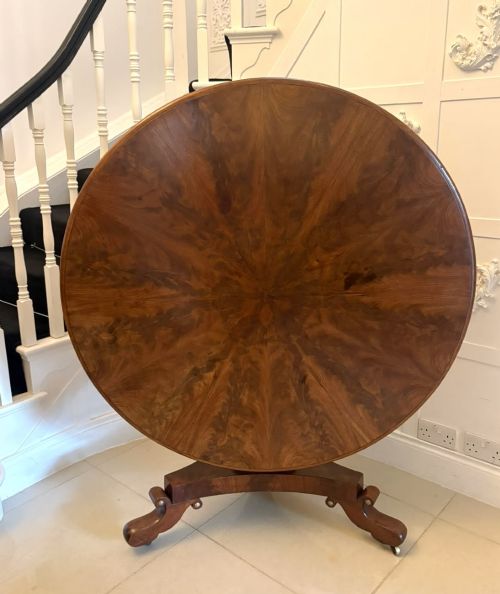
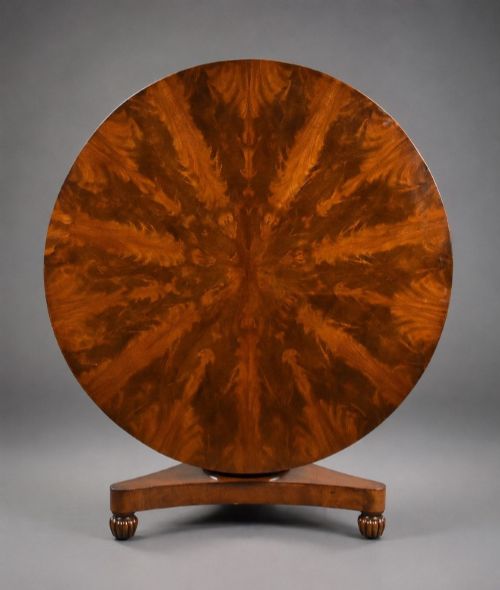
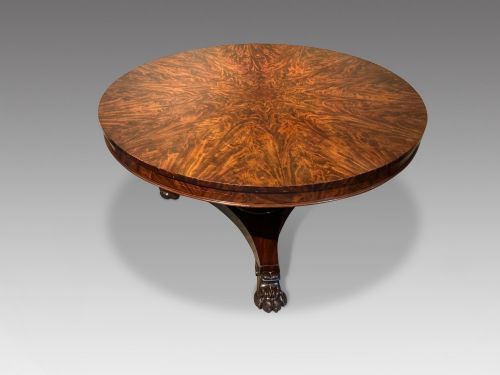
Cabinet makers relied heavily on solid mahogany, rosewood, and pollard oak, often selecting figured veneers and flame mahogany to create striking visual movement across the round or oval tops. Satinwood crossbanding and delicate brass inlay frequently define the borders, providing sharp linear contrast against the darker foundational woods.
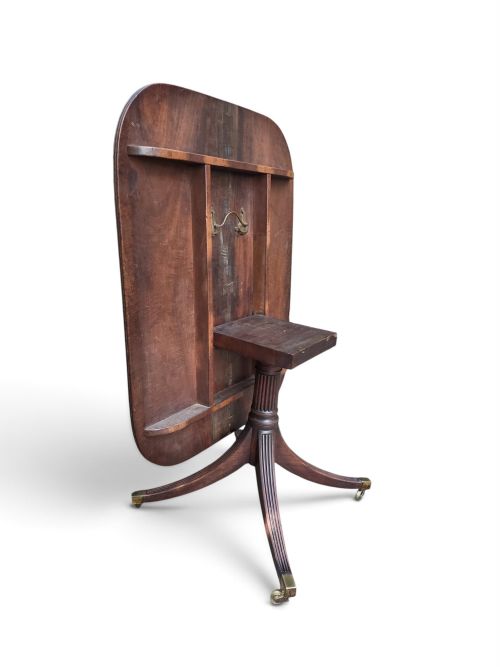
The tipping mechanism depends on a robust wooden or brass catch beneath the top, securing the heavy leaf firmly to the central pedestal when horizontal. Pillars often take an octagonal or reeded form, resting upon solid tripod bases set with brass castors.
What varies in quality
Quality rests upon the selection of timber and the dexterity of the grain matching across the central surface. Superior examples display carefully chosen flame mahogany or figured rosewood where the natural patterns mirror each other across the diameter.
The integrity of the pedestal mechanism and the weight of the base dictate how steadily the table stands when laden. Finer workshops ensured the catch locked flush without wobble, whilst lesser pieces reveal minor play in the central pivot over decades of use.
Gillows·Walker-Lancaster·Peters of Genoa
The Regency Tilt Top Dining Table Glossary
- Tilt-top
- A table top hinged to tip vertically when not in use. This clever design allows large circular tables to store flat against a wall.
- Crossbanding
- A border of veneer laid with the grain running perpendicular to the main surface. It frames the perimeter of the top with a neat contrasting band.
- Flame mahogany
- Timber cut from the fork of the mahogany tree to reveal a fiery, flickering grain pattern. Cabinet makers reserved this for principal display surfaces.
- Centre table
- A freestanding table designed to be viewed from all sides in the middle of a room rather than pushed against a wall.
- Parcel gilt
- Partially gilded with gold leaf or powder to highlight carved details or classical motifs. This decoration catches candlelight and adds warmth.
Regency Tilt Top Dining Table: Frequently Asked Questions
Can I use a tilt top table for everyday dining?
These tables served central domestic roles historically and handle daily meals comfortably today. Their pedestal bases provide ample legroom around the perimeter without obstructive corner legs.
Protect the polished veneer surfaces from heat and moisture using appropriate mats. Tipping the top away when the meal finishes frees up valuable floor space in the room.
How do I tell an original Regency table from a later revival?
Examine the timber shrinkage, construction joints, and secondary woods beneath the top and inside the pedestal. Regency pieces exhibit hand-cut components and natural patina accumulated over two centuries.
Revival pieces from later eras often utilise more uniform machine-sawn framing and modern fixings. The weight and density of the old growth mahogany or rosewood also differ perceptibly from twentieth-century alternatives.
How do I care for rosewood and mahogany finishes?
Maintain the timber by dusting gently with a dry lint-free cloth and applying occasional quality beeswax to nourish the grain. Avoid placing the table near direct heat sources or strong sunlight to prevent the veneer from drying or fading.
Treat spills immediately by blotting rather than wiping. Professional polishers can address deeper marks without compromising the historical surface sheen.