
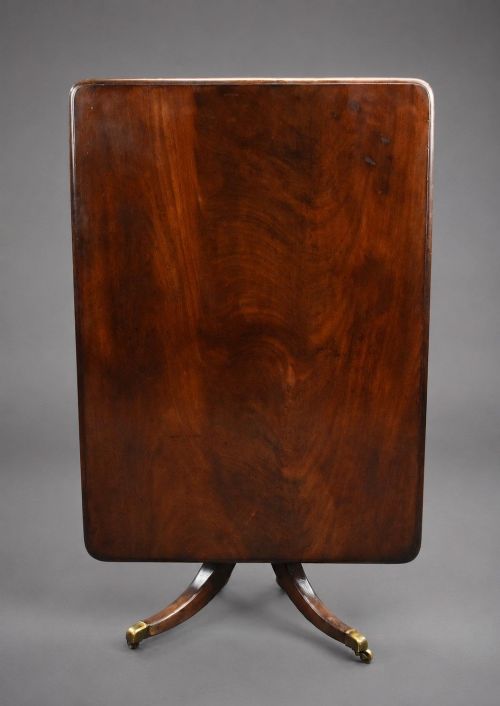
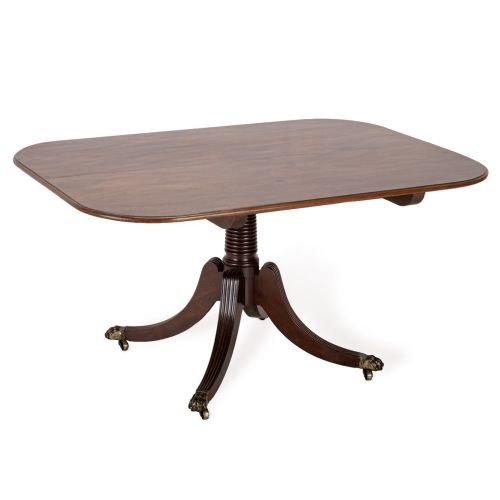


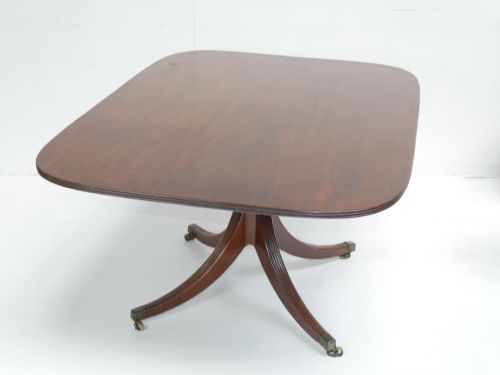
Brass Castor Tilt Table
A brass castor tilt table brings flexible dining and occasional use into a room, rooted in the periods of the eighteenth and nineteenth centuries.
Brass Castor Tilt Table
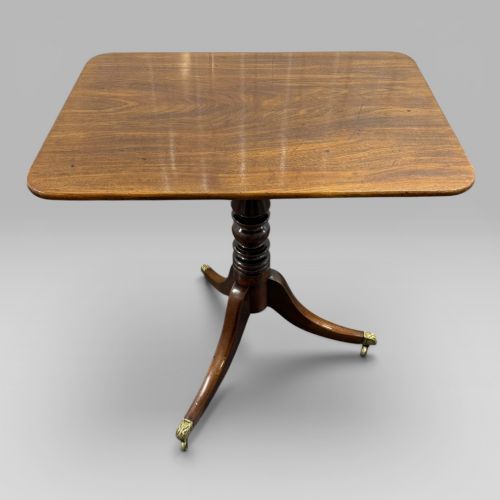
When searching for a brass castor tilt table, buyers encounter functional pedestal tables designed to pivot and tuck away when not in use. The examples appearing here span dining tables, breakfast tables, occasional tables, centre tables, and side tables.
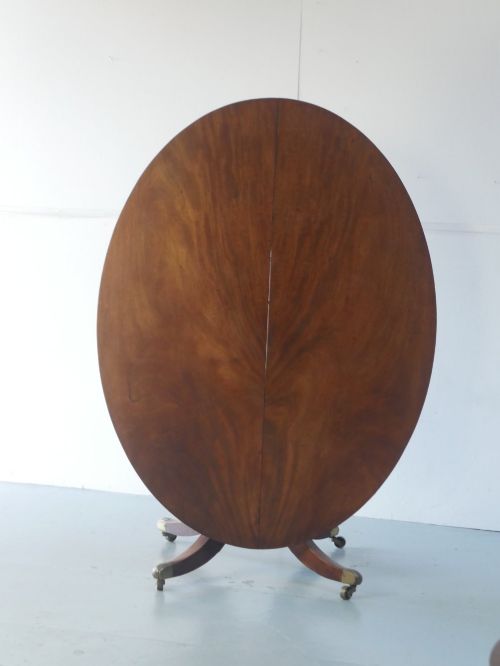
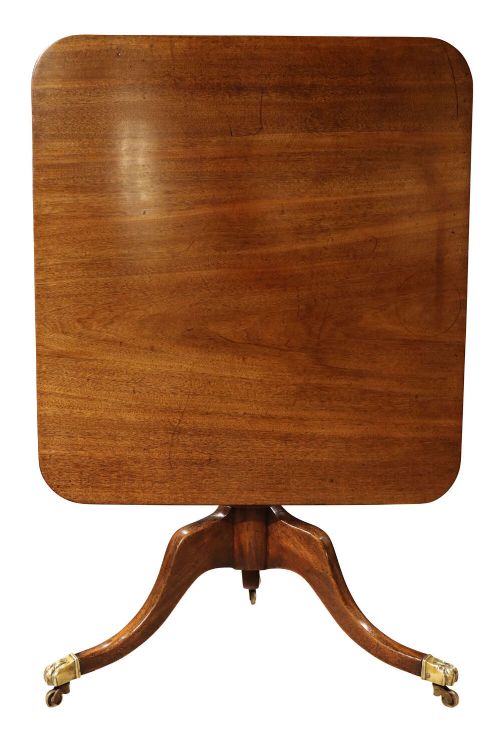
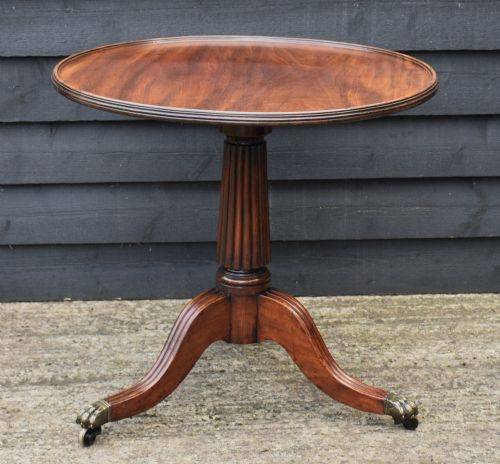
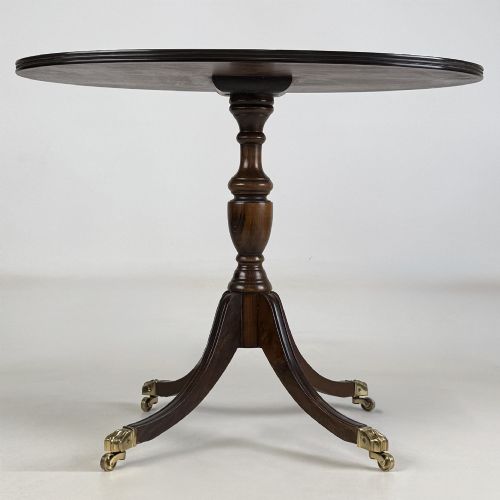
The versions met most often on this page belong to the Regency and Georgian periods, alongside later revivals from the Victorian era and the early twentieth century. These pieces primarily take the form of circular or oval tops supported by a turned column and splayed legs resting on brass casters.
Makers and manufacturers from the eighteenth century onward utilised the tilt mechanism to clear floor space in dining rooms and parlours. Such forms range from compact tripod tea tables to large pedestal dining tables seating up to eight people.
Materials and construction
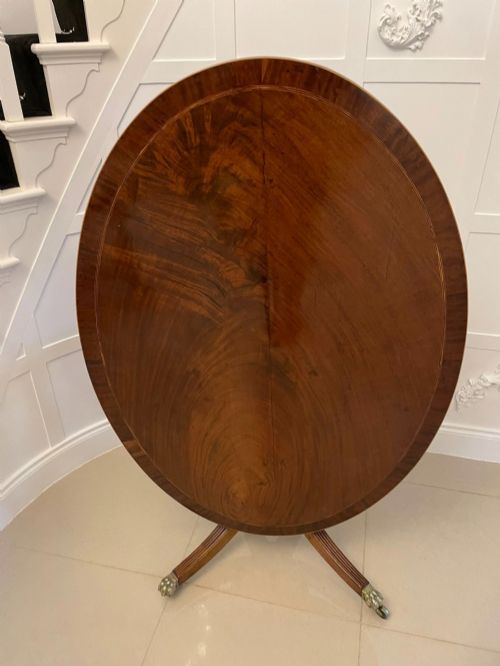
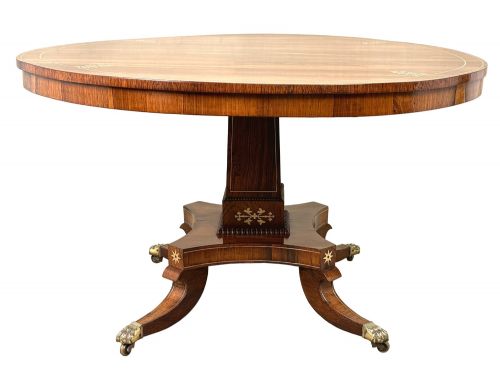
Makers constructed these tables predominantly using solid timbers and veneers such as mahogany, flame mahogany, rosewood, burr oak veneer, satinwood, goncalo Alves, and oak. Individual pieces incorporate decorative details such as ebony inlay and satinwood banding around the edges of the top.
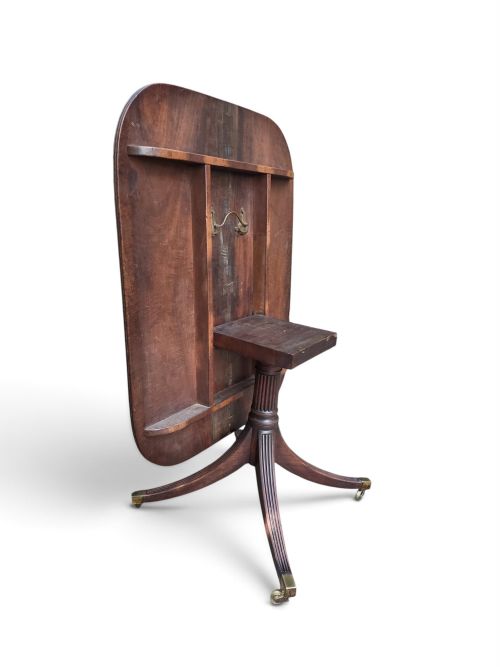
The structural framework relies on a turned central column or pedestal mounted on splayed legs, fitted with brass casters to allow mobility across the floor. The tilting mechanism itself connects the top to the column via a pivoting block and catch, allowing the surface to fold vertically.
Many tables retain their original brass casters, having spent centuries quietly rolling between the dining room and the corner.
Variations in quality
Quality across these tables depends largely on the choice of timber figure and the crispness of the turning on the central pedestal and legs. Finer examples display figured mahogany, burr oak, or contrasting rosewood and goncalo Alves veneers paired with precise inlay work.
Proportion and the integration of the tilt mechanism also separate standard production from superior pieces. Well-balanced tripod or pedestal bases ensure the table remains stable both when locked flat and when tilted.
The Brass Castor Tilt Table Glossary
- Tilt top
- A table mechanism allowing the wooden surface to pivot into a vertical position when not in use. This design feature saved valuable floor space in historical domestic interiors.
- Brass castor
- A small swiveling wheel made of brass attached to the foot of a table leg. It enables easier movement of heavy pedestal tables across carpets and floorboards.
- Pedestal table
- A table supported by a single central column rather than four corner legs. The column usually rests on splayed wooden legs fitted with casters.
- Satinwood banding
- A narrow strip of pale exotic wood inlaid around the perimeter of a tabletop as a decorative border. It creates a sharp visual contrast against darker primary timbers like mahogany.
- Tripod table
- A small occasional table supported by a pillar above three splayed legs. These agile pieces served various functions including tea and supper service.
Brass Castor Tilt Table: Frequently Asked Questions
How do I use one today?
These tables function well as central dining surfaces, breakfast tables, or occasional lamp tables in a living space. The pivoting top remains useful if you occasionally need to clear floor space.
The brass casters also make it straightforward to reposition the table within a room when cleaning or entertaining.
How do I tell Regency from Georgian?
Georgian tables, particularly those from the George III period, often exhibit robust mahogany construction with straight-forward classical proportions. Regency pieces span the early nineteenth century and frequently incorporate more decorative elements like rosewood, brass inlay, and elaborate pedestals.
Overlaps occur because Regency style grew out of the late Georgian period.
Are all these tables antique?
The listings on this page include pieces from original periods such as the eighteenth century, Georgian era, and Regency period, alongside later nineteenth-century items and twentieth-century revivals. Each era brings distinct stylistic traits to the turning, timber selection, and overall form.
Checking the listed period helps clarify whether a table is an eighteenth-century original or a later revival.