
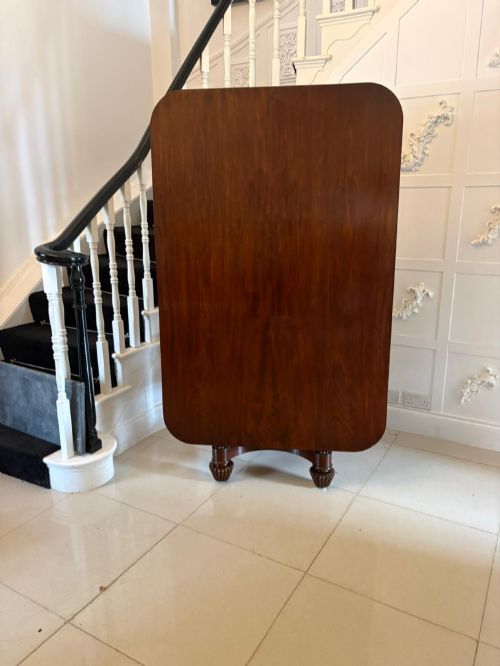
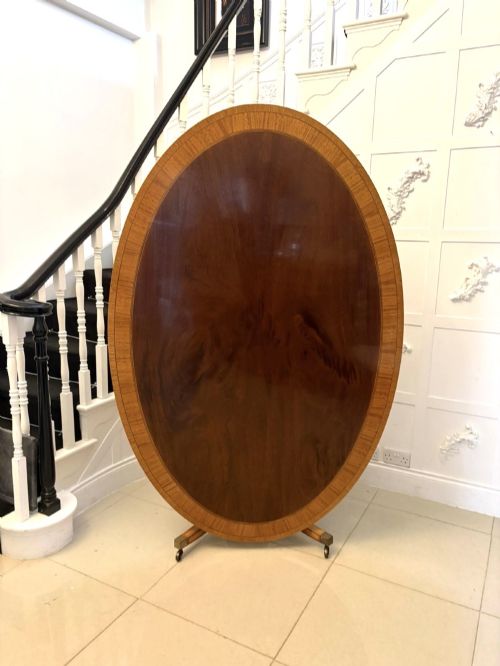
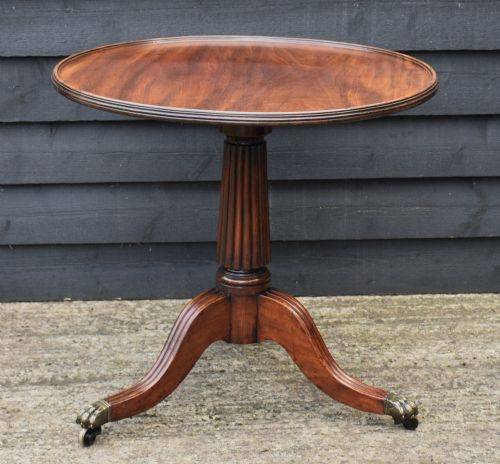
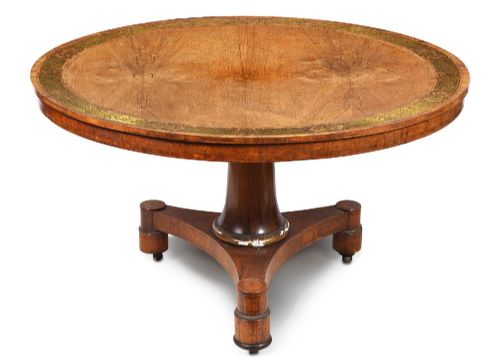

Regency Tilt Table
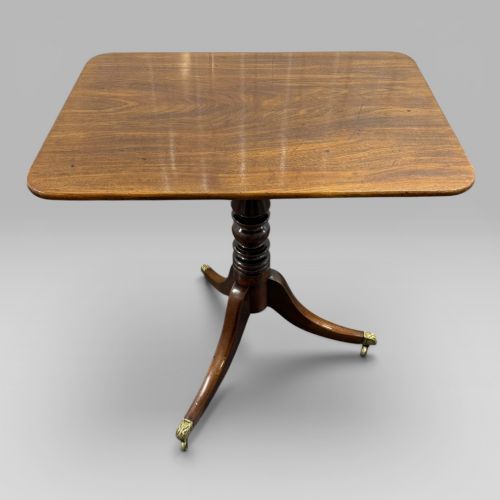
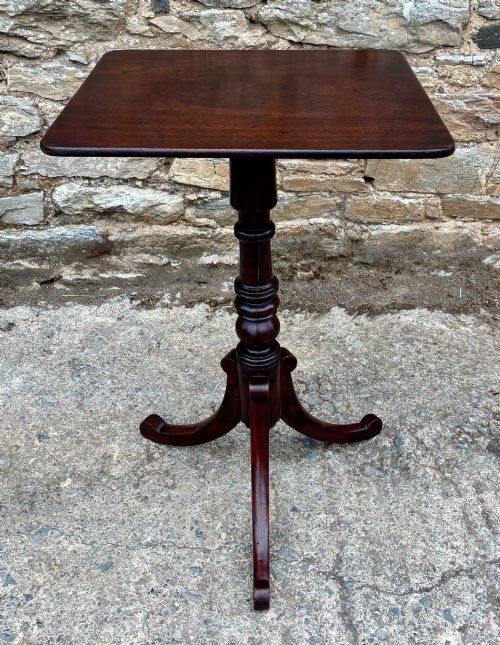
When you search for a regency tilt table, you are looking at practical English tables designed to tilt upright when not in use to save floor space.
Regency Tilt Table
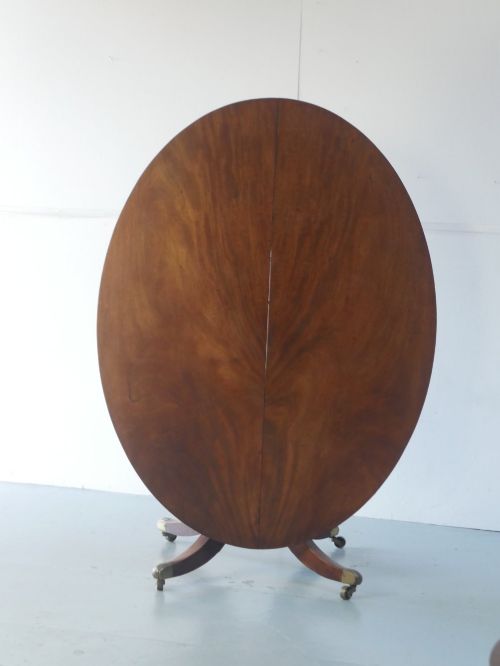
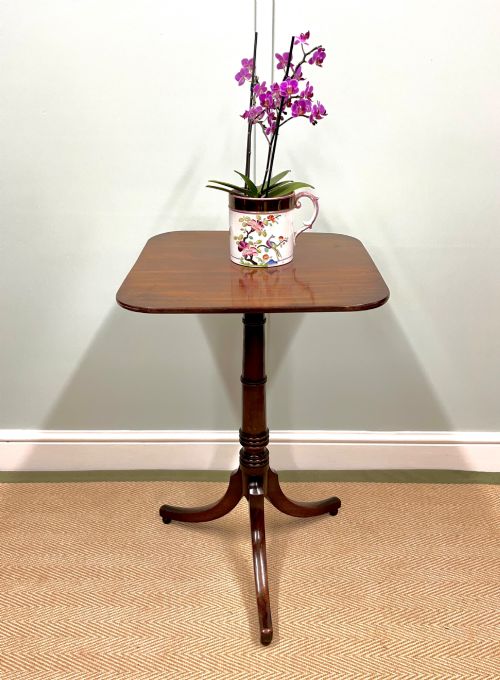
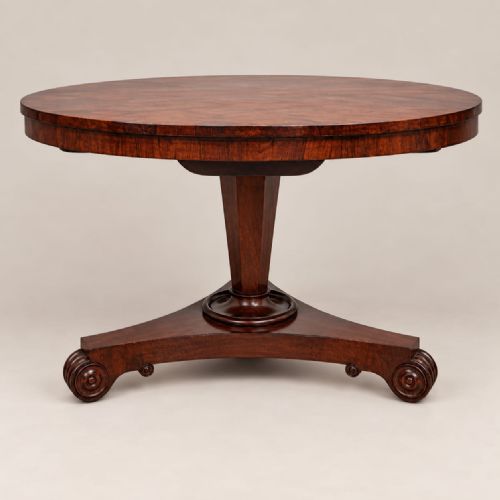
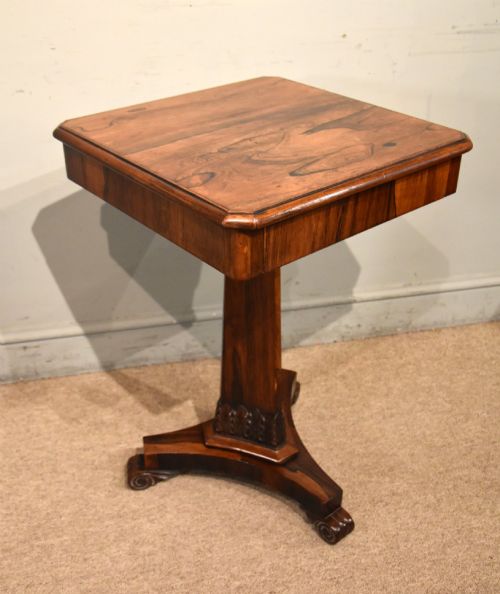
A regency tilt table brings together clever mechanism and domestic utility from the early nineteenth century. These tables range from small wine tables and occasional pieces to large breakfast and dining tables supported on pedestals or tripod legs.
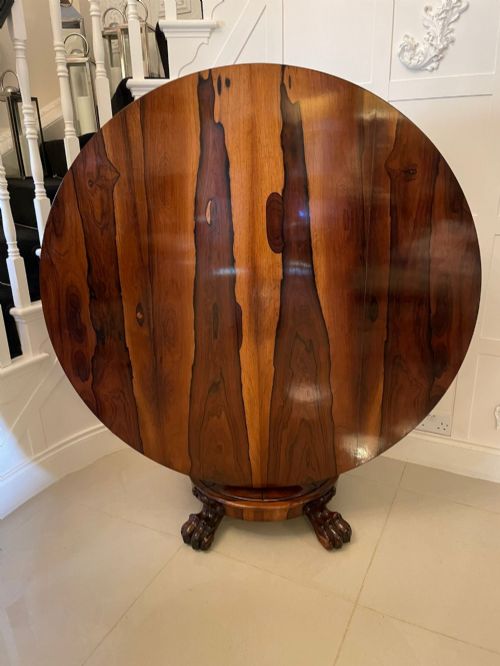
The form relies on a pivoting top that secures with a brass catch, allowing the surface to fold vertically against the base. Most pieces you will encounter date from the Regency and William IV periods, executed in mahogany or rosewood.
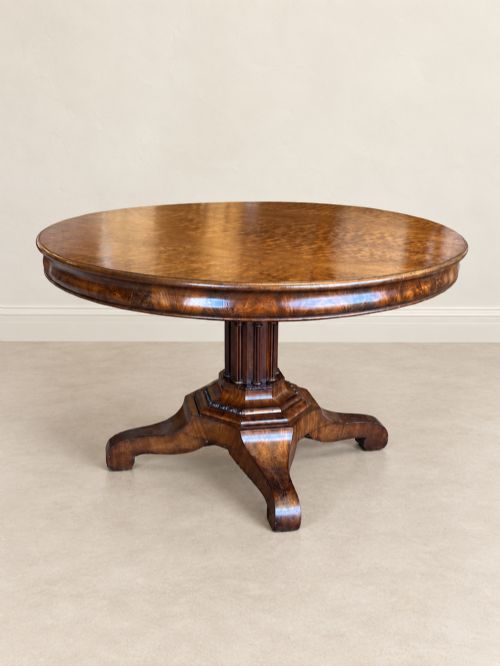
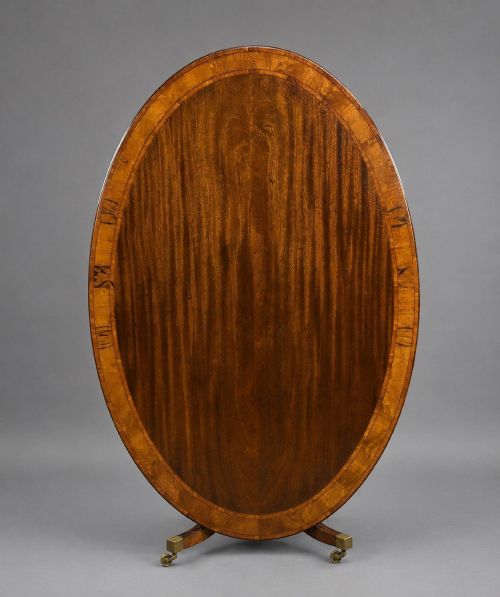
Makers produced these tables for various rooms, resulting in diverse tabletop shapes including circular, oval, square, and octagonal formats. The combination of a tilting mechanism and a sturdy central column defines the category.
Materials and construction
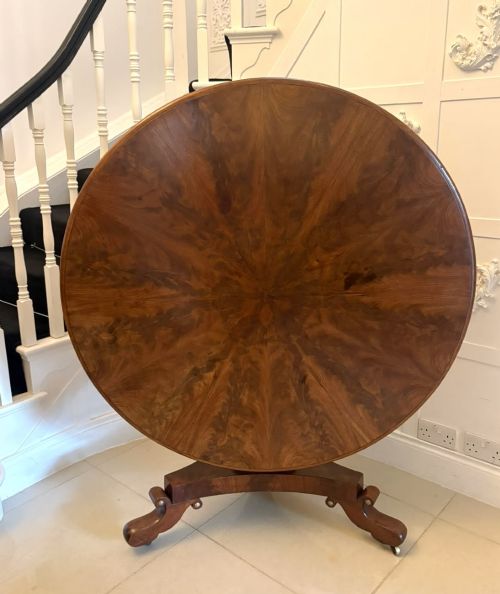
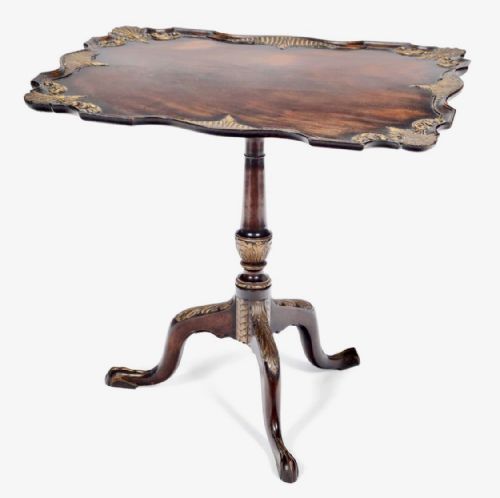
Cabinet makers utilised dense timbers like mahogany, rosewood, and walnut, often applying figured veneers such as flame mahogany or burr oak to the top surfaces. Brass inlays, boxwood stringing, and parcel gilding frequently decorated the borders.
The structural integrity depended on a robust pillar and claw base, typically featuring three or four scrolled or sabre legs. Mechanisms involved iron box catches and wooden blocks to secure the tilting action smoothly.
Table formats include dining, breakfast, centre, and wine tables alongside reading stands and games tables.
Assessing craftsmanship
Superior examples display careful timber selection, where figured grain patterns on the tabletop match harmoniously across the joins. The choice of rich rosewood, amboyna, or finely figured mahogany indicates higher workshop ambition.
Fine craftsmanship shows in the crispness of carved details on the pedestal base and the precise fitting of brass inlays or crossbanding. The stability of the tilting mechanism and the retention of a faded original patina further distinguish finer pieces.
Gillows·Peters of Genoa
The Regency Tilt Table Glossary
- Tilt-top
- A tabletop mounted on a pivoting mechanism that allows it to rotate and fold vertically for storage.
- Tripod base
- A support structure featuring three legs radiating from a central pillar, commonly found on wine and occasional tables.
- Crossbanding
- A strip of veneer applied to the border of a tabletop with the grain running perpendicular to the main surface.
- Patina
- The surface sheen and colour depth developed by wood through age, handling, and exposure to light over decades.
- Breakfast table
- A large circular or oval table designed for morning use, typically standing on a central pillar with a robust base.
Regency Tilt Table: Frequently Asked Questions
How do you use a tilt table?
To use the table, you release a brass catch beneath the top, allowing the surface to pivot upward on its block and pivot pin. When lowered flat, the catch locks the top securely into place for daily use.
In period interiors, these tables spent much of their time tilted against the perimeter of the room, functioning almost like decorative screens until needed.
What woods were used for these tables?
Cabinet makers relied heavily on solid mahogany and rosewood for their durability and rich natural colour. They also employed exotic veneers such as satinwood, amboyna, and burr elm to create striking decorative patterns on the tops.
Inlays of brass, ebony, and boxwood frequently highlighted the outer edges and borders of the better examples.
How can you tell a Regency piece from later revivals?
Original period pieces display construction methods, timber ageing, and hardware consistent with the early nineteenth century. Secondary woods like oak or pine inside the framework match the expected practices of Georgian and Regency workshops.
Later revival pieces from the Edwardian or Victorian eras often feature different internal joinery, heavier proportions, or machine-cut components.