
Octagonal Wine Stand
An octagonal wine stand brings geometric form and practical grace to a room, offering a stable surface designed specifically for bottles, glasses or lamps.
Octagonal Wine Stand
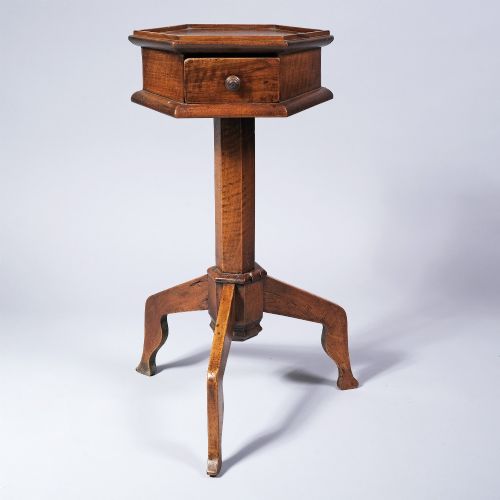
An octagonal wine stand is a compact table shaped with eight sides, designed primarily for holding wine bottles, decanters, or drinking vessels in eighteenth and nineteenth-century interiors.
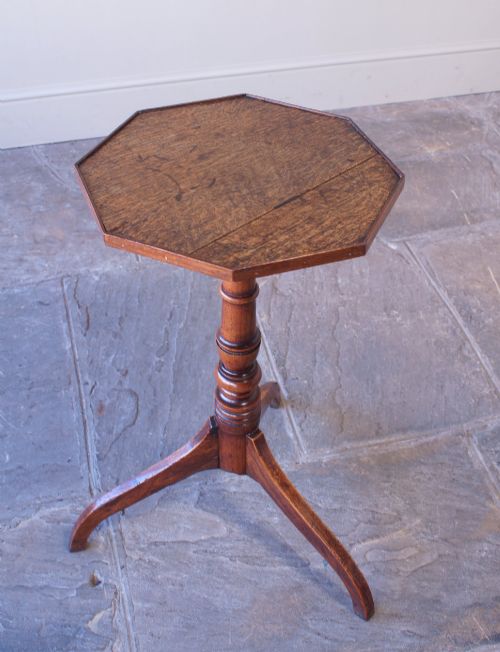
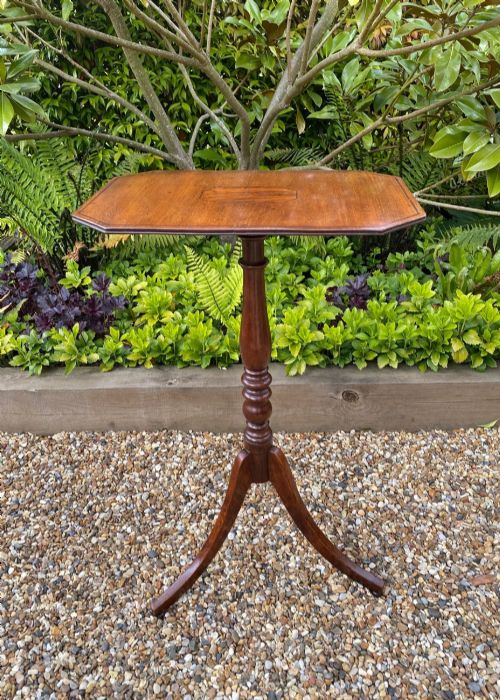
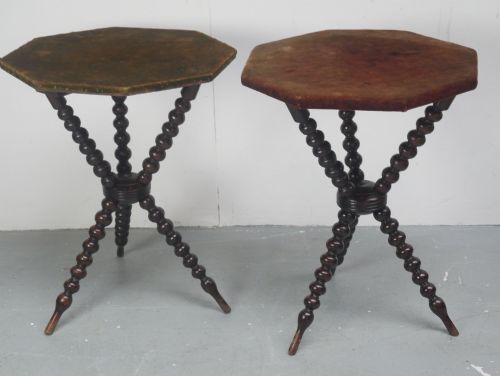
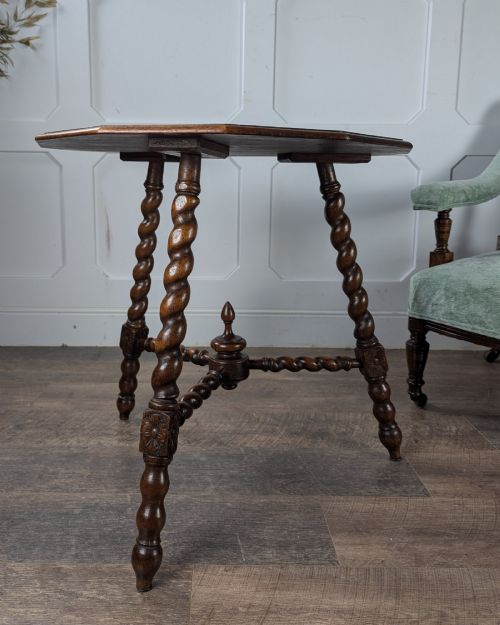
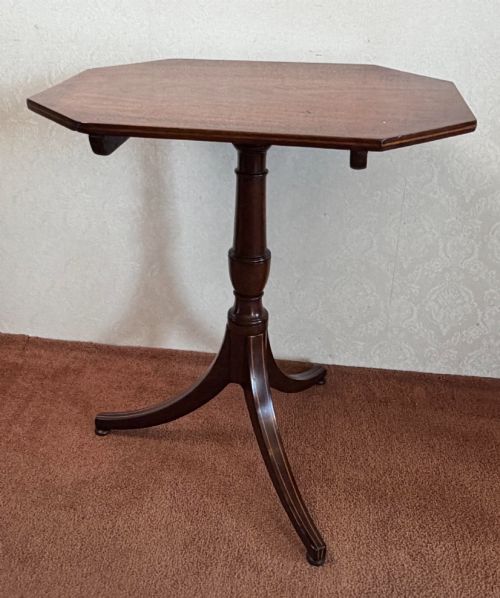
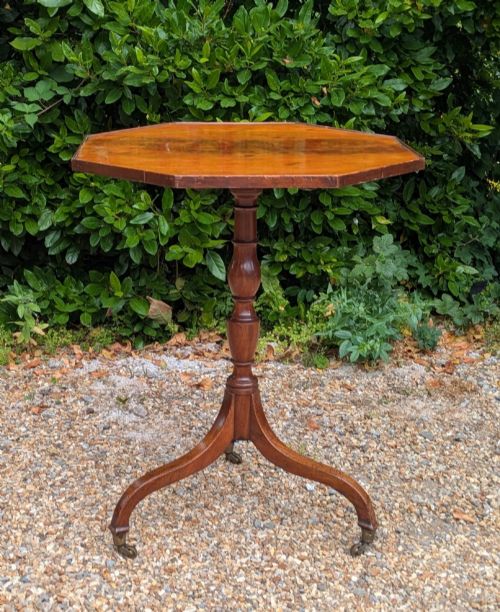
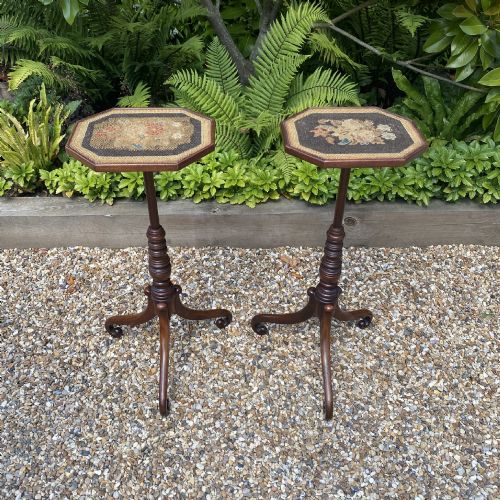
The pieces appearing here span the Georgian, Regency, and Victorian periods, often taking the form of tripod tables with tilt tops, fixed pillar supports, or low stands meant to sit beside seating.
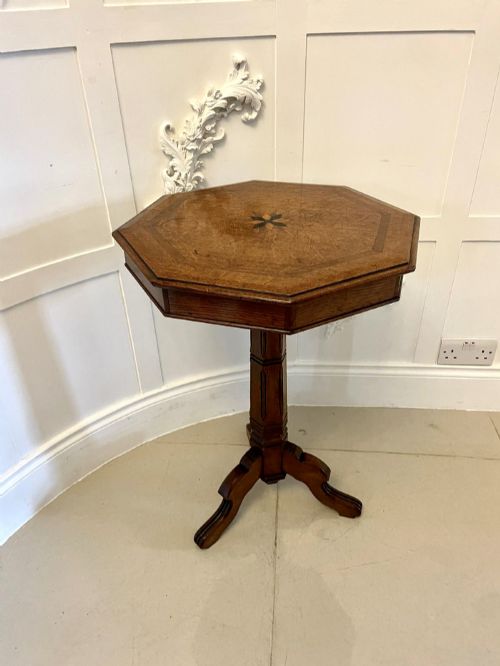
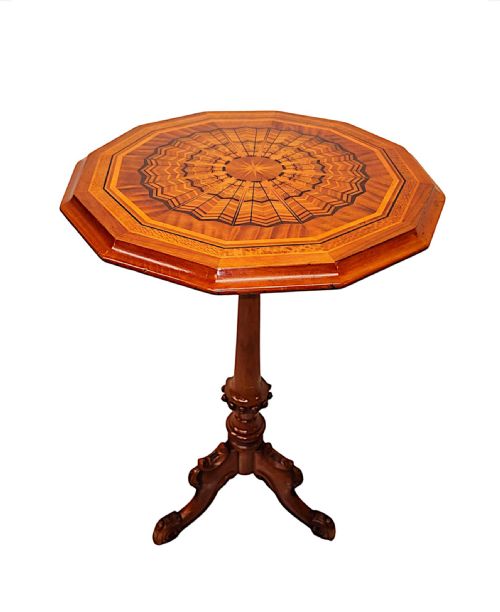
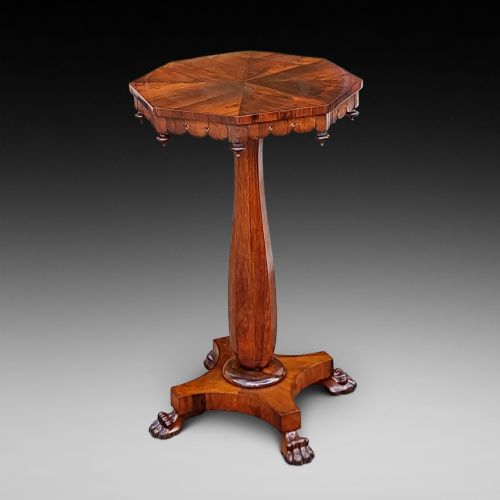
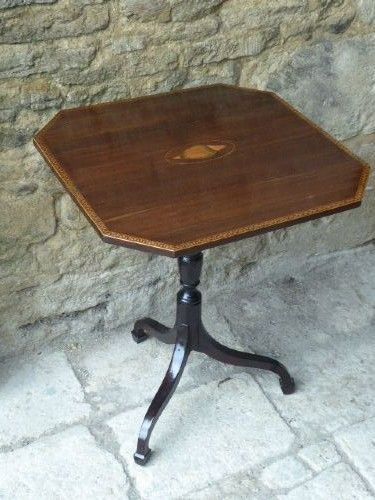
Makers fashioned these tables from timber such as mahogany, satinwood, and rosewood, sometimes incorporating brass banding or boxwood inlay to define the edges of the eight-sided top.
How they were made
Cabinet makers constructed these stands using dense timbers like mahogany, oak, and fruitwood, often selecting figured veneers for the prominent top surface and pairing them with sturdy turned or carved central pillars.
Inlay work using boxwood stringing and contrasting satinwood provided crisp geometric definition to the eight-sided tops, while brass fittings such as casters, handles, and bottle-safe bands added structural utility.
Many examples utilise a tilt-top mechanism with a birdcage or catch action, allowing the top to pivot vertically when not in use to save space and display the timber grain.
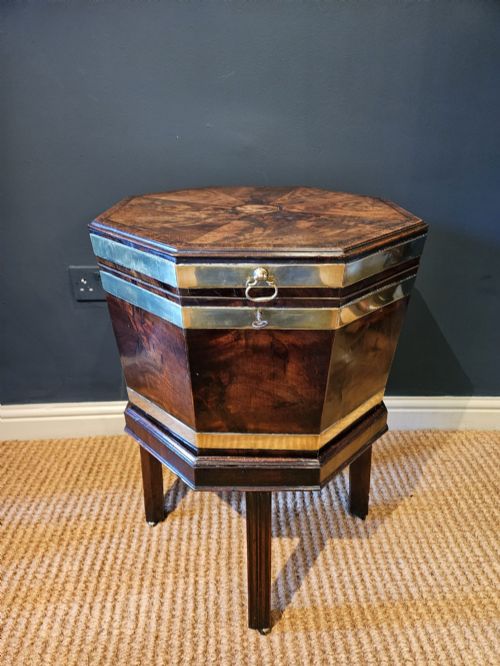
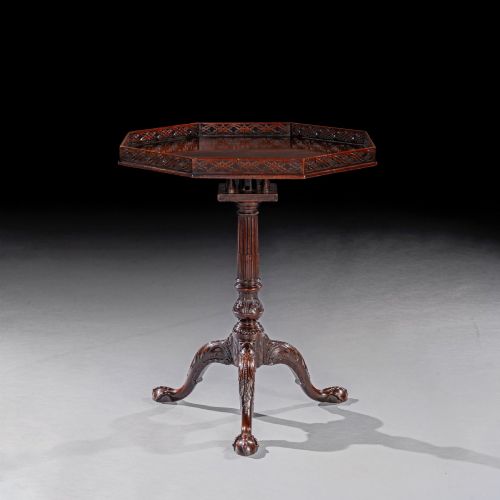
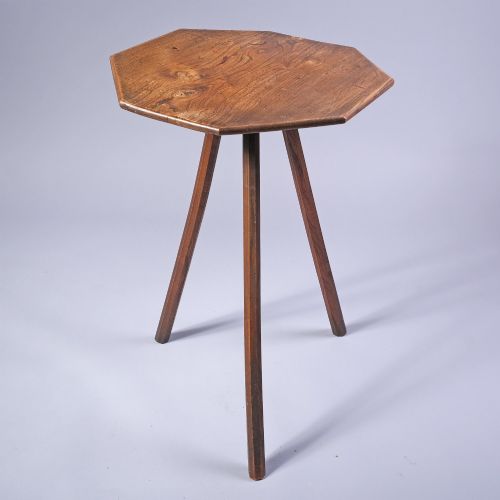
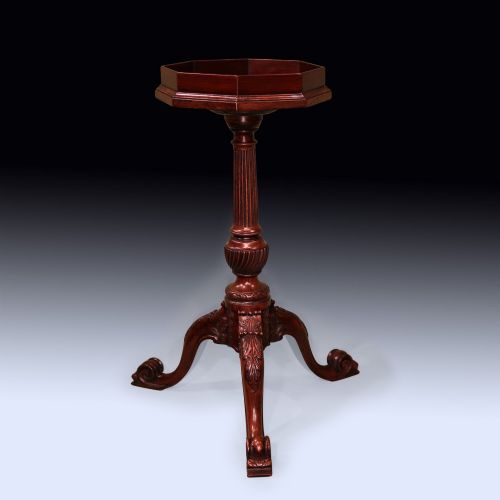
The listings here demonstrate how cabinet makers applied eight-sided tops across diverse forms, ranging from tall pedestal wine tables to low floor-standing coolers in mahogany and satinwood.
What varies in quality
Quality rests in the choice of timber and the precision of the joinery, particularly where the eight sides of the tabletop meet the edge banding and how securely the central pillar joins the tripod legs.
Refined pieces display hand-carved tripod bases with crisp acanthus or scroll detailing, balanced proportions, and well-executed inlay rather than plain painted substitutes or later replacement tops.
Original brass fittings, such as sturdy binding hoops on cooler variants and functioning tilt mechanisms, elevate a piece above simpler utilitarian tables.
Gillows
The Octagonal Wine Stand Glossary
- Tripod table
- A small freestanding table supported by a central pillar resting on three legs. This construction kept the table stable on uneven eighteenth-century floors.
- Cellarette
- A lockable container or cabinet used to store wine bottles securely in the dining room. They frequently feature brass banding and interior divisions.
- Tilt top
- A tabletop mounted on a hinge mechanism that rotates to a vertical position. This allowed servants to store the table flat against a wall when the room was cleared.
- Boxwood stringing
- A narrow strip of pale yellowish boxwood inlaid into a contrasting darker timber veneer. It creates a fine decorative border around table edges.
- Sheraton revival
- A late nineteenth and early twentieth-century design movement inspired by the neoclassical furniture of George Sheraton. It favours satinwood, painted decoration, and delicate proportions.
Octagonal Wine Stand: Frequently Asked Questions
What is an octagonal wine stand used for?
These stands served as portable surfaces for serving wine and holding glasses during evening gatherings in formal rooms.
Today they function effectively as lamp tables or side tables next to armchairs, providing a compact surface that occupies minimal floor space.
How do I tell a Georgian stand from a Victorian one?
Georgian examples generally exhibit restrained classical proportions, premium mahogany or satinwood timbers, and hand-cut dovetailing or subtle inlay.
Victorian pieces often introduce heavier turned elements, darker finishes, and occasionally elaborate carved motifs or mechanical tilt-top hardware.
What does tilt top action mean?
A tilt top action allows the horizontal tabletop to pivot ninety degrees on a central wooden catch, locking flat against the pedestal column.
This clever mechanism enabled households to store multiple small tables compactly against the perimeter of a drawing room.
Are brass mounts original to these stands?
Many wine stands and cellarettes include brass banding, carrying handles, or lion-paw feet designed to reinforce the timber and protect against damp wine bottles.
Examining the fixings for hand-cut screws and matching patination helps confirm whether the metalwork dates to the original period of manufacture.