


Regency Textile Art
Regency textile art brings needlework pictures, maps and samplers into modern rooms through silk, wool and hand-painted detail.
Regency Textile Art
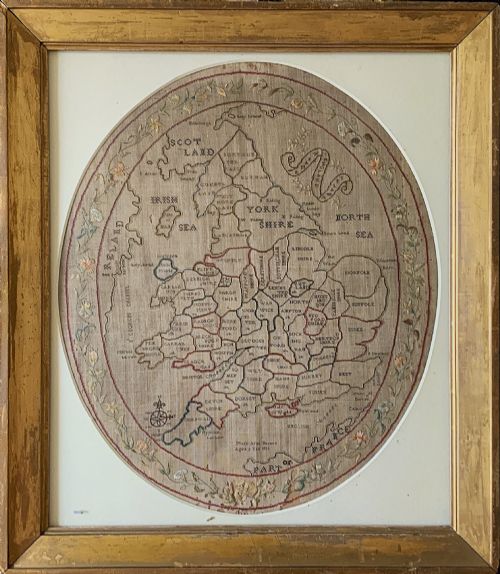
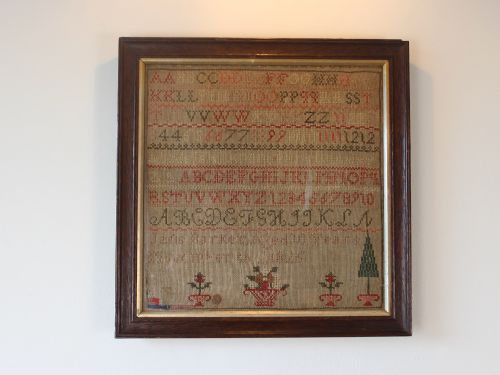
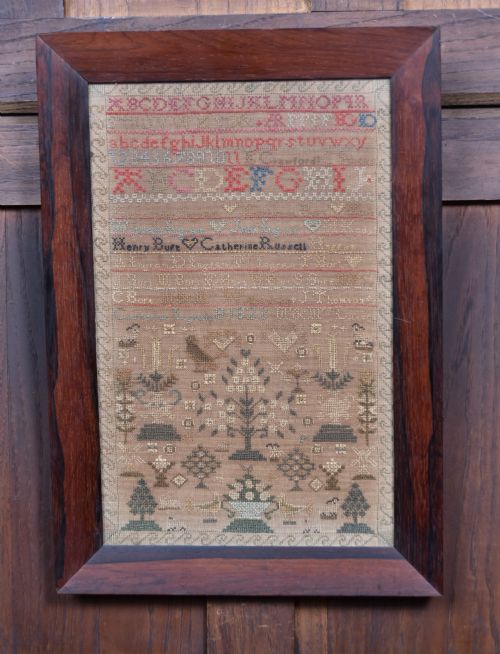
Regency textile art encompasses framed embroideries, needlework samplers and woolwork pictures created across the Georgian and Regency periods. Pieces range from detailed maps of England and Wales to pastoral scenes and alphabet samplers.
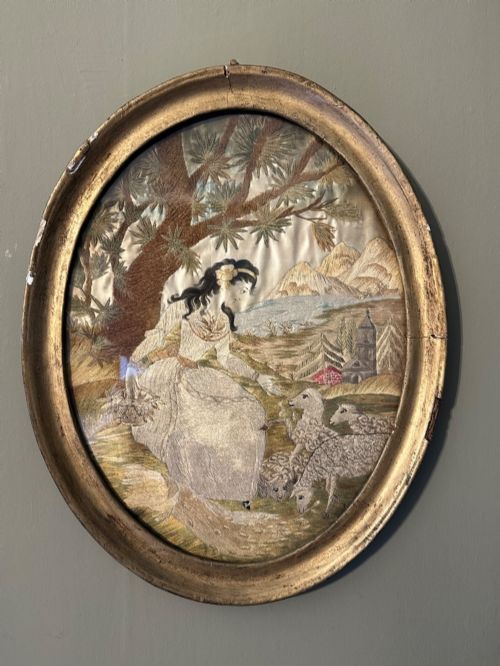
Makers often included young students such as Mary Banion and Sarah Baker, whose schoolroom works survive in period frames. Silk work pictures paired with hand-painted elements represent another common form seen here.
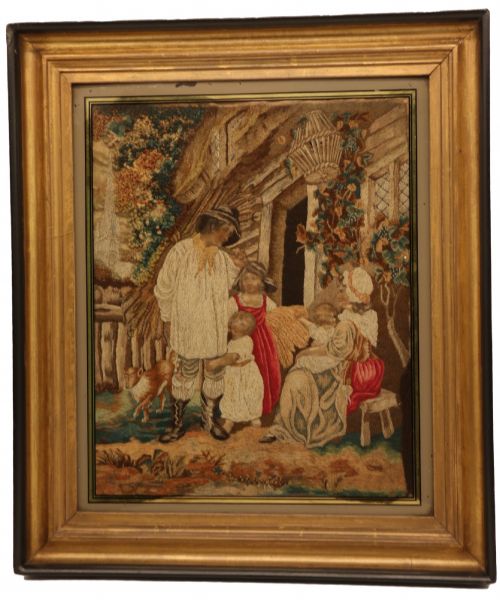
Oval woolwork pictures depicting figures in gardens and embroidered narrative scenes appear frequently. English and Scottish origins dominate the available works from the early nineteenth century.
How they were made
Needlework pictures and samplers rely on silk thread, wool and crewel work stitched onto linen or silk grounds. Hand-painted details frequently complement the embroidery, particularly in pictorial silk works depicting figures or landscapes.
Framing often utilises giltwood, gold leaf and verre églomisé glass to protect the delicate textiles. Mezzotint frames complete many of the paired silk embroideries from the Regency era.
Young Mary Banion stitched her map of England and Wales at just nine years old.
What varies in quality
Quality rests upon the precision of the needlework and the complexity of the subject matter, such as cartographic detail in map samplers versus standard alphabet grids. The condition of the silk thread and painted elements directly affects visual impact.
The survival of original framing, including verre églomisé glass and giltwood surrounds, elevates certain textile works. Balanced composition and the inclusion of named makers add distinction to individual pieces.
The Regency Textile Art Glossary
- Sampler
- A piece of needlework produced as a demonstration or test of skill in various stitches. These often feature alphabets, numbers, and pious verses.
- Crewel work
- Embroidery executed with fine worsted wool on a fabric ground. This technique creates textured, durable surface designs.
- Verre églomisé
- A process of applying cold painting and gold or silver leaf to glass. Frames utilising this method display a distinctive border surrounding the artwork.
- Mezzotint frame
- A type of moulding used for framing prints and pictures. These frames provide a dark, rich border that complements nineteenth-century embroideries.
Regency Textile Art: Frequently Asked Questions
How do I hang antique textile art?
Keep framed textiles away from direct sunlight to prevent fading of the silk threads and woolwork.
Ensure hanging wires and brackets securely support the weight of the original wood and gilt frames.
What subjects appear in Regency samplers?
Makers frequently stitched alphabet sequences, educational texts and detailed maps of England and Wales.
Narrative scenes from stories and pastoral garden settings also populate these early nineteenth-century works.
Are these works made by children?
Many needlework samplers were created by young students learning stitchwork in schoolrooms.
Signatures and dates, such as those by Mary Banion at age nine, often record the maker's identity.
What materials make up silk work pictures?
Makers combined silk thread and wool embroidery with hand-painted details on fabric grounds.
Glazed frames featuring verre églomisé or giltwood protected these delicate textile compositions.