
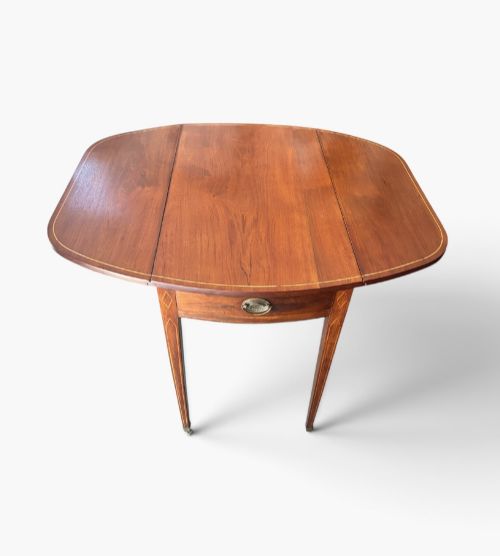


Regency Supper Table
A regency supper table is a flexible dining and occasional piece designed for evening entertaining, prized for rich timber and clever folding or tilting mechanisms.
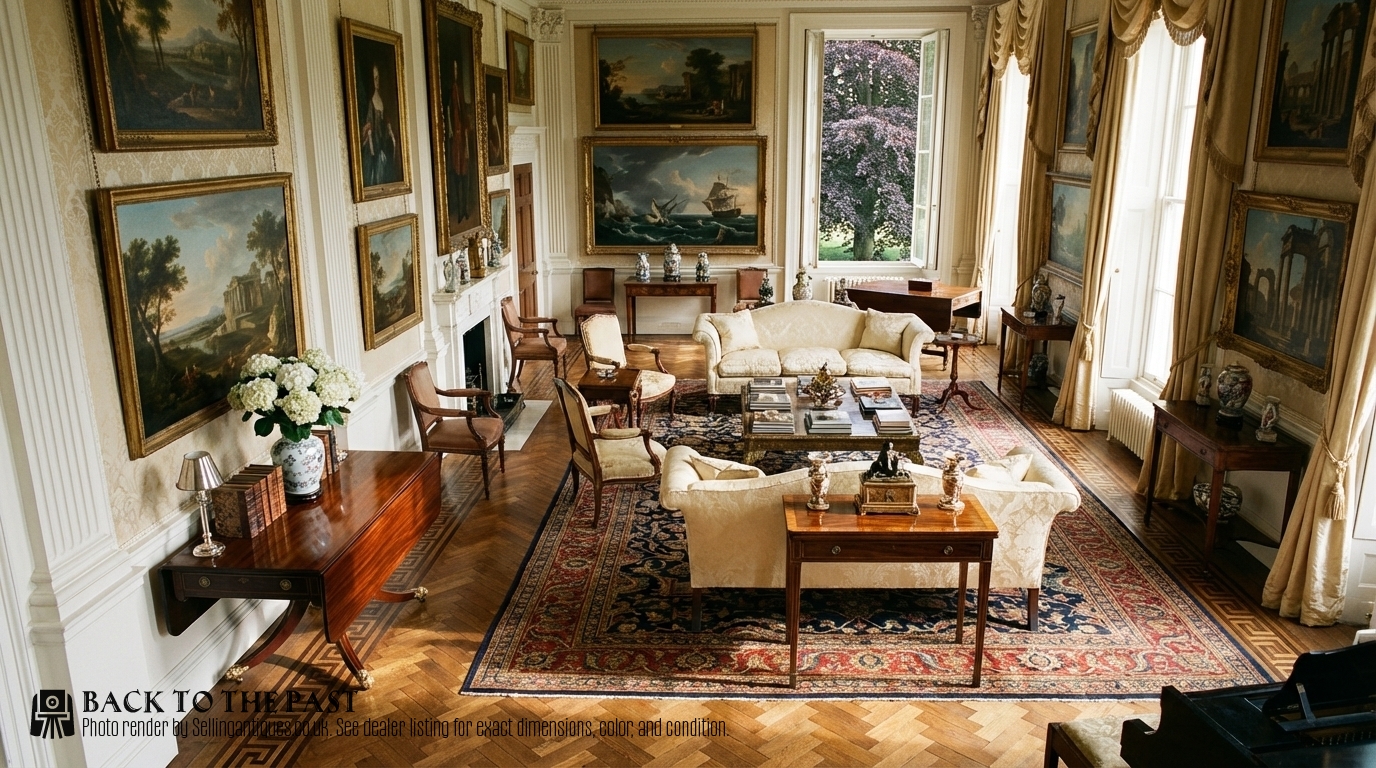
Regency Supper Table
A regency supper table brings together pieces built for evening hospitality during the Georgian, Regency, and William IV periods, often taking the form of fold-over, tilt-top, Pembroke, or pedestal dining designs.
The version most commonly met on this page is the mahogany tilt-top or fold-over supper table, frequently accented with satinwood or boxwood inlay and resting on a central pedestal with tripod legs.
These tables served a dual purpose in period homes, functioning as compact side or occasional tables by day and expanding or tilting upright to accommodate guests when supper was served.
Materials and Construction
Cabinetmakers relied heavily on solid and veneered mahogany, including figured, flame, Cuban, and plum pudding varieties, occasionally pairing darker woods with satinwood, boxwood, or brass inlay for contrast.
Many examples utilise clever mechanical engineering, incorporating folding leaves, swivel mechanisms, or tilt-top actions supported by sturdy turned pillars and tripod or pedestal bases.
Regency Supper Table Retail Price Guide 2026
Typical asking prices for regency supper table among the pieces listed under this phrase on Sellingantiques today, from the lower quarter to the upper quarter. They describe what is for sale here now, not the wider market.
Some dining setups even include a rotating lazy susan paired with porcelain dishes for serving supper.
Craftsmanship and Timber Selection
The distinction between ordinary and superior pieces rests on the choice of timber, where richly figured flame mahogany or carefully matched satinwood banding elevates the visual weight of the furniture.
Structural integrity in the tilting and folding mechanisms dictates overall excellence, separating tight, dependable joints from worn hinges and wobbly pedestals.
James Mein
The Regency Supper Table Glossary
- Tilt top
- A tabletop mounted on a pivot mechanism that allows the surface to be turned vertically and stored flat against the base when not in use.
- Pembroke table
- A small rectangular table featuring two hinged drop leaves on opposing sides and often fitted with a single drawer.
- Crossbanding
- A decorative border of veneer laid with the grain running perpendicular to the central panel, frequently seen in contrasting timbers.
- Tripod table
- A freestanding piece supported by a single central pillar resting on three spreading feet for stability.
- Fold over
- A hinged table top design that opens out to double the surface area, commonly utilised for card and supper use.
Regency Supper Table: Frequently Asked Questions
How were supper tables used originally?
These tables were kept against room walls during the day as side or lamp tables before being moved into position for evening meals or social gatherings.
Their flexible leaves and tilt tops allowed households to save valuable floor space when formal dining was finished.
How do I spot a Regency period table?
Regency furniture is typically identified by classical proportions, clean architectural lines, and the restrained use of brass inlay or contrasting timber stringing.
Makers of this era frequently favoured dark tropical hardwoods like mahogany and rosewood over the lighter oak and walnut of earlier centuries.
Will a supper table seat four people?
Many examples are specifically proportioned to comfortably accommodate four diners, particularly square or circular fold-over and pedestal designs.
Larger variants can extend further, but compact four-seat configurations remain among the most practical for modern dining rooms.