




Regency End Table Drawer
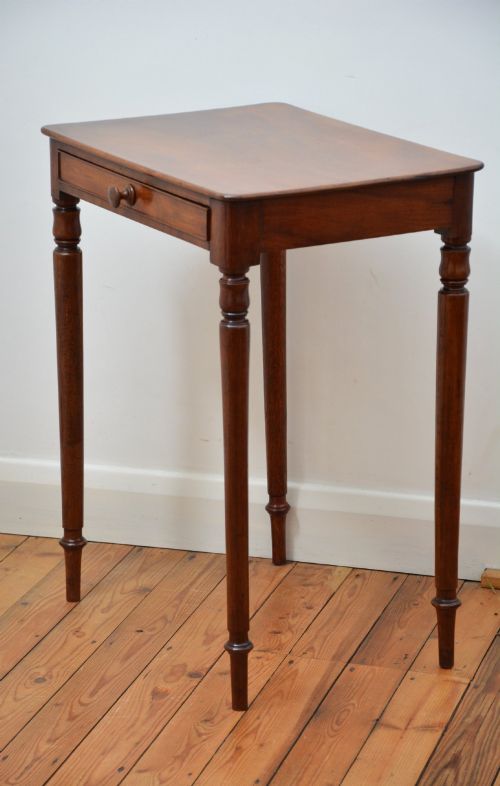
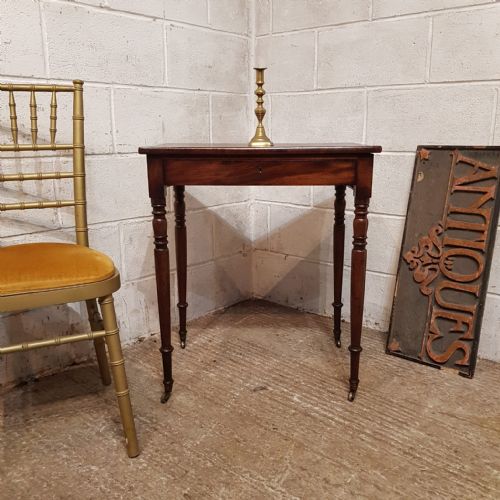
These regency end table drawer options are compact timber pieces designed to sit beside seating and hold small daily items.
Regency End Table Drawer
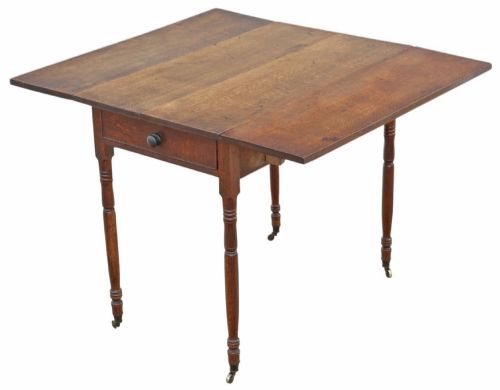
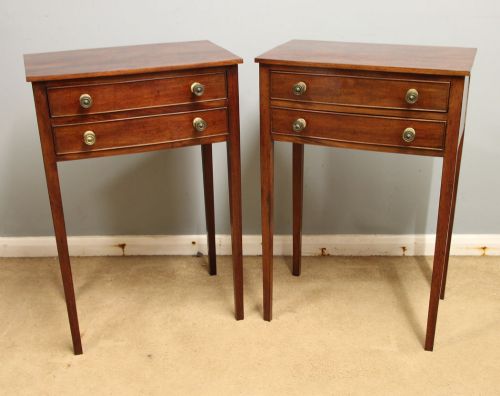
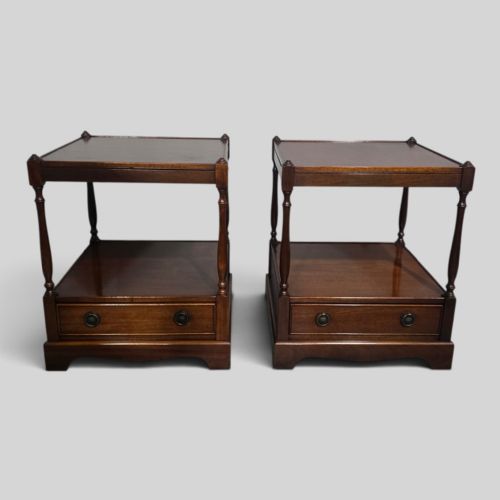
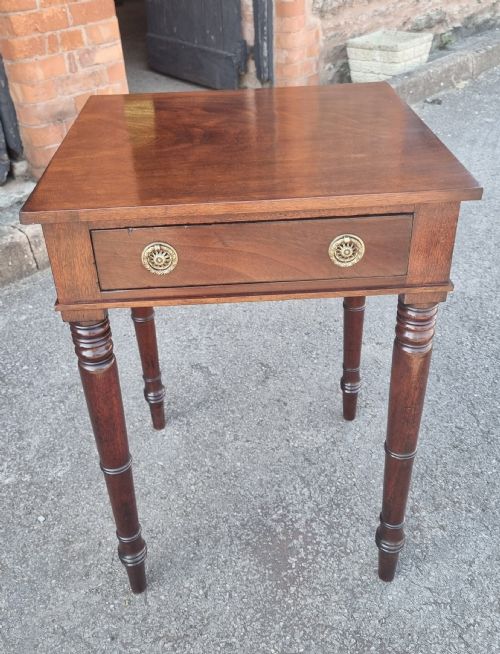
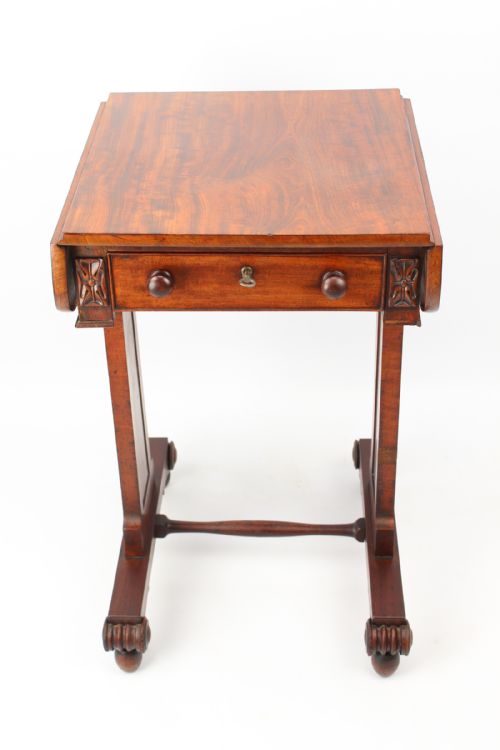
A regency end table drawer search brings up a variety of small occasional pieces, most frequently side tables, lamp tables, and work tables made in mahogany. These tables often incorporate a single drawer or two drawers, resting on pillar supports or splay legs.
The selection spans from the early nineteenth century through later revival styles, featuring forms such as drop-leaf pembroke tables and library tables alongside compact bedside units.
Construction materials and techniques
Cabinetmakers constructed these pieces primarily using solid mahogany and rosewood, frequently incorporating flame mahogany veneers and decorative boxwood stringing. Brass mounts, leather inserts, and silk components appear on specific writing and work tables.
Joinery relies on traditional timber framing, with drop leaves, sliding drawers, and lyre-ended supports forming the structural mechanics of the tables.
Several tables include hidden work bags beneath the drawer, originally designed to hold knitting and sewing projects out of sight.
Assessing build quality and material selection
The choice of timber underpins the distinction between standard and superior pieces, with figured flame mahogany and rosewood indicating higher grade production. Grain matching across the drawer fronts and tabletops shows the care taken by the maker.
Structural refinements such as crossbanding, brass mountings, and well-executed reeded legs separate simpler utility tables from finer library and sofa tables.
The Regency End Table Drawer Glossary
- Pembroke table
- A small occasional table featuring two hinged drop leaves on either side, often fitted with a single drawer.
- Sofa table
- A long, narrow table traditionally placed in front of a sofa, frequently built with two end supports and dual drawers.
- Work table
- A compact table designed for sewing or writing, containing a drawer and sometimes an attached bag or compartment.
- Crossbanding
- A decorative border of veneer laid around the perimeter of a tabletop so the grain runs at right angles to the centre.
- Reeded leg
- A column carved with parallel convex mouldings that project outward, commonly seen on nineteenth-century table bases.
Regency End Table Drawer: Frequently Asked Questions
What rooms suit a regency end table drawer?
These compact pieces fit comfortably beside seating in a drawing room or study, functioning as lamp tables or bedside units. Their surface space handles small everyday items while the drawer keeps clutter out of sight.
Because they occupy a minimal footprint, they integrate easily into sitting rooms and hallways without dominating the floor plan.
How do I spot a true nineteenth-century piece?
Examine the timber selection and construction methods beneath the surface, looking for solid secondary woods like oak alongside period mahogany veneers. Hand-cut joints and timber movement patterns give clues to the age of the piece.
Comparing the proportion of the drawer and the style of the leg supports against known period examples helps confirm the date.
Did these tables always have drawers?
While many occasional and lamp tables incorporate a single drawer or two drawers, open formats without storage compartments also exist in the records. The inclusion of a drawer depended on whether the table served as a writing desk, work table, or simple side stand.
Tables intended for libraries or parlours more frequently included functional drawers for papers and small accessories.
How should I care for antique mahogany surfaces?
Maintain the timber by dusting with a dry cloth and occasionally applying a traditional beeswax polish to nourish the grain. Avoid placing these tables in direct sunlight or near heat sources to prevent the wood from drying out.
Using coasters and protective mats guards the polished top against moisture rings and heat marks.