
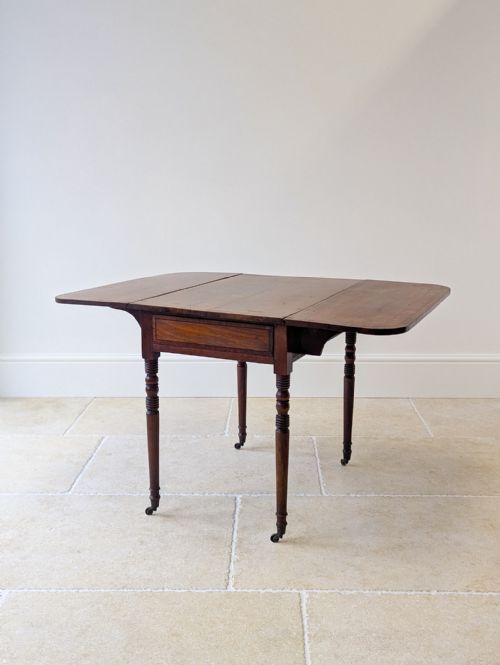
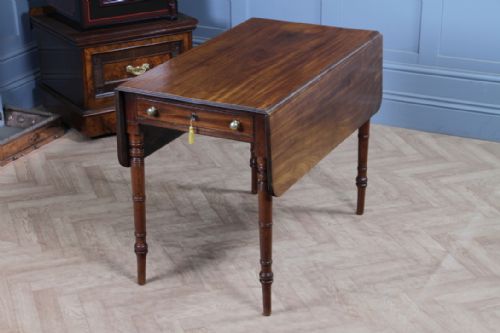


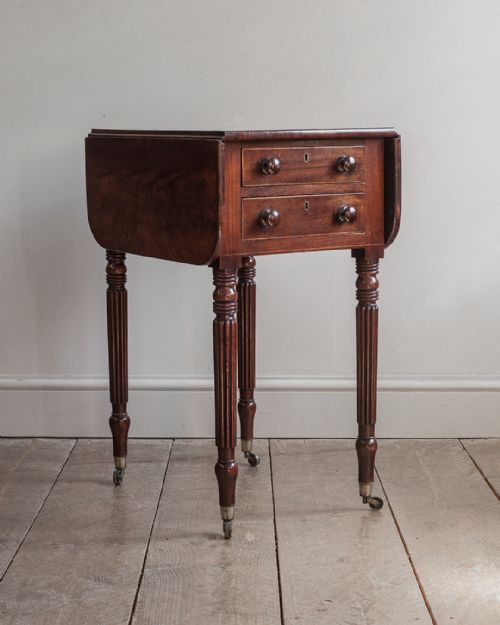


Regency Furniture Drop Leaf
Regency furniture drop leaf tables combine architectural precision with folding leaves to save space without losing formal dining presence.
Regency Furniture Drop Leaf
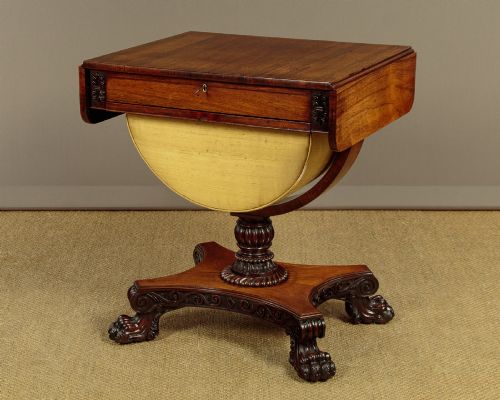
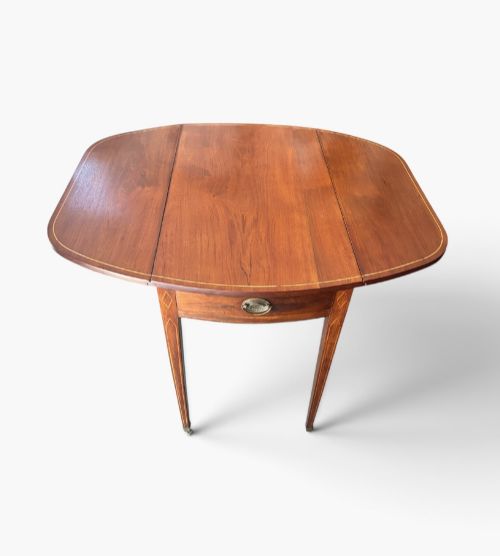
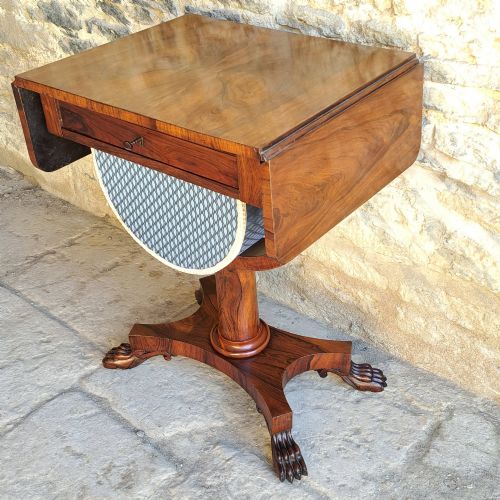
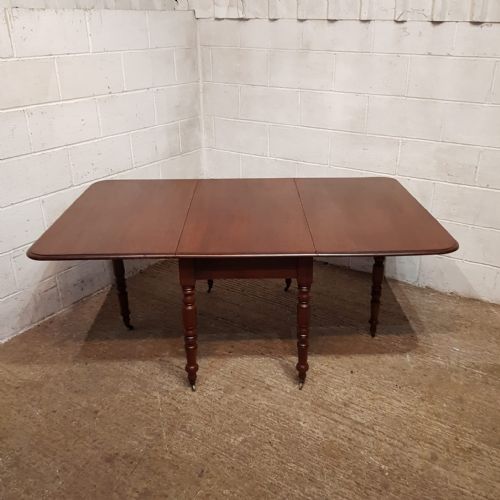
When you search for regency furniture drop leaf pieces, you encounter dining tables, sofa tables, and pembroke tables designed for flexible domestic use. These adaptable forms originate from the Georgian, Regency, and early Victorian periods, spanning the late eighteenth and nineteenth centuries.
You are most likely to meet mahogany and rosewood sofa tables or pembroke tables on this page, alongside larger drop leaf dining tables. Workshops in England, Scotland, and Ireland produced these pieces using native and exotic timbers to suit evolving room layouts.
Timbers and brass inlay techniques
Cabinet makers utilised solid and veneered timbers, selecting rich mahogany, flame mahogany, and dark rosewood for primary surfaces. Satinwood, boxwood, and burr yew provided sharp contrasts through stringing, banding, and intricate inlay work.
Metal embellishment formed a distinct technical speciality, with cut brass inlay set flush into dark rosewood tops alongside cast brass paw feet and mounts. Secondary framing often incorporated oak or pine to stabilise the folding mechanisms of the leaves.
The selection here spans the Georgian, Regency, and Victorian periods, predominantly constructed from mahogany and rosewood with brass and boxwood details.
Distinctions in construction and decorative depth
Quality separates ordinary utilitarian folding tables from pieces commissioned for prominent town and country houses through the precision of the joinery and the selection of timber figures. Flame mahogany and figured rosewood veneers matched symmetrically across a fold-over top indicate superior workshop standards.
The sophistication of brass inlay and secondary detailing elevates a piece, shifting it from simple joinery to high-status cabinet work. Fitted interiors in work tables, complete with original compartments and silver drawers, demonstrate the higher tier of execution.
James Mein Kelso·Morison of Ayr·Gillington of Dublin·William Trotter·George Bullock·Gillows of Lancaster
The Regency Furniture Drop Leaf Glossary
- Pembroke table
- A small occasional table featuring two hinged drop leaves on opposite sides, typically fitted with a single drawer.
- Sofa table
- A rectangular library or centre table designed to stand in front of a sofa, featuring drop leaves on either end and double pedestals or trestle supports.
- Crossbanding
- A decorative border of veneer laid so that the grain runs perpendicular to the main surface.
- Stringing
- A thin, linear inlay of contrasting wood or light-coloured material set flush into the primary timber.
- Drop leaf
- A hinged flap attached to a table top that can be raised to extend the surface or lowered when space is restricted.
Regency Furniture Drop Leaf: Frequently Asked Questions
How do I use a drop leaf table in a small room?
Keep one or both leaves dropped against the base to minimise the footprint when the table is not in use. Raise the leaves and swing out the supporting gate legs or brackets whenever you need a larger surface for dining or writing.
Position the table against a wall or behind a sofa so that the lowered leaves remain unobtrusive. This arrangement preserves floor space while keeping the timber surfaces ready for quick deployment.
What is the difference between a pembroke and a sofa table?
Pembroke tables typically feature two drop leaves on the longer sides of a compact rectangular top, often serving as small breakfast or occasional tables. Sofa tables are longer and narrower, designed specifically with end leaves to stand behind upholstered seating or in open rooms.
Sofa tables frequently incorporate trestle supports or twin pedestals linked by a stretcher, whereas pembroke tables generally rely on four slender legs. Both designs utilise hinged flaps to expand their working surface on demand.
How can I tell a Regency drop leaf table from a Victorian one?
Regency pieces often display classical proportions, crisp boxwood stringing, and restrained brass inlay reflecting early nineteenth-century neoclassical tastes. Timbers tend towards lighter mahogany and highly figured rosewood combined with elegant pedestal or saber leg supports.
Victorian and late William IV examples generally introduce heavier proportions, darker finishes, and sturdier turnings. Construction details like secondary timbers and drawer linings also help clarify the transition from Georgian standards into the nineteenth century.
Can I use a antique drop leaf table for daily dining?
These tables served as functional furniture in period homes and handle regular domestic use provided you protect the polished surfaces from heat and moisture. Use coasters and placemats to prevent ring marks on the antique French polish or wax finishes.
Check the stability of the folding leaf supports before loading them with heavy plates or serving dishes. Gentle treatment of the hinges and drop brackets ensures the mechanism remains secure over time.