


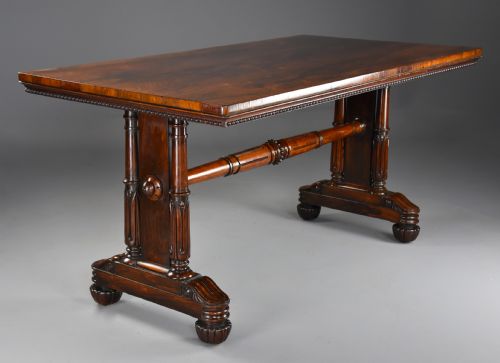
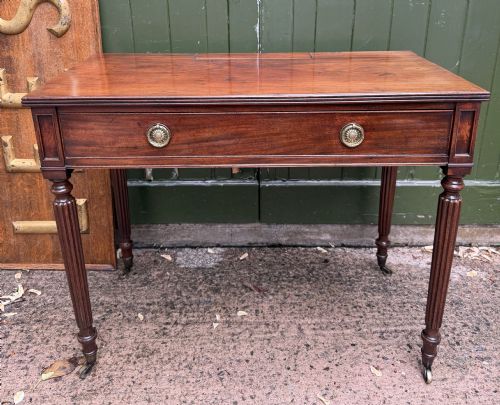


Regency Style Writing Table
These pieces for a regency style writing table bring classical proportion and polished mahogany into a room.
Regency Style Writing Table
A regency style writing table spans compact library desks and broader freestanding library tables designed for formal rooms. Most examples follow the proportions of the nineteenth century, drawing on Georgian and Regency precedents alongside later revivals from the Edwardian and Victorian eras.
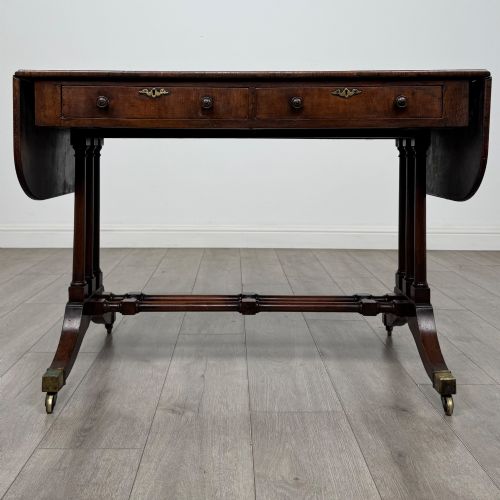
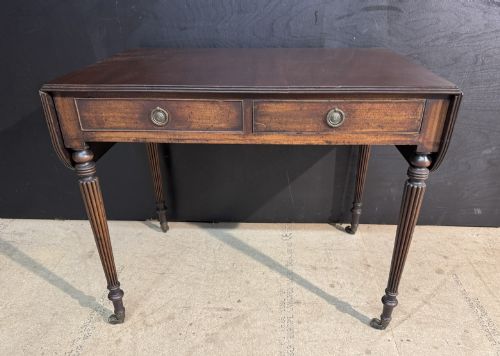
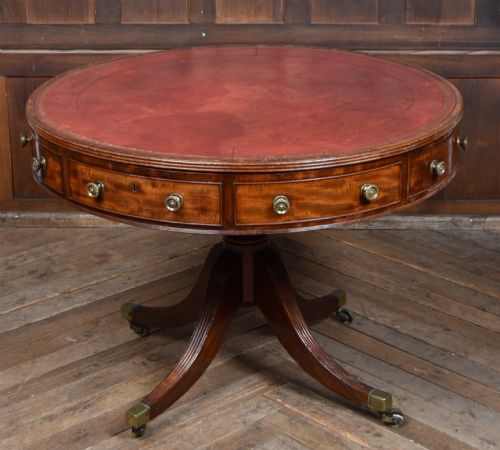
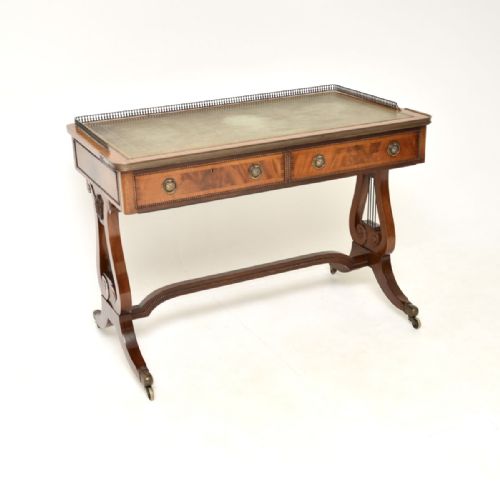
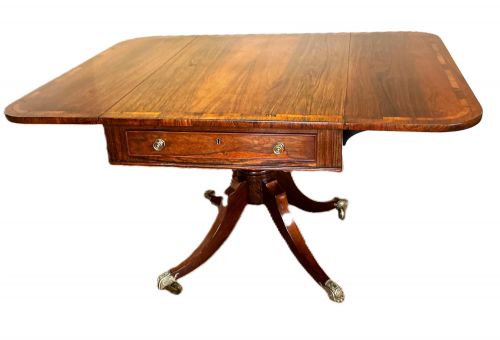
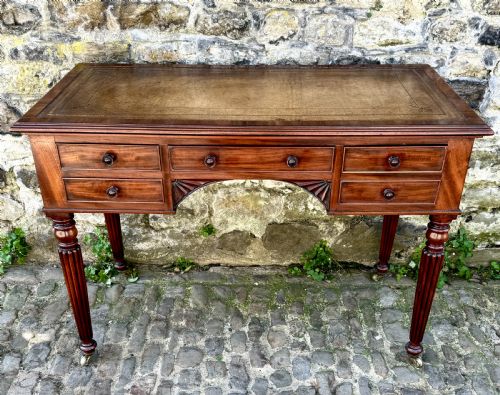
The selection here encompasses pedestal desks, drum tables, and sofa tables with drop flaps, alongside dedicated writing desks. Mahogany forms the backbone of these pieces, frequently accompanied by rosewood, satinwood, and yew wood.
Makers often turned to the aesthetic of Gillows of Lancaster, producing freestanding library tables and chamber tables with characteristic attention to timber grain. Pieces range from plain work surfaces to elaborate forms featuring leather inserts, brass fittings, and painted decoration.
How they were made
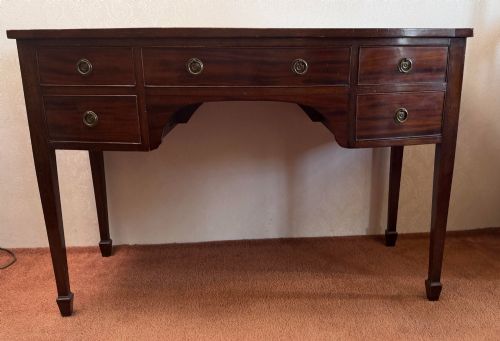
Cabinetmakers relied heavily upon figured mahogany, rosewood, and satinwood, often selecting veneers for drawer fronts and tabletops while employing solid timber for structural framing and legs. Inlaid banding in boxwood and contrasting timbers provided crisp linear definition along edges and borders.
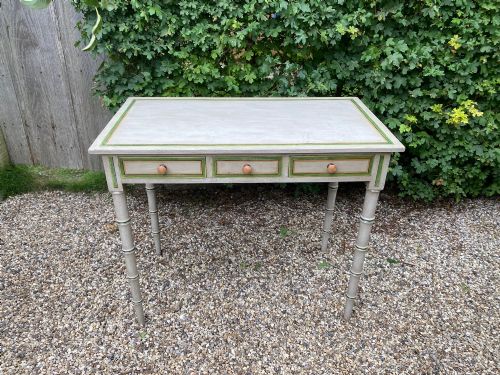
Writing surfaces frequently incorporated inset panels of tooled leather, whilst brass castors, handles, and ormolu mounts added functional detail. Secondary techniques included painted faux bamboo decoration and applied giltwood or Wedgwood plaques on specialised pieces.
A surprise nineteenth-century kidney-shaped writing table arrives complete with Wedgwood plaques and painted decoration.
What varies in quality
The distinction between ordinary and exceptional pieces rests upon the choice of timber figure and the precision of the cabinetwork. Grain selection on tabletops and drawer fronts determines visual depth, whilst crispness in turned legs and brass detailing separates standard production from superior craftsmanship.
Construction methods such as secondary drawer linings, dovetailing, and the retention of original brass hardware indicate the level of care invested during manufacture. Pieces reflecting the workshop standards associated with Gillows demonstrate a higher grade of finish in both internal and external elements.
Gillows of Lancaster·S and H Jewell·William Trotter·Richard Bridgens
The Regency Style Writing Table Glossary
- Sofa Table
- A small rectangular table traditionally placed before a sofa, featuring drop flaps on either end and two small drawers. These versatile pieces often stand on trestle supports or pillar pedestals.
- Drum Table
- A circular library table containing a deep frieze fitted with alternating drawers and dummy drawers. They rotate on a central pillar above a platform base or splayed legs.
- Partners Desk
- A large double-sided writing desk designed for two people to work opposite one another. These pieces feature drawers on both faces and stand freely in the centre of a room.
- Ormolu
- Gilt-bronze ornamentation applied to furniture mounts and details. The technique involves treating bronze with a gold amalgam to create a bright metallic finish.
- Frieze
- The horizontal band situated directly beneath the tabletop, frequently housing one or more drawers. Cabinetmakers often decorated this section with crossbanding or veneers.
Regency Style Writing Table: Frequently Asked Questions
Where should a writing table go?
These tables adapt well as freestanding centrepieces in a study or library, where polished timber and leather inserts remain visible from all sides. Placing them away from direct sunlight protects vulnerable rosewood and mahogany veneers from fading over time.
Smaller sofa tables and side variants fit comfortably behind upholstery or against walls in drawing rooms. Their finished backs and compact proportions allow them to serve functional writing roles without dominating smaller spaces.
How are these tables cleaned?
Routine maintenance requires only a soft, dry cloth to remove dust from mahogany and rosewood surfaces. Avoid silicone-based polishes, which build up and dull the timber grain over years of application.
Leather writing inserts need occasional treatment with specialised leather balms to prevent drying and cracking. Care must be taken to keep moisture away from polished wood and brass mounts during cleaning.
What defines a library table?
Library tables differ from standard desks by being fully finished on all four sides for freestanding placement in large rooms. They often incorporate generous dimensions and deep frieze drawers intended for storing documents and books.
Many examples feature rotational drum formats or twin pedestals designed for shared use. Their substantial proportions reflect nineteenth-century interior arrangements where furniture sat away from walls.
How do styles differ across periods?
Georgian and Regency examples prioritise architectural proportion, classical restraint, and rich mahogany figures. Edwardian and later nineteenth-century revivals frequently combine these elements with lighter satinwood banding and inlaid decoration.
William IV pieces lean towards heavier pedestals and substantial rosewood construction. Understanding these subtle shifts in timber choice and leg turnings helps identify when a piece was produced.