

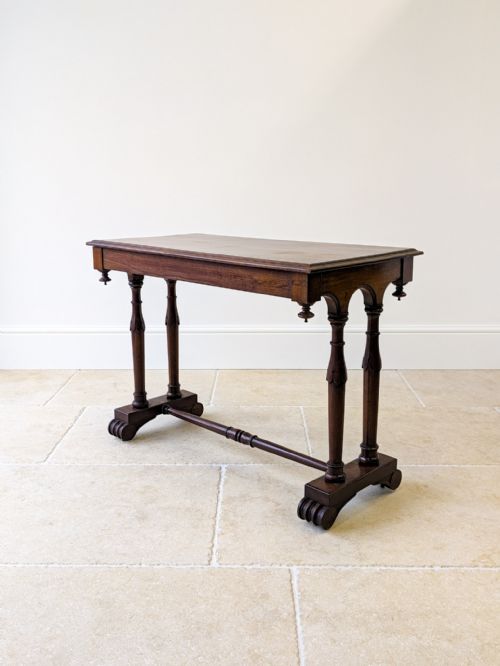
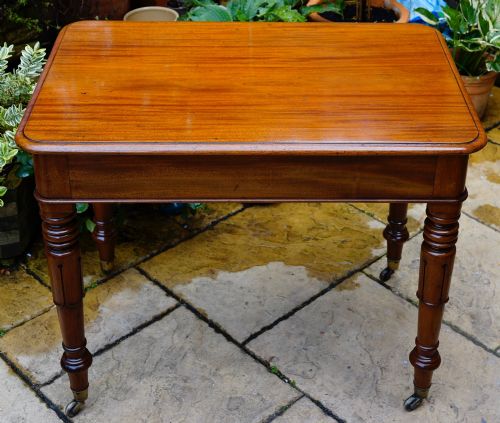
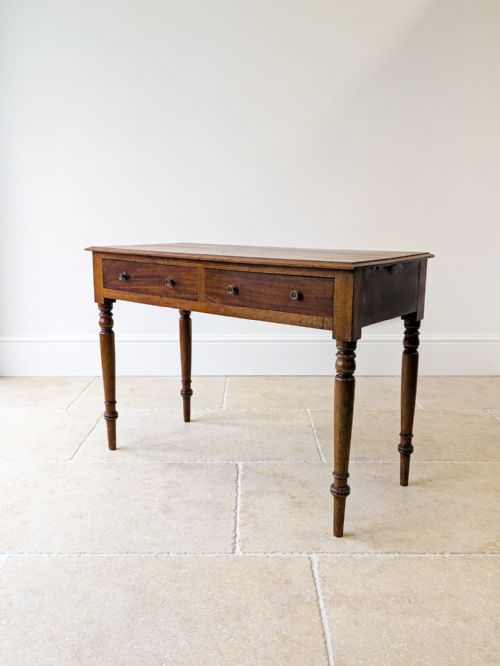
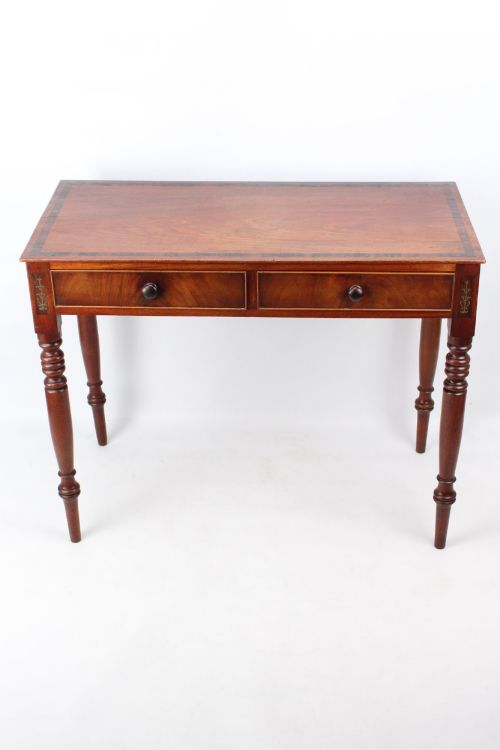
Turned Leg Library Table
A turned leg library table brings heavy timber, leather inserts and honest proportions to a working room.
Turned Leg Library Table
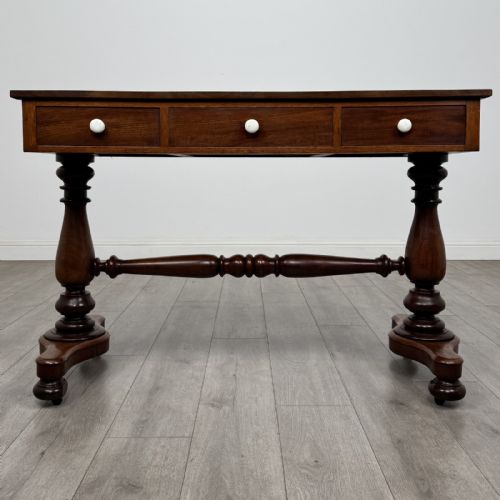
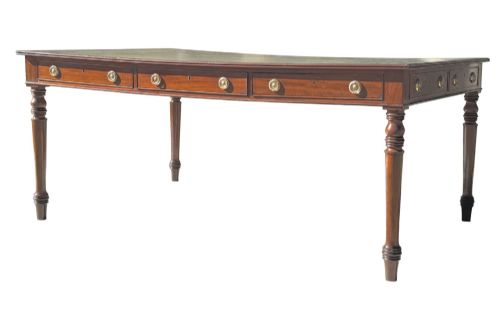
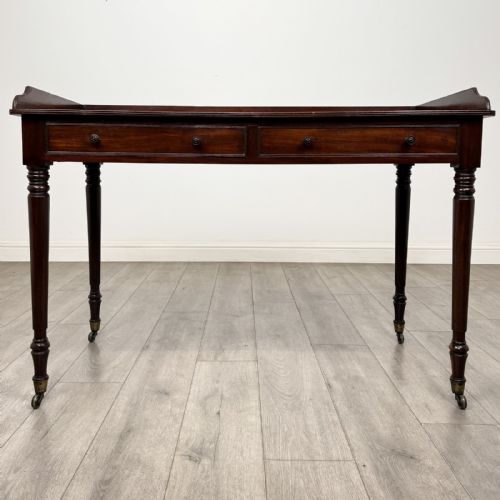
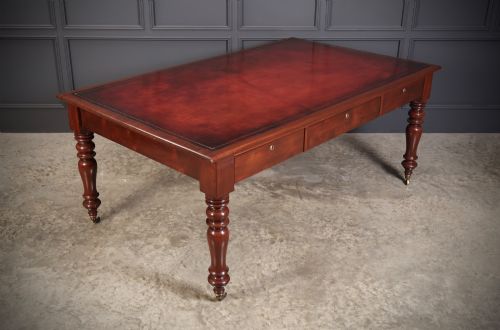
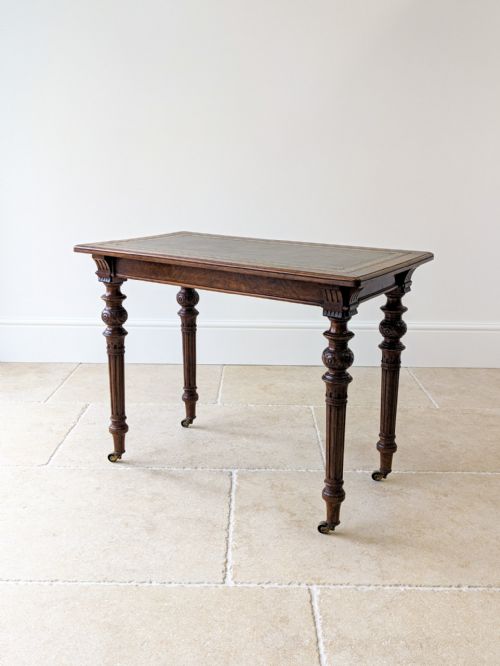
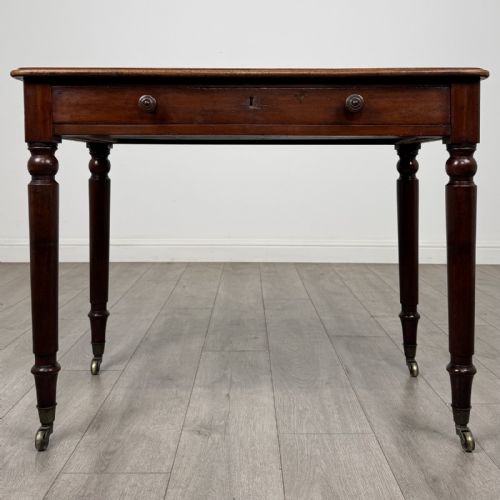
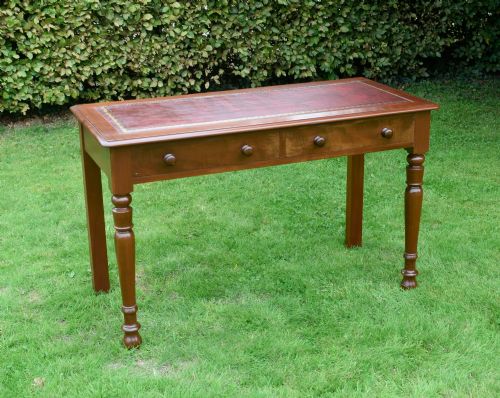
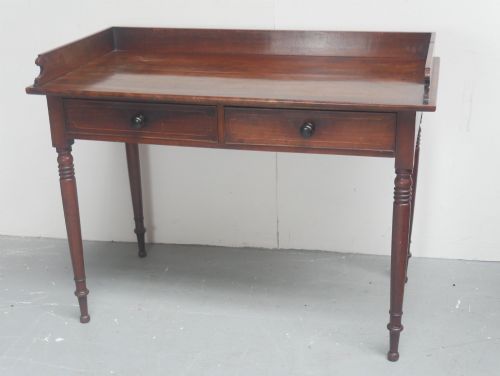
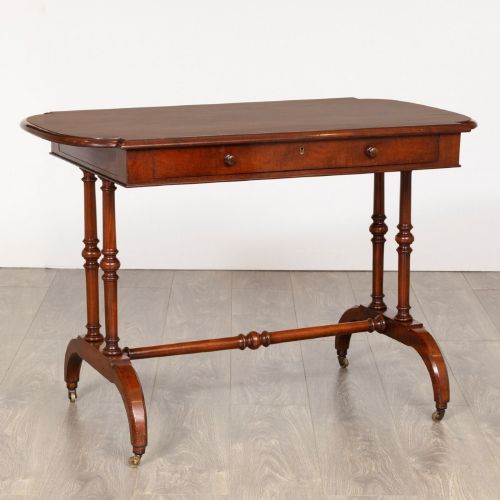
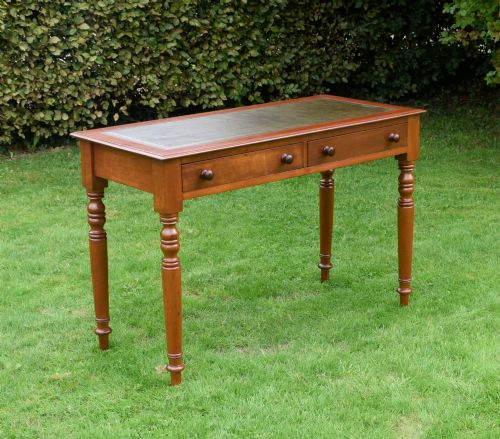
A turned leg library table is a substantial writing or working surface designed to stand free in a room rather than push against a wall. The pieces collected under this phrase span the Georgian, Regency, William IV and Victorian eras, taking the form of library tables, writing desks and partners tables.
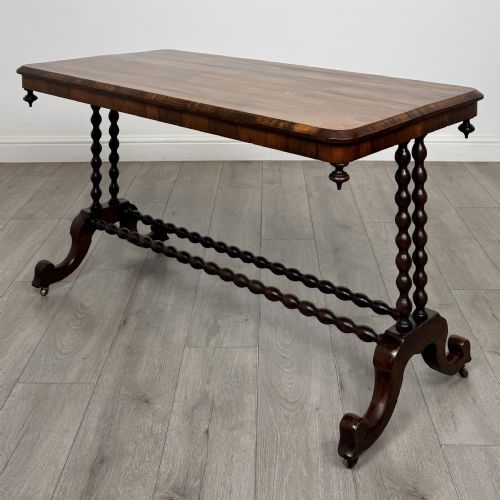
Mahogany dominates the listings, frequently accompanied by walnut, burr walnut, oak and rosewood. These woods are paired with inset leather tops, brass castors and turned supports that ground the heavy timber.
The most common examples encountered on this page are Victorian mahogany writing tables and library pieces from the nineteenth century. Buyers also find earlier Regency and Georgian pieces alongside Edwardian variations.
Materials and construction
Cabinet makers relied on solid mahogany, walnut and oak for structural integrity, often utilising finely figured veneers on drawer fronts and top surfaces. Secondary timbers such as pine or oak were used for drawer linings and internal framing.
Writing surfaces were traditionally lined with tooled leather, secured with brass tacks or blind tooling. Brass inlay, castors and drawer pulls provided functional hardware that patinates with age.
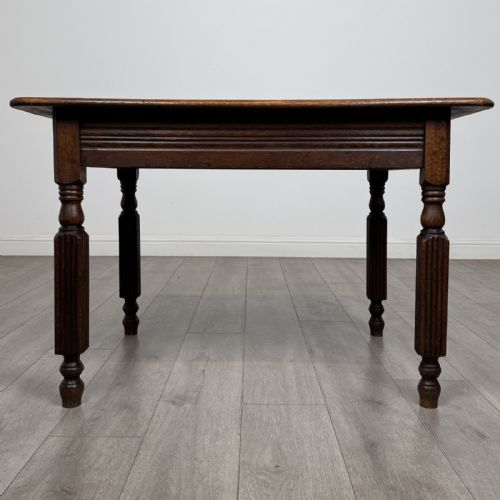
Turning lathes shaped the solid timber legs, producing cylindrical, reeded or bobbin-turned profiles that support the heavy upper casework.
Turned Leg Library Table Retail Price Guide 2026
Typical asking prices for turned leg library table among the pieces listed under this phrase on Sellingantiques today, from the lower quarter to the upper quarter. They describe what is for sale here now, not the wider market.
The listings span the Georgian, Regency, William IV, Victorian and Edwardian periods, constructed primarily from mahogany, walnut, oak and rosewood.
Judgements of quality
Quality rests upon the selection of timber and the depth of the figure in the grain, particularly on mahogany and burr walnut surfaces. A superior table exhibits careful timber matching across the top and drawer fronts rather than mismatched boards.
Construction methods dictate longevity, seen in hand-cut dovetails on drawer boxes and the crispness of the turned work on the legs. Subtleties in brass inlay, patination and the retention of original castors elevate an ordinary desk to a superior example.
The Turned Leg Library Table Glossary
- Partners table
- A large desk designed with drawers on both sides so two people can work facing each other. These pieces often feature pedestals or banks of drawers flanking a central kneehole.
- Library table
- A freestanding table utilised for reading and writing, finished on all sides so it can occupy the centre of a room. They frequently incorporate frieze drawers for stationery.
- Frieze
- The horizontal band beneath the top edge of a table that typically houses one or more drawers. Cabinet makers carved or veneered this section to match the overall style.
- Bobbin turning
- A type of lathe-turned leg characterised by a succession of rounded wooden spheres resembling bobbins. This decorative profile appears frequently on Victorian side and writing tables.
- Patina
- The surface sheen and softening of colour developed by timber and leather through decades of handling and exposure to light. A desirable patina signals age and regular use.
Turned Leg Library Table: Frequently Asked Questions
What is a library table used for?
A library table serves as a large writing, reading or working surface designed to sit in the centre of a room. Unlike a standard desk that faces a wall, it is finished on all sides.
Historically, these tables provided a stable platform for heavy volumes and correspondence. Today, they function effectively as large executive desks or central workspace tables in home studies.
How do I date a library table?
Dating relies on identifying the prevailing style, timber choices and construction techniques visible in the piece. Georgian and Regency pieces tend to show simpler, linear classical proportions, while Victorian examples often display heavier turned legs and richer walnut veneers.
Examining the drawer construction, such as the pitch and regularity of the dovetails, provides further clues to the manufacturing decade.
Can I use an antique table for a home office?
These tables adapt well to modern home offices because their generous proportions easily accommodate laptops, monitors and paperwork. The deep frieze drawers offer practical storage for stationery and modern accessories.
Placing a blotter or desk pad protects the historic leather top from direct wear while maintaining the original surface.
Are these tables freestanding?
Library tables and partners desks are finished on all four sides so they can float in the middle of a room rather than push against a wall. This finish includes the back panel and rear frieze.
Their polished backs make them ideal room dividers or focal points in open-plan spaces.