

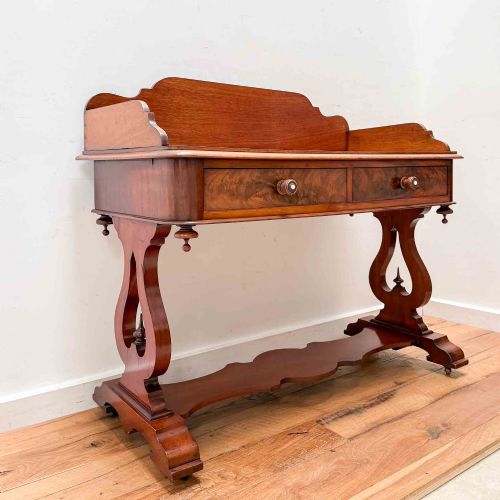


Lyre Leg Writing Desk
These lyre leg writing desk examples offer elegant work surfaces supported by graceful classical forms that bring functional beauty to any study.
Lyre Leg Writing Desk
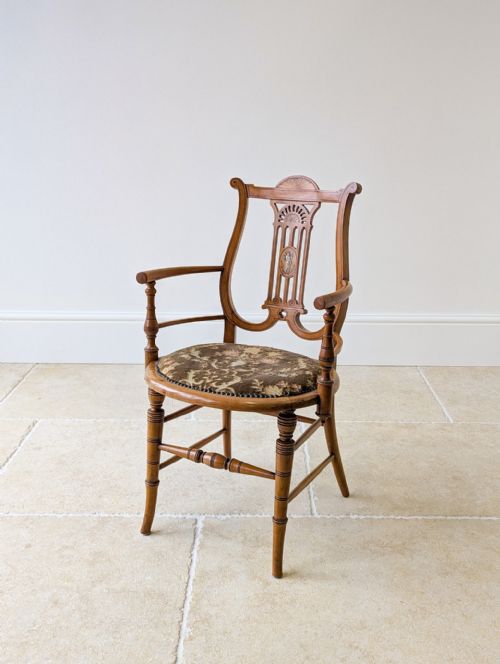
When you search for a lyre leg writing desk, you look for a dedicated writing surface defined by distinct lyre-shaped supports. These tables span several distinct eras from the Regency period through Victorian and Edwardian times, alongside later revival pieces.
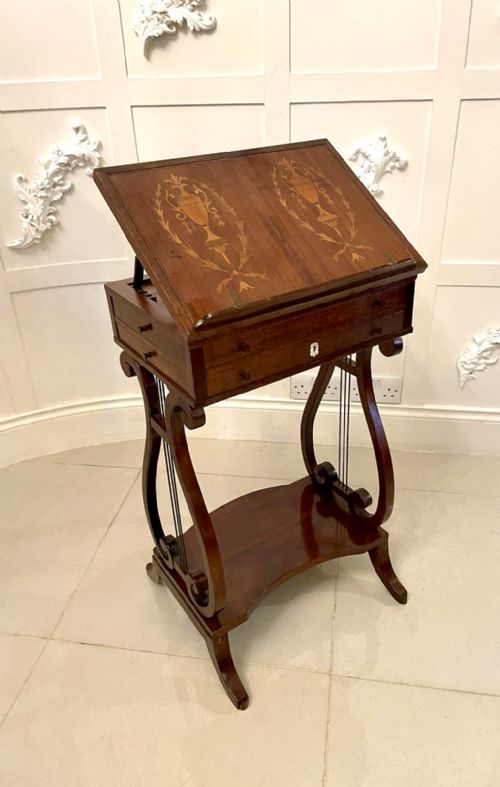
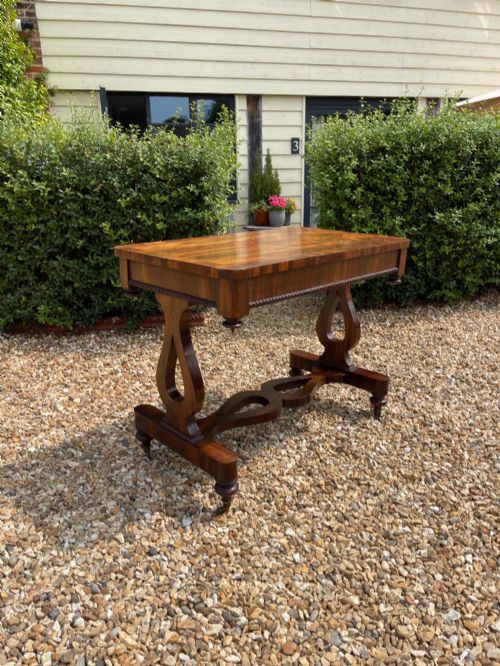
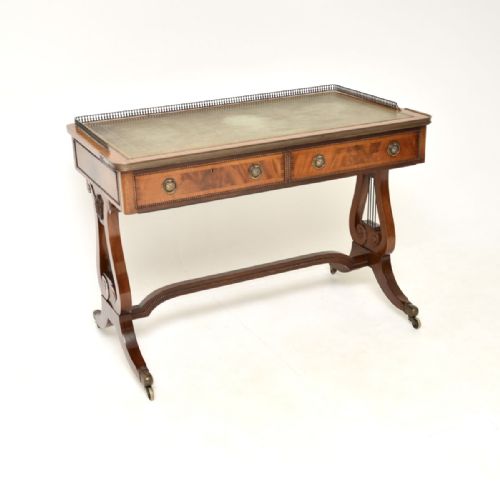
The most frequent variations on this page include mahogany side tables, sofa tables, and specific writing desks or tables featuring characteristic lyre supports. Originating in classical design, these forms serve as both practical writing furniture and striking centre tables.
Makers adapted the lyre motif across various centuries, producing pieces in mahogany, satinwood, and walnut. Whether structured as a compact ladies desk or a freestanding library table, the form remains instantly recognisable.
How they were made
Cabinet makers constructed these pieces primarily using solid and figured mahogany, accented with finer timbers such as satinwood, rosewood, and boxwood inlay. Brass fittings frequently reinforced the joints and supported castors on the moving tables.
Working surfaces often incorporated inset leather panels for writing, surrounded by polished timber frames. Workshops employed traditional joinery to secure the curved lyre supports, ensuring stability beneath the table top.
Current listings demonstrate periods ranging from Regency through Victorian and Edwardian, utilising mahogany, satinwood, and brass.
What varies in quality
The distinction between ordinary and exceptional pieces lies in the selection of timber figures and the crispness of the carving on the lyre supports. Finer examples display meticulous attention to detail in their inlay work and brass mounts.
Proportion and construction integrity dictate the overall calibre of the desk. Superior pieces maintain balanced lines and sophisticated secondary timbers, reflecting the skill of the original workshop.
The Lyre Leg Writing Desk Glossary
- Lyre
- A decorative support carved in the symmetrical shape of an ancient stringed musical instrument. This motif became particularly popular during the Regency period.
- Sofa table
- A rectangular table traditionally placed in front of a sofa, featuring drop leaves on either side. These tables often double as compact writing desks.
- Satinwood
- A lustrous, fine-grained hardwood native to the tropics, prized for its golden yellow colour and used extensively in stringing and veneer work.
- Inlay
- A decorative technique where contrasting materials are inserted into recessed cavities of a timber base to create patterns.
Lyre Leg Writing Desk: Frequently Asked Questions
How do I date a lyre leg desk?
Dating relies on identifying the timber selection, construction methods, and stylistic cues present in the piece. Victorian and Edwardian examples often display heavier proportions compared to earlier Regency origins.
Examining the secondary woods and any brass hardware provides further clues to the exact manufacturing era.
Were these desks used for writing?
Many of these pieces were specifically designed for correspondence, featuring fitted drawers and leather-lined surfaces. Others served multiple functions as library tables or centre tables.
The inclusion of drop leaves and side drawers often indicates a primary use for paperwork and reading.
What maintenance do these tables need?
Routine care involves dusting with a soft cloth and occasionally applying quality beeswax to nourish the timber. Protecting the leather top from direct sunlight and moisture preserves the writing surface.
Avoid placing these desks near heat sources to prevent the mahogany or satinwood from splitting.
How do I place one in a room?
Freestanding models look best positioned in the centre of a room or behind a sofa, showcasing the lyre supports from all angles. Smaller side tables fit comfortably against walls or beside seating arrangements.
Ensure adequate clearance around the table to appreciate the classical silhouette properly.