
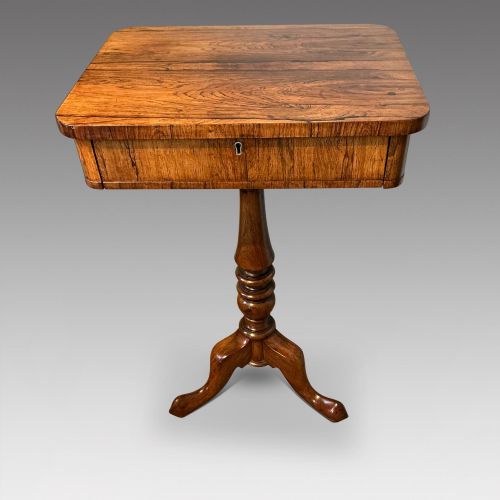
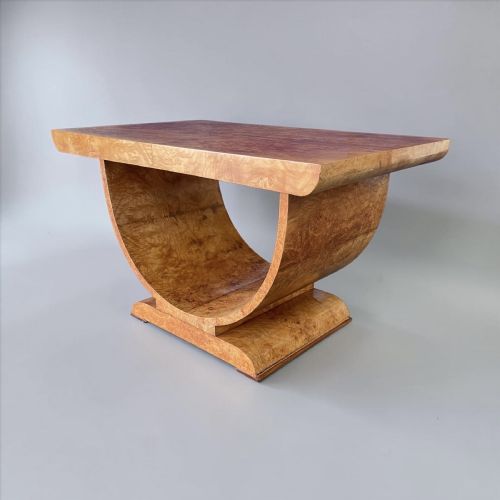
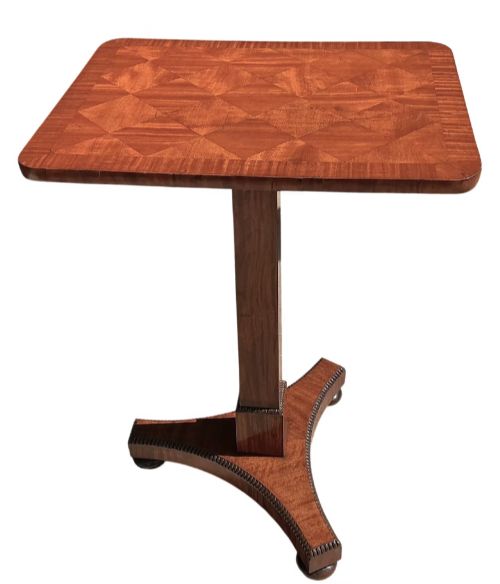
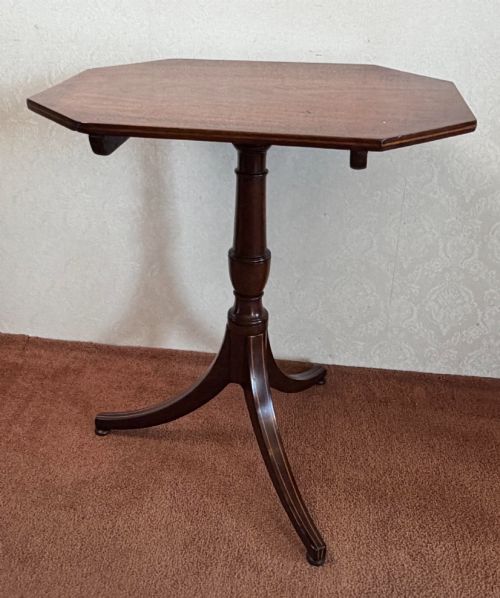
Pedestal Base Side Table
A pedestal base side table brings proportion and a central support column to a room, offering practical surface space without crowding the floor.
Pedestal Base Side Table
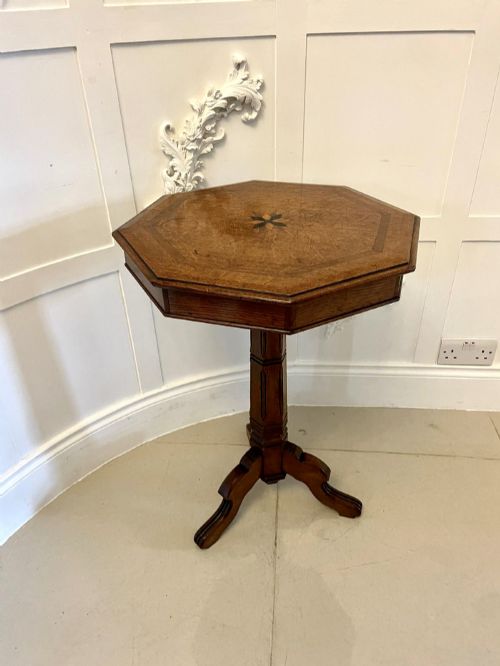
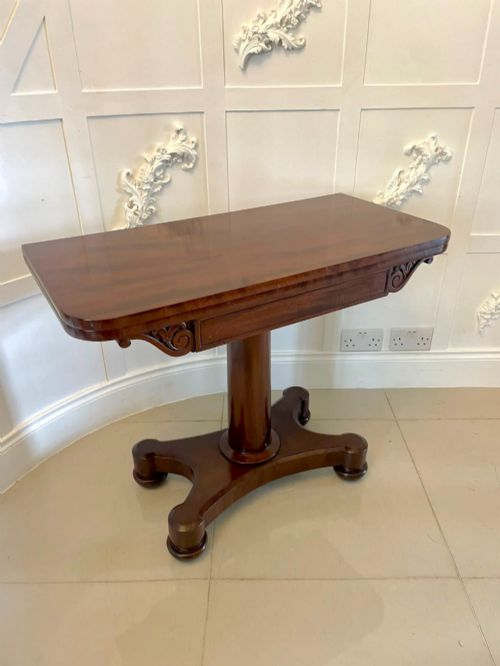
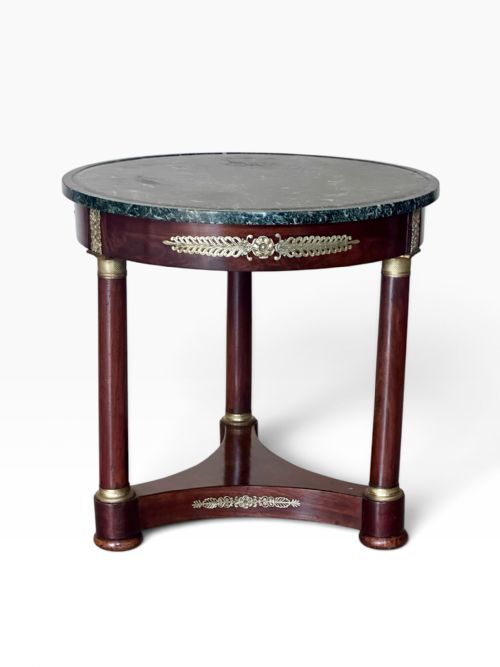
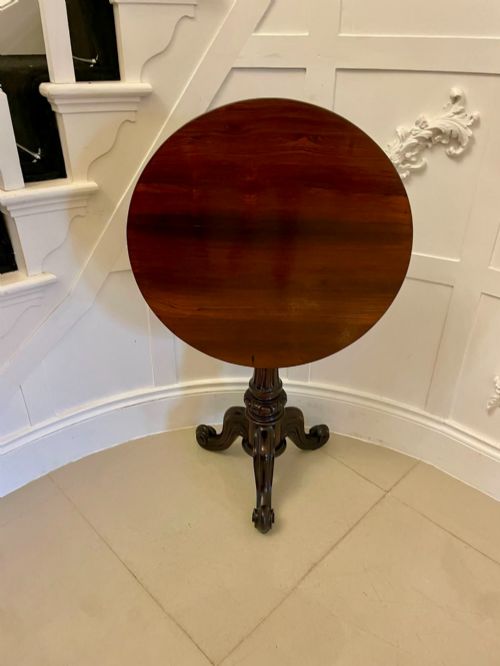
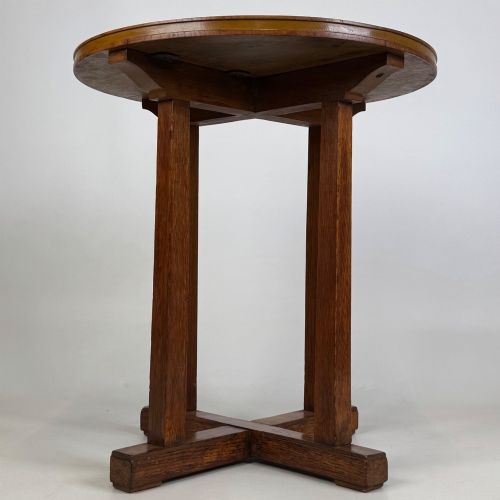
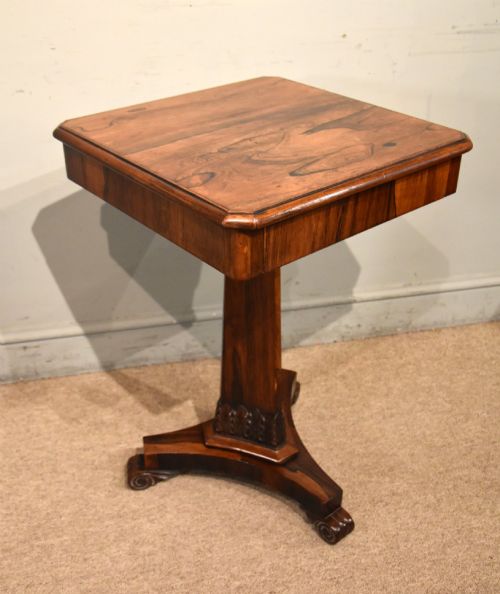
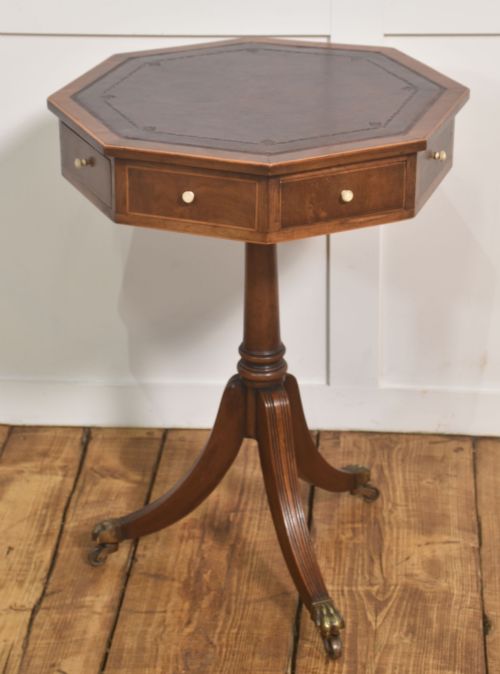
When searching for a pedestal base side table, you encounter compact occasional pieces, wine tables, and drum tables supported by a single central pillar rather than four corner legs. These furnishings appear across several eras, including the Georgian, Regency, William IV, Victorian, and Edwardian periods.
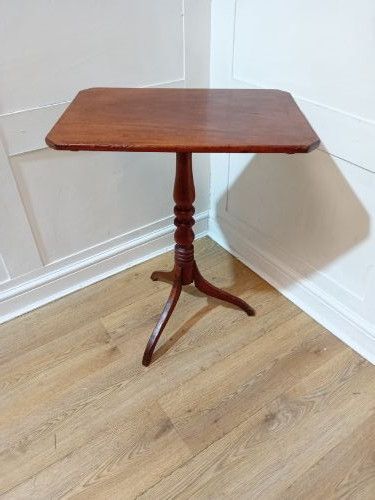
The most common examples on this page are mahogany wine tables and rosewood occasional tables resting on tripod or platform bases. They function as small lamp tables, tea tables, or bedside surfaces within domestic interiors.
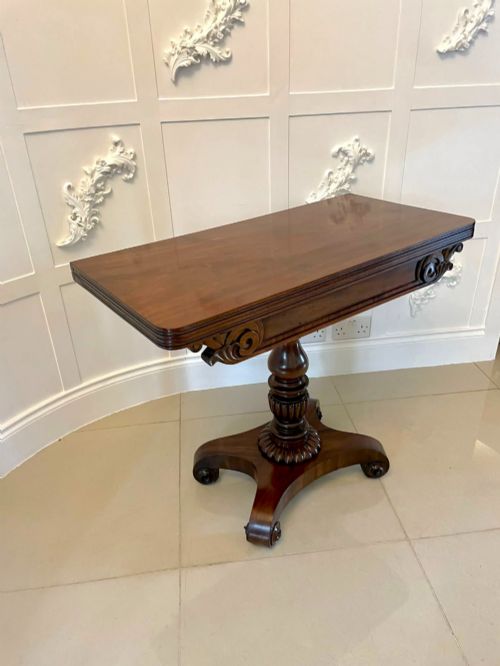
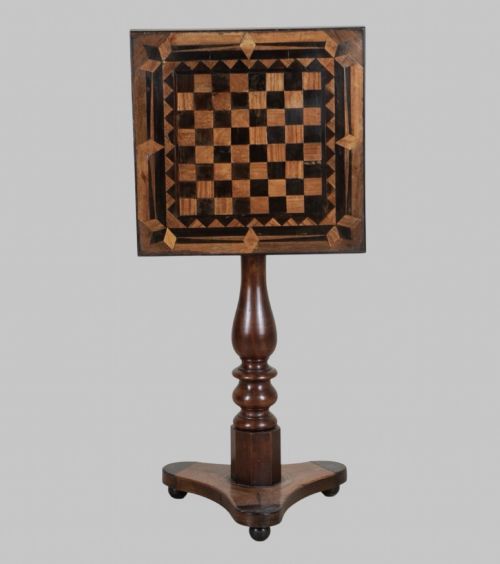
Originating as practical items for holding candles, books, or drinks, these tables utilise turnings, carved pillars, and sometimes inlaid tops to add architectural interest to a corner or seating area.
How they were made
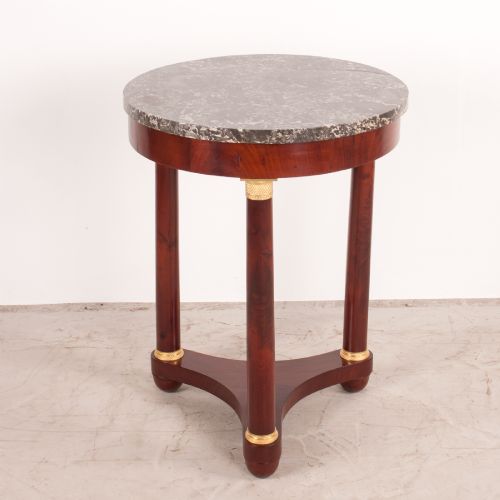
Cabinetmakers constructed these tables using dense timbers such as mahogany, rosewood, oak, and walnut, frequently selecting figured veneers for the circular or square tops. Brass details, marble inserts, and ormolu mounts appear on specific French Empire and later Victorian designs.
The central pillar often connects to a tripod base with carved or splayed legs, providing stability despite the single point of contact with the floor. Joinery methods include traditional pegging, turning on a lathe, and precision veneering over secondary softwood or hardwood cores.
Listings feature woods spanning mahogany, rosewood, oak, walnut, and burr maple alongside marble and brass.
What varies in quality
The distinction between standard examples and finer pieces lies in the choice of timber and the crispness of the carving on the pillar and feet. Highly figured veneers, boxwood inlay, and well-balanced proportions separate exceptional workshop output from routine production.
Structural integrity at the joint where the pillar meets the base determines the longevity and daily utility of the table. Subtle details, such as matching grain patterns across the top and well-turned columns, indicate superior craftsmanship.
The Pedestal Base Side Table Glossary
- Gueridon
- A small French table supported by a single central column or pillar. These tables often feature marble tops and originated in the seventeenth century.
- Wine table
- A small occasional table designed to hold glasses or a bottle near a seating area. They typically feature a circular top on a tripod base.
- Drum table
- A circular library or occasional table with a deep top resembling a drum. They often include drawers and rest on a heavy pillar and plinth.
- Tripod base
- A support structure featuring three legs radiating from a central pillar. This design ensures stability on uneven floors.
- Teapoy
- A small box or table used originally for storing and serving tea. Colonial examples often incorporate intricate carved details.
Pedestal Base Side Table: Frequently Asked Questions
What is a pedestal base side table used for?
These tables provide a compact surface for lamps, books, and drinks next to armchairs or sofas. Their central pillar design allows them to fit into tight corners where four-legged tables might not.
Historically, specific versions served as tea tables, wine stands, or games surfaces with folding or tilt-top mechanisms.
How do I identify a Regency period table?
Regency tables typically display classical influences with dark mahogany or rosewood timbers, brass inlay, and reeded pillar supports. The bases often feature tripartite or quadrupartite platform designs with carved paw feet.
Proportions during this era lean towards architectural clarity and restraint, drawing inspiration from ancient Greek and Roman furniture.
Are marble top tables heavy?
Marble top tables, particularly French gueridons from the nineteenth century, carry significant weight in the stone insert. The heavy top requires a sturdy pedestal base to maintain balance and prevent tipping.
Despite the weight, the smooth stone surface offers high durability for holding drinks and decorative objects.