

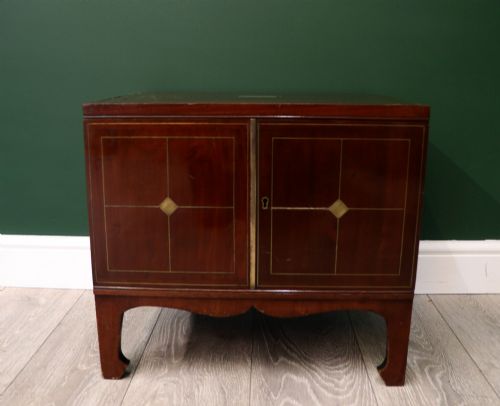
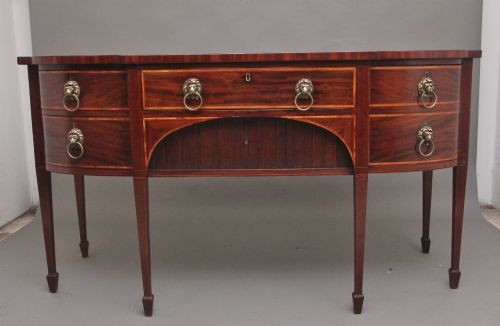
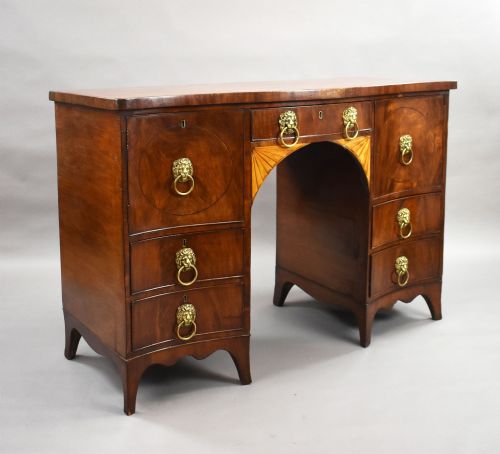
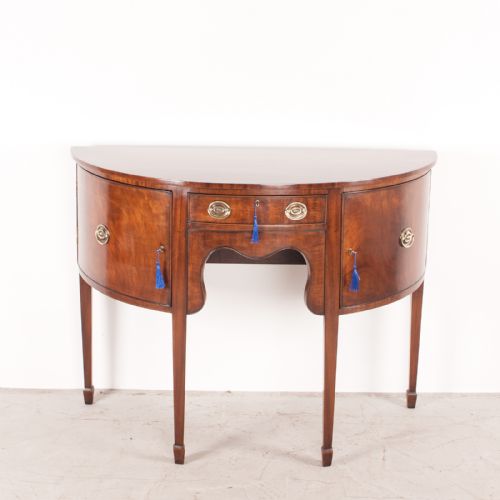


Regency Style Sideboard
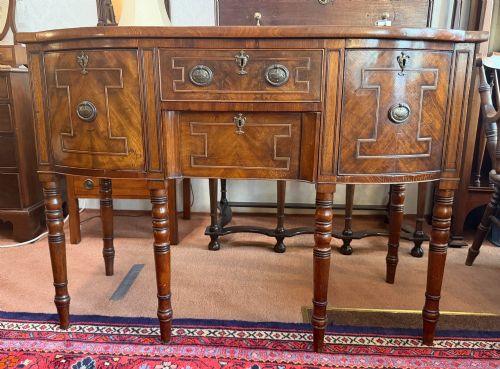
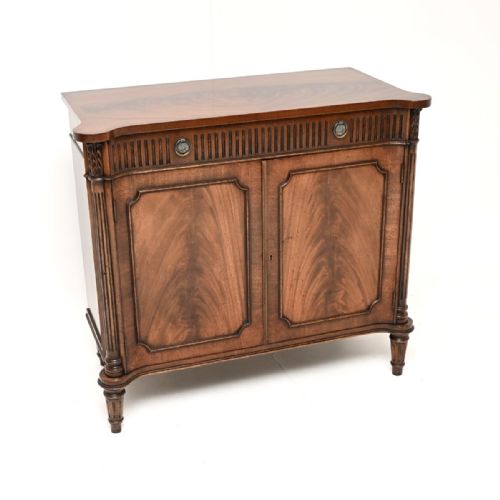
A regency style sideboard anchors a dining room with classical proportion, dark timber, and disciplined brass detailing.
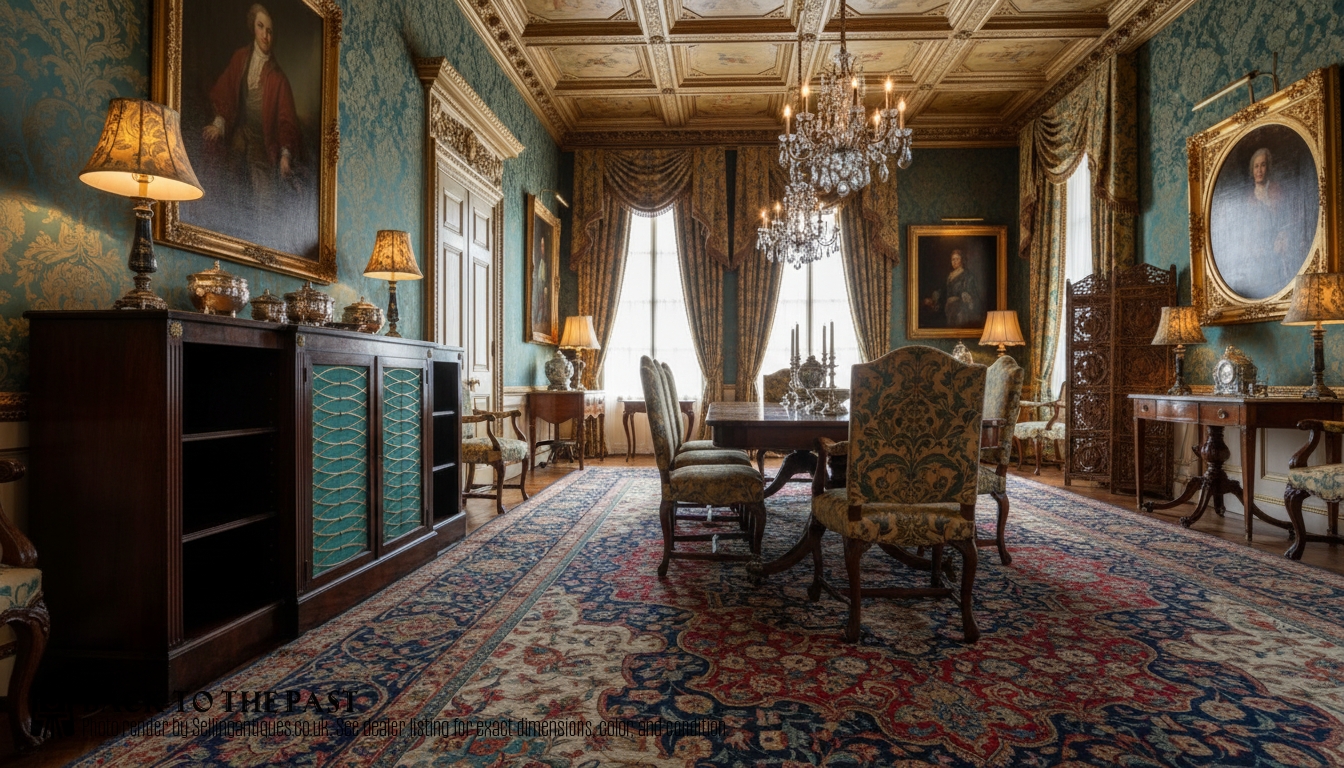
Regency Style Sideboard
A regency style sideboard brings architectural symmetry and formal dining storage into an interior space, drawing on early nineteenth-century design principles. Pieces meeting this description range from authentic period furniture to later revivals executed in the twentieth century.
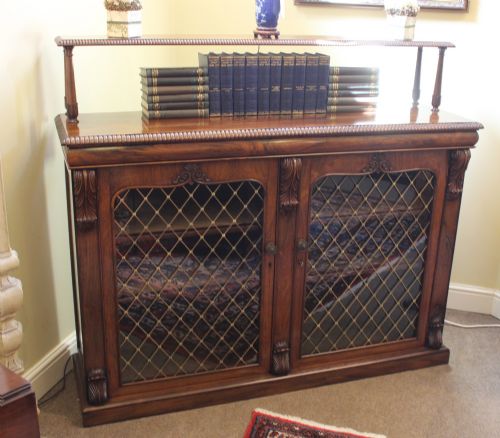
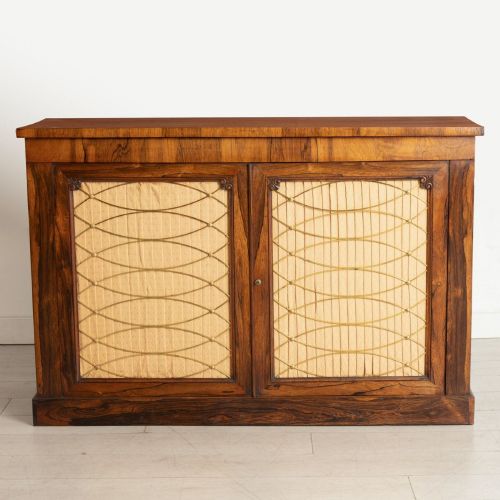
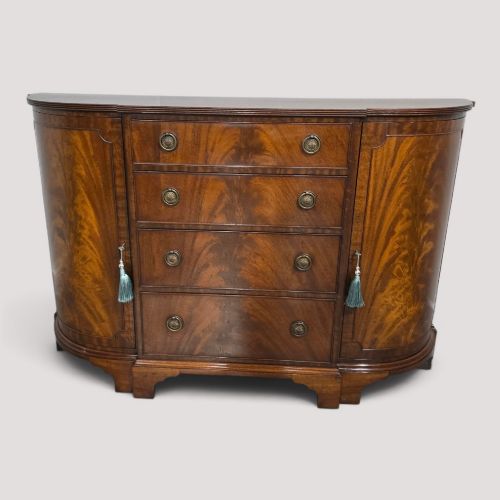
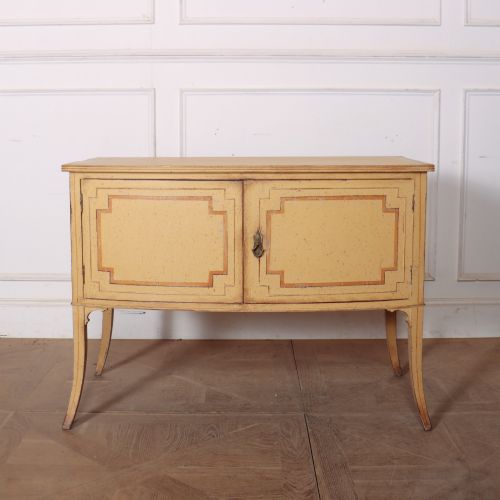
The form typically presents a long, low profile designed to stand against a dining room wall for serving food and storing plate. Variations on this page include straight fronts, bow fronts, serpentine shapes, and breakfront configurations.
Makers and manufacturers through the nineteenth and twentieth centuries adapted these classical shapes using mahogany, rosewood, and walnut. Buyers will encounter both original pieces from the Regency and William IV eras alongside later Edwardian and mid-century revivals.
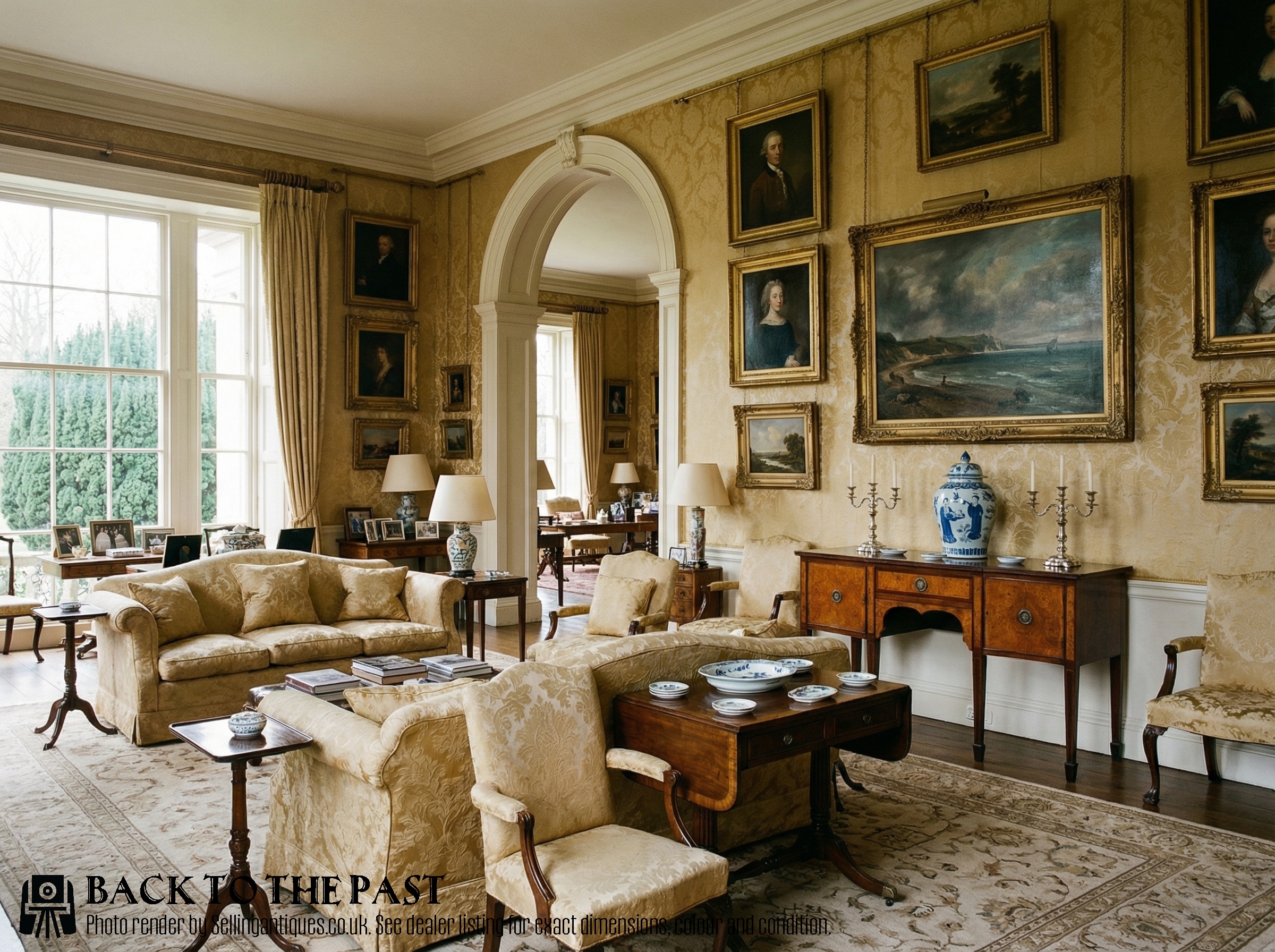
Factors Determining Quality
The selection of timber grain dictates much of the visual impact, with matched flame mahogany or figured rosewood marking the upper tiers of production. Plain secondary timbers and poorly aligned veneer sheets signal standard commercial manufacture.
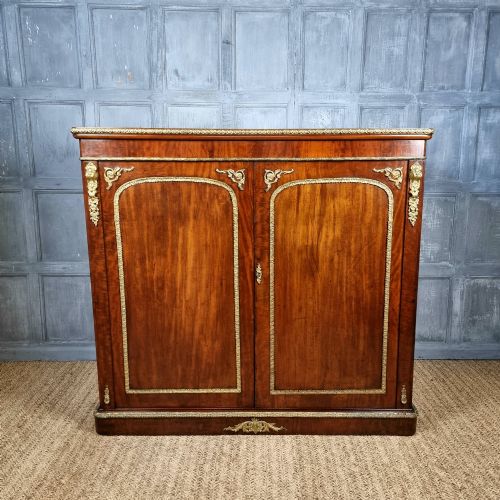
Execution of brass inlay, stringing, and ormolu mounts separates workshop standards, where crisp casting and tight flush fitting indicate superior craftsmanship. Structural integrity in the curved carcase and original hardware further distinguish finer examples.
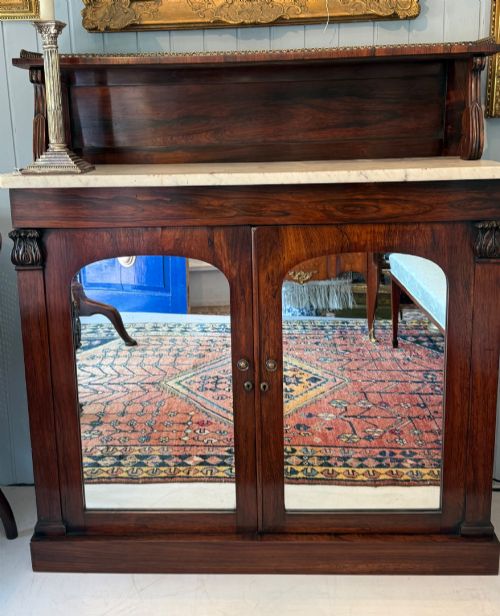
Listings feature mahogany, rosewood, and walnut timbers, alongside marble tops and brass or ormolu mounts.
Gillows·Waring and Gillow·The Woodworkers Ltd Kilkenny
The Regency Style Sideboard Glossary
- Bow-front
- A convex, outwardly curved front facade that softens the linear rigidity of a traditional cabinet. This shape requires advanced woodworking skill to bend timber and veneer accurately.
- Breakfront
- A cabinet design where the central section projects forward from the flanking outer sections. This architectural arrangement creates depth and shadow play across the piece.
- Ormolu
- Gilded bronze mounts cast in classical motifs and applied to furniture corners, friezes, and feet. The technique involves a mercury-gilding process common on high-status nineteenth-century pieces.
- Serpentine
- A horizontally undulating front that curves inward centrally and outward at the ends, resembling a snake's movement. It represents one of the most demanding forms in case furniture construction.
- Chiffonier
- A compact sideboard or cabinet featuring enclosed lower cupboards and a raised upper shelf supported by pillars. Originating in the early nineteenth century, it served similar dining or parlour functions.
Regency Style Sideboard: Frequently Asked Questions
How do I spot a true period piece?
Examine the secondary timbers inside the drawers and behind the backboards, such as oak or pine, which reveal age through oxidation and hand tool marks. Construction methods like hand-cut dovetails and pegged joints offer reliable clues to original nineteenth-century manufacture.
Compare the proportion and weight of the hardware against documented examples from the Regency era. Revivals from later decades often utilise standardised machine-made screws and modern glues that differ from older workshops.
Where should I place a sideboard?
These long serving cabinets traditionally anchor the longest wall of a formal dining room, positioned to allow easy access during meals. Their shallow depth also suits generous hallways or large living spaces as a display surface.
Keep timber furniture away from direct heat sources and strong sunlight to prevent the mahogany or rosewood veneers from drying out and cracking. Maintain stable room humidity to protect the polished finish and delicate brass inlay.
How do I clean mahogany veneer?
Dust the surface regularly with a soft, dry cloth to prevent microscopic particles from scratching the delicate french polished finish. Avoid using modern aerosol polishes containing silicone, which can penetrate the wood grain and damage the antique patina over time.
Apply a microcrystalline wax sparingly once or twice a year to nourish the timber and protect against moisture. Buff gently with clean cotton cloth to restore the natural lustre of the figured wood.