

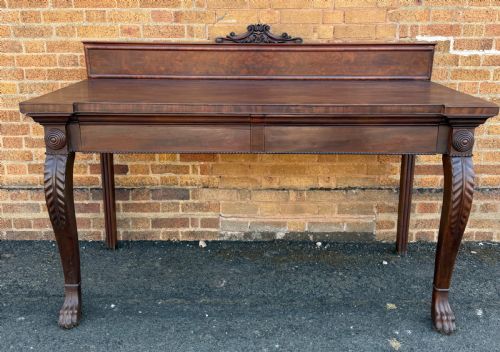


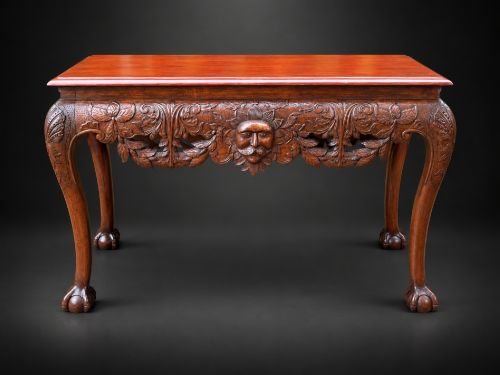


Antique Irish Sideboard
An antique irish sideboard brings architectural gravity to a dining room, offering substantial timber forms designed for display and service.
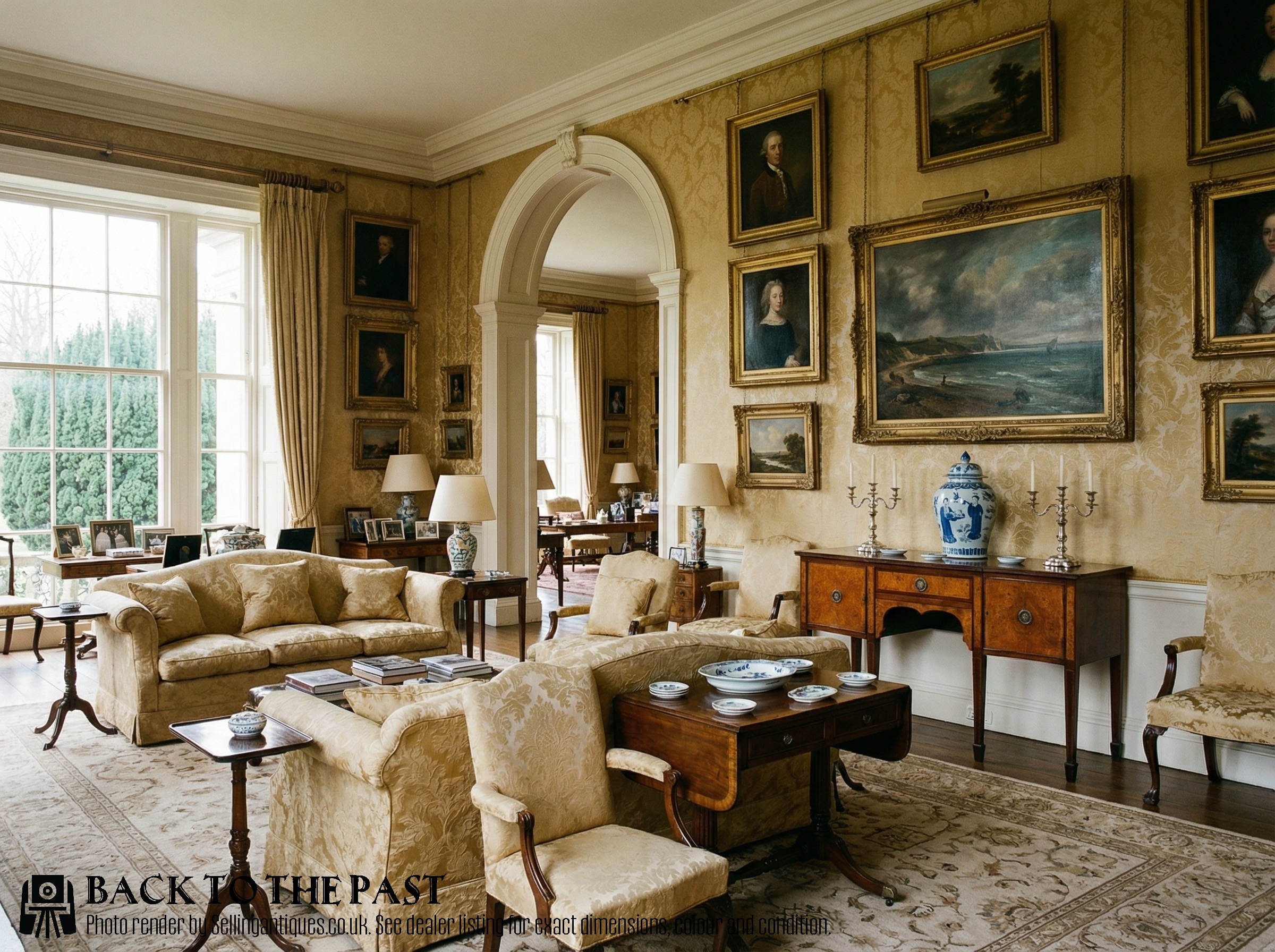
Antique Irish Sideboard
An antique irish sideboard encompasses formal serving tables, console tables, and cupboards shaped by Georgian, Regency, and Victorian hands. Buyers searching for an antique irish sideboard will most frequently encounter nineteenth-century mahogany serving tables featuring deep friezes and bold proportions.
The archive and current listings demonstrate that these pieces often emerge from Dublin workshops, with cabinetmakers utilising native cedar alongside imported timber. Sideboards and servers from this tradition rely on heavy architectural presence rather than delicate ornamentation.
Materials and Techniques
Makers built these pieces primarily from solid and veneered mahogany, frequently selecting stock with strong flame figure or incorporating burr elm panels. Brass mounts, handles, and gallery rails provide metallic contrast to the dark polished wood.
Secondary timbers such as cedar appear in regional Irish furniture, while satinwood serves as a contrasting veneer in later revival pieces. Construction methods involve traditional joinery, heavy turning, and deep hand-carving applied to pedestals, friezes, and legs.
Antique Irish Sideboard Retail Price Guide 2026
Typical asking prices for irish sideboard among the pieces listed under this phrase on Sellingantiques today, from the lower quarter to the upper quarter. They describe what is for sale here now, not the wider market.
Listings feature mahogany, cedar, and satinwood across periods from Georgian to the early twentieth century, with serving tables forming the predominant form.
Judging Quality
Quality rests upon the selection of timber grain, the crispness of the hand-carving, and the proportion of the architectural elements. Pieces with documented attribution to established Dublin makers command particular attention for their refined execution.
Proportions dictate the visual success of the piece, with superior examples maintaining balanced scale across pedestals, legs, and topboards. The integration of secondary woods and the integrity of the original polish and hardware further distinguish finer workshops from standard production.
James Hicks·Robert Strahan And Co·Mack Williams And Gibton·The Woodworkers Ltd Kilkenny·Gillington Of Dublin
The Antique Irish Sideboard Glossary
- Flame mahogany
- Mahogany veneer exhibiting a distinctive feather-like flame pattern caused by the divergence of the wood grain. This figure was highly prized for primary display surfaces.
- Serving table
- A large rectangular table placed against a dining room wall to hold dishes during meals. These tables form the majority of early Irish sideboard listings.
- Frieze
- The horizontal band running beneath the top surface of a table or sideboard, frequently carved with scrolls, foliage, or paterae. In Irish pieces, the frieze is often notably deep and robust.
- Pedestal
- A structural support beneath the ends of a serving table, sometimes taking the form of a cupboard or heavily carved block. They anchor the heavy proportions typical of Regency design.
- Secretaire
- A piece of furniture incorporating a pull-down writing drawer fitted with small drawers and pigeonholes. Several Irish examples combine this function with sideboard forms.
Antique Irish Sideboard: Frequently Asked Questions
What is an Irish serving table?
An Irish serving table is a large sideboard-type furniture piece designed for dining rooms, characterised by heavy proportions and bold carving. These tables were placed against walls to hold silver, glass, and serving dishes.
They lack the enclosed cupboards of later Victorian sideboards, relying instead on open frames, heavy friezes, and sturdy legs.
How do I identify Regency Irish pieces?
Regency Irish pieces display architectural severity combined with rich mahogany veneers, often featuring lion paw feet, bold scrolls, and carved scrollwork on the frieze. The timber selection typically shows strong grain.
Makers working in Dublin during this period produced heavy, confident forms that lean on classical Greek and Roman motifs.
Where were these sideboards made?
Many pieces originated in Dublin workshops run by prominent cabinetmakers such as Gillington or Mack Williams and Gibton. Regional workshops in other Irish towns also produced notable furniture.
Local timbers like cedar sometimes appear alongside imported mahogany in these regional pieces.
How do I live with a large sideboard?
These large tables require substantial wall space and high ceilings to balance their heavy visual weight. They function effectively in dining rooms or wide hallways as console display surfaces.
Maintenance involves regular polishing with appropriate wax to preserve the deep patina of the mahogany and burr elm surfaces.