


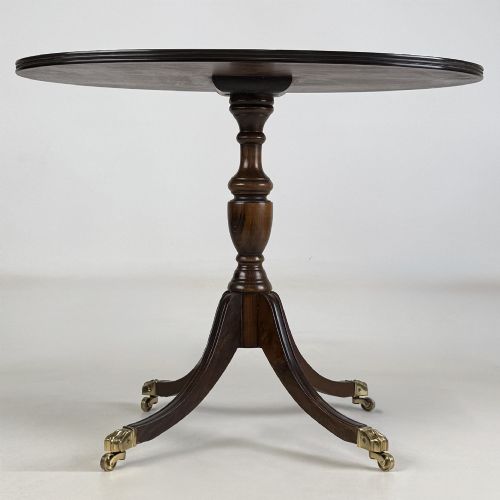
Regency Style Pedestals
Regency style pedestals offer classical proportion and sturdy pillar supports, bringing architectural elegance to dining and occasional spaces.
Regency Style Pedestals
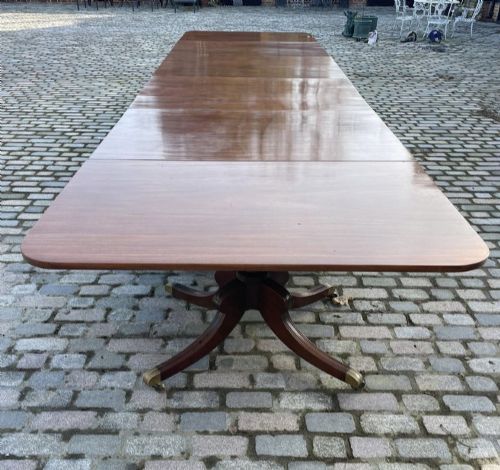
When you search for regency style pedestals, you find dining tables and occasional pieces built upon central columns rather than standard corner legs. These designs draw from nineteenth-century forms, with many examples originating from the Edwardian era and the nineteen-twenties as revivals of earlier aesthetics.
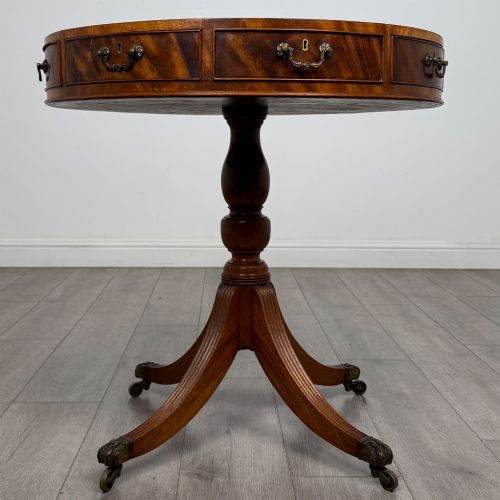
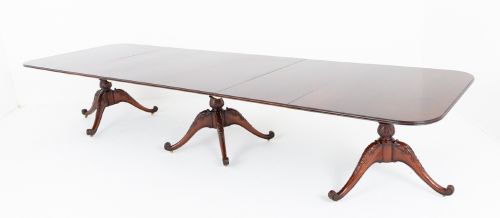
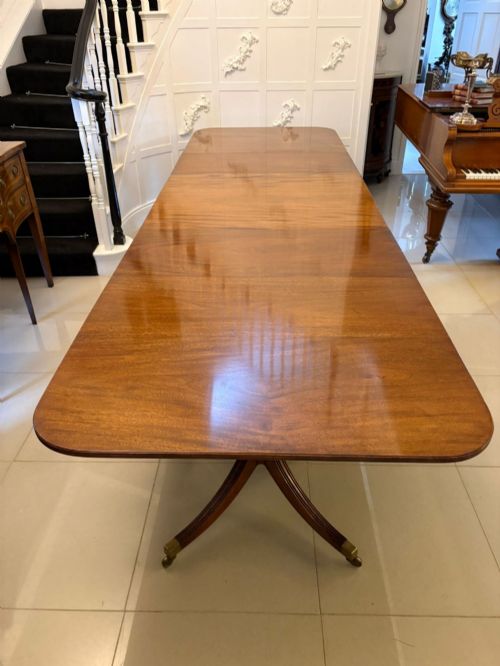
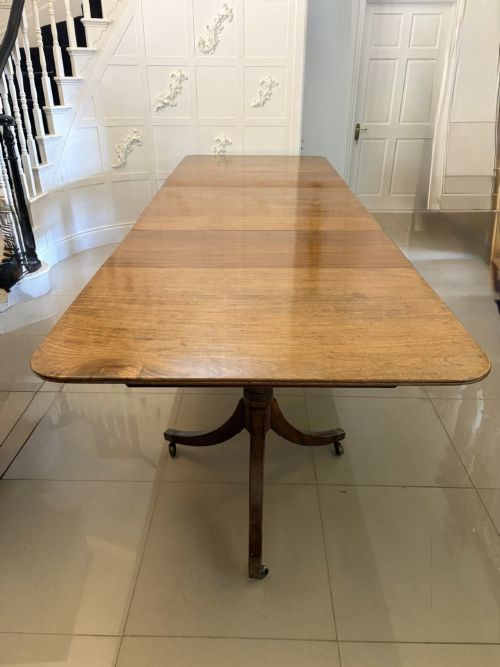
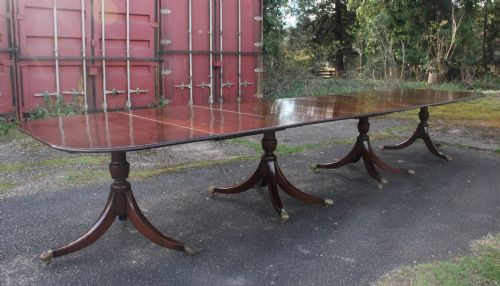
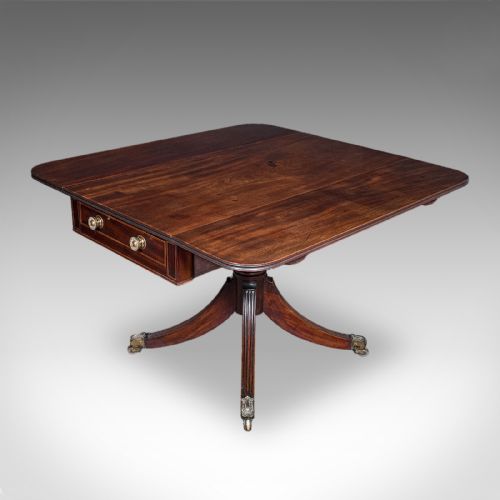
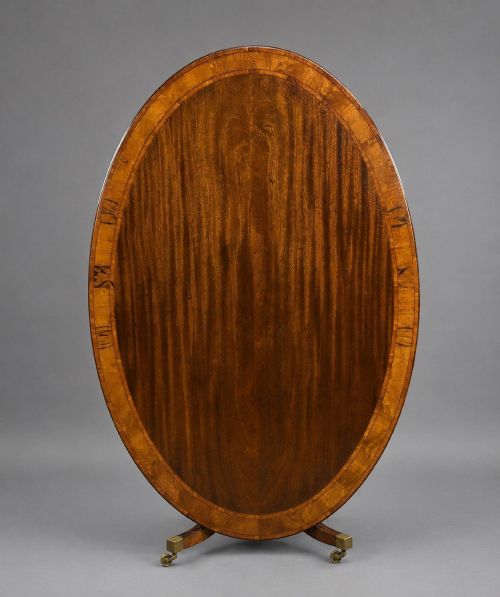
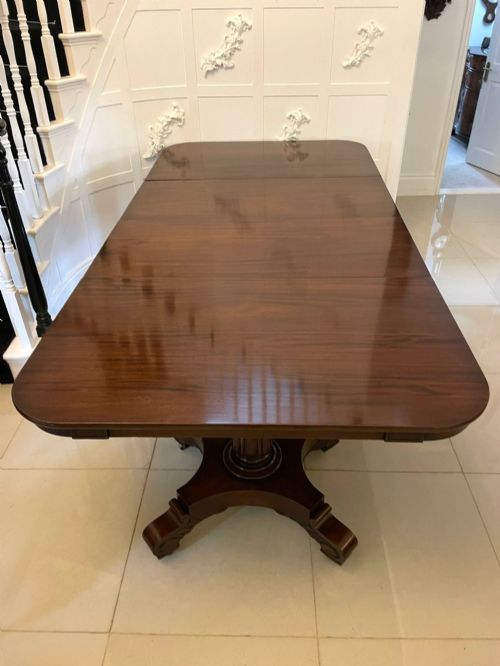
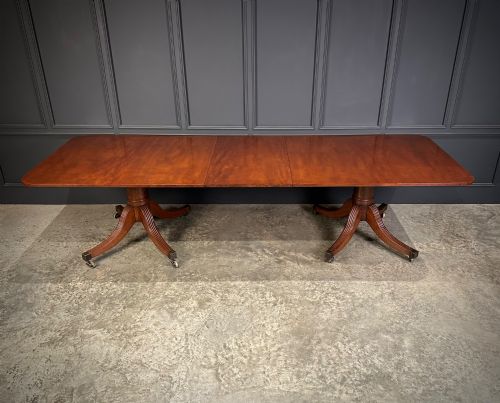
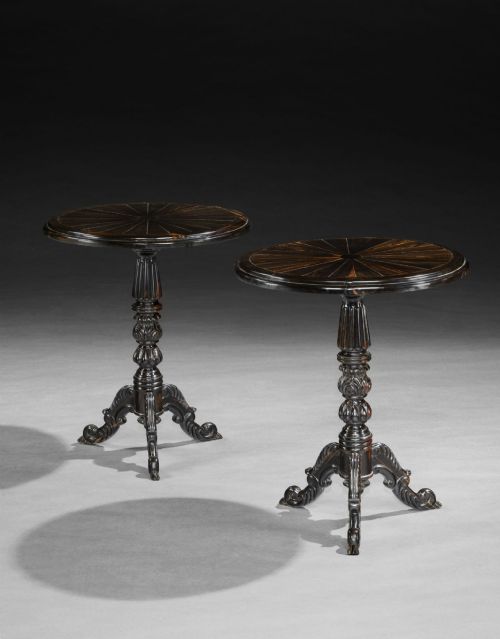
The most common formats on this page are multi-pillar extending dining tables and smaller tripod lamp or wine tables. Mahogany remains the dominant timber, frequently paired with rosewood, burr oak, and satinwood to create structured surfaces for formal rooms.
Makers and designers across the nineteenth and twentieth centuries adapted these classical pedestal configurations to suit varying room scales. From twin-pillar formats seating ten to grand four-pillar extending boards, these pieces prioritise both social utility and formal symmetry.
How they were made
Carpenters constructed these tables using solid timbers and decorative veneers such as figured mahogany, rosewood, and burr oak. Timber selection defined the visual weight of the pedestal, while internal framing provided the strength needed for extending dining mechanisms.
Surface embellishment relied on precision inlay work utilising boxwood and brass, creating sharp linear contrasts against dark tropical hardwoods. Turning and carving shaped the central columns and tripod bases, marrying structural load-bearing requirements with classical ornamentation.
Listings span periods from the Georgian and Regency eras through Victorian, Edwardian, and nineteen-twenties revivals, utilising mahogany, rosewood, oak, and brass.
What varies in quality
The distinction between tiers rests upon the choice of timber and the fidelity of the classical revival detailing. Superior examples employ highly figured mahogany or rosewood veneers matched symmetrically across the top, alongside crisp hand-carving on the pillar terminals.
Construction integrity in the extension mechanism and the stability of the triform or quadrimoral base separate standard production from masterwork output. Solid brass fittings and precise boxwood stringing indicate higher workshop standards during both the original period and subsequent revival eras.
George Bullock·Holland and Sons·Gillows
The Regency Style Pedestals Glossary
- Pedestal
- A central support column holding up a tabletop, replacing traditional corner legs. This configuration allows greater legroom and structural grandeur.
- Tripod Table
- A small occasional table supported by three legs radiating from a central pillar. These portable forms often feature tilt mechanisms for storage.
- Drum Table
- A circular library or occasional table with a deep skirt containing drawers, mounted on a single heavy pillar and a multi-part base. The cylindrical form gives it a commanding presence.
- Stringing
- A thin inlay of contrasting wood, such as boxwood, set into the surface to outline borders and panels. This technique adds geometric definition to mahogany furniture.
- Triform Base
- A three-sided platform foundation supporting a central column, often terminating in scroll feet or castors. It provides stability to heavier breakfast and dining tables.
Regency Style Pedestals: Frequently Asked Questions
How do I seat guests comfortably?
Multi-pillar extending tables allow you to insert additional leaves depending on the number of diners. The central columns distribute weight effectively, preventing obstruction for chair placement.
Smaller tripod and drum tables serve well as static focal points or lamp surfaces rather than primary dining solutions. Their single-column designs require careful placement to maintain balance in a room layout.
Where should I place these tables?
Large multi-pillar dining tables suit spacious reception rooms where their extended lengths can be fully appreciated. Their classical proportions demand breathing room to display the grain of the mahogany or rosewood.
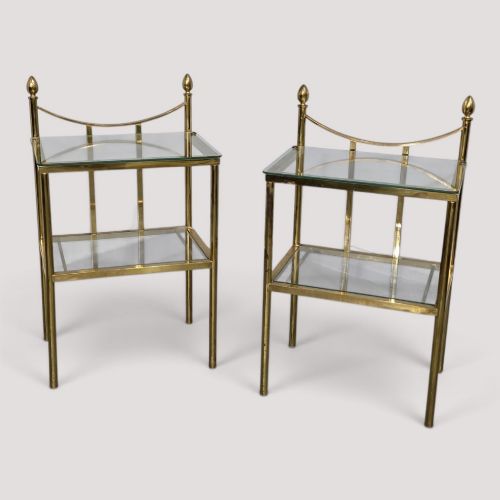
Compact tripod tables and bedside cupboards fit naturally into corners, beside seating arrangements, or in hallways. Their smaller scale makes them versatile accents for daily use.
Are these revival pieces authentic?
Many listings date from the Edwardian era and the nineteen-twenties, constructed as revivals of nineteenth-century aesthetics. These pieces maintain traditional woodworking methods while reflecting the interior tastes of their own decades of manufacture.
Examining the construction methods, timber ageing, and hardware helps distinguish between original nineteenth-century production and early twentieth-century interpretations.
How do I care for polished wood?
Protect the polished mahogany and rosewood surfaces from direct sunlight and excessive heat to prevent timber warping and fading. Regular dusting with a soft cloth maintains the natural lustre of the finish.
Avoid placing damp items directly onto the wood to protect the delicate boxwood inlay and French polished surfaces from moisture damage.