




Black Display Columns
Black display columns are architectural supports and decorative stands that elevate sculpture, plants, or objets d'art.
Black Display Columns
When you search for black display columns, you find architectural supports and elevated platforms designed to raise sculptures, urns, and plants above floor level. These pieces serve both a functional and a decorative purpose in an interior scheme, providing vertical emphasis within a room.
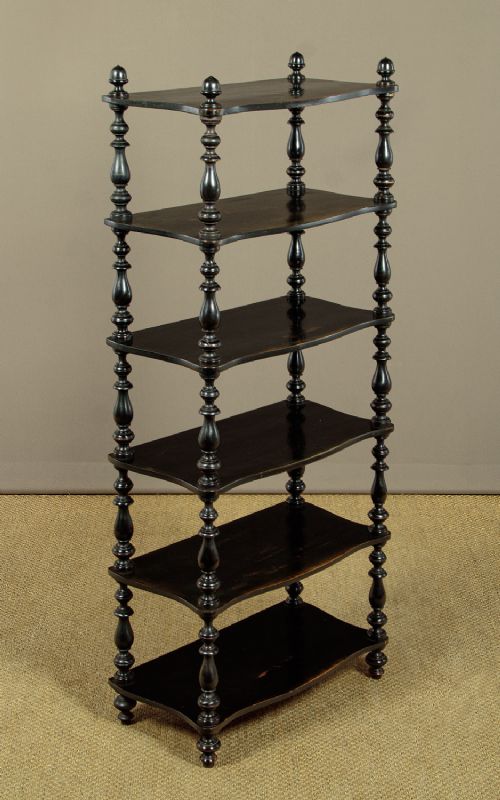
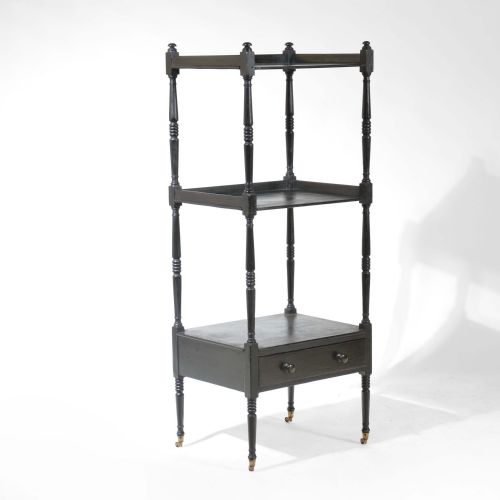
The selections available here span several centuries and stylistic revivals, including Victorian, Edwardian, and Georgian periods. You will encounter forms ranging from simple ebonised wooden plinths and column fragments to elaborate plant stands and tiered etageres.
Materials such as ebonised wood, marble, lacquer, and gilded iron define these objects. Makers utilised these dark surfaces to create dramatic contrast against displayed items, a technique favored during the Aesthetic Movement and Victorian Neoclassical revivals.
How they were made
Makers constructed these columns using timber carcasses finished with ebonisation, a chemical process that darkens cheaper woods to imitate ebony. Lacquer and paint finishes also appear across the pieces, sometimes paired with gilt accents or applied ornamentation.
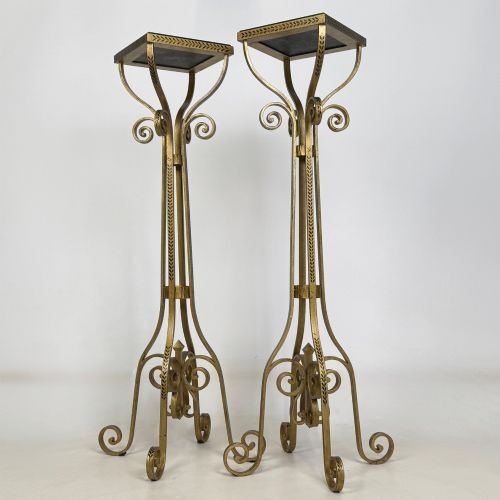
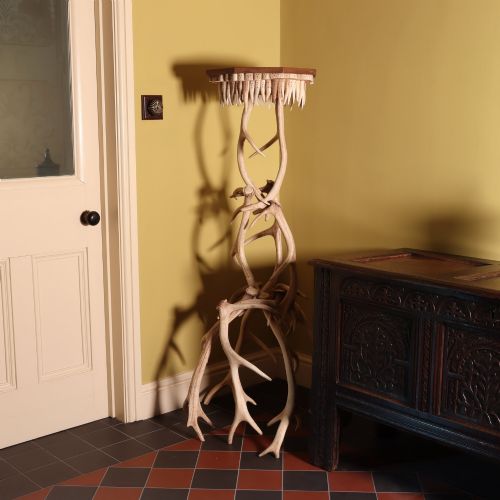
Top surfaces frequently incorporate contrasting materials such as white statuary marble or scagliola, mounted onto wooden or iron structures. Structural elements involve carved wooden shafts, cast iron supports, and occasionally organic materials like antler in more eccentric designs.
An unusual nineteenth-century offering substitutes traditional timber with natural antler to form a striking torchiere stand.
What varies in quality
The distinction between standard utility stands and finer decorative columns lies in the ambition of the carving and the integrity of the materials. Heavier proportions, solid marble tops, and precise parcel gilt detailing indicate a higher grade of craftsmanship.
Surface finish preservation heavily influences the character of each piece. Original ebonising, intact lacquer, and stable structural joints separate well-preserved examples from those with extensive later repainting or structural compromise.
The Black Display Columns Glossary
- Ebonised wood
- Timber treated to resemble ebony through staining, polishing, or chemical darkening. This finish gained popularity in nineteenth-century furniture to create stark visual contrast.
- Scagliola
- A composite material made from selenite, glue, and pigments, embedded to mimic true marble. Craftsmen polished this mixture to achieve a smooth, decorative stone-like surface.
- Torchiere
- A tall stand or floor lamp designed originally to carry a torch or candle. In later periods, these slender columns evolved to support decorative vases and floral arrangements.
- Plinth
- The heavy base supporting a statue, column, or pedestal. It provides stability and visual weight at the foundation of an elevated piece.
- Socle
- A short plinth or pedestal supporting a bust, sculpture, or column base. This architectural moulding lifts the main object slightly above its immediate mounting surface.
Black Display Columns: Frequently Asked Questions
What can I display on a column?
These stands accommodate heavy items like marble busts, bronze sculptures, and large ceramic urns. Lighter plant stands suit trailing foliage and decorative vessels.
Ensure the top surface area and weight capacity match the object you intend to place upon it.
How do I clean ebonised wood?
Dust the surface regularly with a soft, dry cloth to prevent particulate buildup. Avoid harsh chemical sprays that can strip the dark finish.
Apply a microcrystalline wax occasionally to protect the wood and maintain its subtle sheen.
Are these stands structurally stable?
Most antique columns are sturdy, but their stability depends on the base footprint and weight distribution. Grand scale pieces and marble-topped columns offer significant gravity support.
Position them on level flooring away from high-traffic walkways to prevent accidental tipping.
How do I identify the period?
Examine the construction methods, tool marks, and stylistic motifs present on the shaft and base. Victorian Neoclassical pieces feature classical orders, while Aesthetic Movement stands often incorporate lacquer and simpler geometric lines.
Comparing the materials to documented examples from the nineteenth and early twentieth centuries helps confirm the date.