


Sculpture Display Bases
Sculpture display bases elevate three-dimensional art to catch the eye, uniting heavy stone and warm wood across distinct historical periods.
Sculpture Display Bases
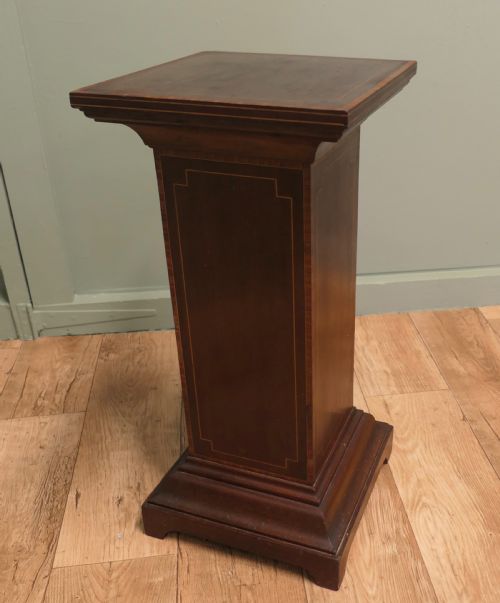
Sculpture display bases take several forms on this page, appearing as pedestals, columns, plinths, and stands. These sturdy supports lift figures, busts, and models off the floor or surface to present them properly.
The selection includes pieces spanning the late nineteenth century through to the early twentieth century. Buyers encounter classic neoclassical designs alongside utilitarian studio stands and carved wooden supports.
How they were made
Makers utilised solid woods such as mahogany, sycamore, and ebonised timber, often pairing them with carved details or secret compartments. Paint was also applied to utilitarian studio stands for functional workshop use.
Stonemasonry played a primary role through the use of marble, scagliola, and stone. Workshops turned columns and shaped socle bases to bear the heavy weight of stone statuary and marble tops.
What varies in quality
The calibre of a base rests upon the selection of materials and the ambition of its classical revival styling. Rich veining in marble and deeply carved timber details separate standard utility pieces from grander architectural examples.
Proportion and structural stability dictate the success of the design. A well-balanced column supports significant weight while maintaining harmonious classical lines.
The Sculpture Display Bases Glossary
- Pedestal
- An upright architectural support that carries a statue or column. These freestanding structures elevate objects to eye level.
- Socle
- A short plain plinth or block serving as a pedestal for a statue or bust. It provides a stable foundation on a larger base.
- Scagliola
- A composite material made from selenite, glue, and pigments, mimicking marble and other hard stones. Craftsmen apply it to columns and architectural details.
- Torchere
- A tall ornamental stand or candlestick originally designed to carry a torch. In later periods, these served primarily to hold decorative sculptures.
- Plinth
- The lower square slab at the base of a column or pedestal. It distributes the weight of the structure evenly across the floor.
Sculpture Display Bases: Frequently Asked Questions
What weight can these bases hold?
Most antique stone and hardwood stands are engineered to support heavy marble or bronze sculptures safely.
Heavier marble columns and solid timber pedestals offer exceptional load-bearing capacity for large display items.
How do I clean marble bases?
Dust surfaces regularly with a soft, dry cloth to prevent the buildup of abrasive particles.
Avoid acidic cleaning agents which can etch the polished stone surface over time.
Where should I place a column?
Corners and open entryways provide stable locations that highlight the vertical lines of a tall column.
Ensure the floor is entirely level before positioning heavy stone pedestals in living spaces.
How do I date these pieces?
Stylistic clues such as neoclassical motifs and the choice of ebonised wood point toward nineteenth-century manufacturing.
Construction methods and material finishes help narrow down the decade of origin.