

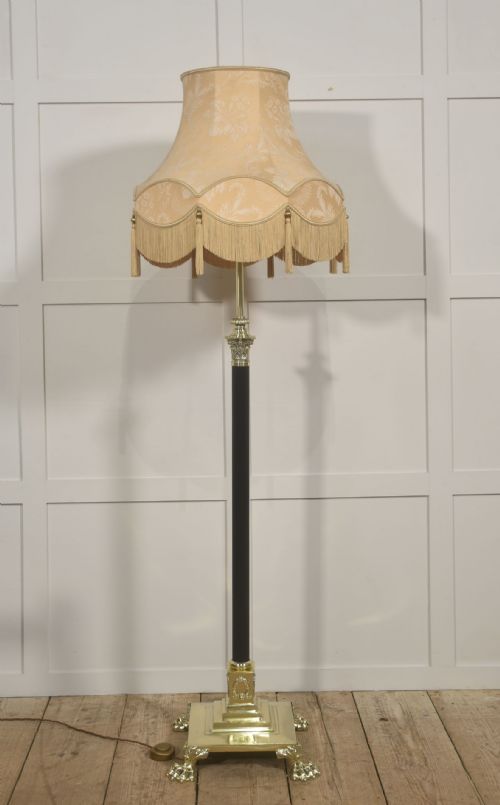


Neoclassical Black Columns
Neoclassical black columns bring architectural dignity to a room, offering sturdy support and striking contrast through dark marble, patinated metal, and classical orders.
Neoclassical Black Columns
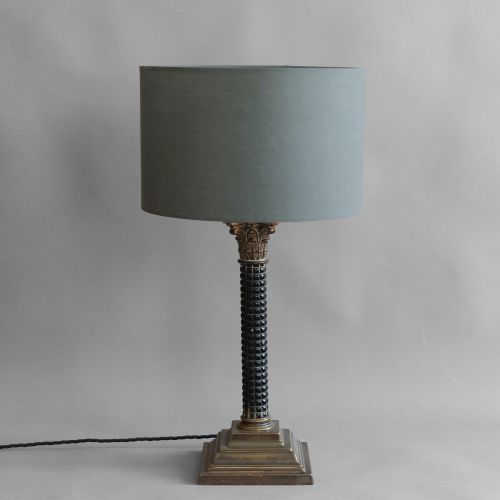
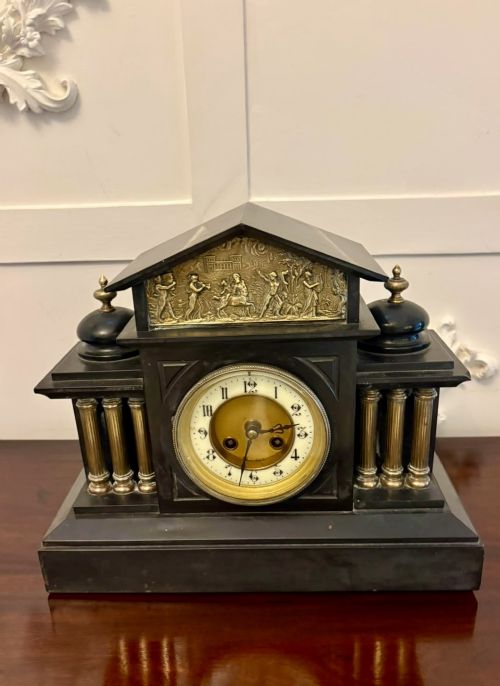
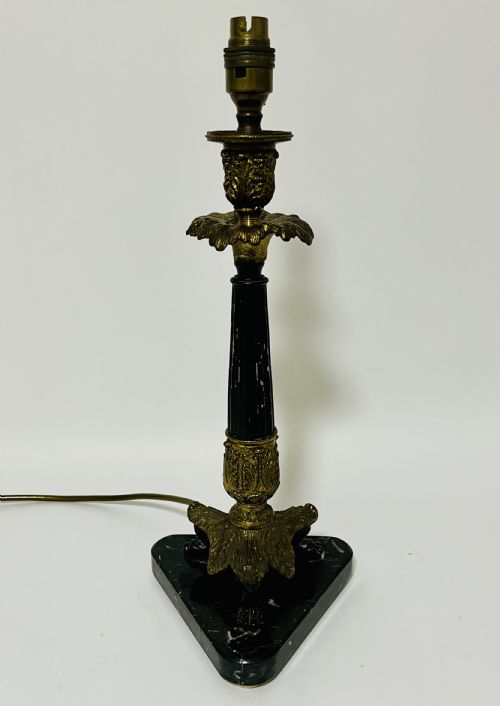
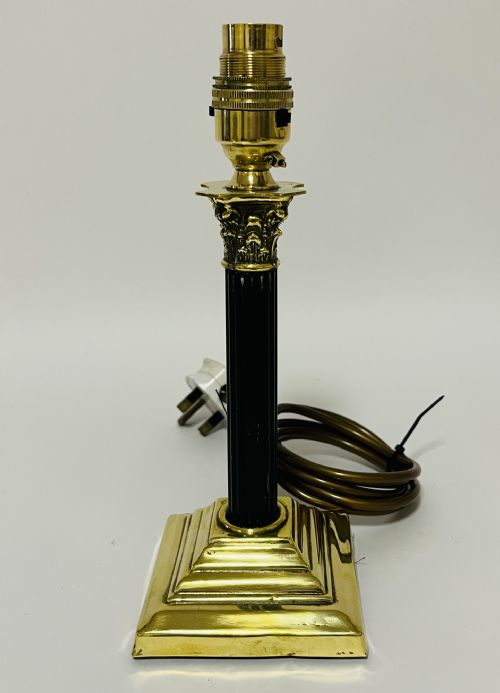
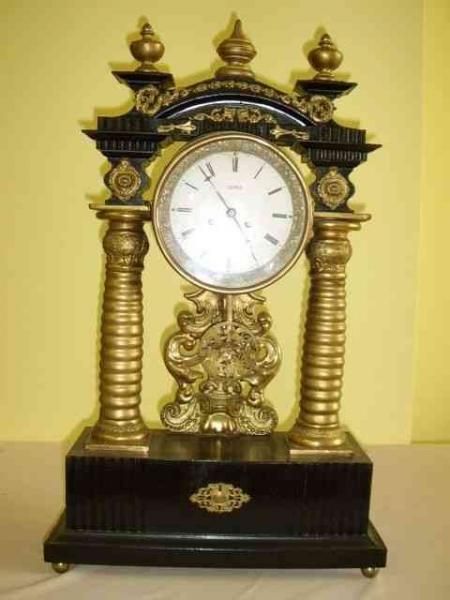
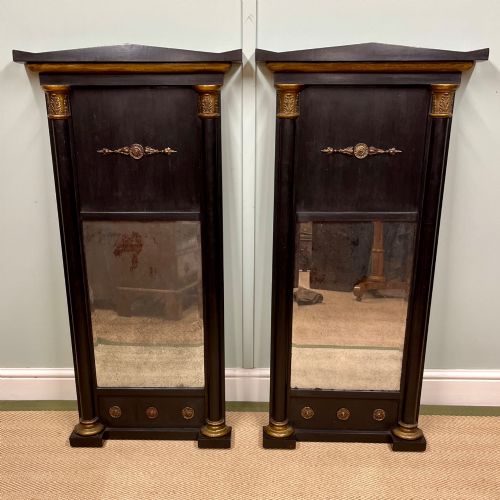
Neoclassical black columns encompass a range of architectural and decorative objects spanning the eighteenth, nineteenth, and early twentieth centuries. When searching for neoclassical black columns, buyers encounter varied functional forms including table lamps, standard lamps, mantel clocks, torcheres, pedestals, and framed prints.
The pieces on this page derive primarily from French and British traditions, utilising styles such as Empire, Regency, and Victorian neoclassical. Common iterations include Corinthian order table lamps, marble mantel clocks with architectural housings, and tall wooden or scagliola display columns.
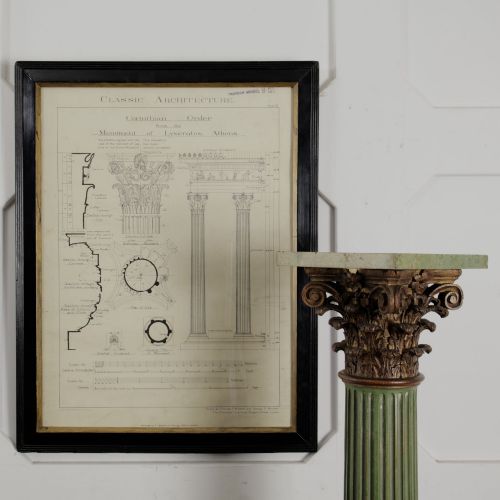
Domestic lighting and timepieces dominate the selection, merging dark column shafts with metallic mounts. Buyers also find architectural engravings depicting ancient temples and porticos that complement three-dimensional columnar furnishings.
Materials and Construction
Makers constructed these columns using natural black marble, painted wood, scagliola, and toleware to form the dark vertical shafts. These materials provided solid structural integrity and a sombre visual weight suited to classical interiors.
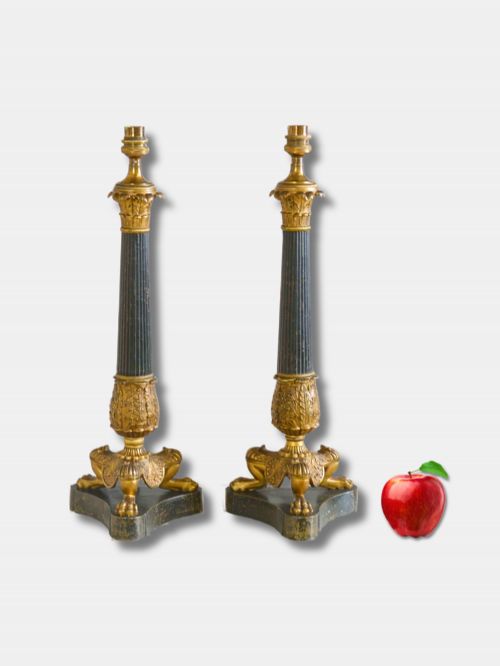
Metal components such as brass, ormolu, and gilt bronze provide structural capitals, bases, and decorative mounts. Craftsmen cast and chased these metallic elements to depict acanthus leaves, classical figures, and paw feet, contrasting sharply with the dark stone or wood.
Surface decoration frequently includes parcel gilding and painted detailing, particularly on wooden columns and metal candlesticks. Engravings employ ink on paper, while scagliola mimics natural stone through pigmented plaster and glue.
Masonic lodge candlesticks stand alongside French architectural clocks, proving that even solemn rituals appreciate a sturdy Corinthian column.
Distinctions in Quality
Quality rests upon the crispness of the casting in bronze or ormolu mounts and the depth of detail in carved capitals. Fine examples exhibit sharp acanthus foliage on Corinthian capitals and precise proportioning derived directly from classical architectural treatises.
The choice of core materials dictates refinement, with solid black marble, scagliola, and fire-gilt ormolu occupying the upper tier of execution. Lesser examples rely on simpler painted wood or standard brass plating without hand-chased finishing.
Integrity of proportion and the harmony between the dark column shaft and its metallic bases determine the visual success of lamps and clocks. Pieces retaining original gilding and undamaged stone elements command greater appreciation.
Humphrey Hopper
The Neoclassical Black Columns Glossary
- Corinthian
- An architectural order defined by ornate capitals decorated with rows of carved acanthus leaves. This style appears frequently on the brass and gilt capitals of columnar lamps.
- Ormolu
- Gilt bronze produced by applying a mercury and gold amalgam to bronze and heating it to drive off the mercury. This technique imparts a rich, lasting metallic lustre to mounts and feet.
- Scagliola
- A composite material made from pigmented selenite, glue, and plasters, applied to mimic natural marbles and stones. It was often utilised for decorative columns and plinths.
- Toleware
- Lacquered or enamelled sheet metal fashioned into decorative household objects. In these listings, it forms dark cylindrical bodies for table lamps.
- Torchere
- A tall stand or candlestick originally designed to hold a torch or single light. These pieces serve as elevated display supports in neoclassical interiors.
Neoclassical Black Columns: Frequently Asked Questions
What periods do these columns represent?
The listings span from the eighteenth century through the Regency and Victorian eras into the early twentieth century. These periods saw repeated revivals of classical Greek and Roman design motifs.
Maker styles draw heavily on French Empire and British Regency aesthetics, translating monumental stone architecture into domestic furniture and lighting.
How were column lamps originally wired?
Most antique columns began life as oil lamps, candlesticks, or architectural ornaments before later conversion to electricity. Surviving pieces often retain evidence of their original fuel reservoirs or candle sockets.
Buyers should inspect the wiring pathways to understand how previous owners adapted the hollow shafts for modern electrical cords.
Where should I place a standard lamp?
Tall standard lamps function effectively in corners or beside heavy seating where they provide ambient vertical illumination. Their architectural presence anchors a room's decorative scheme.
Ensure the floor surface is level to support heavy marble or brass bases safely without risk of tipping.
How do I distinguish marble from scagliola?
Natural marble feels cold to the touch and displays continuous veining cut directly from stone blocks. Scagliola is a composite plaster material that often feels slightly warmer and may reveal a smooth, painted matrix under close magnification.
Both materials provide a heavy, stable foundation for classical column shafts.