
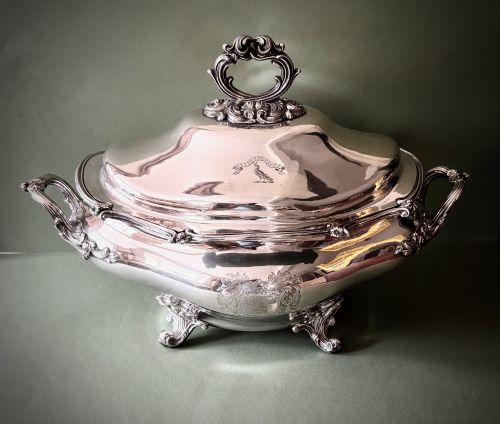
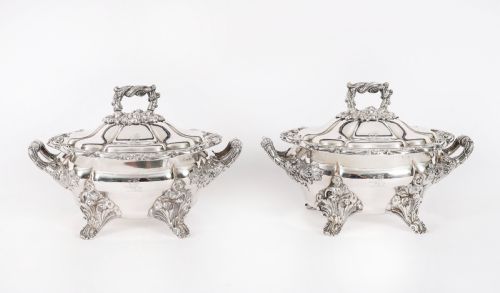
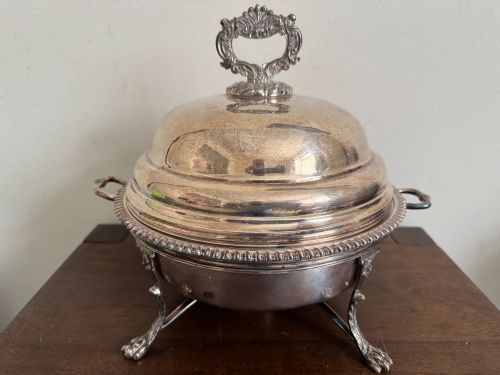


Regency Silver Tureen
A regency silver tureen brings grand dining tables of the nineteenth century into focus, offering the weight and craftsmanship collectors seek.
Regency Silver Tureen
A regency silver tureen encompasses serveware created during the Georgian and nineteenth century periods, spanning soup tureens, sauce tureens, and entree dishes. These vessels served grand dining rooms, functioning as centrepieces for serving hot dishes before individual plates were filled.
The selections available here lean heavily towards Old Sheffield Plate and sterling silver, alongside porcelain supper sets and warming dishes. Pieces range from single lidded servers to paired entree dishes and complex supper sets featuring rotating mechanisms.
Geographic origins extend from London workshops to Indian Colonial creations, showing how elite dining standards travelled across the empire. Oval lidded sauce tureens and warming dishes dominate the forms, reflecting the specific culinary demands of Regency dining.
How they were made
Old Sheffield Plate forms the foundation of many pieces, utilising a fusion method where a thin sheet of silver was fused to a copper core. This technique predates modern electroplating and leaves a characteristic edge where the base metal shows through wear.
Sterling silver items rely on traditional silversmithing techniques such as raising, hammering, and casting for decorative handles and feet. Makers added applied crests and borders to mark elite ownership.
Porcelain elements appear in supper sets, shaped and fired to fit within metal frames alongside glass components. These ceramic segments demanded precise moulding to integrate smoothly with metal warming stands and burners.
Some nineteenth-century diners required rotating supper sets so guests could reach pickles without leaning across the roast.
What varies in quality
The purity and weight of the metal separate standard items from exceptional examples, with sterling silver holding a different intrinsic value than Old Sheffield Plate or silver plate. The thickness of the silver layer in fused plate determines how well the piece survives centuries of polishing.
Casting detail in handles, finials, and feet distinguishes workshop output. Crisp chasing and sharply defined crests indicate superior handwork compared to softer, more rounded cast ornamentation.
Complexity of form elevates certain items, such as multi-piece supper sets with lampstands, rotating mechanisms, and matching covers. The integration of functional warming components requires sophisticated mechanical alignment.
Matthew Linwood·Cresswick·Dan Holy
The Regency Silver Tureen Glossary
- Old Sheffield Plate
- An early form of plated metal created by fusing silver to a thick copper core under heat and pressure. This technique produced durable domestic wares before the invention of electroplating.
- Entree dish
- A shallow serving vessel designed for the second course of a formal meal. These often came in pairs and fit into warming stands.
- Supper set
- A complex arrangement of multiple dishes and covers, frequently fitted around a central element or lazy susan. These allowed diners to serve themselves various dishes from a single station.
- Warming dish
- A specialised vessel featuring a compartment for hot water or a burner beneath. This kept food at the correct temperature throughout long nineteenth-century meals.
- Soup tureen
- A large, deep vessel with a fitted lid and handles, used for serving soup at the table. They represent the most monumental form of dining silver.
Regency Silver Tureen: Frequently Asked Questions
How do I clean a silver tureen?
Clean sterling silver and plated surfaces using a soft cloth and specialised silver polish, avoiding abrasive pads that strip thin plating. Old Sheffield Plate requires particular care to prevent exposing the underlying copper.
Store pieces in dry environments away from direct sunlight and sulfur sources to minimise tarnishing between uses.
What is Old Sheffield Plate?
Old Sheffield Plate is a composite material made by fusing a thin layer of sterling silver to a thick copper base. This technique was used before electroplating became common in the nineteenth century.
Collectors prize genuine fused pieces for their soft lustre and the distinctive copper telegraph lines visible at raw edges.
How were warming dishes used?
Warming dishes held hot water or accommodated small lamps beneath the serving vessel to keep food warm during lengthy Regency meals. They were essential for multi-course dining where food needed to remain hot at the table.
The inclusion of a lampstand or double-walled base distinguishes these functional items from standard serving dishes.
What makes an Indian Colonial tureen different?
Indian Colonial silver reflects British dining forms executed by silversmiths working in India during the nineteenth century. These pieces often incorporate local decorative motifs alongside standard Regency shapes.
The metal purity and regional maker marks set them apart from standard London-made silver.