

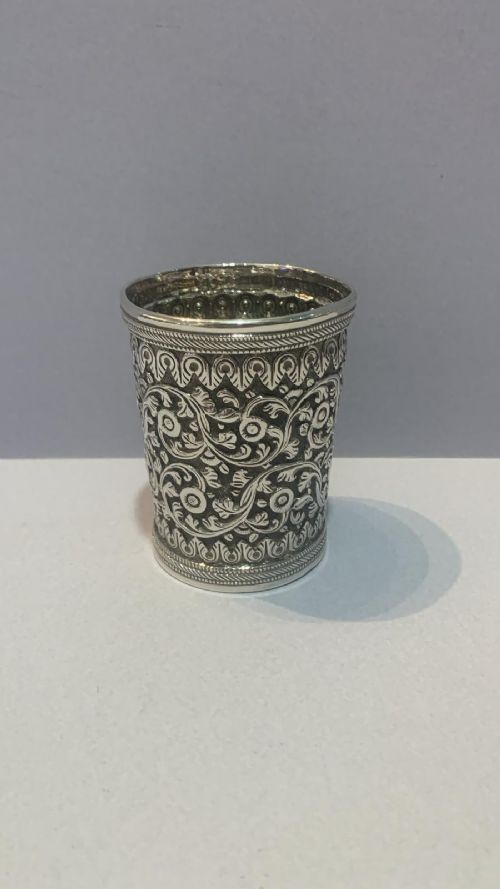


Indian Colonial Silverware
Indian colonial silverware brings together traditional eastern craftsmanship and western forms, offering striking bowls, vases, and trophies created during the Raj.
Indian Colonial Silverware
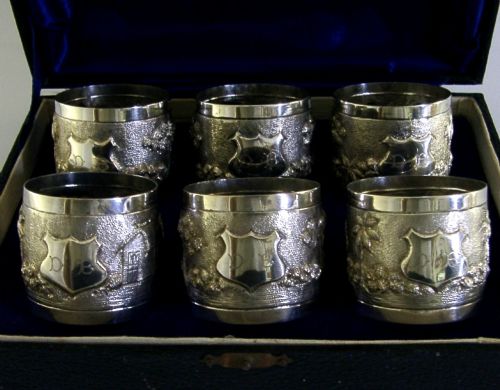
Indian colonial silverware comprises decorative bowls, presentation trophies, lidded jars, and vases produced during the nineteenth and twentieth centuries. These objects reflect the historical intersection of British patronage and local artisans working across regions such as Kutch and Gujarat.
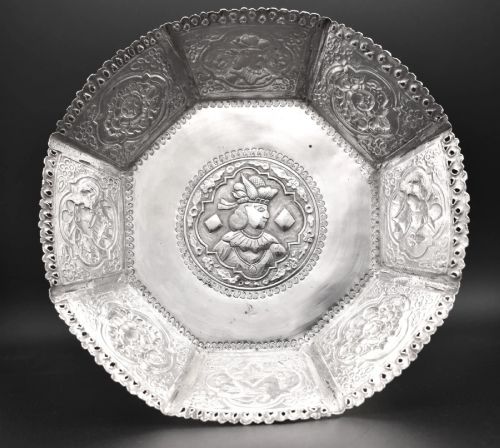
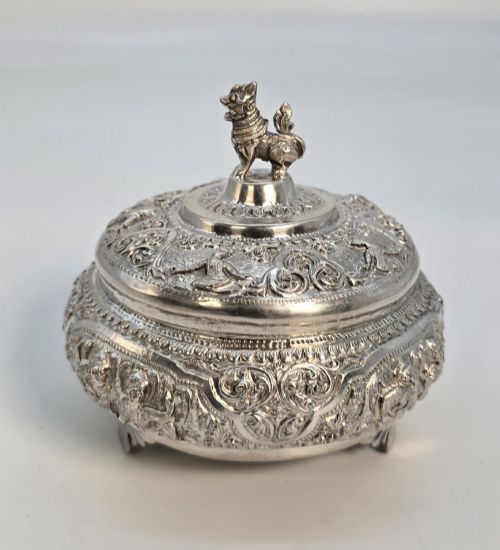
Buyers encountering this category will most frequently find solid silver bowls, footed tazzas, and lidded containers dating from the Victorian and Edwardian eras. The inventory spans utilitarian serving vessels adapted for western tastes alongside distinct presentation pieces recording regimental or local histories.
How they were made
Silversmiths utilised solid silver, occasionally incorporating ebonised wood for insulation or contrast in handles and components, alongside silver plate variations. The physical weight of these objects often indicates substantial silver content, as seen in heavy bowls and large baluster vases.
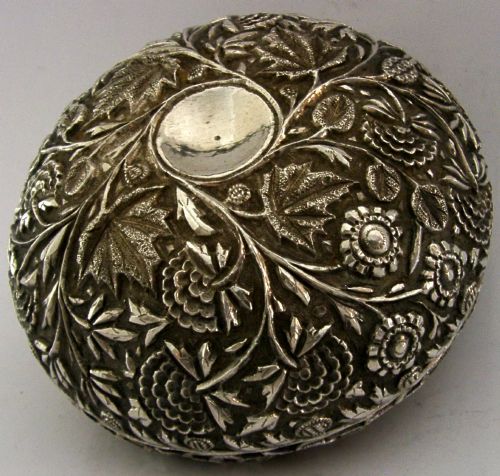
Techniques relied heavily on intricate embossing, chasing, and repoussé work to create densely patterned surfaces. Artisans hammered and pushed the silver from behind to form high-relief foliage, figures, and folkloric scenes characteristic of Anglo-Indian and Burmese styles.
Indian Colonial Silverware Retail Price Guide 2026
Typical asking prices for indian colonial silverware among the pieces listed under this phrase on Sellingantiques today, from the lower quarter to the upper quarter. They describe what is for sale here now, not the wider market.
Object types span functional serving items like soup tureens alongside decorative vessels, vases, and presentation trophies.
What varies in quality
Quality rests primarily on the crispness and depth of the repoussé chasing, where sharply defined motifs distinguish superior workmanship from softer, shallower decoration. The density of the silver and the structural integrity of large forms, such as substantial baluster vases and soup tureens, also dictate distinction.
Context adds another layer of merit, particularly when pieces bear specific historical inscriptions, such as presentation details for regiments like the Assam Valley Light Horse. Maker attribution, regional specificity like Kutch attribution, and the survival of matching covers or pairs elevate individual items.
Hodsoll Collection
The Indian Colonial Silverware Glossary
- Repoussé
- A metalworking technique where the artisan hammers the silver from the reverse side to form a raised design on the front. This method creates the characteristic three-dimensional foliage and scenes found on colonial vessels.
- Tazza
- A shallow bowl or saucer mounted on a stem and foot, used historically for display or serving. Burmese and Anglo-Indian examples frequently employ this footed format.
- Baluster
- A vase or architectural column shape with a rounded, swelling lower portion tapering to a narrow neck. Large specimens of this form demonstrate significant weight and silversmithing scale.
- Betel Nut Container
- A small lidded jar or box designed to hold betel quid ingredients. These containers often feature intricately embossed folkloric motifs.
- Soup Tureen
- A large, deep serving vessel for soup, fitted with a lid and handles. Victorian examples in this category reflect formal dining habits during the Raj period.
Indian Colonial Silverware: Frequently Asked Questions
What is Indian colonial silverware?
Indian colonial silverware comprises decorative and functional metalwork produced in India during the British period, blending local craftsmanship with European forms.
These pieces include presentation trophies, soup tureens, baluster vases, and betel nut containers made for British officials, regiments, and the local elite.
How do I identify Kutch silver?
Kutch silver is typically identified by its dense, intricate repoussé decoration featuring traditional foliage, animal motifs, and architectural scrolls.
Items originating from this Gujarat region often display exceptional depth of chasing and heavy silver construction.
What periods do these pieces span?
The available pieces primarily span the nineteenth century into the Edwardian era, covering Victorian and Raj period production.
Dating is typically established through stylistic indicators, historical inscriptions, and hallmarks where present.
How were presentation trophies used?
Presentation trophies served as commemorative awards for military regiments, sporting achievements, or civic milestones during the British administration in India.
Inscribed details often record specific battalions, such as the Assam Valley Light Horse, providing clear historical context for the silver.
How do I care for solid silver?
Solid silver requires gentle cleaning with appropriate silver polish to maintain its lustre without abrading the detailed repoussé work.
Storing pieces in dry conditions prevents tarnishing and protects delicate applied elements like ebonised wood.