
Regency Side Bookcase
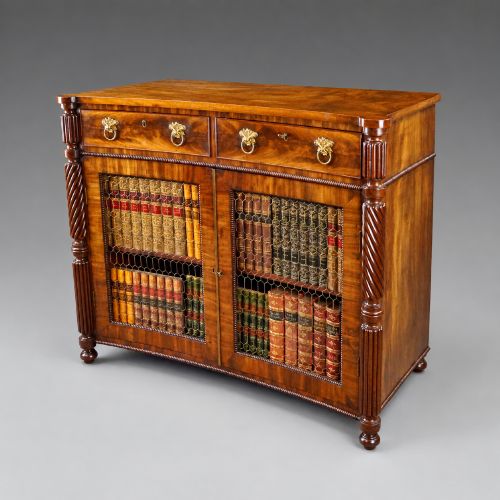
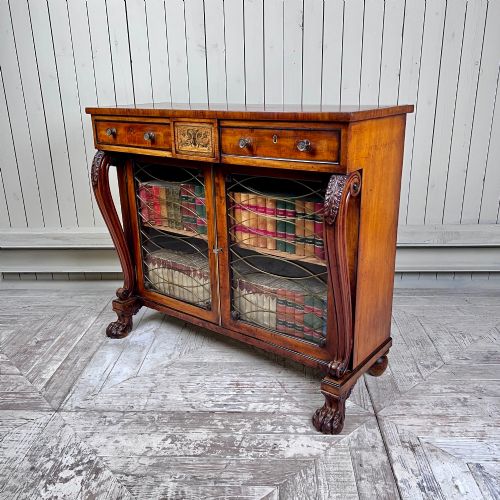
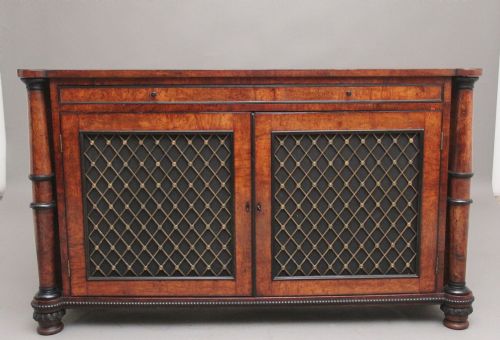
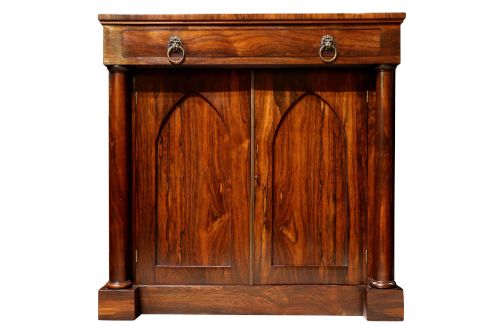
A regency side bookcase brings architectural discipline and rich timber grain to a room, combining display shelving with enclosed storage.
Regency Side Bookcase
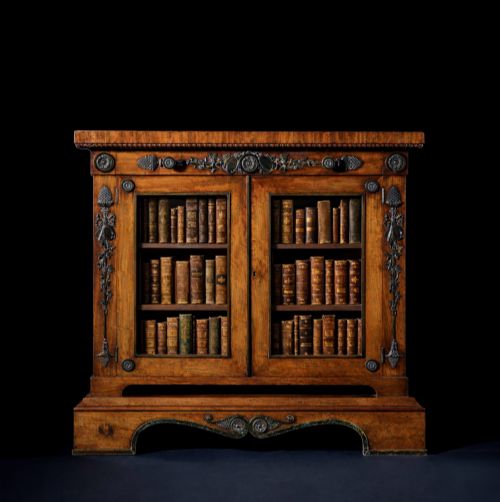
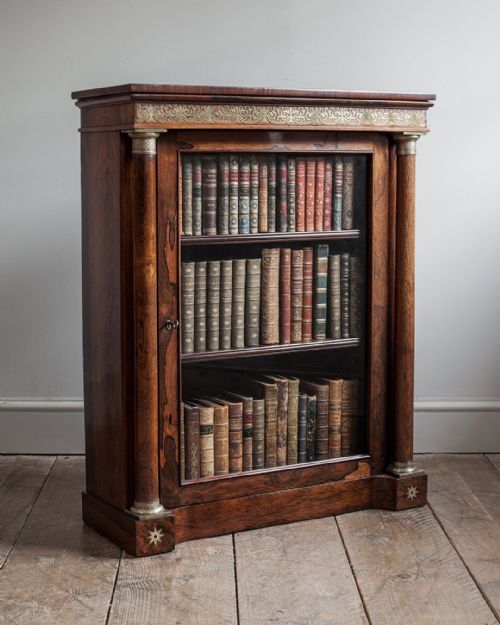
When you search for a regency side bookcase, you encounter low-profile furniture designed to sit against a wall, frequently combining open bookshelves or glazed cupboards with lower enclosed storage. The pieces meeting this description span the Regency period itself as well as the wider nineteenth century, drawing on Georgian and William IV proportions.
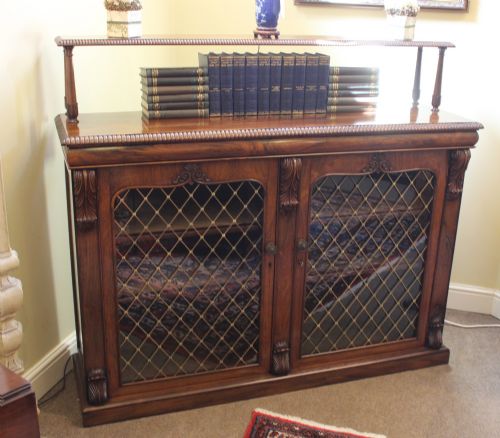
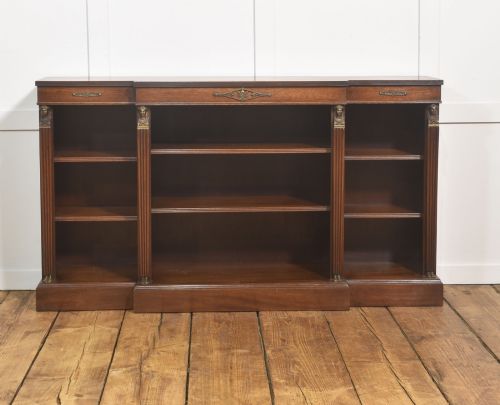
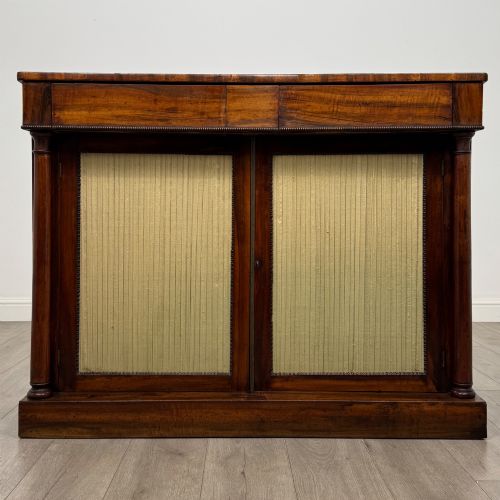
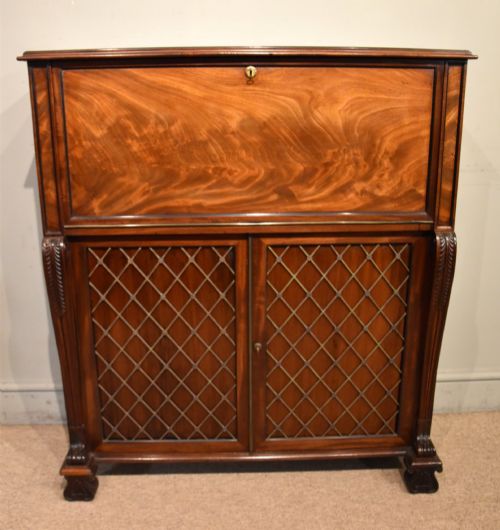
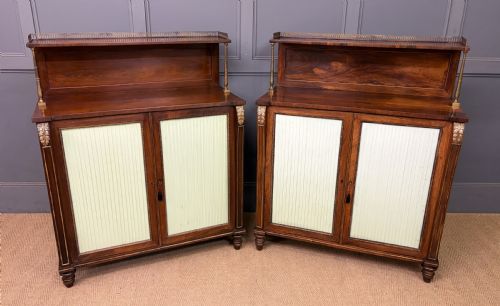
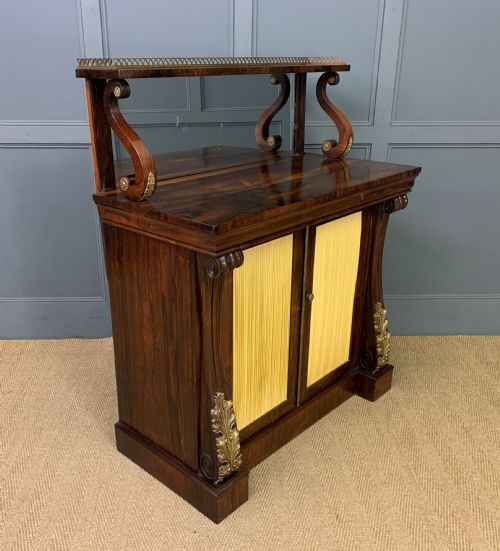
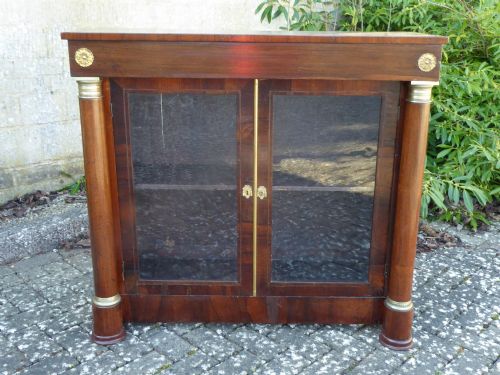
You will notice these forms appearing as chiffoniers, pier cabinets, and breakfront side cabinets rather than soaring library shelving. They are compact enough for everyday domestic placement while retaining formal classical lines.
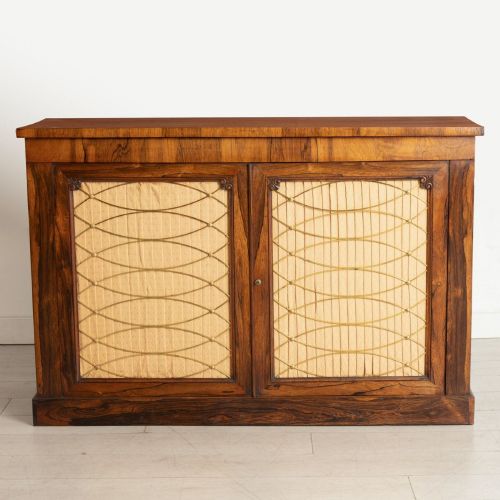
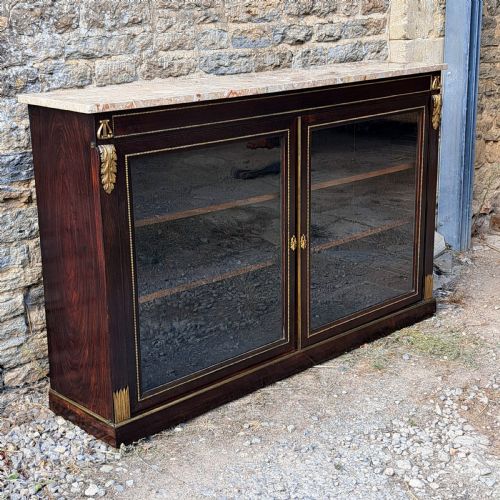
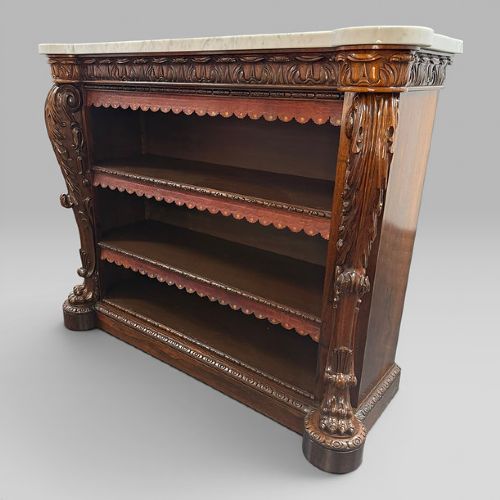
The materials recorded in these listings rely heavily on figured rosewood and mahogany, often embellished with brass inlay, grilles, or marble tops. Workshops of the period utilised these dense timbers to create low silhouettes that anchored a drawing room or parlour.
How they were made
Cabinet makers constructed these pieces using solid hardwoods and carefully cut veneers over secondary timbers, applying rosewood and mahogany to achieve striking grain patterns. Brass featured prominently as fine inlay work, mounts, and protective wire grilles on cabinet doors.
Construction techniques included framed panel doors, sometimes lined with pleated fabric or fitted with glass, alongside adjustable shelving supported on timber bearers. Structural stability relied on tight joinery and heavy pedestals or plinths rather than tall legs.
The listings show nineteenth-century cabinets executed predominantly in rosewood and mahogany, frequently incorporating brass inlay and glass doors.
What varies in quality
The distinction between standard cabinet work and exceptional execution rests on the selection of timber veneers and the crispness of brass detailing. Finer examples display continuous grain matching across drawer fronts and doors, alongside hand-cut brass marquetry rather than stamped metal.
Gillows
The Regency Side Bookcase Glossary
- Chiffonier
- A low sideboard or cabinet featuring enclosed cupboards below, sometimes surmounted by small shelves. It served as a versatile serving and display piece in nineteenth-century interiors.
- Breakfront
- A cabinet design where the central section projects forward from the flanking wings. This creates depth and visual rhythm across the facade of a large bookcase.
- Pier cabinet
- A narrow piece of furniture built to fit the wall space between windows. These cabinets frequently utilised glass doors to display collections.
- Secretaire
- A desk disguised as a standard cabinet drawer, dropping down on hinges to reveal a writing surface and small pigeonholes. It added a private writing function to a sitting room cabinet.
- Pollard oak
- Timber taken from trees that were pollarded, resulting in gnarled and heavily figured wood grain. Makers prized this decorative material for statement panels.
Regency Side Bookcase: Frequently Asked Questions
Where should I place a side bookcase?
These low cabinets suit sitting rooms, dining rooms, and hallways where tall bookcases would overwhelm the floor space. Their shallow depth allows them to sit comfortably against walls without blocking movement.
They function well beneath large mirrors or paintings, providing a stable surface for lamps and decorative objects while keeping books close at hand.
How do I care for rosewood and mahogany?
Keep timber furniture away from direct sunlight and strong heat sources to prevent the wood from drying and the veneer from lifting. Occasional dusting with a soft, dry cloth maintains the surface.
Avoid silicone-based polishes and apply traditional wax sparingly only when the wood appears dry, buffing it gently to preserve the natural sheen.
What is the difference between a chiffonier and a bookcase?
A chiffonier typically combines a low enclosed cupboard base with a tiered superstructure or a simple flat top, focusing on general room storage. A bookcase prioritises shelving for book storage, whether open or behind glass doors.
Many pieces listed under this search combine both forms, offering lower cupboards beneath open upper shelves.
How can I tell a Regency piece from a later copy?
Examine the construction methods, timber types, and interior secondary woods such as oak or pine. Period pieces display hand-cut dovetails, tool marks consistent with nineteenth-century workshop practice, and timber movement appropriate to age.
Stylistic markers like neoclassical brass mounts, ebony stringing, and proportions typical of the eighteen-twenties help confirm the era of manufacture.