
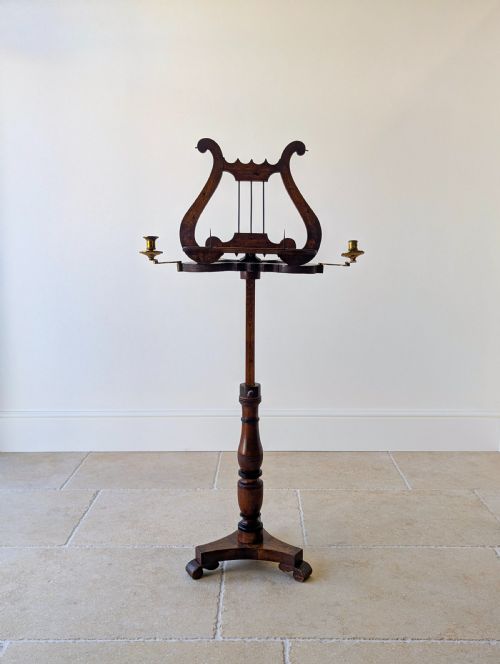


Regency Sheet Music Rack
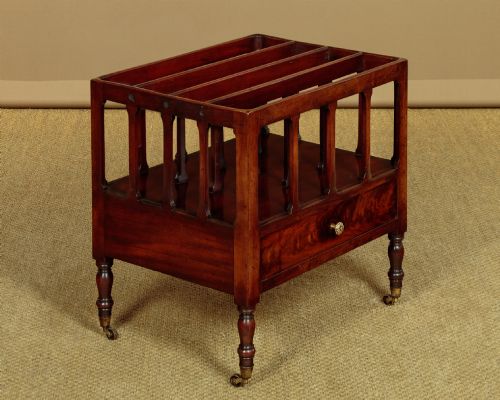
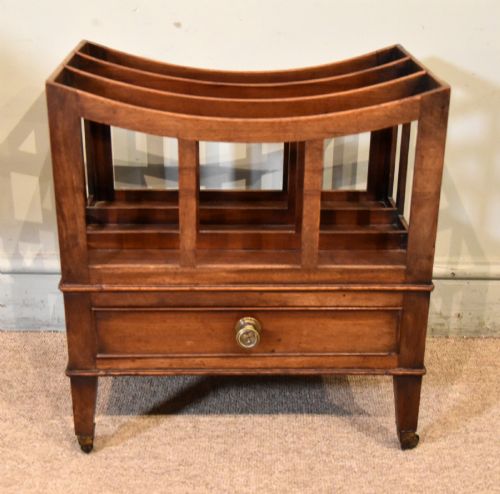
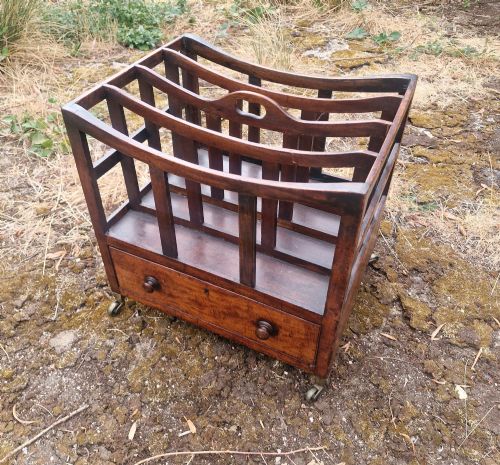
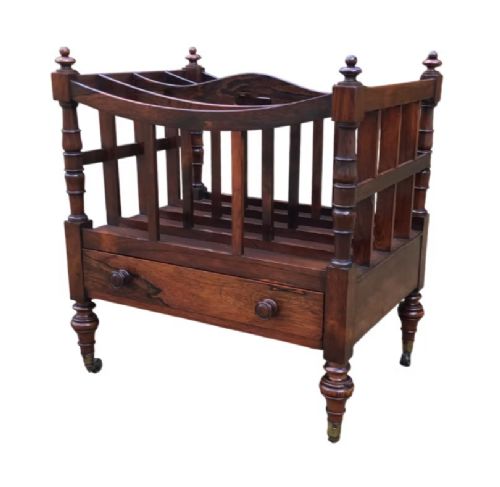
A regency sheet music rack is a practical music stand or canterbury designed to hold folios neatly.
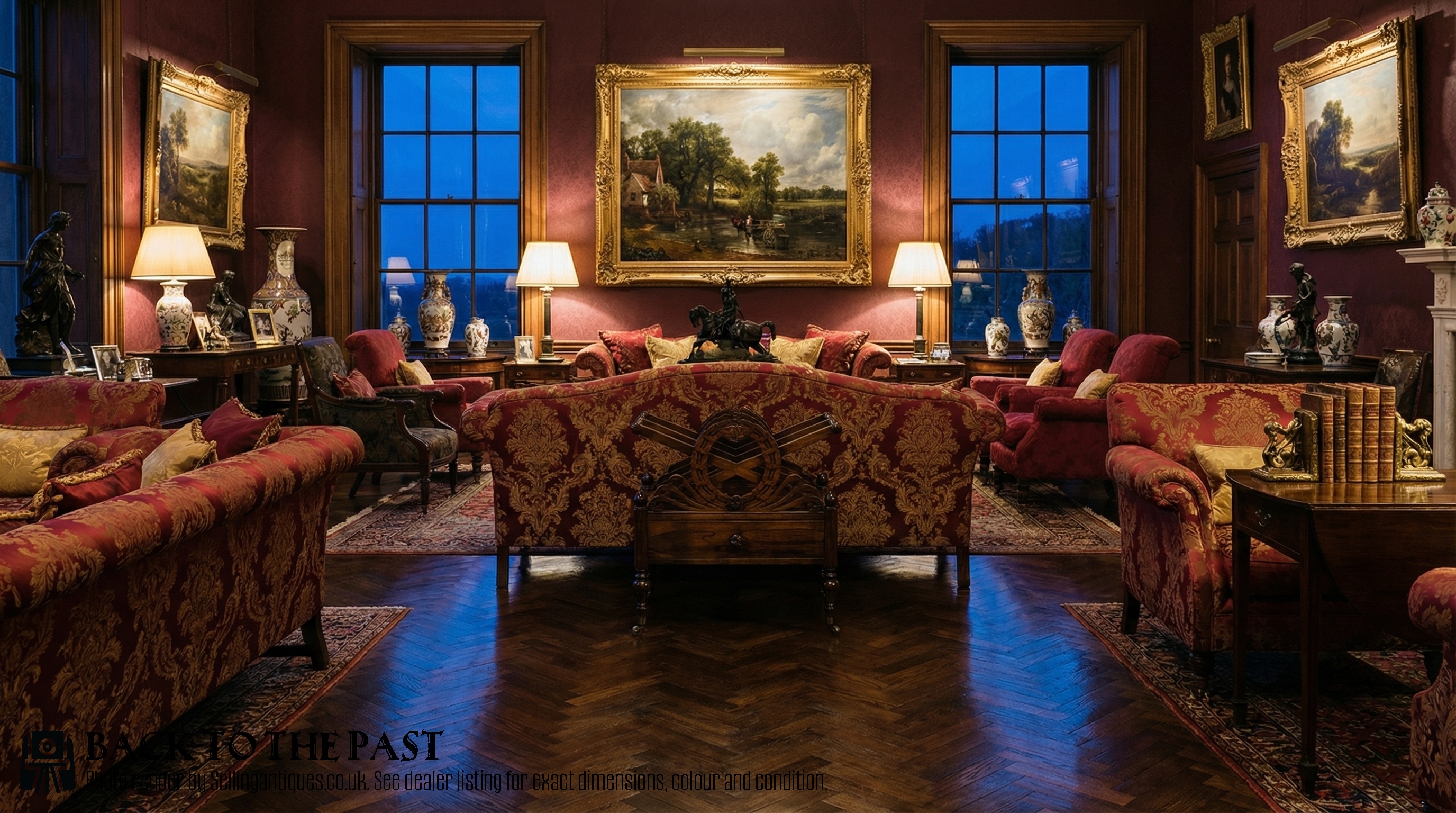
Regency Sheet Music Rack
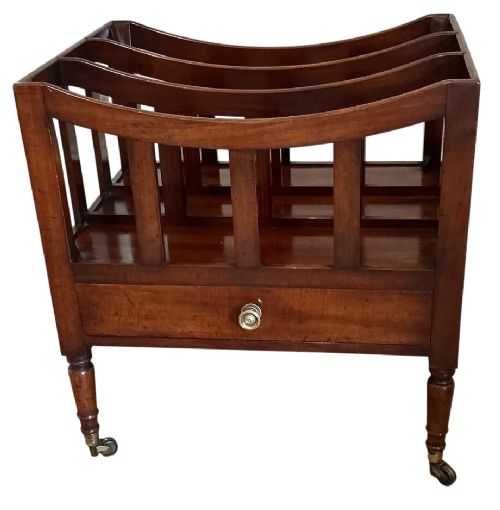
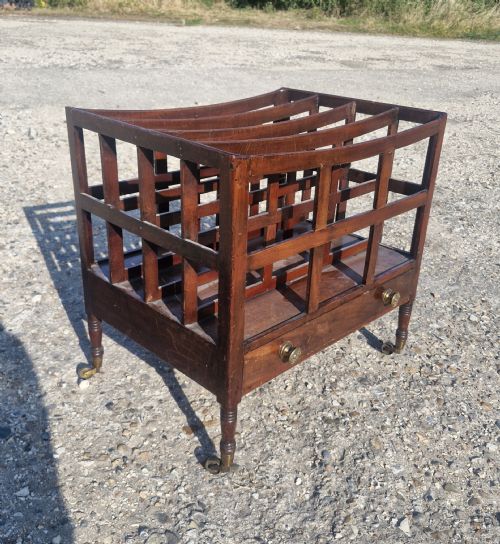
A regency sheet music rack brings together freestanding canterburys, music stands, and magazine racks from the Regency, George III, George IV, and William IV periods. These pieces serve to hold sheet music, newspapers, and folios within the home.
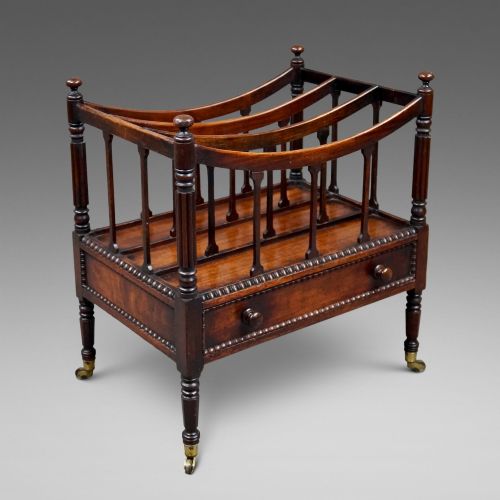
Mahogany and rosewood dominate the current selection, often appearing in boat-shaped or divided designs with turned legs and castors. Examples range from simple four-division canterburys to elaborate duet music stands and whatnot combinations.
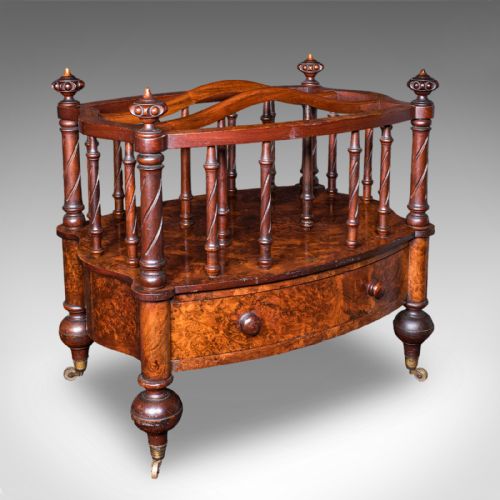
The 19th-century interpretations frequently incorporate inlay, satinwood details, or carved motifs such as Prince of Wales feathers. Buyers will also encounter burr walnut variants alongside sturdy Cuban mahogany structures.
Materials and Construction
Cabinet makers utilised dense timbers like mahogany, rosewood, and burr walnut, often selecting Cuban mahogany for its rich grain and weight. These woods provide the structural integrity needed for compartmented racks and heavy stands.
Decorative elements involve delicate inlay and ebony banding set into the primary timber surfaces. Turned wooden legs, frequently mounted on castors, allow these freestanding pieces to move easily across floorboards.
Metal components such as brass appear in the castors and occasional fittings, adding functional detail to the wooden framework. Joinery techniques secure the upright partitions and drawer units built into the lower sections.
Listings feature mahogany, rosewood, burr walnut, and satinwood inlay across Regency and William IV forms.
Craftsmanship and Proportion
The refinement of the turned legs and the crispness of any carved details set finer examples apart from simpler pieces. Proportions remain balanced, whether the object takes a boat shape or a multi-division stand format.
Timber selection dictates visual weight, with figured rosewood or burr walnut indicating a higher tier of production. The integration of functional drawers and clean joints demonstrates superior workshop practice.
The Regency Sheet Music Rack Glossary
- Canterbury
- A low stand with partitioned sections for holding sheet music, newspapers, and periodicals, often fitted with a drawer below.
- Lyre-form
- A decorative motif shaped like an ancient lyre, frequently utilised in the vertical supports of music stands.
- Etagere
- A set of open shelves for displaying small objects, sometimes combined with lower rack compartments.
- Boat-shaped
- A curved hull-like outline typical of specific Regency canterbury designs.
- Inlay
- The technique of embedding contrasting woods or materials into a solid surface to create decorative patterns.
Regency Sheet Music Rack: Frequently Asked Questions
What is a canterbury used for?
A canterbury serves as a moveable stand for holding sheet music, folios, and newspapers close to an instrument or seating area.
Many examples include lower drawers for smaller accessories and divided upper sections to keep papers sorted.
How do I identify a Regency music rack?
Look for characteristic timber choices such as mahogany and rosewood, alongside design elements like turned legs and brass castors.
Period pieces often feature boat-shaped frames, lyre supports, or subtle inlay work typical of early nineteenth-century cabinet making.
Can these racks hold modern magazines?
Most nineteenth-century divisions accommodate standard periodicals and sheet music comfortably, though very large formats may require specific compartment widths.
The sturdy wood construction handles daily retrieval and storage of reading material with ease.
What is the difference between a music stand and a canterbury?
A music stand generally holds a score at an angle for performance or reading, while a canterbury functions primarily as a storage rack with vertical partitions.
Some hybrid pieces combine both functions into a single freestanding table or cabinet format.